
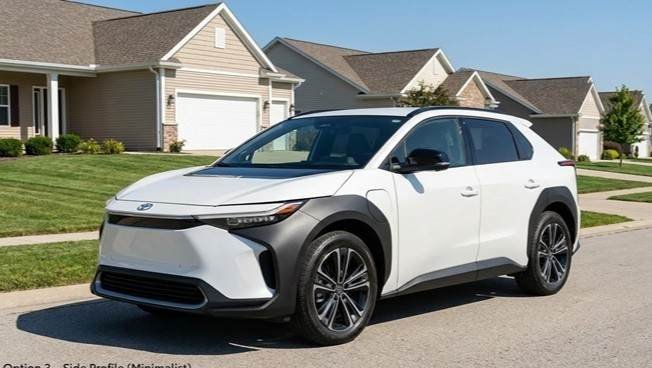
Toyota sold 4,964 electric vehicles in the U.S. in August 2026, a 35% jump from July and a sharp contrast to the broader market’s year-over-year decline. That figure — almost exactly what the user asked about — comes almost entirely from its growing lineup of electric SUVs: the refreshed bZ (the updated version of the bZ4X), the new smaller C-HR EV, and the bZ Woodland.
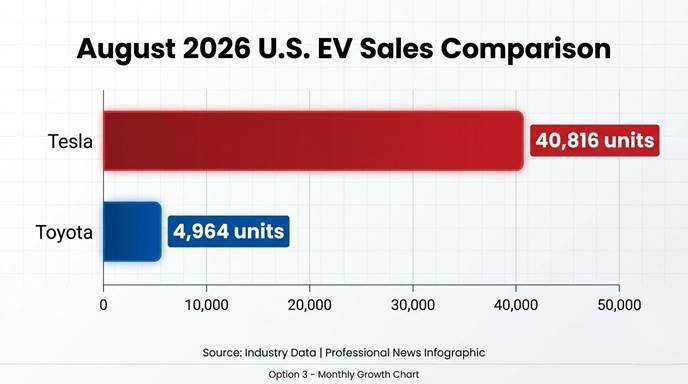
This isn’t headline-grabbing volume like Tesla’s 40,816 units the same month, but the growth story is more interesting than raw numbers suggest. Toyota achieved it without the $7,500 federal tax credit that fueled last year’s EV rush. Buyers are choosing these vehicles on their own merits in a more normalized market.
The 2026 bZ remains the star. After a meaningful refresh last fall that added up to 314 miles of range, faster charging, battery preconditioning, and standard NACS charging for Tesla Superchargers, sales have climbed steadily. Through the first eight months of 2026, Toyota has moved more than 22,500 bZs — already well ahead of the entire 2025 calendar year for the model (then still called the bZ4X).
In the first half of the year alone, the bZ outsold Toyota’s own Land Cruiser and Sequoia in the U.S. That’s a notable crossover moment for a brand whose reputation was built on gas and hybrid trucks and SUVs.
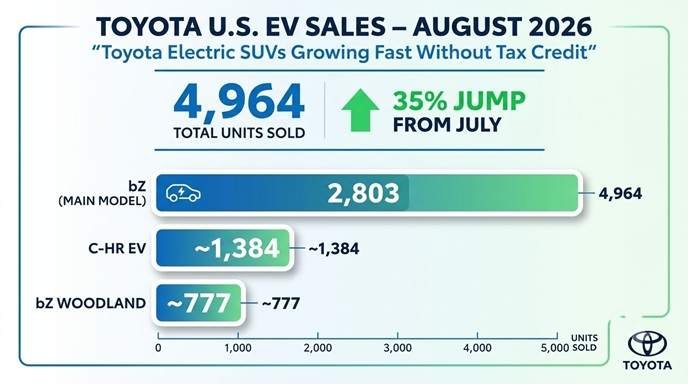
The C-HR EV and bZ Woodland, both launched earlier in 2026, are adding meaningful volume too. In August they contributed roughly 1,384 and 777 units respectively. These three models together give Toyota a more complete electric SUV range than it has ever offered Americans: a compact crossover, a mainstream midsize option, and a more rugged Woodland variant.
Toyota’s EV momentum is happening in a tougher environment. Overall new EV sales in August were down sharply from the same month in 2025 because buyers had rushed to claim the expiring tax credit last year. Yet Toyota’s numbers rose month-over-month and are running well ahead of last year’s pace on a like-for-like basis.
This suggests the refreshed bZ and new models are resonating with buyers who want:
- Toyota’s legendary reliability and dealer service network
- Strong real-world efficiency without needing a home charger or worrying about range anxiety on road trips
- Pricing that starts in the mid-$30,000s before incentives (when available)
The average transaction price for new EVs fell again in August, helped in part by stronger sales of lower-priced models like the bZ. Toyota is helping narrow the price gap between electric and gas vehicles at a time when many buyers are still hesitant.
Toyota continues to sell far more hybrids than pure EVs. In August alone the company moved over 124,000 electrified vehicles across Toyota and Lexus, the vast majority of them gas-electric hybrids. That hybrid strength gives the company breathing room to refine its EV lineup without betting the farm on battery-electric volume.
For American families who like the idea of an electric SUV but still want the peace of mind of Toyota’s service experience and resale values, the current bZ lineup is starting to look like a credible option rather than a risky experiment.
Toyota is still a long way from challenging Tesla or even Hyundai/Kia in pure EV volume. But the August numbers show the company is no longer just dipping a toe in the water. The refreshed bZ with NACS access and the addition of the C-HR EV and bZ Woodland are giving buyers real choices across different sizes and use cases.
If you’re a U.S. buyer shopping for an electric SUV right now, Toyota’s current offerings are worth a closer look — especially if you value dealer support, proven reliability, and a vehicle that feels like a normal Toyota rather than a tech experiment. Inventory is improving, prices are competitive, and the product is clearly getting better with each passing month.
The 4,964 units sold in August may not dominate the conversation the way Tesla’s numbers do, but they represent the kind of steady, sustainable growth that could make Toyota a more significant player in America’s electric SUV market sooner than many expected.
Related Post