
Full-size pickup shoppers have long equated serious capability with a V8. The 2026 Chevy TurboMax engine, a 2.7-liter turbocharged four-cylinder offered in the Silverado 1500, challenges that assumption. It is smaller and lighter than a V8, and it is designed to make most of its pulling force at low engine speeds, where towing and hauling happen. The question buyers keep asking is whether a turbocharged four-cylinder can deliver the performance, durability, and everyday practicality they expect from a full-size truck.
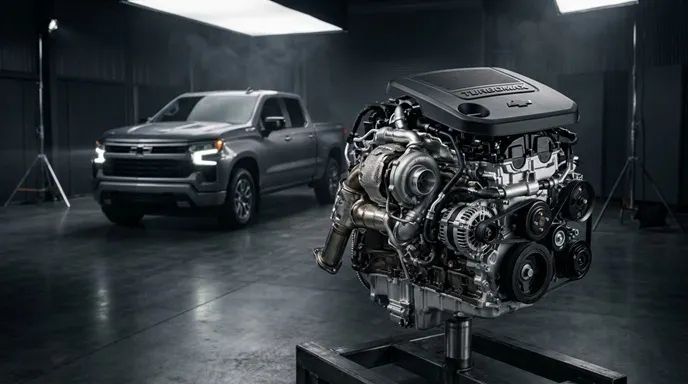
Answering that means separating what Chevrolet has published from what owners report and what has not yet been tested over many years. This guide covers the TurboMax’s specifications, which models offer it, fuel economy and fuel requirements, inspection points, maintenance, and how it compares with the 5.3-liter V8 and the 3.0-liter Duramax diesel.
How It Feels Under Load
Torque is the twisting force that gets a truck moving and keeps it moving up a grade. Horsepower matters more at high speed. A turbocharged engine typically delivers its strongest torque across a broad band of low-to-mid engine speeds, which is why it can feel responsive pulling away from a stop or climbing a hill with a trailer.
In everyday driving, the practical questions are throttle response and boost timing. Modern turbos are designed to reduce “turbo lag,” the brief delay before boost builds. Under light throttle, a turbo engine can feel nearly like a naturally aspirated engine. Under heavy load, such as a loaded bed on a grade, the turbo works harder and the engine works harder with it, which affects fuel use and heat. Owners should expect more engine noise and temperature variation when the truck is working at its limit, which is normal for a turbocharged engine.
How It Compares With Larger Engines
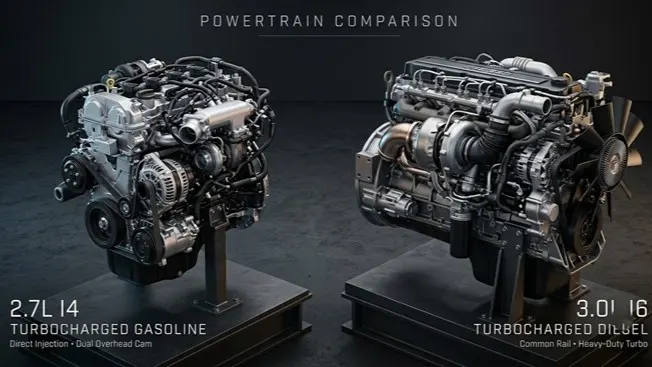
Peak horsepower and torque numbers can be misleading in isolation. A better comparison looks at where the torque arrives, how the transmission uses it, and what the truck is rated to tow and carry. For reference, Chevrolet’s larger engines are the 5.3-liter V8 and the 3.0-liter Duramax diesel.
The TurboMax’s advantage is that it can offer strong low-end torque with a smaller, lighter engine. Its disadvantage is that a V8 or diesel will usually have more reserve when the truck is pushed hardest. Those trade-offs matter more than any single number.
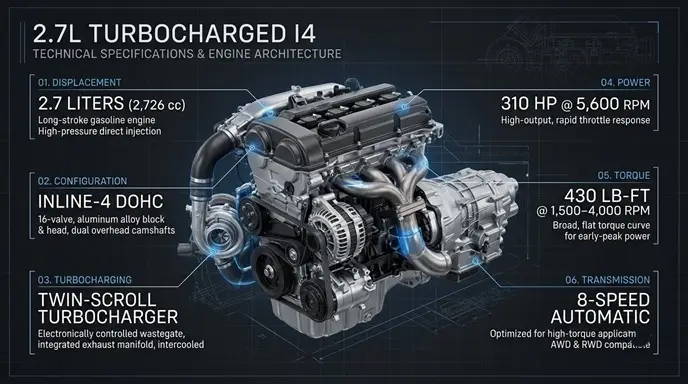
GM’s 2.7L turbocharged four-cylinder, branded TurboMax, powers the Silverado 1500, Sierra 1500, Colorado and Canyon. This guide covers what it makes, and how it compares with the 5.3L V8 and the 3.0L Duramax diesel.
What Is the Chevy TurboMax Engine?
A small-displacement turbo built to deliver V8-like pulling power with better efficiency.
TurboMax is Chevrolet’s marketing name for the 2.7L turbocharged DOHC inline-four. It debuted in the 2019 Silverado 1500 and has since been retuned and expanded into the midsize Colorado and GMC Canyon. Its goal is strong low-rpm torque from a lighter, more compact engine than a V8.
Key Features
Dual-volute turbo
- Splits exhaust pulses for quicker spool
- Torque arrives at low rpm
Cylinder deactivation
- Can run on fewer cylinders at light load
- Helps highway economy
Integrated exhaust manifold
- Cast into the cylinder head
- Faster warm-up, cooler exhaust gas to the turbo
Direct injection
- Precise fuel metering
- Needs good fuel and oil habits
Variable oil pump
- Reduces parasitic loss
- Matches oil flow to demand
Auto stop/start
- Fitted on many trims
- Can be switched off by the driver
Output Comparison (hp and lb-ft)
2026 Models That Use the TurboMax
Tune and torque vary by truck and trim.
| Vehicle | Tune | Approx. Output | Notes |
|---|---|---|---|
| Chevy Silverado 1500 | Standard | 310 hp / 430 lb-ft | Base engine on many trims; 8-speed automatic |
| GMC Sierra 1500 | Standard | 310 hp / 430 lb-ft | Shares the Silverado powertrain |
| Chevy Colorado (WT/LT) | Standard-output | ~237 hp / ~260 lb-ft | Lower-output tune on base midsize trims |
| Chevy Colorado (Trail Boss / ZR2) | High output | ~310 hp / ~430 lb-ft | Off-road trims use the stronger tune |
| GMC Canyon | Standard / High output | Mirrors Colorado | AT4 and AT4X use high output |
Output numbers are approximate. Confirm each trim on Chevrolet.com.
Fuel Economy (MPG)
Approximate combined EPA-style figures for full-size crew-cab configurations. Check fueleconomy.gov for exact trims.
Fuel-Cost Calculator (5 years)
Uses the mpg values shown. Diesel trucks also carry a purchase premium and DEF costs, not included here.
Fuel Requirement: Regular or Premium Gas?
Short answer: regular unleaded (87 octane) is the recommended fuel.
RecommendedRegular 87
- Designed and rated to run on regular
- No performance penalty claimed by GM
- Saves roughly $0.50–$0.90 per gallon versus premium
OptionalPremium 91+
- Not required
- May help in extreme heat, heavy towing or hot climates
- Little to no benefit in normal driving
Fuel Cost Impact (approx. per 15,000 miles)
TurboMax Engine Problems
The 2.7L has been in production since 2019, so patterns are known. Most complaints are manageable. Severity and frequency ratings below are editorial judgments, not statistics.
1. Carbon buildup on intake valves Moderate
2. Cylinder deactivation noise or drivability complaints Moderate
3. Turbo lag and boost feel Minor
4. Oil consumption and dilution concerns Moderate
5. Transmission pairing issues Moderate
6. Recalls and bulletins Check
Concern Level (editorial estimate)
Is the 2026 Chevy TurboMax Engine Reliable?
Generally acceptable, with maintenance discipline being the deciding factor.
editorial score
Strengths
- Several years of real-world use
- Strong low-end torque
- Lighter than a V8
- Simpler than a diesel emissions setup
Watch-outs
- Heavy, frequent towing stresses small turbo engines
- Skipped oil changes hurt turbos and chains
- Fewer long-term high-mileage examples than the 5.3L
TurboMax Maintenance: Oil, Service Intervals & Long-Term Costs
Follow the Oil Life Monitor, but be more conservative if you tow, idle a lot or drive short trips.
Oil Basics
| Spec | Typical Requirement |
|---|---|
| Oil type | Full synthetic, dexos1 Gen 3 approved |
| Viscosity | 0W-20 (check the owner’s manual for your model) |
| Capacity | About 6 quarts with filter (verify per vehicle) |
| Change interval | Per Oil Life Monitor, often 5,000–7,500 mi; shorter for severe use |
Suggested Service Timeline
Estimated 5-Year Routine Maintenance Cost
Illustrative estimates of routine service only, not repairs or tires.
Tips to Extend Engine Life
- Let the engine reach operating temperature before heavy throttle.
- Use full-synthetic oil that meets GM’s dexos spec.
- Change oil sooner when towing, idling or making short trips.
- Use Top Tier fuel and avoid running very low on fuel.
- Keep software updated at service visits.
Chevy TurboMax vs. 5.3L V8: Which Engine Should You Choose?
The turbo four wins on torque and low-rpm response. The V8 wins on proven durability, sound and towing headroom.
| Category | TurboMax 2.7L | 5.3L V8 |
|---|---|---|
| Horsepower | 310 hp | 355 hp |
| Torque | 430 lb-ft (lower rpm) | 383 lb-ft |
| Combined MPG (approx.) | 20–21 | 18–19 |
| Max towing (approx.) | Up to ~9,500 lb | Up to ~13,000+ lb |
| Fuel | Regular 87 | Regular 87 |
| Complexity | Turbo + direct injection | Direct injection + cylinder management |
| Sound | Quieter, four-cylinder tone | Classic V8 sound |
| Resale appeal | Good, improving | Strong with traditional buyers |
Towing Capacity (approx. maximum)
Pick TurboMax if…
- You mostly drive daily and tow occasionally
- You want lower fuel costs and strong off-the-line pull
- Your towing stays within ~7,000 lb
Pick the 5.3L V8 if…
- You tow often or near the limit
- You want the more traditional, proven layout
- You value the V8 sound and feel
Chevy TurboMax vs. Duramax Diesel: Gasoline or Diesel?
Diesel brings the best efficiency and towing torque. Gas is cheaper up front and simpler to own.
| Category | TurboMax 2.7L (Gas) | 3.0L Duramax (Diesel I6) |
|---|---|---|
| Power | 310 hp / 430 lb-ft | 305 hp / 495 lb-ft |
| Combined MPG (approx.) | 20–21 | 24–26 |
| Upfront cost | Lower (often standard) | Roughly $3,500–$4,000+ extra |
| Fuel | Regular gas | Diesel, plus DEF fluid |
| Towing (approx. max) | ~9,500 lb | ~13,000 lb |
| Maintenance | Simpler and cheaper | Fuel filters, DEF, emissions parts |
| Best for | Daily driving, mixed use | High-mileage, towing, long highway trips |
Efficiency vs. Upfront Cost
At average mileage, the diesel’s premium can take roughly 6–10 years to recover through fuel savings alone. It makes the most sense if you tow heavily or drive 20,000+ miles a year.
Frequently Asked Questions
Does the Chevy TurboMax require premium gas?
What size is the TurboMax engine?
Which trucks use the TurboMax?
Is the TurboMax good for towing?
How often should I change TurboMax oil?
How long will a TurboMax engine last?
Why Chevrolet Uses Different Engines
Engine choice follows the vehicle. A pickup must tow, haul, and maintain performance under heavy loads, so manufacturers match engines to the truck’s weight, packaging, and expected workload. A crossover typically needs a smaller, lighter, more fuel-efficient engine that fits a unibody vehicle and meets emissions and cost targets. Using one engine across every vehicle would compromise either the truck’s capability or the crossover’s efficiency.
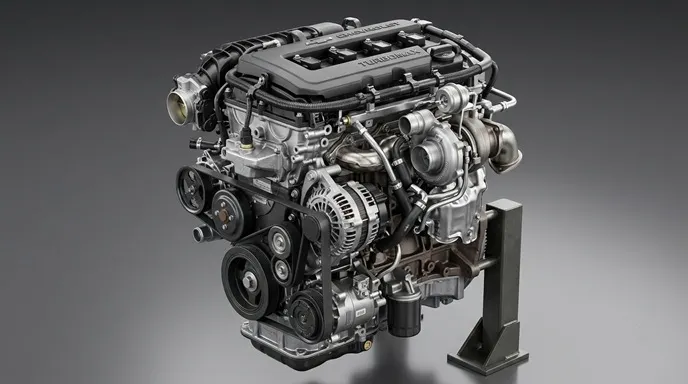
2.7L TurboMax vs. 1.5L Turbo: Two Different Engines
| Feature | 2.7L TurboMax (L3B) | 1.5L Turbo (Equinox) |
|---|---|---|
| Typical vehicle | Silverado 1500 | Equinox crossover [verify model-year availability] |
| Size | About 2.7 liters | About 1.5 liters |
| Purpose | Truck torque and towing | Efficient crossover power |
| Service information | Specific to L3B | Specific to the 1.5L engine |
Do not apply 1.5L bulletins, recalls, or ratings to the TurboMax, or the reverse. Mixing them up is one of the most common errors in engine research.

Official Ratings vs. Real-World Results
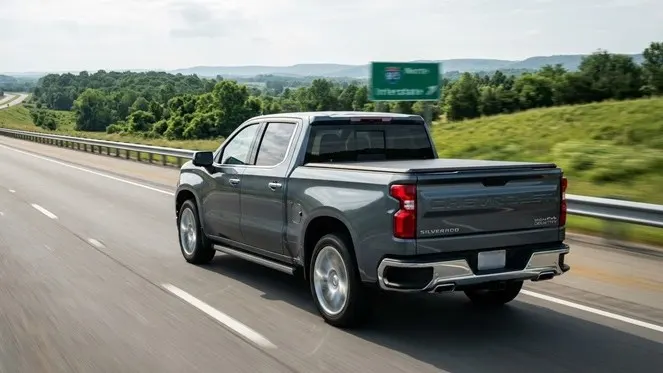
EPA ratings come from standardized testing. Real driving depends on temperature, terrain, tire pressure, cargo, and habits. Owner-reported mileage can be useful for context, but it is not a controlled measurement, and I have not included any owner data in this article. Treat EPA figures as the baseline and expect your own results to vary.
Does the TurboMax Make Financial Sense for High-Mileage Drivers?
It can, if the buyer compares the EPA ratings for the specific configurations and the local fuel price. The TurboMax may suit drivers who want truck capability with a smaller engine and who do not tow heavy loads frequently. Drivers who tow often may find that a larger engine’s reserve power and the diesel’s fuel economy under load change the math. Run the calculation with the official figures for each truck you are considering.
Inspection Areas for Any TurboMax Truck
Turbocharger and boost system. Listen for whistling, hissing, or surging under acceleration. Check the intake piping, clamps, and connections for cracks, loose fittings, or oil residue. A boost leak can reduce power and set codes.
Oil leaks and consumption. Check the oil level on the dipstick, look for fresh oil around the valve cover, oil filter area, and under the engine, and note any burning-oil smell. Consumption varies by engine and driving, so compare the oil level against the owner’s manual’s guidance.
Cooling system. Confirm the coolant level and condition, look for leaks or crusty residue around hoses and fittings, and watch the temperature gauge during a test drive, especially under load or on a hot day.
Unusual noises and vibration. Ticking on cold start, rattling, or rough idle that does not settle should be checked by a qualified technician. Some noises are normal, so compare what you hear with a known-good example if possible.
Hesitation or reduced power. Note how the truck responds to throttle input at low, medium, and highway speeds. Hesitation can come from many sources, including fuel delivery, sensors, boost control, or transmission shifting.
Warning lights and diagnostic trouble codes. A check-engine light, oil pressure warning, or temperature warning should be treated seriously. Have a shop or a scan tool read any stored or pending codes, and ask for the repair history explaining them.
Separating Normal Turbo Maintenance From Documented Problems
Turbocharged engines need clean oil, clean intake air, reliable cooling, and proper maintenance. Those are general considerations, not evidence of a defect. A documented problem is one the manufacturer has acknowledged through a recall, bulletin, or warranty program for the specific engine and model years. Keep the two categories separate when evaluating a truck.
A Warning About Other Chevrolet Engines
Some Chevrolet service information concerns other engines. For example, bulletins relating to the Equinox’s 1.5-liter turbo, including engines identified by other codes, apply to that engine, not the 2.7L TurboMax. Verify the engine code, VIN, and model year before attributing any bulletin to the TurboMax.
Is the 2026 Chevy TurboMax Engine Reliable?
Reliability is earned over years of use, and a 2026 engine is still early in its life. Long-term reliability data, such as dealer warranty claims, owner surveys, and high-mileage teardown reports, takes time to accumulate. Independent reliability rankings for a new model-year engine may be limited or unavailable, so treat any early score as provisional.
Engineering Features
The TurboMax combines a turbocharger with direct fuel injection, a combination many manufacturers use to deliver power from smaller engines. Engineering choices like these bring trade-offs: turbochargers add heat, pressure, and components that need proper care, while direct injection can require attention to fuel quality and carbon buildup over time. Chevrolet’s engine description and owner’s manual explain the specific features of the L3B. I have not added claims about materials or durability features that I could not confirm.
Performance Under Normal and Demanding Conditions
Under everyday driving, a turbocharged engine should feel smooth and responsive. Under sustained towing, steep grades, or heat, it will run hotter and work harder. Owners who expect to tow should follow the maintenance schedule for severe use if the owner’s manual lists one, and should keep the truck within its published ratings.
High-Mileage Ownership
No engine has a guaranteed lifespan. Engines last longer when they receive regular oil changes with the correct oil, timely repairs, clean fuel, and reasonable operating temperatures. Driving habits matter as well: frequent short trips, repeated heavy towing, and neglected warning lights all shorten an engine’s life. Any article or seller promising a specific mileage milestone for this engine is making a claim that cannot be verified.
What Long-Term Data Exists
For a new engine, the most useful information comes from recalls, bulletins, NHTSA complaints, consumer reliability surveys, and independent repair cost estimates. Consumer Reports, J.D. Power, and RepairPal publish reliability and repair-cost information over time. Check those sources for the most current results before making a decision, and treat them as context rather than a guarantee.
Limitations and Matching the Engine to Your Needs
The TurboMax is not the best choice for every buyer. Heavy or frequent towing, large payloads, and sustained high-speed work may push a smaller engine closer to its limits. Before buying, calculate your real needs, including passengers, cargo, tongue weight, and trailer weight. Compare those numbers with the truck’s published towing and payload ratings, which depend on the exact configuration. Matching the engine to the job is more important than matching it to a horsepower figure.
Chevy TurboMax vs. 5.3L V8
The 5.3-liter V8 is the engine many buyers compare against the TurboMax. Verify all of the figures below on the official 2026 pages before publishing.
| Feature | 2.7L TurboMax (L3B) | 5.3L V8 |
|---|---|---|
| Configuration | Turbocharged inline-four | Naturally aspirated V8 |
| Horsepower | 310 hp | [verify] |
| Torque | 430 lb-ft | [verify] |
| Transmission | 8-speed automatic | [verify] |
| EPA fuel economy | Varies by configuration | Varies by configuration |
| Towing and hauling | Check the truck’s rating | Check the truck’s rating |
| Driving character | Turbo responsiveness, quieter operation at light load | Traditional V8 sound and linear power |
| Ownership costs | Verify local fuel and service costs | Verify local fuel and service costs |
Should You Buy a 2026 Chevy With the TurboMax Engine?
The TurboMax is a reasonable choice for a buyer who wants a full-size pickup, better fuel economy than a V8 in many configurations, and enough low-speed torque for daily work and light to moderate towing. It is less compelling for buyers whose primary need is heavy, frequent towing.
Consider the TurboMax if you: drive mostly in town or on the highway, tow occasionally, carry moderate loads, and want a smaller engine.
Consider a V8 if you: tow often, want more reserve power, or prefer a traditional V8 character.
Investigate the Duramax diesel if you: tow heavy trailers regularly, drive long distances with loads, or want the diesel’s torque characteristics.
Consider an SUV or hybrid if you: mostly carry passengers and light cargo, want lower fuel costs, or do not need a pickup’s bed.
Before You Buy
- Confirm the engine code, trim, and model year on the window sticker.
- Compare the EPA ratings for the exact configuration.
- Check the owner’s manual for the fuel grade and oil specification.
- Search the VIN at nhtsa.gov/recalls for open recalls.
- Ask for service records and any diagnostic history.
- On a test drive, check cold-start noise, idle quality, throttle response, highway merging, and transmission shifts.
- Scan for codes, including pending codes, and inspect for oil or coolant leaks.
- Tow or load the truck, if possible, to see how it responds.
A truck that matches your real workload will serve you better than one chosen only for its horsepower figure. Verify every figure against Chevrolet and the EPA, match the engine to your needs, and buy with the owner’s manual and service history in hand.
Related Post