
Tesla long-awaited second-generation Tesla Roadster finally took center stage on October 15, 2026, and the biggest surprise wasn’t the claimed 0.59-second 0-60 mph time on the top “Rocket” trim. It was the cold-gas thruster system that makes those numbers possible — and how brutally short-lived that power really is.
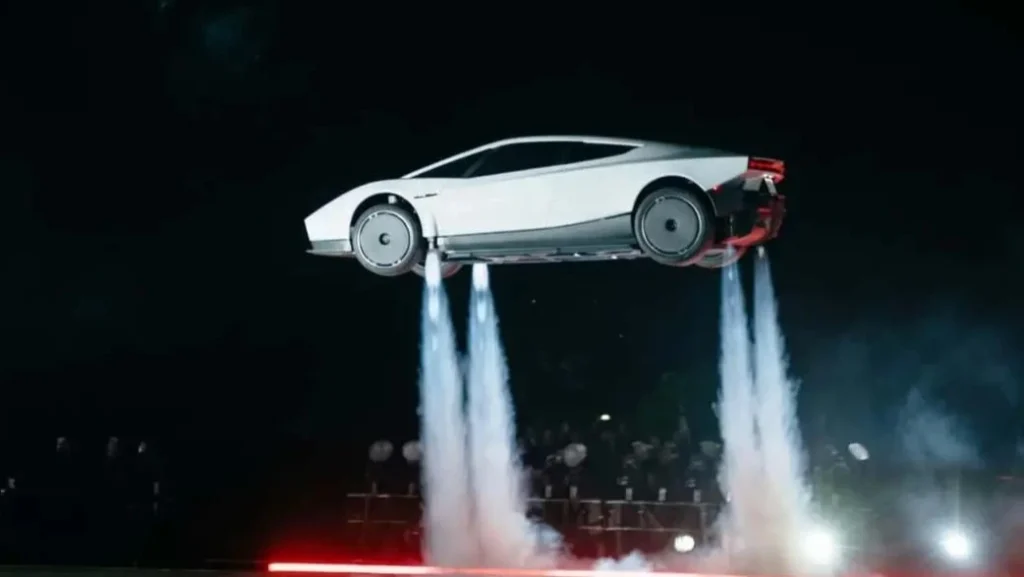
The system uses compressed nitrogen (or air) stored in carbon-fiber overwrapped pressure vessels tucked into every available space in the car. The Thrust version carries a 200-liter tank feeding four rear nozzles. The flagship Rocket version doubles that capacity to 600 liters across ten nozzles positioned all around the vehicle. During the reveal event outside Waco, Texas, the car used these thrusters to flip itself mid-air, hover briefly, and launch over Tesla’s entire current lineup.
The performance is eye-watering while it lasts. Tesla engineering VP Lars Moravy confirmed the rear thrusters alone can deliver more than 80 kilonewtons of thrust — roughly four to five times what the tires can handle on their own. That’s how the car can claim sub-one-second acceleration without shredding rubber. But here’s the reality check that hasn’t gotten much attention: those thrusters are good for only about five seconds of full boost on the Thrust model before the tank pressure drops too low to be useful.
Even more sobering is the refill process. According to Moravy in a Top Gear walkaround, refilling the Thrust version’s tank from an external high-pressure nitrogen supply currently takes between two and six hours. Tesla’s goal is to bring that down to under 30 minutes, but that’s still a long time between stunts. The company has said the car will eventually be able to recharge its own tanks without special propellant, but no details have been provided on how or how long that onboard system would actually take.
This isn’t a limitation Tesla tried to hide — it’s simply physics. Cold-gas thrusters work by releasing high-pressure gas through supersonic nozzles. The more you use them, the faster the pressure drops. Unlike a rocket that burns fuel continuously, this system is designed for short, violent bursts: launching off the line, correcting attitude in mid-air, or softening a landing after a jump.
For American buyers who have been waiting nearly a decade for this car, the short duration versus long refill time raises practical questions. The Rocket trim, which can actually fly short distances, is invite-only and explicitly “not approved for public road use.” Even the more street-oriented Thrust version is described as limited release. That suggests Tesla understands most owners will treat the thrusters as a track-day or demonstration feature rather than something they use every time they drive.
The thruster system adds significant weight and complexity. The Rocket version removes the passenger seat entirely to make room for the larger tank. Every usable void in the car is packed with pressure vessels, which also means less space for luggage or other practical items. At the same time, the car still promises more than 300 miles of electric range and a top speed over 230 mph on the higher trims.
For enthusiasts who want the ultimate expression of Tesla performance, the trade-off may be worth it. Five seconds of near-rocket acceleration or the ability to pull off controlled jumps is the kind of experience money can’t normally buy. But it also means the car’s most headline-grabbing capability is inherently limited — a feature you’ll use sparingly because the logistics of refilling are so cumbersome.
Tesla has a history of over-promising and then iterating. The company has already said it wants to dramatically shorten refill times. If they can get the car to self-refill quickly using its own systems, the thrusters could become far more usable. Until then, the Roadster’s most dramatic party trick remains exactly that: a brief, spectacular burst of performance that takes hours to reset. For American buyers dreaming of owning the fastest-accelerating production car ever, the message is clear: the thrusters deliver the impossible — but only for a few glorious seconds at a time.
Related Post