
September brought another round of political noise and fluctuating gas prices here in the United States. Across the Atlantic, British buyers quietly set a new electric-vehicle record that most American coverage treated as a distant curiosity. New EV registrations in the UK jumped 36% year-over-year, hitting an all-time monthly high. That figure is not just a UK story. It highlights policy differences, brand mix, and consumer behavior that U.S. shoppers, dealers, and Detroit executives would do well to examine instead of dismissing as “over there.”
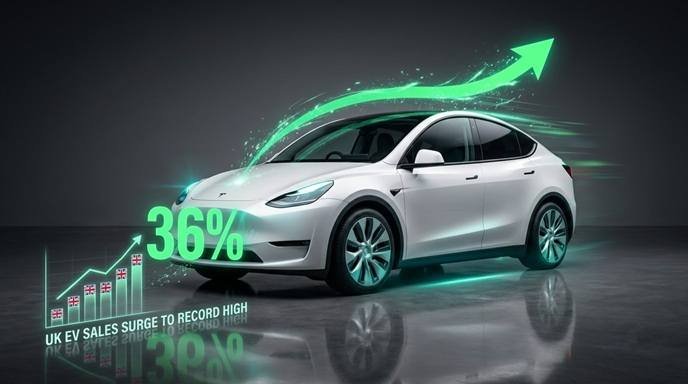
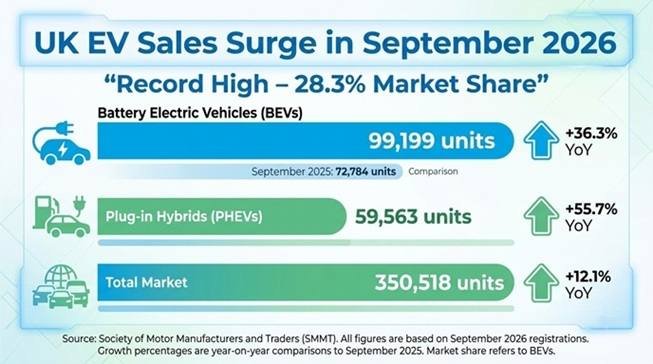
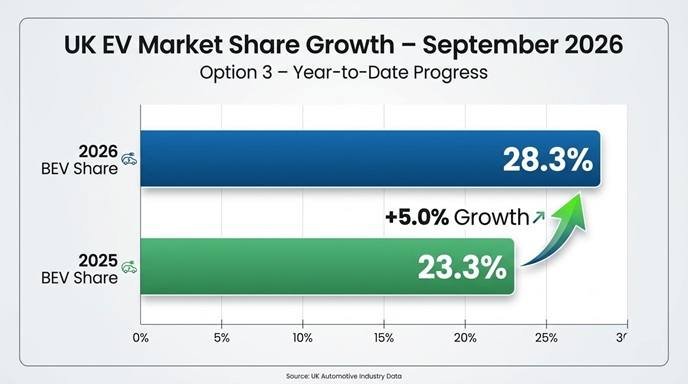
The raw numbers, reported by the Society of Motor Manufacturers and Traders, showed roughly 47,800 battery-electric cars registered in September. That pushed EVs to about 22 percent of the total new-car market for the month, the highest share yet. Plug-in hybrids added another slice, but the pure-EV sales jump was the headline. Tesla remained a volume leader, yet the real movement came from a broader pack: Kia, Hyundai, Volkswagen’s ID family, and a noticeable rise in Chinese-branded models such as MG and BYD. Average transaction prices for those latter vehicles sat well below the Teslas and premium Germans that still dominate U.S. EV conversations.
Americans often hear that Europe is “ahead” on EVs and then stop listening. The UK case is more specific. The country runs a Zero Emission Vehicle mandate that required 22 percent of new-car sales to be electric in 2024, with the percentage climbing each year. Automakers that miss the target face fines. That stick, combined with generous company-car tax treatment (Benefit-in-Kind rates that make an EV dramatically cheaper for employees than a gasoline equivalent), funnels fleet buyers toward batteries. Private buyers followed once more affordable models appeared. The United States has federal tax credits and some state rebates, but no comparable nationwide sales mandate and a far weaker company-car incentive structure. The result is visible on dealer lots: U.S. EV inventory has sat longer in several regions while UK dealers report tighter supply of popular compact crossovers.
Charging infrastructure differences matter too, though not in the way many Americans assume. The UK is denser; most drivers cover shorter daily distances. Public chargers are more common in cities and along motorways, and home charging is feasible for a larger share of households than in sprawling U.S. suburbs or rural counties. That said, the British grid has faced its own winter strain, and rural charging deserts exist. The surge happened anyway because the cars themselves became cheaper and the tax math became irresistible for company fleets. U.S. drivers who commute 40-plus miles each way or live in apartments without dedicated parking still face a steeper practical hurdle.
Chinese brands deserve a closer look from an American perspective. MG (owned by SAIC) and BYD have used aggressive pricing and longer warranties to grab share in Britain without the 100-percent tariff wall the United States erected. Those vehicles undercut many domestic and Korean offerings on the UK high street. U.S. policymakers and unions argue the tariffs protect jobs and intellectual property. The UK experiment shows what happens when that barrier is lower: volume rises faster, prices fall, and traditional European and American brands lose share in the entry-level segment. Whether that is a net positive depends on whether you prioritize rapid adoption or industrial policy. Either way, the data is now sitting in public view.
Used-car ripple effects are another under-discussed piece. As new EV volume climbed, residual values for three-to-five-year-old gasoline cars in Britain softened more quickly than many forecasts predicted. That has made ICE vehicles cheaper on the second-hand market, which in turn keeps some budget-conscious buyers in combustion for now. The same dynamic is beginning to appear in parts of California and the Northeast, but the UK’s higher new-EV mix is accelerating it. American dealers watching their used inventory should note the pattern.
None of this means the UK has solved range anxiety, battery recycling, or raw-material supply. Mining and processing bottlenecks remain global. What the September figures do show is that a combination of regulation, tax design, and a wider model lineup can move the needle even in a high-cost, high-energy-price country. U.S. manufacturers currently enjoy a more protected home market and still lead in pickup and large-SUV EVs—the vehicles many Americans actually want. The British record does not change that overnight. It does, however, illustrate how quickly share can shift once more affordable, smaller EVs become plentiful and the tax code tilts hard in their favor.
For the American considering a purchase this fall, the practical takeaway is narrower. If your daily driving resembles a typical UK commute—under 40 miles, mostly highway or suburban—the UK data suggests you would already be comfortable in several models that are only now arriving or expanding here. If you tow, live in an apartment, or regularly cross three states, the British numbers are less relevant. Policymakers in Washington and state capitals might usefully study the company-car tax lever; it moved fleet volume without requiring every private buyer to love the technology first.
The UK just posted a record. The United States is still arguing over the same cars. The gap is not destiny, but it is measurable, and September made it harder to ignore.
Related Post