
In a move that underscores how deeply the electric vehicle supply chain is now intertwined with national defense, the Department of War has awarded a $75 million grant to convert a major U.S. EV battery factory into a dual-use facility capable of producing high-performance battery packs for military drones.
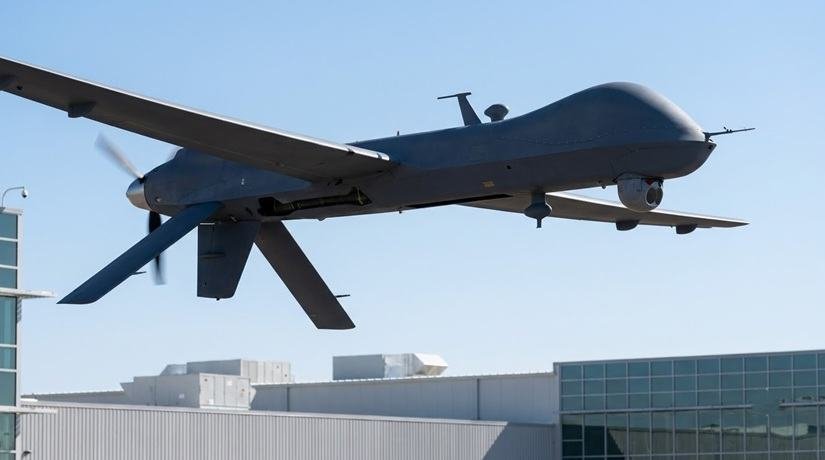
The grant, announced on October 5, 2026, targets a large-scale battery plant in the Midwest that currently supplies cells for several American-made electric trucks and SUVs. The funding will allow the facility to add dedicated production lines for military-grade drone batteries while continuing its civilian EV work. Officials describe the project as a “rapid-response capability” that leverages existing American manufacturing expertise to meet urgent drone requirements without building new factories from scratch.
Modern military drones — from small reconnaissance units to larger loitering munitions — rely heavily on advanced lithium-ion and lithium-metal battery technology for extended flight times, rapid recharging, and high energy density. The same chemistries and manufacturing processes used in today’s electric vehicles are directly applicable, and often superior, to what the military has historically sourced from specialized defense contractors.
By tapping an existing EV battery plant, the Department of War gains several advantages:
- Immediate access to proven, high-volume production lines
- Faster scaling than building dedicated military facilities
- Cost efficiencies from sharing overhead with commercial output
- Strengthened domestic supply chain resilience against foreign adversaries
The plant in question already produces pouch and prismatic cells using the latest nickel-manganese-cobalt (NMC) and lithium-iron-phosphate (LFP) formulations. The $75 million investment will fund new clean-room assembly areas, specialized formation and testing equipment, and enhanced quality-control systems required for defense applications.
For the roughly 1,200 workers at the facility, the grant means job security and new skill-development opportunities. The Department of War has required that the project create at least 180 new positions focused on defense battery production, with priority given to veterans and workers already employed at the plant. Training programs will cover military-grade quality standards, secure supply-chain protocols, and advanced battery diagnostics.
The move also signals a broader shift in U.S. industrial policy. Instead of treating the EV and defense sectors as separate worlds, the government is deliberately overlapping them. This approach mirrors what China has done for years with its “civil-military fusion” strategy, but on American terms.
American consumers may wonder whether this military diversion will affect EV prices or availability. Officials insist the civilian side of the plant will continue operating at full capacity and that the new defense lines are additive. In fact, the shared infrastructure and economies of scale are expected to lower per-unit costs for both commercial and military batteries over time.
Still, the decision highlights how quickly geopolitical tensions can redirect industrial resources. If drone demand surges further, future grants or contracts could expand the military footprint at EV plants across the country.
This $75 million grant is part of a larger push to onshore critical defense technologies. The Department of War has already funded similar dual-use projects involving semiconductor fabrication, rare-earth processing, and advanced materials. The goal is clear: reduce reliance on foreign suppliers — especially China — for anything that could affect battlefield readiness.
For U.S. readers, the story is a reminder that the electric vehicle transition is no longer just about climate or consumer choice. It has become a strategic national asset. The same battery innovations that make your next electric truck or SUV more capable are now being adapted to keep American drones in the air longer and more reliably.
The plant is expected to begin military drone battery production in the second half of 2027, with initial deliveries to drone manufacturers shortly thereafter. The Department of War has not disclosed which specific drone programs will receive the new cells, citing operational security.
In an era when supply-chain security and technological superiority are national priorities, turning an EV battery factory into a dual-use defense asset makes perfect sense. It’s a pragmatic example of how America’s commercial strengths can be quickly repurposed for military needs — and a signal that the electric vehicle industry’s role in national security is only just beginning.
Related Post