
Is the 2026 CX-5 just a restyled 2025 CX-5, or did Mazda actually change the vehicle enough to make the newer one worth choosing?
That is the real shopping question. Plenty of compact SUVs change a grille and a screen and call it a new year. This is not that. The 2026 model is a new generation: longer, roomier, simpler in how it is packaged, and built around a different idea of what a CX-5 should be. The previous-generation 2025 CX-5 is the one that still offers a turbocharged 2.5-liter engine and a wider mix of trims. The new-generation 2026 CX-5 is the one that grew in almost every direction that matters in a family SUV.
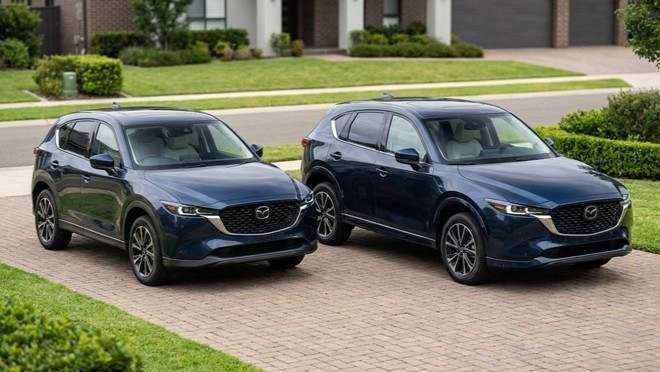
The biggest differences are not subtle. The body is larger. Rear-seat and cargo room improve. The cabin technology is newer. The trim ladder is cleaner. And the turbo engine that defined the sportiest 2025 models is gone from the U.S. 2026 lineup. That last point alone can decide the purchase. If you are choosing between leftover 2025 stock and a current 2026, you are not comparing two versions of the same car. You are comparing two different CX-5s with different strengths.
2025 CX-5 vs 2026 CX-5 at a Glance
| Spec | 2025 CX-5 | 2026 CX-5 |
|---|---|---|
| Generation | Previous generation | New generation |
| Overall length | About 180.1 in. | About 184.6 in. |
| Width | About 72.6 in. | About 73.2 in. |
| Wheelbase | About 106.2 in. | About 110.8 in. |
| Engine | 2.5L four-cylinder; turbo 2.5L available | 2.5L naturally aspirated four-cylinder |
| Horsepower | 187 hp (non-turbo); up to 256 hp turbo on premium fuel | About 187 hp |
| Torque | About 186 lb-ft non-turbo; up to 320 lb-ft turbo on premium | About 185 lb-ft |
| Transmission | 6-speed automatic | 6-speed automatic |
| AWD | Available; not universal on every 2025 configuration | Standard i-ACTIV AWD in the U.S. |
| Turbo availability | Yes | No previous-generation turbo in the U.S. lineup |
| Trim structure | Broader, including turbo and special editions | Five main trims: 2.5 S, Select, Preferred, Premium, Premium Plus |
| Cargo / interior room | Compact-SUV typical for its generation | Larger interior and cargo area than 2025 |
| Starting MSRP | Often starts lower, especially on leftover non-turbo stock; varies by dealer | 2.5 S starts at $30,900 MSRP before destination and fees |
MSRP is the manufacturer’s suggested retail price. It does not include destination, taxes, title, registration, options, or dealer charges. A 2025 sitting on a lot may be discounted. A 2026 may be closer to sticker, depending on demand. Three differences matter most before you get lost in equipment lists.
First, size. The 2026 CX-5 length and wheelbase both jump by more than four inches. That is a real stretch, not a rounding error.
Second, power. The 2025 CX-5 turbo is the performance outlier. The 2026 model uses one naturally aspirated 2.5-liter engine across the range.
Third, how Mazda sells it. Mazda CX-5 trim levels 2026 are fewer and easier to understand. The 2025 ladder was more complicated, but it also gave you a turbo and more personality at the top.
1. The 2026 CX-5 Is Longer and More Spacious
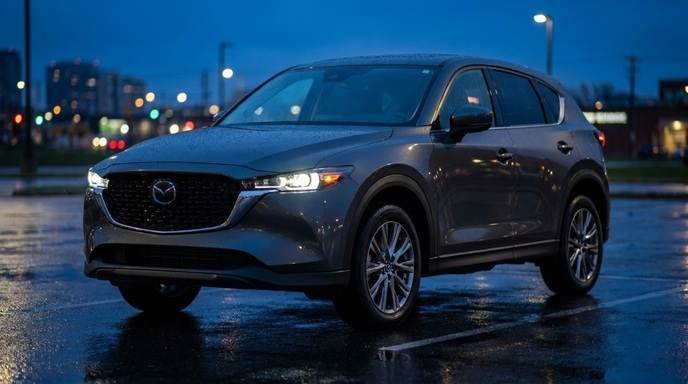
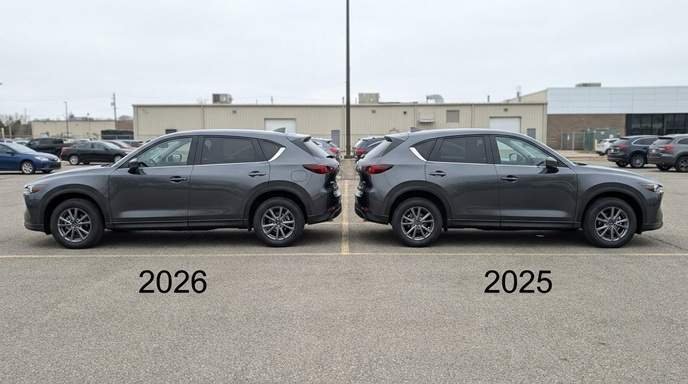
If you only remember one measurement from this comparison, make it wheelbase. The 2025 CX-5 vs 2026 CX-5 dimensions look like this in plain English: the new model is longer, a bit wider, and sits on a substantially longer wheelbase. Official figures put 2026 CX-5 length at about 184.6 inches, versus about 180.1 inches for 2025. Width moves from about 72.6 inches to about 73.2 inches. Wheelbase grows from about 106.2 inches to about 110.8 inches.
That is roughly 4.5 inches of extra overall length and about 4.6 inches of extra wheelbase. In this class, that is a lot. Wheelbase is the distance between the front and rear wheels. Stretch it, and you usually get more rear-seat room and a more stable highway ride. Overall length is what you feel in a garage, a parking garage ramp, and a crowded lot. The 2026 CX-5 vs 2025 CX-5 size gap is large enough that you should measure your garage if the 2025 already felt snug against the water heater or the second car.
What those extra inches do for passengers
Rear-seat room is where compact SUVs either work for families or become a compromise. The previous-generation CX-5 was comfortable enough for adults in back on shorter trips. It was not the roomiest vehicle in the segment. The longer 2026 wheelbase is aimed squarely at that complaint.
Adults in the second row get more of a chance to sit with their knees away from the front seatbacks. Kids in boosters get a little more space for fidgeting. Fitting a rear-facing child seat behind a tall driver is less of a Tetris problem. Door openings on a longer vehicle can also make buckling those seats less awkward, though that still depends on how Mazda shaped the rear doors.
This is not a three-row SUV. Nobody should shop either CX-5 as a substitute for a CX-90 or a minivan. It is still a two-row compact. The 2026 simply uses more of that two-row footprint for people.
What those extra inches do for cargo and loading
A longer rear overhang and a longer wheelbase usually mean a more usable cargo hold. The 2026 CX-5 cargo space is larger than the 2025’s, which matters more than the brochure language suggests. A week of groceries, a folded stroller, and a couple of duffels is the real test—not a golf-bag photo.
The extra length also changes how you load. A wider, taller opening is easier when you are swinging in a bulky box from Costco. A longer cargo floor is easier when you are laying down a stroller or a set of camping chairs without folding every seat. Mazda’s 2026 interior space gains are part of the same story: the cabin grew because the vehicle grew.
The parking and garage trade-off
There is a cost. The 2026 CX-5 length vs 2025 is enough to notice in tight city parking and older suburban garages. If you currently back the 2025 in with a couple of inches to spare, do not assume the 2026 will behave the same. Parallel parking gets slightly harder. Multi-story garages with tight turns feel a little more cramped. The extra 0.6 inch of width is minor by itself; combined with the extra length, the vehicle occupies more of a parking stripe.
Maneuverability is not ruined. This is still a compact SUV, not a midsize three-row barge. But the 2026 is the less darty of the two in a crowded lot. If you live on a narrow street and parallel park daily, drive both. If you live in a typical suburban driveway and mostly want more rear-seat room, the 2026 size increase is the feature.
2. 2026 CX-5 Specifications: The Engine Change Is a Big Deal
The 2026 CX-5 specifications look familiar until you get to power. Both model years use a 2.5-liter four-cylinder and a six-speed automatic. That is where the similarity ends. The 2025 Mazda CX-5 vs 2026 Mazda CX-5 engine story is not a small tune. It is a change in character.
The 2025 non-turbo 2.5-liter makes 187 horsepower. The 2026 2.5-liter is also rated at about 187 horsepower and about 185 lb-ft of torque. On paper, the base engines are in the same neighborhood. In the real world, the 2025 still had an escape hatch: a turbocharged 2.5-liter that could reach 256 hp and 320 lb-ft of torque on premium fuel. That engine is the reason some shoppers still want a 2025.
A naturally aspirated engine makes power by drawing air in on its own. A turbocharger force-feeds extra air into the engine so it can burn more fuel and make more power, especially in the midrange where you actually pass and merge. You do not need an engineering degree to feel that difference. The 2025 turbo pulls harder when you already have two passengers, a weekend’s luggage, and a short on-ramp.
Mazda did not give the 2026 CX-5 a different engine as you climb the trim ladder. The 2.5 S and the Premium Plus share the same 2.5-liter four-cylinder. You are not buying more power when you buy more leather. You are buying comfort and technology.
AWD is the other mechanical headline. i-ACTIV AWD is standard across the U.S. 2026 CX-5 lineup. On the 2025, all-wheel drive was part of the mix, but it was not a given on every configuration. If you want AWD without thinking about it, the 2026 simplifies the decision. If you live in a dry climate and were happy with a front-drive 2025, that cheaper 2025 configuration may still exist on a dealer lot.
Do not expect a dramatic fuel-economy story from unverified numbers. Mazda has not made the 2026 into a hybrid in this comparison, and the six-speed automatic is a known quantity rather than a new eight- or eight-plus-speed unit. The 2026 CX-5 engine is adequate for daily driving. It is not the reason you buy the new one. Space and technology are.
Does the 2026 Mazda CX-5 Have a Turbo?
The U.S.-market 2026 Mazda CX-5 does not offer the previous generation’s turbocharged 2.5-liter engine. That is the clean answer. If you searched “does the 2026 CX-5 have a turbo,” you can stop scrolling.
The 2026 Mazda CX-5 turbo question exists because the 2025 CX-5 turbo was one of the more interesting engines in the compact-SUV class. On regular fuel it was already stronger than the non-turbo 2.5. On premium fuel it could reach 256 horsepower and 320 lb-ft of torque. That is the kind of midrange that makes a loaded CX-5 feel less strained on a mountain grade or a fast merge.
The 2026 model uses the naturally aspirated 2.5-liter instead: about 187 hp and about 185 lb-ft. Same displacement family, much less punch. There is no 2026 CX-5 turbo discontinued footnote hiding a secret options box on Premium Plus. The five U.S. trims all use the same non-turbo engine.
Why would Mazda do that? A few practical reasons are more likely than a conspiracy. Turbo engines cost more to build and to certify. They add complexity. A single engine across Mazda CX-5 trim levels 2026 keeps the lineup simple and may help Mazda hit efficiency and pricing targets on a larger, heavier new-generation SUV. Mazda also has other turbo and more powerful models in the 2026 Mazda models mix for buyers who want that character.
Who should still prefer the 2025 turbo?
- Drivers who regularly merge onto fast interstates
- Anyone who often carries passengers and cargo together
- Buyers who like a stronger midrange more than a bigger back seat
- Shoppers who can find a discounted 2025 Turbo, Turbo Premium, or Turbo Premium Plus
If your driving is mostly around town, school runs, and moderate highway speeds, the 2026’s 2.5-liter will not feel weak. It will feel familiar—like the non-turbo 2025, in a larger body. The 2026 Mazda CX-5 turbo absence only becomes a deal-breaker if you already knew you wanted the old punch.
3. 2025 CX-5 vs 2026 CX-5 Trim Levels
Mazda used the redesign to clean up the menu. The 2025 lineup was a buffet: non-turbo trims, turbo trims, and special looks such as Carbon Edition. That was great if you wanted a specific combination of power and appearance. It was annoying if you just wanted to know which CX-5 to buy in 20 minutes. Mazda CX-5 trim levels 2026 are simpler. Five main U.S. configurations, one engine, standard AWD:
- 2.5 S
- 2.5 S Select
- 2.5 S Preferred
- 2.5 S Premium
- 2.5 S Premium Plus
| 2025 structure (typical U.S. mix) | 2026 structure |
|---|---|
| 2.5 S, Select, Preferred, Carbon Edition, Premium, Premium Plus | 2.5 S, Select, Preferred, Premium, Premium Plus |
| Separate turbo trims (Turbo, Turbo Premium, Turbo Premium Plus, plus special editions) | No turbo trims |
| FWD available on some versions | AWD standard |
| More ways to mix power, paint, and packages | One ladder; you pay for comfort and tech, not a different engine |
A 2026 CX-5 trim comparison is therefore easier. Each step up buys equipment, not horsepower.
2026 CX-5 2.5 S
This is the entry point: the new generation’s size, standard AWD, the 2.5-liter engine, and the newer infotainment foundation, including the 12.9-inch screen and wireless Apple CarPlay and Android Auto.
Buy the 2.5 S if you want the redesigned CX-5 at the lowest MSRP and you do not need heated seats, a power liftgate, or a dressed-up interior. Starting MSRP is $30,900 before destination and other charges. It is a complete SUV. It is also the trim that will feel most “base” after you sit in a Select.
2026 CX-5 2.5 S Select
Select is the first comfort jump: leatherette seating, heated front seats, a 10-way power driver’s seat, and wireless phone charging.
This is the trim for people who will actually live with the car in winter and do not want to pay for leather yet. Leatherette wipes down after kids, pets, and takeout. The power seat ends the manual-pump routine. Wireless charging cuts down on cable clutter even if you still need a cord on a dead-battery morning.
If you liked a well-optioned 2025 Select or Preferred but want the new body, start here.
2026 CX-5 2.5 S Preferred
Preferred is the convenience trim: heated steering wheel, memory seating, and a power rear liftgate on top of what Select already has.
These are high-use items. Memory seating matters when two people share the car. The heated wheel matters in January. The power liftgate matters every time your hands are full. For a lot of families, Preferred is the 2026 CX-5 they should buy if they are not chasing a luxury cabin.
2026 CX-5 2.5 S Premium
Premium is where the interior starts to feel like Mazda’s nicer compact SUVs: leather seating, ventilated front seats, heated rear seats, a panoramic moonroof, Bose 12-speaker audio, and a 360-degree View Monitor.
This is the “I want the cabin to feel special” step. Ventilated seats are the feature you underestimate until July traffic. The 360-degree camera is the feature you underestimate until you park next to a concrete pillar. Bose is the feature you notice on a three-hour drive. The moonroof is the emotional extra. Some buyers love the open roof. Others would rather keep Preferred’s money and skip the glass.
Premium starting MSRP is $38,950 before destination and fees.
2026 Mazda CX-5 Premium Plus
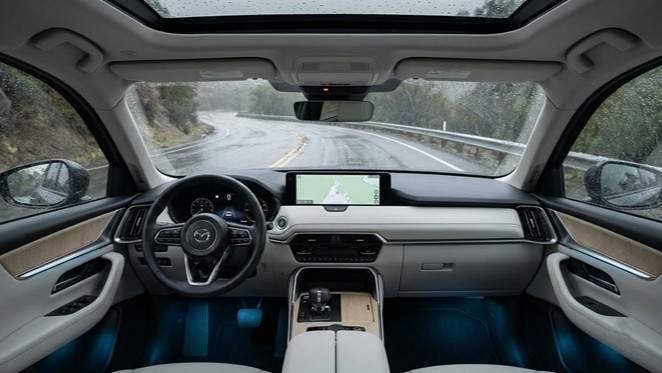
The 2026 Mazda CX5 Premium Plus is the search-term trim, and for once the extra attention is fair. This is where Mazda puts the technology that makes the new generation feel current rather than merely larger.
2026 CX-5 Premium Plus features typically center on:
- The 15.6-inch touchscreen instead of the 12.9-inch unit
- Driver Monitoring
- Cruising and Traffic Support with Lane Change Assist
- 360-degree camera (also part of the Premium step in this lineup)
- Hands-free / power liftgate
- Driver personalization such as memory seating
- Paddle shifters and the rest of the premium equipment stack
2026 CX-5 Premium Plus price starts at $41,450 MSRP before destination, taxes, and dealer charges. That is not a small number for a compact SUV with 187 horsepower. You are paying for the largest screen and the most capable driver-assist package Mazda is putting on this model, not for a stronger engine.
Is the 2026 CX-5 Premium Plus worth it? Only if you will use the highway-assist features and you care about the bigger display. If you mostly drive around town, Preferred or Premium already covers the comfort equipment that changes daily life. Premium Plus is the maximum-technology CX-5, not automatically the best one.
4. Interior and Technology: Where the 2026 CX-5 Feels New
The 2025 vs 2026 CX-5 interior comparison is the easiest one to feel in a showroom. The previous-generation cabin aged better than most compact SUVs. Materials were nicer than the price suggested. The commander knob and the 10.25-inch-class screen were familiar Mazda. Familiar, though, is not the same as current. Phone mirroring worked. Wireless charging appeared as you moved up. It did not look like a 2026 dashboard.
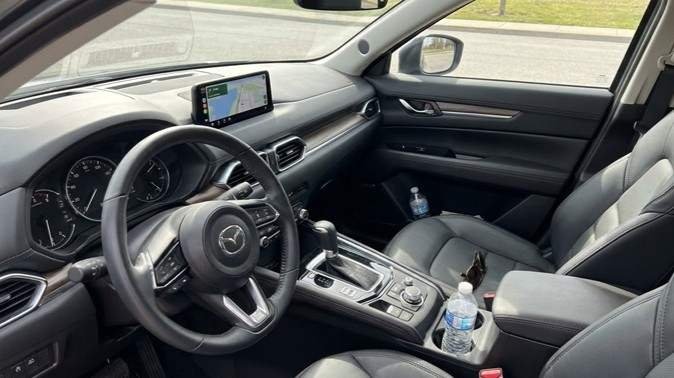
The new-generation cabin is built around a much larger display. The 12.9-inch touchscreen is standard on the 2026 range. Premium Plus steps up to 15.6 inches. That single change does more for the “this is new” impression than another chrome bar on the grille.
Wireless Apple CarPlay and Android Auto are part of the 2026 infotainment setup, which is what most U.S. buyers will actually use. If you live in CarPlay, the extra screen size is pleasant for maps. If you mostly glance at a direction and drive, the 12.9-inch screen is already a big jump from the 2025 unit. Do not buy Premium Plus only because the number on the screen is larger.
Seating is the other interior story. 2025 already offered cloth, leatherette, leather, heat, and ventilation depending on trim. 2026 keeps that idea but spreads it across a cleaner five-trim ladder. Rear-seat usability improves because the vehicle is larger, not because Mazda invented a new kind of cushion. Cupholders, door bins, and wireless charging are the small things you notice after a week. The 2026 has more of a “grown compact” feeling: more room to drop a bag, more space for a passenger to sit without folding themselves.
What you should not expect is a different driving position philosophy. Mazda still wants you to sit like you are in a car that happens to be an SUV. That is a plus if you liked the 2025. It is not a plus if you wanted a high, truck-like perch.
5. Cargo Space and Practicality
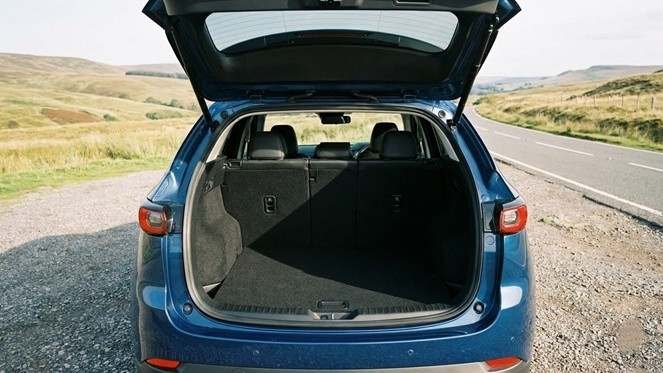
Families do not buy compact SUVs for horsepower charts. They buy them because a sedan’s trunk lost the argument. The 2025 CX-5 was respectable, not class-leading, for cargo. Mazda’s previous-generation figures were in the neighborhood of about 30.9 cubic feet behind the rear seats and about 59.3 cubic feet with the seats folded. Useful. Not cavernous.
The 2026 CX-5 cargo space improves because the vehicle is longer and rides on a longer wheelbase. Exact cubic-foot labels can vary with how a manufacturer measures, and you should check the window sticker or Mazda’s current U.S. specs for the number on the model you are buying. The practical point is simpler: the new cargo hold is the one Mazda designed after years of hearing that the old CX-5 was tight against bigger rivals.
What that means in a parking lot:
- More room behind the second row for groceries without folding seats
- An easier time loading a stroller, suitcase, and backpack together
- A longer cargo floor when the rear seats are down
- A liftgate opening that is more useful if you regularly load bulky boxes
Rear-seat folding still matters. A 40/20/40 or 60/40 split is the difference between carrying passengers and a pair of skis versus choosing one or the other. Confirm the split on the specific 2026 trim you are shopping; do not assume every compact SUV folds the same way.
Is the extra size meaningful? For a couple who never fills the back, maybe not. For a family that already felt the 2025 was one grocery run away from folding seats, yes. The 2026 CX-5 interior space and cargo gains are the main reason to pay for the new generation if you do not care about the missing turbo.
6. 2025 CX-5 vs 2026 CX-5: Safety and Driver Assistance
Both generations come from a brand that takes driver-assist hardware seriously. Neither should be sold as a self-driving vehicle. Equipment also varies by trim, so a 2025 Premium Plus and a 2026 2.5 S are not wearing the same kit.
Expect the usual compact-SUV toolkit on both: automatic emergency braking, adaptive cruise, lane-keeping support, and blind-spot monitoring, with availability depending on trim and packages. The 2026 generation is where Mazda put the newer interface and the more advanced highway features, especially at the top.
On 2026:
- A 360-degree View Monitor is part of the Premium / Premium Plus territory and is one of the most useful parking tools in the lineup
- Driver Monitoring appears at Premium Plus
- Cruising and Traffic Support with Lane Change Assist is the Premium Plus highway-assist headline
Driver Monitoring watches for drowsiness or distraction. Cruising and Traffic Support is Mazda’s more capable traffic-jam and highway assistance, with lane-change help when the system and the situation allow it. You still have to pay attention. It can reduce fatigue on a long interstate commute. It will not matter much on a 12-minute school run.
Do not treat this section as a crash-test comparison. Ratings depend on test year, protocol, and the specific vehicle tested. If safety scores are a deciding factor, look up the latest official results for the exact model year and body you are buying rather than assuming the new one “must be safer” because it is new.
For most shoppers, the honest difference is this: 2025 already had a strong assist suite for its time. 2026 updates the cameras, screens, and top-trim highway assistance. Buy the 2026 for the newer systems if those systems are why you are shopping. Do not buy it only because the brochure has more acronyms.
7. 2025 CX-5 vs 2026 CX-5: Which One Is Better Value?
Value is where leftover inventory can beat a redesign. Choose the 2025 if the math and the engine line up. Dealers still working through previous-generation stock often have more room to discount than they do on a new-generation SUV people are waiting to see. If you find a 2025 turbo at a price that undercuts a loaded 2026, you are getting the more muscular powertrain and a proven design. That is a rational buy, not a nostalgic one. The 2025 also remains the only way in this comparison to get that 256-hp, 320-lb-ft turbo punch on premium fuel.
The 2025’s other value case is simpler: you like the size you already know, you do not need more rear-seat room, and you would rather not pay new-generation money for a 187-hp CX-5 that is larger than you need.
Choose the 2026 if you are paying for the things that actually changed. The new generation is longer and more spacious. The interior and screens are newer. AWD is standard. The trim ladder is easier. You will own a current-generation vehicle for the rest of the loan, which matters if you care about how the car feels in three years, not just how it compares on a spreadsheet this afternoon.
Do not default to “2026 is newer, therefore it is better.” A discounted 2025 Turbo Premium Plus can be more interesting to drive than a 2026 Preferred. A 2026 Preferred can be a better family tool than a 2025 that leaves adults unhappy in the back seat. The better value is the one that matches what you will still care about after the new-car smell is gone.
One pricing caution, twice: MSRP is not the out-the-door price. Destination, tax, title, registration, and dealer fees can erase an apparent bargain. Compare fully loaded numbers, not window-sticker poetry.
2026 CX-5 Release Date and Availability
The 2026 CX-5 is the current new-generation model, not a rumor and not a future product.
Mazda unveiled the redesigned CX-5 as a 2026 model-year vehicle and put it into the U.S. lineup as the replacement for the long-running previous generation. If you are reading this as a shopper, treat 2026 CX-5 release date questions as a current-availability issue: the new model is the one Mazda is selling now, while 2025s are the outgoing generation that may still be on lots.
That split matters. A 2025 you can sit in today might be a leftover with a discount. A 2026 you can sit in today is the new generation with the larger body and no turbo. Ask the dealer which year is actually in stock, which is in transit, and what the out-the-door price is on each. Announcement dates and first-arrivals dates are history. The useful question is what you can buy this week.
Among 2026 Mazda models, the CX-5 remains the mainstream two-row compact. It is not the hybrid CX-50, and it is not a three-row CX-90. Shop it against other compact SUVs and against the 2025 CX-5, not against vehicles that solve different problems.
Should You Buy the 2025 CX-5 or 2026 CX-5?
Choose the 2025 CX-5 if:
- You want the turbocharged 2.5-liter and will use that extra midrange
- A dealer is discounting 2025 stock enough to make the older generation the clear deal
- You prefer the outgoing size for parking and garage fit
- You want a specific 2025 trim mix, such as a turbo model or Carbon Edition look, that 2026 does not copy
- Power matters more to you than a bigger back seat and a bigger screen
Choose the 2026 CX-5 if:
- You want more interior space and a longer wheelbase for passengers
- You want the newest generation’s cabin, screens, and driver-assist updates
- Standard AWD and a simple five-trim ladder make shopping easier
- You regularly fill the cargo area and felt the 2025 was tight
- You plan to keep the vehicle long enough that “current generation” matters
- You do not miss the turbo, or you never needed it
If you are still stuck, ignore the model year for a minute and answer three questions: Do you need more rear-seat room? Do you want a turbo? Is the 2025 actually cheaper out the door? Two out of three usually points to the right truck.
Frequently Asked Questions
Is the 2026 CX-5 bigger than the 2025 CX-5?
Yes. The 2026 model is a new generation with more overall length, a longer wheelbase, and a bit more width. Mazda’s figures put 2026 CX-5 length at about 184.6 inches versus about 180.1 inches for 2025, with wheelbase growing from about 106.2 inches to about 110.8 inches. That extra size shows up most in rear-seat room, cargo space, and how much garage the vehicle occupies.
How much longer is the 2026 CX-5?
About 4.5 inches overall. The 2026 CX-5 length vs 2025 is 184.6 inches against 180.1 inches. Wheelbase, which does more for passenger room, grows by about 4.6 inches. That is a meaningful stretch in the compact-SUV class, not a trim-level styling change.
Does the 2026 Mazda CX-5 have a turbo?
The U.S.-market 2026 Mazda CX-5 does not offer the previous generation’s turbocharged 2.5-liter engine. It uses a naturally aspirated 2.5-liter four-cylinder with about 187 hp and about 185 lb-ft of torque. The 2025 CX-5 turbo, which could reach 256 hp and 320 lb-ft on premium fuel, is the engine you want if that stronger midrange is the point of the purchase.
What are the 2026 Mazda CX-5 trim levels?
Mazda CX-5 trim levels 2026 in the U.S. are 2.5 S, 2.5 S Select, 2.5 S Preferred, 2.5 S Premium, and 2.5 S Premium Plus. All five use the same 2.5-liter engine and standard AWD. You move up for comfort, convenience, and technology, not for a different powertrain.
What is the 2026 CX-5 Premium Plus?
It is the top U.S. trim. 2026 CX-5 Premium Plus features include the 15.6-inch display, Driver Monitoring, and Cruising and Traffic Support with Lane Change Assist, along with the premium interior equipment from the trims below it. Starting MSRP is $41,450 before destination and other charges. It is worth it if you want the most technology. It is not required if you mainly want space and heated seats.
How much cargo space does the 2026 CX-5 have?
Mazda designed the new generation with a larger cargo area than the 2025. The previous CX-5 offered about 30.9 cubic feet behind the rear seats and about 59.3 cubic feet with seats folded. The 2026’s extra length and wheelbase are there in part to improve loading and luggage space. Check Mazda’s current U.S. spec sheet for the official 2026 cubic-foot ratings on the trim you are buying.
Is the 2025 or 2026 CX-5 better?
Neither is universally better. The 2025 CX-5 vs 2026 CX-5 decision depends on whether you value turbo performance and a possible discount, or space, new technology, and a current-generation body. The 2025 is the more interesting driver’s choice if you find the turbo. The 2026 is the better family-and-tech choice if you want the larger interior.
When was the 2026 CX-5 released?
The 2026 CX-5 is Mazda’s current new-generation model in the U.S., sold as the replacement for the previous CX-5. Treat it as available now rather than as an upcoming vehicle. 2025 models may still appear as leftover inventory. Confirm what is actually on the lot and what the out-the-door price is before you decide based on model year alone.
The 2025 CX-5 vs 2026 CX-5 comparison is not a beauty contest between two similar crossovers. Mazda changed the assignment. The 2025 CX-5 is the more interesting choice if you want turbocharged performance and a potentially lower transaction price. That turbo 2.5-liter, especially at 256 hp and 320 lb-ft on premium fuel, still gives the outgoing model a personality the new one does not try to match. If a dealer will deal on leftover stock, the previous generation can be the smarter check to write.
The 2026 CX-5 makes more sense if you prioritize space, newer technology, updated styling, and the advantages of the new generation. It is longer. It has a longer wheelbase. It has a cleaner trim structure, standard AWD, and a cabin that no longer feels like a well-kept 2017 idea. You give up the turbo. You gain the SUV most families actually asked Mazda to build. Buy the 2025 for punch and price. Buy the 2026 for room and the current generation. That is the whole decision.
Related Post