
Finding used cars with low mileage sounds like a formula. Sort listings from fewest miles to most, pick the one that looks clean, and congratulate yourself for beating the average commuter. That formula is how people buy expensive surprises. A seven-year-old SUV with 35,000 miles can be a gift. It can also be a car that sat, leaked, missed services, took a hit, or has an odometer story that does not match the paperwork. A higher-mileage car that lived on the highway, saw oil changes on time, and has a boring history report can be the calmer purchase.
Low miles are a clue. They are not a condition report. The job is to find out how those miles happened, whether they are real, how the car was maintained, what it is worth, and what it is like today. This is a 2026 shopping guide for doing that without paying a “unicorn tax” or taking home someone else’s neglected garage queen.
What Counts as a Low-Mileage Used Car?
There is no magic number. “Under 100,000 miles” is not a definition. It is a leftover from when that figure used to scare people, and it still tells you nothing without the model year.
Context first:
- A 3-year-old car with 90,000 miles was used hard.
- A 5-year-old car with 60,000 miles is roughly in the normal American range.
- A 7-year-old car with 35,000 miles is genuinely low-mileage for its age.
- A 10-year-old car with 50,000 miles is also low-mileage — and old enough that rubber and fluids may matter more than the odometer.
Consumer Reports has long advised extra questions when average annual mileage is more than about 20,000 or less than about 5,000. Unusually high use and unusually low use both deserve an explanation. Low mileage, they note, is not proof the car was treated gently.
Use miles per year:
Odometer ÷ age in years = average miles per year
A 6-year-old SUV with 42,000 miles is about 7,000 a year. That is light use. The next sentence is the one that matters: why?
A retired owner with two cars is one answer. A flood car that sat at an auction is another. Same math. Different purchase.

Why Are Low-Mileage Used Cars So Attractive?
Because miles are a rough proxy for remaining life. All else equal, 35,000 miles usually means less accumulated wear than 135,000: less suspension cycling, less transmission heat, less interior abrasion, more life left, easier resale, more buyer confidence.
All else is rarely equal.
Low mileage is a condition clue, not a guarantee. Maintenance, accidents, owners, storage, climate, and the way the car was driven can outweigh the number. Consumer Reports is blunt on this: even a reliable model becomes a problem when service was skipped. Your target is not the lowest odometer in the county. It is the best-documented low-mileage car for the money.
How to Find Used Cars With Low Mileage
1. Set a realistic mileage range before you search
Do not start with “lowest miles on earth.” That is how you fall in love with a $4,000 premium attached to a car that needs tires, a battery, and a story.
Set four filters:
- Years you will consider
- Mileage range that fits those years
- Out-the-door budget
- Condition and history — the filter that kills pretty listings
A range keeps you from treating one freakishly low-mileage ad as destiny.
2. Compare mileage with the vehicle’s age
Two 2021 SUVs:
SUV A: 82,000 miles, complete records
SUV B: 31,000 miles, thin records, odd ownership gaps
B wins the screenshot. It has not won the purchase. Mileage only means something next to age, owner count, service history, accidents, title, use, and the car in front of you.
Treat the odometer as one exhibit. Not the verdict.
3. Look for the reason behind the low mileage
Ask it out loud: Why so few miles?
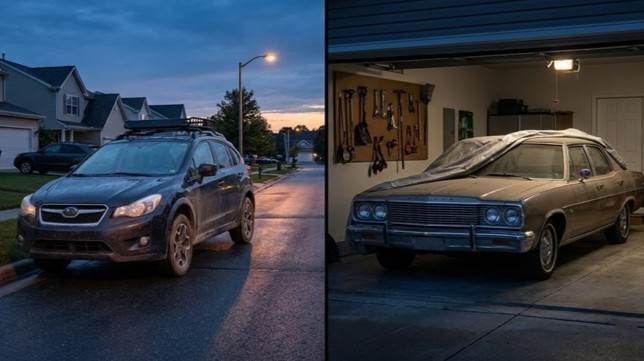
Legitimate answers are common. Work-from-home. A second car for commuting. Seasonal use. An older owner. A snowbird vehicle. A truck that only towed on weekends.
Those are not automatic red flags. Long storage, outdoor sitting, unrepaired accident, missing oil changes, or a jumpy odometer history are. Extremely low miles should create questions, not a faster handshake.
4. Check the vehicle history report
The FTC recommends a history report before you buy used. Depending on the source and the records behind it, you may see owners, accidents, title brands, some service events, and mileage snapshots.
Watch the mileage line like a bank statement.
This is sane:
- 2022: 12,000
- 2023: 19,000
- 2024: 27,000
- 2025: 34,000
This is not:
- 2022: 48,000
- 2023: 63,000
- 2024: 31,000
A drop needs an explanation and documents, not a shrug. NHTSA describes odometer fraud as illegally altering a reading to make a vehicle look lower-mileage than it is. Unusually low numbers are not automatically bargains. They are invitations to verify.
A report is not a mechanical inspection. It will not catch a worn transmission. Use it anyway.
5. Don’t confuse low mileage with low wear
A car can suffer without traveling far. Short trips, cold starts, stop-and-go, rough pavement, and hours of idling beat up oil, batteries, exhaust, and interiors. Steady highway miles can look worse on paper and easier on some parts. Consumer Reports has made this point for years: a higher-mileage highway commute can mean less wear than a lower-mileage city beater.
Highway use is not always better. How it was driven still matters. Ask whether the car was a three-mile school loop or a 40-mile interstate run. The odometer will not volunteer that.
6. Check the maintenance records
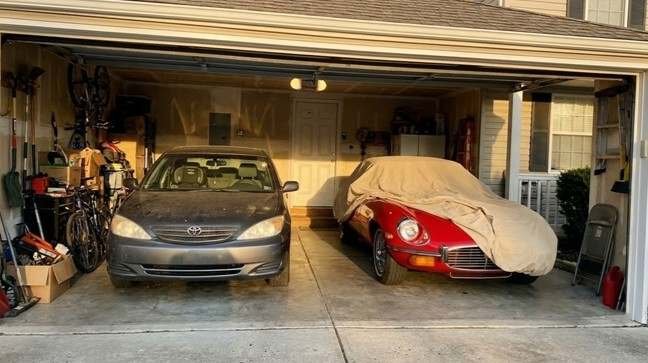
Low miles do not cancel oil. This is especially true of older garage queens.
A 2017 sedan with 38,000 miles looks perfect until you learn the owner skipped services “because we hardly drove it.” Now you may have old oil, old coolant, a tired battery, and brakes that glazed from sitting.
Look for:
- Oil changes
- Brakes and tires
- Battery
- Coolant
- Transmission service if the maker calls for it
- Filters
- Inspections
- Major repairs
- Recall work
Records do not have to be a leather binder. The more complete they are, the less you are guessing. No records is not proof of abuse. It is proof you are buying a mystery at a low-mileage price.
7. Pay attention to age-related problems
Time still happens when the car does not move. Rubber, fluids, seals, batteries, tires, and bushings age in the driveway.
A 10-year-old car with 40,000 miles can be a worse bet than a 5-year-old car with 80,000 if the older one sat. Ask what was replaced because of age, not miles:
- Tires (date codes, not just tread)
- Battery
- Belts and hoses
- Wipers
- Seals
- Fluids
- Suspension bushings
Follow the manufacturer’s schedule for that exact powertrain. A “lifetime fill” story from a seller is not a maintenance log.
8. Inspect the tires carefully
Tires talk. Check brand, size, tread, uneven wear, sidewall cracks, date codes, whether they match, and alignment clues. A low-mileage car on bald or cupping tires is telling you something about alignment, storage, or neglect. Fresh tires prove only that someone bought tires.
Old tires with deep tread are still old tires. Dry rot does not care about the odometer.

9. Inspect the interior for mileage clues
The cabin is a second odometer. Look at the driver’s seat bolster, steering wheel, pedals, shifter, door pulls, armrests, mats, switches, and seat controls. Advertised 25,000 miles with a collapsed driver’s seat and polished wheel is not proof of fraud by itself. It is a question: does this wear match the story?
One scuff means nothing. A cluster of clues means you slow down.
10. Get an independent pre-purchase inspection
Do not skip this because the miles are low. Especially do not skip it because the miles are low. The FTC says a history report will not reveal every mechanical problem and recommends an independent mechanic. Consumer Reports says the same. A dealer “we inspected it” is not the same as a shop that works for you.
A good inspection can catch engine, transmission, suspension, brake, steering, leak, cooling, electrical, tire, underbody, and accident-repair issues. The fee feels irritating next to a $20,000 decision. That is the point. It is cheap compared with a rebuilt title you were too excited to see. If the seller refuses an independent inspection, you already have your answer.
11. Check for open safety recalls
Mileage does not determine recalls. The VIN does.
NHTSA’s VIN lookup shows unrepaired safety recalls. The FTC also tells used-car buyers to check. A 20,000-mile car can have an open airbag recall. A 120,000-mile car can be clean. Run the VIN before you fall in love with the dash.

12. Compare the price against similar cars
Low miles cost extra. Sometimes they should. Sometimes the premium is a tax on your impatience.
Three comparable listings:
- $22,500 and 62,000 miles
- $24,000 and 48,000 miles
- $28,500 and 25,000 miles
The last one is pretty. Is $4,500 extra justified after equipment, tires, records, accidents, and options? Maybe. Maybe it is an under-equipped car with a romantic odometer.
You are buying the relationship between price, miles, condition, history, equipment, and what it will cost to keep. Not a trophy number.
13. Don’t forget the out-the-door price
Advertised price is a headline. The FTC wants buyers to ask for written out-the-door pricing so fees are visible and offers are comparable. Your real number can include price, dealer fees, tax, registration, documentation, extras, and finance products. A low-mileage car with $3,000 of nitrogen, etch, and “protection” is not a low-mileage deal. It is a padded invoice. Get the OTD in writing. Compare that, not the windshield number.
14. Understand the used-car Buyer’s Guide
Dealers must display the FTC Buyer’s Guide. It says whether the car is as is or under warranty, and it is not decoration. Read it. If a salesperson promises something that matters — remaining warranty, a repair before delivery, a return — get it in writing. The FTC’s line on oral promises is the one people learn too late: they are hard to enforce. Private-party sales are even more “as is.” Price accordingly.
15. Consider certified pre-owned cars
CPO is a middle path: later-model used, inspected to a program standard, with some warranty. Consumer Reports describes CPO vehicles that way. Programs differ by brand: age and mile caps, inspection checklists, deductibles, and what is actually covered.
CPO is not a substitute for your own VIN check, test drive, and skepticism. Compare CPO price against a non-CPO twin, remaining factory warranty, deductible, and what the inspection actually included. If the CPO premium buys you a warranty you will use and a tighter history, it can be rational. If it is a sticker on a car you could buy cheaper with your own inspection, do the math.
16. Look beyond the odometer when choosing a model
Do not hunt low miles first and invent a need for whatever you find. Pick vehicles that fit the job: reliability, safety, fuel, insurance, repairs, parts, resale, cargo, towing, tech, comfort, and your roads. Consumer Reports’ useful order is research reliability, then shop.
A cheap-to-run Honda with 55,000 documented miles will often beat a 28,000-mile luxury orphan with $400 oil changes and $1,800 tires. Low mileage on the wrong car is still the wrong car.
17. Be careful with extremely low-mileage used cars
A 10-year-old car with 18,000 miles. A five-year-old SUV with 12,000. A sports car that has barely been started. These can be real. They should produce more questions.
Who owned it? How was it stored? Was it started and driven, or did it sit? Are there records? Does the history support the miles? Does the wear match? Accidents? Are the tires and battery as old as the car?
The FTC’s history-report-plus-inspection advice and NHTSA’s odometer-fraud warnings exist for listings that look too gentle to be true. Believe them after the paperwork and the mechanic agree.
18. Know the red flags before you visit
Do not drive two hours for a listing that already failed the homework.
Walk-away material:
- Seller blocks an independent inspection
- Mileage in reports goes backward or jumps without documents
- Zero maintenance history on a car priced like a collector piece
- Price far below comps with no explanation
- Pressure to pay today
- No VIN
- Condition that fights the advertised miles from multiple angles
One missing oil sticker is not a red flag. A pattern is.
19. Take a proper test drive
Five minutes around the block is a demonstration, not a test. Where you can, drive it cold, in town, and at speed. Listen and feel for:
- Cold start
- Engine noise
- Shift quality
- Steering
- Brakes
- Clunks and rattles
- Warning lights
- Pull or vibration
- HVAC
- Infotainment, cameras, driver aids
The useful question is not “Does it feel nice?” It is “Does anything feel off?” Some problems hide when the car is warm. If they will only let you drive it after a 20-minute warmup, that is information.
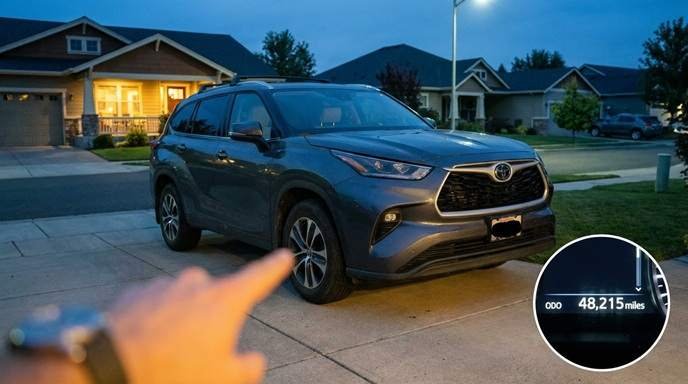
20. Calculate total cost of ownership
A low-mileage luxury SUV at $24,000 can lose to a $27,000 mainstream SUV once insurance, premium fuel, tires, brakes, and independent-shop rates show up. The FTC tells used-car buyers to budget registration, insurance, fuel, and maintenance, not just the purchase.
Add:
Price + tax/fees + insurance + fuel + maintenance + likely repairs + interest
The best low-mileage car is the one whose total cost fits the next five years. Not the one that won the odometer contest.
How Many Miles Is Too Low for a Used Car?
There is no universal “too low.” Ask whether the miles make sense for age and history.
20,000 miles on a three-year-old daily driver is light enough to investigate. 20,000 on a year-old lease return is ordinary. 40,000 on a 10-year-old car is low-mileage and storage/maintenance territory.
The number is not the problem. A number with no story is.
Is Low Mileage More Important Than Vehicle Age?
Not by default. A newer car with more miles can beat an older low-mile car because of safety tech, remaining warranty, less rotten rubber, and a newer powertrain. An older low-mile car can win if it was maintained, stored well, and priced for its age.
Compare year + miles + condition + history + price. Any one of those, used alone, is how people buy the wrong car with great confidence.
The Best Strategy for Buying Used Cars With Low Mileage
- Set a true maximum budget, including tax and fees.
- Pick several models that fit the job and are cheap enough to own.
- Set a mileage range, not a fantasy minimum.
- Compare asking prices against similar cars.
- Get the VIN before you commit.
- Run history. Watch the mileage line.
- Check NHTSA recalls.
- Read service records.
- Inspect body, interior, tires, fluids, electronics, underside.
- Pay an independent mechanic.
- Test-drive like you mean it.
- Get out-the-door money in writing.
- Negotiate from comps and documented issues, not vibes.
- Read the contract. It should match the deal you agreed to.
Searching for used cars with low mileage is a sound strategy if you want remaining life. It is a poor strategy if the odometer is allowed to outrank maintenance, history, condition, reliability, price, and ownership cost. A 30,000-mile car with a murky past is not automatically better than a 60,000-mile car with receipts. A 90,000-mile highway car with a clean file and a price that admits the miles can be the adult buy.
Check the mileage timeline. Read the history. Read the records. Look at tires and seat wear. Check recalls. Drive it. Inspect it. Then price the whole ownership story. Do not rush because someone else is “on the way.” There is always another used car. The goal is not the fewest miles in town. The goal is a low-mileage car whose story, condition, and price still make sense after you look under the number.
Related Post