
The Mazda6 never dominated American sales charts, but it earned something rarer: loyalty. While many midsize sedans felt like appliances, the last Mazda6 drove with more precision, looked more expensive than its price, and made a strong case that a family sedan did not have to be boring. Then Mazda pulled it from the U.S. after the 2021 model year, and the nameplate faded just as crossovers took over showrooms.
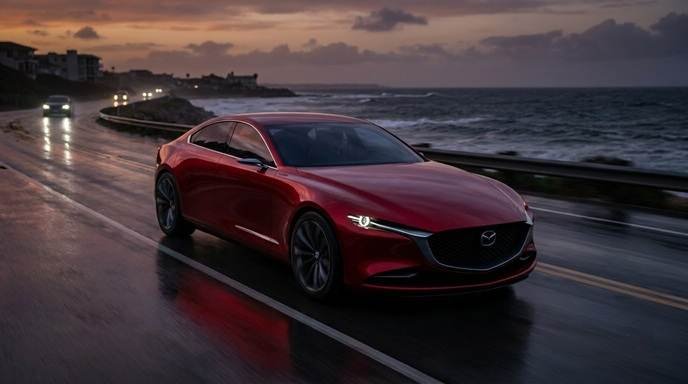
That absence is why the 2027 Mazda 6 keeps coming up in search results. Shoppers still want to know whether Mazda could revive the sedan with a more premium design, hybrid power, all-wheel drive, or the kind of cabin that now shows up in the CX-90. Mazda has not officially confirmed a 2027 Mazda 6 for the United States. The bigger question is not simply whether the Mazda6 could return. It is what kind of sedan Mazda would build if it did.
What’s New for the Next Generation?
A next-generation Mazda6 would not be a simple refresh of the car Americans last saw in 2021. Mazda’s brand has moved upmarket. The CX-70 and CX-90 already chase a more premium buyer with richer materials, stronger standard safety tech, and powertrains that would have seemed ambitious in the old Mazda6 era.
The U.S. sedan market has changed just as much. Volume still exists, but the cars that remain successful tend to offer hybrids, quiet cabins, and enough technology to keep pace with crossovers. Toyota made that shift explicit with a hybrid-focused Camry. Honda and Hyundai have followed with electrified options of their own. A new Mazda 6 that arrived with only a conventional gasoline engine would be fighting yesterday’s battle.
Here is where things get interesting. Mazda now has more than one way to build a sedan. It could create a practical midsize car aimed at Camry and Accord shoppers, or it could use its newer large-vehicle architecture to make a rear-drive-based, more expensive sedan with a stronger performance identity. Those are very different products. Mazda has not said which path, if either, it intends to take.
What can be said with more confidence is the expectation set. Buyers would want a quieter interior, better infotainment, stronger driver-assistance systems, and some form of electrification. Mazda’s recent vehicles already point in that direction. That is informed expectation, not a confirmed 2027 Mazda 6 spec sheet.
When Could It Arrive in the U.S.?
Mazda has not officially announced a 2027 Mazda 6, and it has not published a U.S. on-sale date. That is the most important fact in this section. A model-year rumor is not a launch announcement.
Automotive timing talk often starts with a calendar year because that is how shoppers search. “2027 Mazda 6 release date” is a natural query. It is also easy to over-interpret. Even when a company is developing a vehicle, production timing can slip because of supplier issues, emissions rules, factory capacity, or a simple change in product strategy. Mazda has spent the past several years filling out its crossover lineup. That work has a way of pushing sedans down the priority list.
If Mazda were to revive the nameplate for America, a U.S. introduction would likely follow a global reveal by months, not days. Dealers would need inventory, training, and pricing. None of that exists publicly for a 2027 Mazda 6. Until Mazda confirms a program, any specific month or dealer-arrival window is guesswork. The release timing remains unconfirmed.
How Much Could It Cost?
Mazda has not officially confirmed a 2027 Mazda 6 price, and no MSRP should be treated as fact. The last U.S. Mazda6 occupied a relatively accessible midsize-sedan range, with well-equipped versions climbing into the mid-$30,000s in its final years. Mazda’s current lineup tells a different story. The Mazda3 still starts in compact-car territory, while the CX-90 opens much higher and can move quickly into luxury-adjacent pricing once buyers add powertrain and trim.
That gap matters. If Mazda built a conventional midsize sedan to fight the Camry and Accord, a starting price in the high $20,000s to low $30,000s would be the competitive neighborhood. If it built a more premium sedan using its large-vehicle thinking, the number would almost certainly rise. Hybrid and plug-in hybrid hardware would push it higher still. All-wheel drive, if offered, would add another premium.
What could make a new Mazda 6 significantly more expensive than its predecessor is not chrome or a bigger screen. It is architecture, powertrain, and positioning. A smoother six-cylinder, a PHEV battery pack, extra sound insulation, and richer interior materials all cost money. Mazda has been willing to charge more when it believes the product feels more expensive. Any 2027 Mazda 6 price discussion should stay in that context: estimates only, and highly dependent on what Mazda actually decides to build.
Will the 2027 Mazda 6 Be Available in the U.S.?
This is the question that matters most for American shoppers. Availability in another country is not U.S. availability. Mazda stopped selling the Mazda6 in the United States after 2021 because sedan demand was falling and crossover demand was not. That business reality has not reversed, even if a loyal group of drivers still wants a Mazda sedan with adult-size rear seats.
Mazda’s U.S. sedan strategy is now thin. The Mazda3 sedan remains, but it is a compact car. The company has put its American energy into crossovers: CX-30, CX-50, CX-70, CX-90, and the ever-important CX-5. Against Toyota, Honda, and Hyundai, that is a rational move. Those rivals still sell plenty of sedans, but they also have the volume, hybrid experience, and dealer traffic to support them.
Could the Mazda6 name have a realistic chance to return? Only if Mazda sees a gap it can own. The old Mazda6 was often the driver’s choice in the segment, yet it lacked a hybrid and all-wheel drive when many U.S. buyers wanted both. A comeback would need a clearer answer to those objections. It would also need to be profitable in a market where many households now default to a crossover without a second thought.
There is an important distinction buyers need to understand. Interest in a Mazda6 comeback is real. A confirmed U.S. allocation is not. Until Mazda says the car is coming to American dealers, the 2027 Mazda 6 USA story remains unresolved.
2027 Mazda 6 Redesign
If Mazda did redesign the Mazda6, the visual brief would be obvious: make it look more expensive without turning it into a costume. Mazda’s Kodo design language already does that well. Recent Mazdas have wide stances, simple body surfaces, and lighting that looks considered rather than busy.
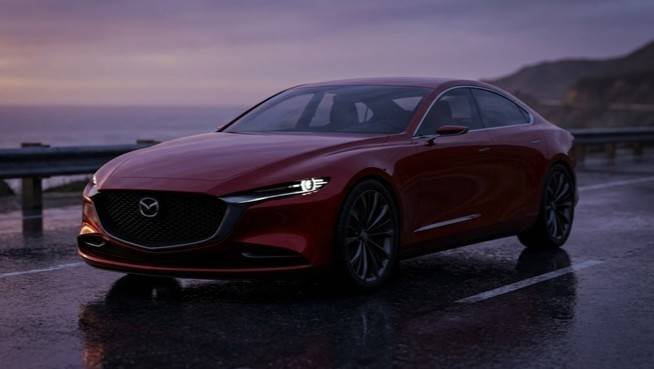
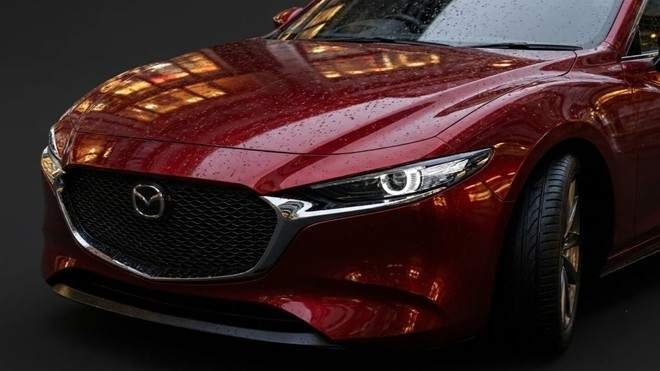
A next Mazda6 would likely keep a long, athletic profile. The front end would probably use a more sculpted grille and slimmer headlights, in line with Mazda’s newer crossovers. The roofline could stay coupe-like, because that silhouette helped the last car look special. At the rear, a clean lamp signature and a short deck lid would fit the brand better than oversized chrome or giant exhaust finishers.
Wheel design would do a lot of the premium work. Larger, simpler wheels tend to make a sedan look costlier than extra creases in the sheet metal. Aerodynamics would matter more than they did a decade ago, especially if Mazda wants better highway efficiency from a hybrid or a taller, quieter cabin.
Mazda has not released official 2027 Mazda 6 exterior dimensions or design images. Any talk of exact length, width, or wheelbase would be invention. The more useful point is design intent. Mazda knows how to make a sedan look like a smaller luxury car. That remains one of the strongest arguments for a Mazda6 return.
2027 Mazda 6 Hybrid: Will Mazda Bring Back a Hybrid Sedan?
A hybrid is the feature most likely to decide whether a revived Mazda6 could survive in America. The last U.S. Mazda6 never offered one. That became a problem as fuel prices moved around and as rivals improved their EPA numbers without asking drivers to give up much comfort.
Mazda has not officially confirmed a 2027 Mazda 6 hybrid. Still, the logic is hard to ignore. Mazda’s broader electrification strategy is not “battery-electric or nothing.” The company has talked about a mix of efficient gasoline engines, hybrids, plug-in hybrids, and EVs. In the U.S., that mix already shows up in Mazda’s larger crossovers.
A hybrid Mazda6 would make the most sense if it delivered smoother low-speed running, stronger real-world fuel economy, and enough power to pass on the highway without drama. That is exactly how the Toyota Camry Hybrid won over a huge share of midsize buyers. Mazda would not need to copy Toyota’s character. It would need to close the efficiency gap while keeping the steering feel and body control that made people like the Mazda6 in the first place.
Possible hybrid approaches could range from a conventional hybrid setup to a more Mazda-specific system based on technology the company already uses elsewhere. Until Mazda confirms hardware, those are possibilities, not product details. The search intent around a 2027 Mazda 6 hybrid is valid. The confirmation is not.
2027 Mazda 6 PHEV: Could Plug-In Hybrid Technology Return?
A plug-in hybrid is a different proposition. Mazda already sells PHEV power in its larger vehicles, so the idea of a 2027 Mazda 6 PHEV is not wild. It is also not confirmed.
The appeal is easy to explain. A PHEV can cover short commutes on electricity, then run as a hybrid on longer trips. That is attractive to drivers who have a garage and a 240-volt charger but are not ready for a fully electric car. The trade-offs are just as clear: extra weight, extra cost, and a charging routine that only pays off if the owner actually plugs in.
For a midsize sedan, a PHEV could help Mazda look current against electrified rivals. It could also push the car out of the value conversation and into a more expensive one. Shoppers who never charge at home would be better served by a regular hybrid. Shoppers with predictable mileage and home charging might like the PHEV idea a lot.
Mazda has not confirmed electric range, battery size, or even the existence of a Mazda6 plug-in. Treat every specific PHEV number you see online with skepticism unless it comes from Mazda.
2027 Mazda 6 Engine Options
Powertrain is where speculation gets sloppy, so it helps to stay with what would make sense rather than invent horsepower figures. Mazda has not officially confirmed a 2027 Mazda 6 engine.
A U.S. midsize sedan generally needs at least two things: adequate passing power and a path to competitive fuel economy. A modern turbocharged four-cylinder could still do the first job. A hybrid system would do the second. A plug-in hybrid would add electric commuting. Mazda’s larger vehicles also use a turbocharged inline-six and a separate PHEV setup, which raises the possibility of a more premium powertrain if the sedan is not meant to be a Camry fighter.
The trade-off is simple. More cylinders and more electric hardware can make a car feel special. They also raise price, weight, and complexity. For a volume sedan, a smooth four-cylinder hybrid is the commercially safe answer. For a halo sedan, Mazda’s more ambitious engines are the emotionally interesting answer.
Mazda has not confirmed displacement, output, transmission type, or drivetrain pairings for a 2027 Mazda 6. Anyone publishing those numbers as fact is ahead of the company.
2027 Mazda 6 Inline-Six Engine
Mazda’s turbocharged inline-six is one of the most distinctive engines in the brand’s current lineup. It is smooth, has a grown-up sound, and supports the idea that Mazda wants to be taken seriously next to European and near-luxury brands. Putting that engine in a future Mazda6 is a fascinating rumor. It is still speculation.
An inline-six would help the sedan’s premium positioning immediately. The layout fits a longitudinal, rear-drive-based architecture better than a traditional transverse midsize sedan. That could give Mazda a driving character the Camry and Accord cannot easily match: better balance, a more traditional performance-sedan feel, and all-wheel drive as a natural partner rather than a bolted-on extra.
The obstacles are cost, fuel economy, and market size. An inline-six Mazda6 would almost certainly be more expensive than the old car. It might also need hybrid assistance to keep efficiency acceptable. And the audience for a premium midsize sedan is smaller than the audience for a practical family four-door.
If Mazda wants a true Mazda6 comeback as a driver’s sedan, the inline-six is the romantic choice. If it wants volume, it may be the wrong one. Mazda has not confirmed either outcome.
2027 Mazda 6 AWD
All-wheel drive is one of the features American buyers missed most on the previous Mazda6. Snow-belt shoppers, mountain commuters, and plenty of rain-belt drivers simply moved to crossovers. A 2027 Mazda 6 AWD option would not magically beat a CX-50 in a blizzard, but it would remove a common objection.
AWD can help with snow, heavy rain, and highway stability in poor weather. It can also give buyers confidence, which is often the real product. The downside is weight, cost, and some fuel-economy penalty. That is why many sedans still offer it only on higher trims, if they offer it at all.
Would AWD be standard? There is no reliable evidence that it would. On a conventional FWD sedan, optional AWD is the usual pattern. On a rear-drive-based premium sedan, AWD could be more central to the design. Until Mazda confirms the architecture, the drivetrain layout is unknown.
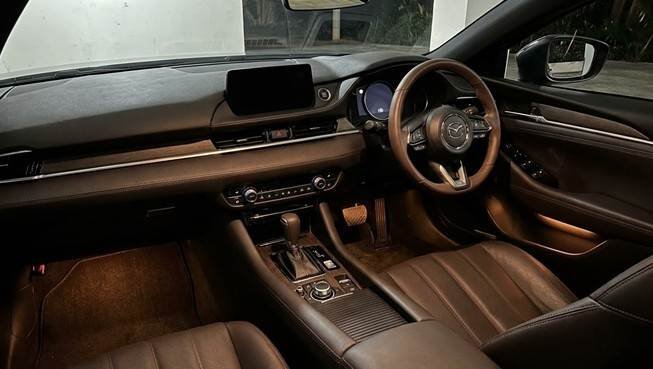
2027 Mazda 6 Interior: Technology, Comfort and Premium Features
Mazda interiors have been a quiet advantage for years. Even when the previous Mazda6 was aging, it still felt more carefully assembled than some higher-volume rivals. A new Mazda 6 would be judged against a much higher standard.
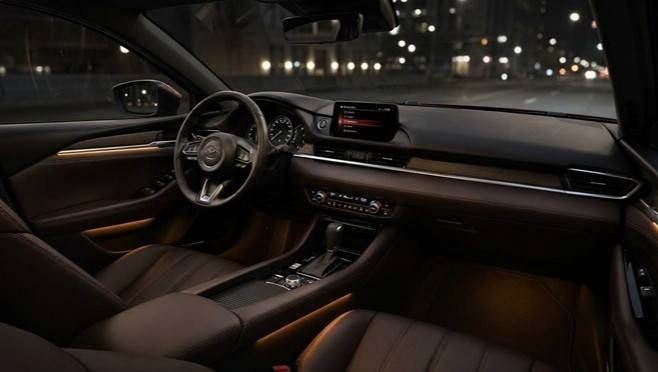
American buyers would expect supportive front seats, adult-friendly rear-seat space, and materials that do not shout “rental fleet.” Mazda’s current design philosophy favors physical controls for climate functions, a driver-oriented dashboard, and a calmer look than the screen-heavy cabins at some competitors. That approach still works, but the displays themselves need to feel current. Wireless smartphone connectivity, a clear digital instrument cluster, and a premium audio option are now table stakes in this class.
Cabin quietness may matter even more. Hybrids expose road and wind noise because the engine is not always covering it up. If Mazda wants the sedan to feel expensive, it will have to spend money where shoppers cannot see it: extra insulation, better glass, and cleaner airflow around the mirrors.
Mazda has not confirmed screen sizes, upholstery choices, or cargo capacity for a 2027 Mazda 6 interior. The safe forecast is not a feature list. It is a standard: the cabin would need to feel at least as special as Mazda’s better crossovers, or the sedan would have no reason to exist.
2027 Mazda 6 Infotainment and Safety Technology
Mazda’s recent infotainment direction has been conservative by design. The company has tried to keep the driver’s eyes on the road, with a commander control and a screen that does not demand constant tapping. That philosophy can age well if the software is fast and the smartphone integration is painless. It can frustrate buyers if the interface feels dated next to a Camry or Sonata.
For a future Mazda sedan, shoppers should watch for wireless Apple CarPlay and Android Auto, available navigation, a fully digital gauge display, and connected services that do more than send unused alerts to a phone. None of those features should be assumed as standard on every trim.
Safety tech is clearer because Mazda already fields a strong set of driver-assistance systems across its U.S. lineup. Adaptive cruise control, lane-keeping assistance, blind-spot monitoring, and automatic emergency braking are now expected. More advanced highway-assist features could appear on higher trims, as they do elsewhere in the Mazda catalog. Confirmed on current Mazdas is not the same thing as confirmed on an unannounced 2027 Mazda 6. The competitive requirement, though, is obvious. A new sedan without modern safety tech would not be taken seriously.
Could It Become Mazda’s Premium Sedan?
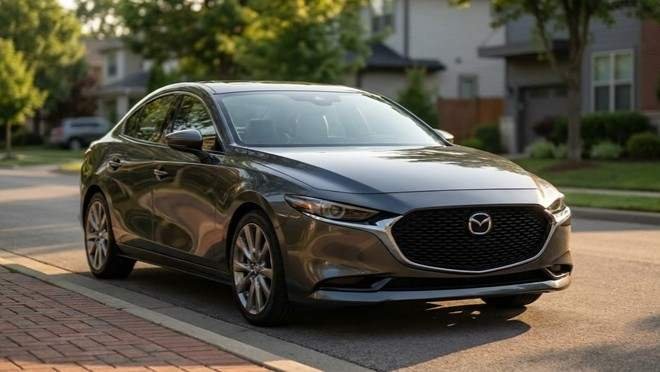
Mazda does not need to out-gadget the Toyota Camry or out-practical the Honda Accord. Its best chance is to look and feel like the most elegant car in the parking lot. Proportions would do most of that work: a longer hood if the architecture allows it, a tucked cabin, and a stance that sits down on its wheels.
Kodo design is at its best when it stays simple. A premium Mazda sedan should look expensive in gray, in sunlight, with no extra trim. That is a different job from looking aggressive in photos. Driving-focused design can still be aerodynamic. In fact, it has to be. A slippery body helps fuel economy, high-speed quietness, and range if any electric driving is involved.
Mazda could differentiate a new Mazda 6 by refusing the usual midsize-sedan visual tricks. Less chrome. Fewer fake vents. More paint quality and lighting detail. That is how the brand has made crossovers look costlier than their window stickers. The same trick could work on a sedan. Official 2027 Mazda 6 exterior specifications have not been released.
2027 Mazda 6 Fuel Economy
Official EPA ratings for a 2027 Mazda 6 have not been released, because Mazda has not confirmed the vehicle. Any specific MPG number circulating online should be ignored unless it comes from the EPA or Mazda.
The factors that would shape fuel economy are still worth understanding. Engine choice matters most. A hybrid would likely transform the conversation; a conventional gasoline engine would not. Vehicle weight, aerodynamics, transmission calibration, all-wheel drive, and even wheel size would then decide whether the car merely looks efficient on paper or actually saves money on a commute.
This is one reason the old Mazda6 ran out of room in America. It drove well, but it did not have a hybrid answer when the segment moved. If Mazda brings the nameplate back, fuel economy will not be a footnote. It will be part of the business case.
2027 Mazda 6 vs Toyota Camry
The Camry is the first car a revived Mazda6 would have to justify itself against. Toyota’s latest formula is clear: hybrid power as the mainstream choice, a comfort-first ride, broad dealer support, and resale value that makes the monthly-math easier. Mazda cannot beat Toyota at being Toyota.
Where a new Mazda 6 could compete is driving character and interior atmosphere. Mazda still tends to tune steering and body control for people who notice those things. The Camry is easier to live with for many families, especially on fuel economy and all-around practicality. AWD availability, hybrid maturity, and expected pricing would all favor the Toyota if Mazda launched a sedan without a fully thought-out electrified lineup.
The target buyers are different. Camry shoppers often want low drama. Mazda6 shoppers, at least historically, wanted a little more involvement. That difference only matters if the Mazda is actually for sale.
2027 Mazda 6 vs Honda Accord
The Accord remains the most complete “normal sedan” in the class for a lot of drivers. It is roomy, efficient in hybrid form, and comfortable on a long highway trip. Honda’s interior design has become more polarizing, but the packaging is hard to criticize.
A revived Mazda6 would probably concede some rear-seat space and trunk practicality if it chased a sleeker shape. It could win on steering feel, seating position, and a more boutique cabin. Pricing would be the trap. If Mazda positioned the car too close to near-luxury money, the Accord’s value would look even better.
The honest comparison is not brochure versus brochure. It is whether Mazda can give Accord shoppers a reason to wait, tour a quieter showroom, and give up some convenience for a more special car. Without official specs, that remains a character comparison, not a scorecard.
2027 Mazda 6 vs Hyundai Sonata
Hyundai has already proved that a midsize sedan can look striking and offer a lot of technology for the money. The Sonata’s advantage is usually value: features, warranty perception, and in some versions a more extroverted design. Mazda’s potential advantage is taste and driving manners.
If Mazda got the redesign right, it could look more expensive than the Sonata without trying as hard. If it got electrification right, it could neutralize one of Hyundai’s practical strengths. Comfort and tech would be closer than styling partisans admit. Hyundai often packs in more gadgets. Mazda often makes the gadgets less annoying to live with.
This comparison should stay balanced. The Sonata is a real car you can buy today. The 2027 Mazda 6 is not.
Is the 2027 Mazda 6 Worth Waiting For?
If you love Mazdas and specifically want a midsize sedan, waiting for official news is reasonable. You are not imagining the gap. The last Mazda6 left a hole, and no current Mazda3 sedan fully replaces it. Waiting also makes sense if driving dynamics matter more to you than being first in line, and if you can live with your current car a while longer.
Look elsewhere if you need a vehicle this year. Look elsewhere if you require a hybrid, a certain amount of rear-seat room, or guaranteed AWD. Look elsewhere if your household needs a crossover’s ride height and cargo flexibility. The Camry, Accord, Sonata, and Mazda’s own CX-50 or CX-5 are real answers to real needs.
The practical advice is unglamorous. Do not pause a necessary purchase for an unannounced car. Do watch Mazda’s official channels if a sedan is the only shape you want. A Mazda6 comeback would be worth a close look. It is not worth freezing your garage for.
What We Know vs. What Is Still Unknown
| Feature | Current Status | What Buyers Should Know |
|---|---|---|
| U.S. availability | Unknown | Mazda has not confirmed a U.S. return for the Mazda6. |
| Release date | Unknown | No official 2027 Mazda 6 release date has been announced. |
| Price | Unknown | Any MSRP online is an estimate or rumor, not a Mazda figure. |
| Hybrid | Rumored / Unknown | A hybrid would make competitive sense; Mazda has not confirmed one. |
| PHEV | Rumored / Unknown | Mazda builds PHEVs elsewhere, but not a confirmed Mazda6 PHEV. |
| Engine | Unknown | Mazda has not officially confirmed this specification yet. |
| Inline-six | Speculation | Attractive for a premium sedan; not confirmed for a Mazda6. |
| AWD | Unknown | U.S. buyers would want the option; availability is unconfirmed. |
| Interior | Unknown | Expect a more premium cabin if the car is green-lit, not a spec list. |
| Fuel economy | Unknown | Official EPA ratings have not been released. |
Frequently Asked Questions
Q.1. Will there be a 2027 Mazda 6?
Mazda has not officially confirmed a 2027 Mazda 6. Interest is high, but the vehicle is not an announced U.S. product.
Q.2. Is Mazda bringing back the Mazda6?
Not officially. The Mazda6 left the U.S. after 2021, and Mazda has not confirmed a comeback.
Q.3. When will the 2027 Mazda 6 be released?
The 2027 Mazda 6 release date remains unconfirmed. There is no official U.S. launch window.
Q.4. How much will the 2027 Mazda 6 cost?
Mazda has not confirmed a 2027 Mazda 6 price. Any starting number you see should be treated as speculation.
Q.5. Will the 2027 Mazda 6 be sold in the USA?
U.S. availability has not been confirmed. Do not confuse possible sales in other markets with an American dealer introduction.
Q.6. Will the 2027 Mazda 6 be a hybrid?
That is unknown. A hybrid would help the car compete, but Mazda has not said it will offer one.
Q.7. Will the 2027 Mazda 6 have AWD?
All-wheel drive is unconfirmed. It would be a useful U.S. option, especially in the Snow Belt.
Q.8. What engine could the 2027 Mazda 6 use?
Mazda has not officially confirmed this specification yet. A four-cylinder, hybrid system, PHEV, or even an inline-six are all discussed as possibilities, not facts.
Q.9. Will there be a 2027 Mazda 6 PHEV?
A PHEV version has not been confirmed. Mazda’s other PHEVs do not automatically mean a Mazda6 plug-in is coming.
Q.10. Is the Mazda6 coming back to America?
There is no official yes. A Mazda6 return remains a possibility in conversations among enthusiasts, not a scheduled U.S. product plan.
The potential 2027 Mazda 6 is interesting because it sits at a fork in Mazda’s American identity. The company now knows how to build richer interiors and more ambitious powertrains. It also knows that U.S. shoppers have spent a decade voting for crossovers. A revived Mazda6 would have to be more than a pretty four-door with a famous name.
The real story is whether Mazda can combine its driving-focused character with the electrification, technology, efficiency, and premium features today’s buyers expect. If the answer is a hybrid or PHEV sedan that still feels like a Mazda, the nameplate could matter again. If the answer is silence, the CX-50 and CX-90 will keep carrying the brand.
Related Post