
A $10,000 budget won’t buy you a brand-new car in 2026, but it still puts you squarely in the territory of a reliable, five-to-ten-year-old Kia with plenty of life left in it. Realistically, that money gets you a compact sedan or hatchback with moderate mileage, or an older SUV with higher miles but more interior space. Kia has built a reputation over the last decade for offering strong value, long warranties, and decent fuel economy — which is exactly why its used models hold appeal for first-time buyers, commuters, and families trying to avoid a car payment. This guide walks through which used Kia models actually make sense under $10,000, what to watch for mechanically, and how to avoid the common mistake of buying “cheap” instead of buying “good value.”
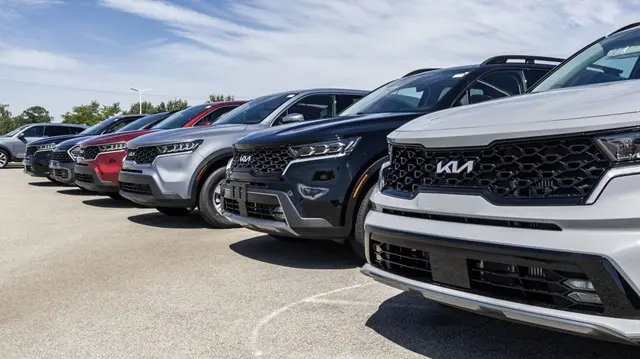
Is Buying a Used Kia Under $10,000 Worth It in 2026?
it depends on the specific car, not the badge. Kia as a brand has improved its reliability standing significantly since the early 2010s, and most Kia models built from roughly 2015 onward are reasonably dependable when properly maintained. At the Used Kia Under 10K price point, you’re generally shopping in the 2014–2019 model-year range, depending on the specific model and your region.
Advantages: Kias in this price bracket tend to have good fuel economy for their class, reasonably modern safety features on later model years, lower insurance premiums than many competitors (with some notable exceptions covered below), and parts that are widely available and not especially expensive compared to European brands.
Disadvantages: Some engine families used in Kia and Hyundai vehicles between roughly 2011 and 2019 were the subject of class-action settlements related to engine failure and fire risk (more on this later). Certain models — particularly the Soul, Forte, Optima, and Sportage from specific years — have also been targeted in a wave of thefts due to a lack of engine immobilizers, which has pushed insurance costs higher in some cities. None of this means every used Kia is a bad buy — it means due diligence matters more than brand loyalty.

7 Best Used Kia Models You Can Find Under $10,000
Pricing below is a general market range based on typical used-car trends. Actual listings vary by region, mileage, trim, accident history, and local demand — always cross-check current listings on sites like Autotrader, CarGurus, or Cars.com before assuming availability.
7 affordable models actually worth considering, and reliability-focused buying tips.
7 Affordable Kia Models Worth Considering
What actually fits in a sub-$10,000 budget in 2026, and what you get for it
Kia Soul (2014–2017)
Probably the single best value pick on this list — boxy, practical interior space, simple mechanicals, and a non-turbo engine lineup that tends to be easier to maintain than Kia’s GDI turbo units.
Kia Forte (2014–2017)
A compact sedan, not technically an SUV, but frequently cross-shopped at this budget for its reliable 2.0L non-turbo engine and cheap parts availability.
Kia Sportage (2011–2014, non-turbo)
Can be found in this budget range, but buyers must be selective — stick to the naturally aspirated 2.4L engine and avoid earlier Theta II turbo variants linked to engine failure recalls.
Kia Rio (2015–2018)
A great “first car” or commuter pick — small, efficient, and one of the cheapest Kias to insure and repair. Limited cargo/passenger space is the main tradeoff.
Kia Optima (2013–2015, non-turbo)
A midsize sedan offering more interior room and highway comfort than the Forte or Rio. Stick to the 2.4L non-turbo engine; the 2.0T has more reported issues at high mileage.
Kia Sorento (2011–2013, V6)
The most “SUV” you can get at this budget with 3-row seating availability on some trims. High mileage is a given here — a thorough pre-purchase inspection is non-negotiable.
Kia Soul EV (2015–2017, select markets)
Harder to find, but if available in your area, offers low running costs and fewer mechanical failure points than gas models. Battery degradation is the key thing to check.
Is the Mileage Too High for a Used Kia Under $10K?
Setting realistic expectations before you start shopping
Problems You Should Check Before Buying
Specific, known issues — not generic warnings
Theta II Engine Failure (2011–2018 Sorento, Sportage, Optima)
Subject to a major recall/class-action settlement over connecting rod bearing failure causing engine seizure. Confirm via VIN lookup that recall work (engine inspection/replacement) was completed.
Kia Anti-Theft Vulnerability (2011–2021 models)
Many older Kias lack engine immobilizers, making them targets for theft via a widely publicized method. Ask if the anti-theft software patch was installed, and factor in potential insurance cost increases.
Excessive Oil Consumption
Common complaint on GDI engines from this era. During a test drive, check the oil level and ask for recent oil change records — frequent top-offs between changes is a warning sign.
Timing Chain Noise
A rattling noise on cold start can indicate timing chain tensioner wear, more common on higher-mileage units. Listen carefully during start-up at the test drive.
Suspension Wear
At 100K+ miles, struts, bushings, and control arms are common wear items. Budget $300–$800 for potential suspension work if not recently replaced.
Infotainment Glitches
Older touchscreen units may freeze or lag. Annoying, but rarely a dealbreaker — usually fixable with a system reset or software update.
Reliability by Model
Based on commonly reported long-term ownership patterns at this age/mileage range
Buying Tips at This Price Point
Run a free NHTSA VIN check
Confirms open recalls, including Theta II engine issues — do this before even scheduling a viewing.
Request maintenance records
A documented oil-change history matters more than mileage alone at this budget tier.
Budget $100–150 for a pre-purchase inspection
Non-negotiable at sub-$10K prices — it can reveal engine, transmission, or suspension issues before you commit.
Avoid turbocharged variants at high mileage
Non-turbo 2.0L/2.4L engines generally tolerate higher mileage with fewer catastrophic failures.
Check insurance quotes first
Theft-prone models may carry higher premiums in some regions — this can offset a “cheap” purchase price.
Inspect for rust (northern/salt-belt regions)
Check wheel wells, frame rails, and exhaust components if the car came from a cold-weather area.
Negotiate based on remaining service life
Factor in likely upcoming costs (timing components, suspension) into your offer price.
A used Kia under $10,000 can absolutely be a smart buy in 2026 — models like the Soul, Forte, and Rio with non-turbo engines tend to be dependable, cheap to maintain daily drivers. The real risk isn’t the mileage itself; it’s buying a Theta II turbo engine year without confirming recall completion, or skipping a pre-purchase inspection. Do the homework upfront, and a budget Kia can deliver years of reliable use well past 150,000 miles.
1. Kia Forte
Model years to look at: 2016–2019
Typical price range: roughly $7,000–$10,000
Typical mileage at this budget: 60,000–95,000 miles
Engine/Transmission: 2.0L four-cylinder, paired with a 6-speed automatic or manual
EPA fuel economy: approximately 25–30 city / 35–39 highway mpg, depending on trim and year
The Forte is arguably the single best value play on this list. It’s a compact sedan with a roomy back seat for its class, straightforward mechanicals, and low running costs. Pros: excellent gas mileage, comfortable ride, cheap parts. Cons: base-trim interiors feel basic, and some early infotainment systems lag behind modern expectations. Watch for: worn engine mounts, minor electrical gremlins in power windows/locks, and tire wear patterns that suggest alignment issues. Best for: commuters and first-time buyers who want the lowest possible running cost.
2. Kia Soul
Model years to look at: 2015–2019
Typical price range: roughly $7,500–$10,000
Typical mileage at this budget: 55,000–90,000 miles
Engine/Transmission: 1.6L or 2.0L four-cylinder with 6-speed automatic
EPA fuel economy: approximately 24–27 city / 30–33 highway mpg
The Soul’s boxy shape isn’t for everyone, but it delivers hatchback-like cargo flexibility in a package that’s easy to park and maneuver. Pros: surprisingly tall interior with good headroom, upright seating that many drivers find comfortable, strong cargo capacity for its footprint. Cons: less composed on the highway than a sedan, and this generation has been a frequent target for theft in certain metro areas (see the insurance section below).
3. Kia Rio
Model years to look at: 2015–2019
Typical price range: roughly $6,000–$9,000
Typical mileage at this budget: 50,000–85,000 miles
Engine/Transmission: 1.6L four-cylinder, 6-speed automatic
EPA fuel economy: approximately 28–29 city / 37 highway mpg
The Rio is the most affordable entry on this list and often the easiest to find comfortably under budget, leaving room for a pre-purchase inspection and a cash cushion for maintenance. Pros: very low purchase price, excellent fuel economy, simple mechanicals. Cons: smaller back seat and trunk than the Forte, fewer available safety-tech options on base trims. Best for: students and single commuters prioritizing the lowest possible total cost.
4. Kia Optima
Model years to look at: 2014–2017 (non-turbo trims recommended for budget-focused buyers)
Typical price range: roughly $7,000–$10,000
Typical mileage at this budget: 70,000–100,000 miles
Engine/Transmission: 2.4L four-cylinder (naturally aspirated) or 2.0L turbo, 6-speed automatic
EPA fuel economy: approximately 23–24 city / 34–35 highway mpg
The Optima is a mid-size sedan, which means more rear legroom and trunk space than the Forte — useful for small families. Pros: roomy cabin, comfortable highway ride, upscale-looking interior for the price. Cons: this is one of the models affected by the Theta II engine issues discussed later — verify engine history carefully. Watch for: oil consumption, engine knocking noises, and confirmation of any prior engine-related recall work. Best for: small families who need more space than a compact sedan offers.
Certain Kia and Hyundai vehicles equipped with Theta II 2.0L/2.4L GDI engines (built roughly 2011–2019, depending on model) were subject to class-action settlements over premature engine wear, stalling, and in rare cases fire risk. This primarily affected certain Optima, Sorento, and Sportage model years with these specific engines — it does not apply to every Kia or every engine. Always check the VIN against Kia’s official recall and warranty extension records before buying an affected model.
5. Kia Sportage
Model years to look at: 2014–2017
Typical price range: roughly $8,000–$10,000
Typical mileage at this budget: 80,000–110,000 miles
Engine/Transmission: 2.4L four-cylinder, 6-speed automatic, FWD or AWD
EPA fuel economy: approximately 21–23 city / 28 highway mpg
The Sportage is the most budget-friendly compact SUV on this list, though you’ll typically find higher mileage than on the sedans above at the same price. Pros: SUV ride height and visibility, available AWD, decent cargo space for road trips. Cons: some model years with the 2.4L GDI engine fall under the same scrutiny mentioned above — request documentation. Watch for: engine oil consumption, AWD system fluid service history, and suspension wear from higher-mileage examples. Best for: buyers who want SUV practicality and don’t mind trading some fuel economy for it.
6. Kia Sorento
Model years to look at: 2013–2015
Typical price range: roughly $8,000–$10,000 (often at the higher mileage end)
Typical mileage at this budget: 100,000–130,000 miles
Engine/Transmission: 2.4L four-cylinder or 3.3L V6, 6-speed automatic
EPA fuel economy: approximately 18–20 city / 25–26 highway mpg (V6 trims lower)
The Sorento offers three-row seating on some trims and a more substantial feel than the Sportage, but at this price point you’re buying into higher mileage. Pros: family-friendly space, optional third row, stronger V6 available. Cons: higher fuel costs, and mileage in the six figures means more wear items are likely due soon. Watch for: transmission shift quality, timing chain noise on higher-mileage V6s, and full maintenance records. Best for: families who need occasional third-row seating and are comfortable buying higher-mileage vehicles with a strong service history.
7. Kia Sedona
Model years to look at: 2015–2017
Typical price range: roughly $8,500–$10,000 (availability under $10K can be limited)
Typical mileage at this budget: 90,000–120,000 miles
Engine/Transmission: 3.3L V6, 6-speed automatic
EPA fuel economy: approximately 18 city / 25 highway mpg
The Sedona is Kia’s minivan, and it’s the most space-efficient option on this list by far — but good examples under $10K can be harder to find since minivans tend to hold value well with families who need them. Pros: maximum passenger and cargo space, comfortable ride, strong V6 power. Cons: lower fuel economy, higher mileage typical at this price, bulkier to park and drive daily. Watch for: sliding door mechanism wear, transmission fluid service history, and brake wear given the vehicle’s weight. Best for: larger families who prioritize interior space above fuel economy or sportiness.
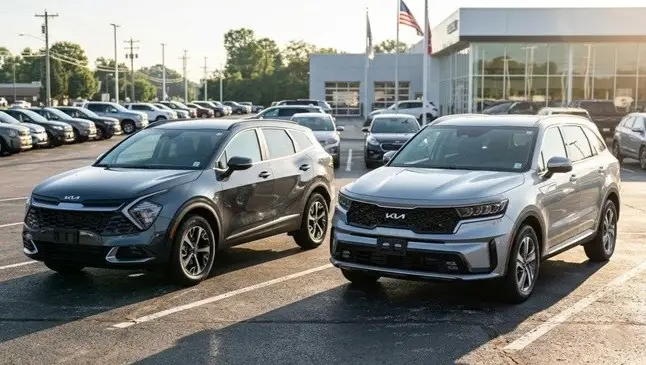
Best Used Kia Under $10,000 Based on Your Needs
Different buyers have different priorities, and the “best” Kia really depends on what you’re using it for day to day.
| Need | Recommended Model | Why |
|---|---|---|
| First-time buyer | Kia Forte | Low cost, simple mechanicals, cheap insurance |
| Daily commuting | Kia Rio or Forte | Best fuel economy on the list |
| Small families | Kia Optima | Mid-size sedan space without SUV running costs |
| City driving | Kia Soul | Compact footprint, easy to park, good visibility |
| Cargo space | Kia Sedona | Minivan-level cargo and passenger room |
| Affordable SUV | Kia Sportage | Lowest-mileage SUV option typically available under $10K |
What Mileage Is Too High for a Used Kia Under $10K?
Mileage matters, but it’s not the only number that matters.
- Below 80,000 miles: Generally still within or close to the original powertrain warranty window for newer purchases of the car when new, and typically has years of reliable service left if maintained properly.
- 80,000–100,000 miles: A very common range for this price point. Timing components, brakes, and suspension bushings may need attention soon — factor that into your offer.
- 100,000–130,000 miles: Still viable if the service records are thorough, but budget for upcoming maintenance like water pumps, belts, and possibly a transmission service.
- Above 130,000 miles: Only worth considering if the price reflects it and the car has documented, consistent maintenance. A high-mileage Kia with full records can genuinely outlast a lower-mileage one with no history.
This is where buyers often get it backwards: a 95,000-mile Forte with full dealer service records can be a far safer purchase than a 60,000-mile Optima with no paperwork and an unclear ownership history. Mileage tells you how much the car has been driven — it doesn’t tell you how well it’s been cared for.
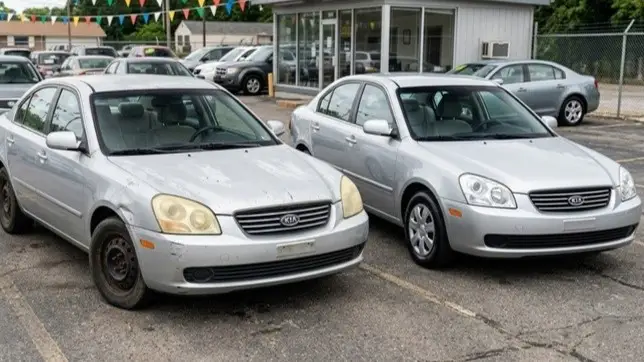
Used Kia Problems You Should Check Before Buying
No used car in this price range is problem-free. Here’s what actually matters for Kia specifically:
- Engine knocking: A rod-knock type sound, especially on Theta II-equipped Optima, Sorento, and Sportage models, should be a walk-away red flag unless the engine has documented replacement under the settlement program.
- Excessive oil consumption: Ask sellers directly whether the car has needed oil top-ups between changes — this was a known symptom on certain affected engines.
- Transmission problems: Hesitation, harsh shifting, or slipping should prompt a transmission fluid and filter service check.
- Cooling-system issues: Check for coolant leaks, especially around the water pump and radiator hoses on higher-mileage examples.
- Electrical problems: Power window switches, infotainment glitches, and battery drain issues are common minor annoyances on older trims.
- Brake and suspension wear: Standard wear items — budget for these regardless of mileage.
- Theft-related concerns: Certain Kia models built without engine immobilizers (roughly 2011–2021, depending on model and trim) have been disproportionately targeted for theft. This has real insurance implications covered below.
- Unresolved safety recalls: Always check the VIN before purchase — this takes two minutes and can save thousands.
Not every Kia model or engine was part of the Theta II settlement, and not every Kia is at elevated theft risk. These issues are specific to certain model years and engine families — don’t let general internet chatter talk you out of a sound, individually verified vehicle.
Are Used Kia Cars Expensive to Insure in 2026?
Insurance costs on a used Kia vary significantly by model, VIN, driver age, location, and insurer — there’s no single “average” number that applies nationwide. That said, a few factors are worth knowing:
- Models like the Soul, Forte, Optima, and Sportage from certain model years without engine immobilizers have seen increased comprehensive insurance premiums in cities with high theft rates, and some insurers have adjusted rates or requirements accordingly.
- Comprehensive coverage (which covers theft) is worth prioritizing on these specific models even if you’d normally consider dropping it on an older car.
- Younger drivers will generally pay more regardless of the vehicle, but compact sedans like the Forte and Rio tend to insure more affordably than SUVs or the Sedona.
Before finalizing any purchase, get an actual insurance quote using the specific VIN — not just the model name. Theft risk and premium adjustments can vary even between trims and model years of the same car.
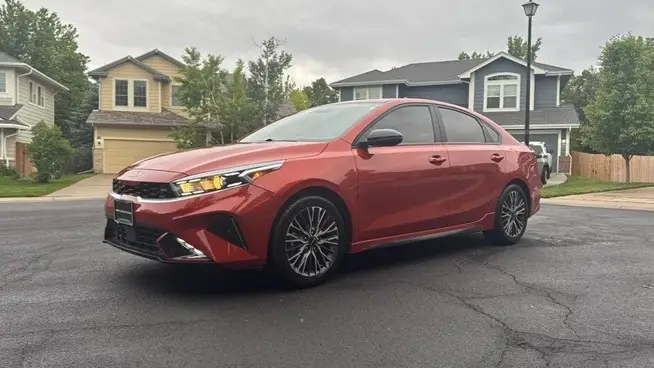
How to Check a Used Kia Before Buying It
- Pull a vehicle history report (Carfax or AutoCheck) for accidents, title issues, and service records.
- Verify a clean title — avoid salvage, rebuilt, or flood titles unless you fully understand the implications.
- Check for open recalls using the official NHTSA recall lookup tool with the VIN.
- Inspect the engine cold — listen for knocking before it warms up, and check oil condition and level.
- Test the transmission through all gears, including reverse, on a test drive long enough to include highway speeds.
- Inspect the brakes for pulsation, grinding, or pulling to one side.
- Check tire condition and look for uneven wear that could indicate alignment or suspension issues.
- Request maintenance records — a seller who has them and shares them freely is a good sign.
- Verify theft protection — ask if an aftermarket immobilizer or steering wheel lock has been installed, particularly on Soul and Forte models.
- Get an independent mechanic inspection before finalizing any purchase — this typically costs $100–$200 and can save you from a costly mistake.
Dealer vs. Private Seller: Where Should You Buy a Used Kia Under $10K?
| Factor | Dealer | Private Seller |
|---|---|---|
| Price | Usually higher, less negotiation room | Often lower, more room to negotiate |
| Warranty | Sometimes offers limited used-car warranty | Typically none — “as-is” |
| Fees | Documentation and prep fees add up | Minimal fees beyond title/registration |
| Vehicle history | Often provided or available | Buyer must request/verify independently |
| Inspection access | Sometimes restricted | Usually more flexible scheduling |
Neither option is automatically better. A dealer may offer peace of mind through a short warranty, while a private sale can save you money if you’re comfortable doing your own due diligence. Either way, insist on an independent inspection before handing over payment.
How Much Should You Actually Spend on a Used Kia?
A $10,000 budget doesn’t mean a $10,000 purchase price. Sales tax, registration, and title fees vary by state, but it’s common to set aside 7–10% of the purchase price for taxes and fees alone. That means a $9,000 vehicle could realistically cost $9,700–$10,000 out the door in many states.
Beyond that, budget for an initial maintenance pass — an oil change, brake inspection, and possibly new tires if they’re worn — which can run anywhere from $200 to $800 depending on what the car needs. A practical approach: aim to spend $8,000–$8,500 on the vehicle itself, leaving $1,500–$2,000 for taxes, fees, and initial maintenance so you’re not caught off guard in the first month of ownership.
Frequently Asked Questions
1. Is Kia a good brand for buying used cars?
Generally yes for model years from the mid-2010s onward, provided you verify engine history and check for recalls on the specific VIN.
2. What is the most reliable used Kia under $10,000?
The Forte and Rio tend to have the simplest, most proven mechanicals in this price range, with fewer reports tied to the Theta II engine concerns.
3. Can I find a used Kia with less than 100,000 miles under $10K?
Yes, particularly with the Forte, Soul, and Rio, though availability depends heavily on your region and current market conditions.
4. Which used Kia SUV is best under $10,000?
The Sportage is typically the most accessible SUV option at this price point, though mileage tends to run higher than on the sedans.
5. Is a used Kia Forte better than a Kia Optima?
The Forte is cheaper to buy, insure, and fuel. The Optima offers more interior space. Choose based on whether you need rear-seat and trunk room more than low running costs.
6. Are older Kia engines reliable?
Many are, but certain Theta II GDI engines from specific model years had documented reliability issues. Verify the engine and VIN before purchasing any affected model.
7. What Kia model years should buyers inspect more carefully?
Optima, Sorento, and Sportage models equipped with Theta II 2.0L/2.4L GDI engines from roughly 2011–2019 warrant extra scrutiny and VIN verification.
8. Are used Kia cars expensive to maintain?
Generally no — parts and labor costs tend to be comparable to or lower than many mainstream competitors, though costs vary by shop and region.
9. Should I buy a used Kia with over 150,000 miles?
Only if the price reflects the mileage and there’s thorough, documented maintenance history. Without records, this mileage carries meaningfully higher risk.
10. What should I check before buying an older Kia?
A vehicle history report, open recall status via NHTSA, an independent mechanic inspection, and verified maintenance records are the non-negotiables.
Is a Used Kia Under $10,000 a Smart Buy?
A used Kia under $10,000 can absolutely be a smart buy in 2026 — but only when you treat the purchase as a vehicle evaluation, not a brand decision. Compact sedans like the Forte and Rio offer the best combination of low cost, good fuel economy, and mechanical simplicity for commuters and first-time buyers. The Optima and Sportage add space for families willing to do extra homework on engine history. The Sorento and Sedona make sense only if you specifically need their passenger or cargo capacity and are comfortable with higher mileage.
The single most important takeaway: a well-maintained, high-mileage Kia with complete service records is a better purchase than a lower-mileage one with an unknown past. Don’t buy the newest model year you can afford — buy the one with the clearest history.
Related Post