
The asking price on a used Honda hybrid listing is the easy number. The hard numbers hide in the battery’s age, the 12-volt battery that makes the whole system throw a tantrum, the difference between a 2011 Civic Hybrid and a 2021 CR-V Hybrid, and whether you drive 15,000 stop-and-go miles or 8,000 highway miles.
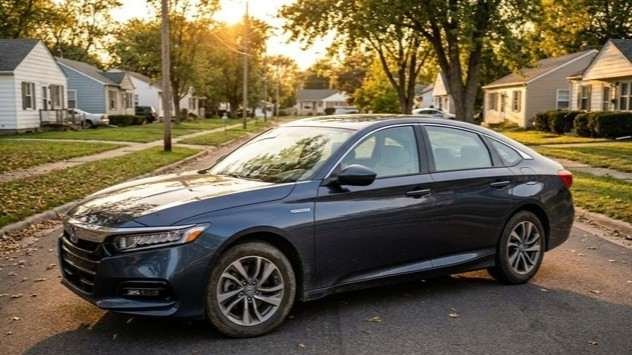
A used Honda hybrid can be a quiet, cheap-to-fuel commuter. It can also be a car whose fuel-economy pitch falls apart in January, or whose “hybrid warning” is a $180 conventional battery — or a pack that is actually tired. This guide is for U.S. shoppers who want to know which models they are actually looking at, what to inspect, and when the hybrid premium is worth paying.
Hybrid systems, EPA ratings, warranty length, and recalls are model-year specific. Confirm the VIN, in-service date, and current Honda/NHTSA information for the exact car.
Which Used Honda Hybrid Models Are You Actually Shopping?
Honda has not sold one hybrid for 25 years. It has sold several systems, with gaps. Do not shop “a Honda hybrid.” Shop a year, a powertrain, and a battery chemistry.
| Model | Typical U.S. years | System type | What used buyers should know |
|---|---|---|---|
| Insight | 2000–2006; 2010–2014; 2019–2022 | IMA, then two-motor | The 2019–2022 car is the one most shoppers mean |
| Civic Hybrid | 2003–2015; 2025–present | IMA, then two-motor | Long gap in between; old IMA packs need extra scrutiny |
| Accord Hybrid | 2005–2007; 2014–2015; 2017–present | IMA, then two-motor | 2017-up is the volume used hybrid sedan |
| CR-V Hybrid | 2020–present | Two-motor | The used Honda hybrid SUV most people will find |
| CR-Z | 2011–2016 | IMA | Small sport hybrid; aging assist batteries |
| Accord Plug-in | 2014 | PHEV | Rare; not the same as a regular Accord Hybrid |
| Clarity Plug-in | 2018–2021 | PHEV | Plug-in range plus gasoline; different inspection |
Newer hybrid crossovers and trucks will age into the used market later. If the badge is new and the used price still looks like new-car money, you are not getting a bargain. You are buying remaining warranty and someone else’s first years of ownership.
Older IMA Honda hybrids
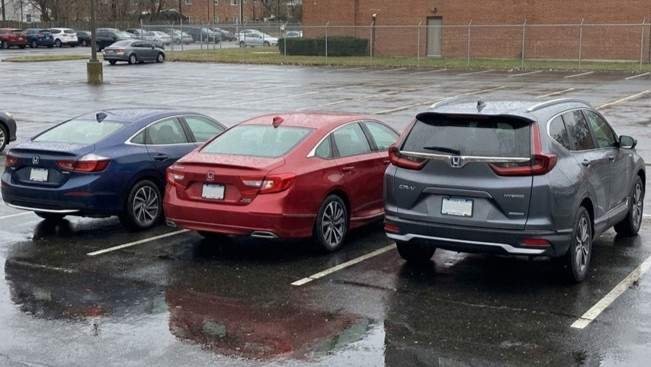
Honda’s early Integrated Motor Assist cars — early Insight, Civic Hybrid, CR-Z, 2005–2007 Accord Hybrid — use a gasoline engine with an electric motor that helps. They are not the same as a modern Honda that can creep on electricity in a parking lot. Many still run well. The assist battery, 12-volt battery, and IMA warning lights are the shopping issues, not whether Honda “knew how to build hybrids.” Honda did. Those packs are simply old.
Two-motor Honda hybrids
From the mid-2010s onward, Honda’s mainstream hybrids use a two-motor setup (often discussed as i-MMD). The 2014–2015 Accord Hybrid was an early version. The 2017–up Accord Hybrid, 2019–2022 Insight, 2020–up CR-V Hybrid, and 2025 Civic Hybrid are the family most buyers should study.
These cars can move at low speed on electricity, keep the engine in efficient ranges, and feel more like a modern hybrid than an IMA Civic. They also cost more to recapitalize if a lithium pack or power-control unit fails out of warranty.
Plug-in Honda hybrids are a different product
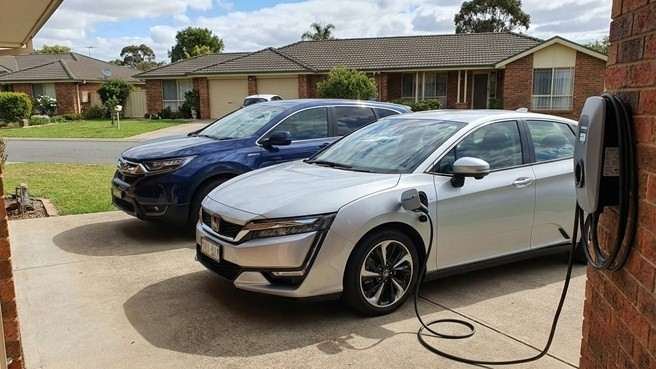
A Clarity Plug-in Hybrid with a charge cable is not a CR-V Hybrid. You are buying a high-voltage pack sized for electric commuting, charge-port condition, and whether the previous owner ever plugged it in. If they never charged it, you did not buy a failed idea. You bought a heavy hybrid. Price it that way.
How Honda Hybrid Systems Differ
Two cars with a blue Hybrid badge can have almost nothing in common in a shop.
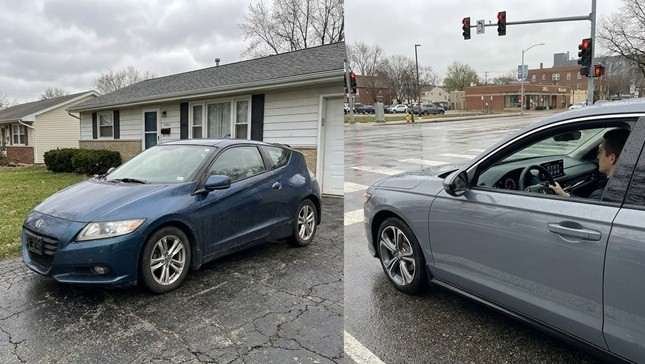
IMA (older): Smaller nickel-metal hydride assist pack, engine-centric driving, well-known independent rebuild market on Civic/Insight packs. Failures often announce themselves with an IMA light, weak assist, and a car that still drives like a gas Civic with extra weight.
Two-motor (newer): Larger lithium-ion pack in most later models, more EV-like low-speed behavior, better EPA city numbers, more dealer-centric diagnosis. A no-start or “hybrid system” message is not something to clear with a parts-store code reader and hope.
If a seller says “it’s just like a Prius,” smile and keep inspecting. Honda’s layout is its own. Independent Toyota hybrid specialists are everywhere. Honda two-motor specialists are fewer. That affects both inspection and the bill if something major fails.
Used Honda Hybrid Battery Life: Age, Miles, Climate, and Use
How long does a used Honda hybrid battery last? There is no honest single mileage. Packs degrade with time, heat, charge cycles, and how the car was driven. A 90,000-mile Accord Hybrid that lived in Minneapolis highway traffic can be healthier than a 55,000-mile Insight that baked in Phoenix and sat for weeks.
What “degradation” means. The car rarely dies at 70% capacity. It slowly uses the gasoline engine more, posts worse MPG, and may limit electric assist. Owners notice the fuel gauge first, not a dramatic failure.
Age versus mileage. Calendar age matters, especially on IMA NiMH packs from the 2000s and early 2010s. A 2012 Civic Hybrid with 70,000 miles is not “low mile” in battery years. It is a 13-plus-year-old electrochemical device.
Climate. High heat is harder on packs than mild coastal weather. Repeated deep discharge — short trips with a dying 12-volt battery, or a PHEV that is always empty — is harder than mixed driving with regular use.
Usage. Hybrids like to be driven. A garage queen can still have a tired 12-volt battery, dried bushings, and a pack cooling fan full of dust. A taxi-style Insight 2019 with oil records may have a more honest pack than a pretty car that sat.
Mileage alone cannot certify the battery. Two 100,000-mile CR-V Hybrids can be in different health. You need a test drive that includes electric-only creep, engine restart, highway merge, and a scan that is more than “no check-engine light.”
Warning signs the hybrid battery may be tired
- Hybrid or IMA warning lights, or messages that return after a 12-volt replacement
- Assist that feels missing; the engine working harder at speeds that used to be quiet
- Fuel economy well below that year/trim’s EPA combined rating after a tank of mixed driving (one tank is not a lab)
- Rattling, whirring, or a pack cooling fan that never shuts up
- The car starts, then dies, or throws random electrical gremlins (often the 12-volt — still a buying issue)
- Reduced-power behavior, or the engine staying on in situations where a healthy two-motor Honda would shut it off
None of these, by itself, proves the high-voltage pack is finished. Several together, plus a seller who will not allow a Honda-capable shop to look, is enough to walk.
Honda Hybrid Battery Replacement Cost
How much does a Honda hybrid battery cost? Enough that you should price it before you fall in love — and not from a single forum post dated 2018.
The bill moves with:
- Model and chemistry. Rebuilding an old Civic IMA NiMH pack is a different industry from replacing a late lithium pack in a CR-V Hybrid.
- OEM versus remanufactured versus used. Dealer new is usually the most money and the cleanest paperwork. Independent reman is common on older IMA cars. Used packs are a gamble you should price as a gamble.
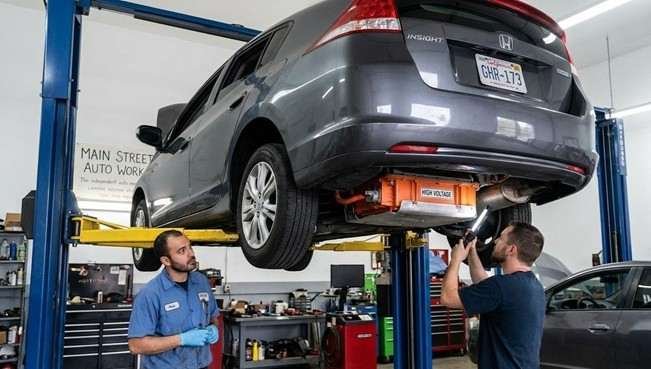
- Labor and programming. Hybrid work is not a 30-minute battery swap. Isolation, cooling, and software matter.
- Warranty on the replacement. 12 months and 8 years are not the same product.
- Core charges and diagnostics. Some of the invoice is “we had to prove it was the pack.”
Do not budget a made-up national average. Call a Honda dealer and a hybrid-capable independent with the year, model, and VIN. Ask for parts, labor, and warranty separately. If the car is close to that number away from a clean gas Civic or CR-V, the hybrid has to earn its keep in fuel and remaining factory coverage.
A practical stance: if the high-voltage pack is out of warranty, untested, and the seller will not cut the price for uncertainty, you are the warranty.
Used Honda Hybrid MPG: EPA Sticker vs Real Winter Commutes
EPA figures are useful for comparing two model years. They are not a promise for your ZIP code.
City driving is where modern two-motor Hondas usually look like the brochure. Regenerative braking and low-speed electric running help. That is why a used Honda hybrid often makes more sense as a 12,000–15,000-mile suburban commute than as a 80-mph interstate cruiser.
Highway driving narrows the gap versus a gas Accord or CR-V. The hybrid can still win. It rarely wins by the same margin as in traffic.
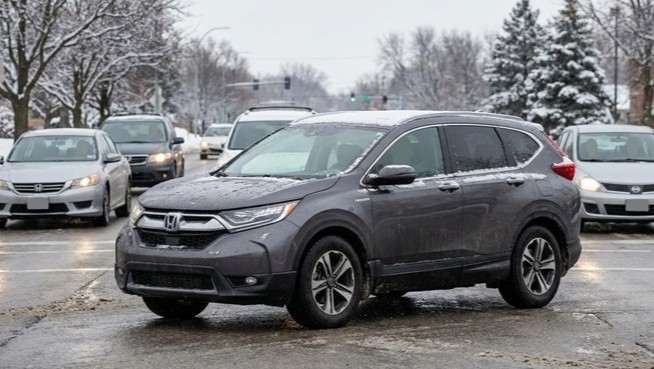
Cold weather hurts. Battery chemistry, cabin heat, and engine warm-up all cost energy. A Minnesota January is not a California lab loop. If the seller’s “I get 50 mpg” story was July, believe July.
HVAC, tires, and style. Low tire pressure, a roof box, aggressive launches, and max defrost will spend the hybrid advantage. So will a dying 12-volt system that keeps the car confused.
Check fueleconomy.gov for the exact year and drivetrain. Approximate combined ratings many shoppers see (verify the year — they move):
- 2019–2022 Insight: often around the low 50s combined on efficient trims
- Accord Hybrid (2018–2022 era): often mid-to-high 40s combined
- CR-V Hybrid: often high 30s to around 40 combined, lower with AWD
- Older Civic Hybrid IMA: still thrifty, not Insight-2019 thrifty
- 2025 Civic Hybrid: among the stronger new Honda stickers; used examples will be priced like it
If a listing claims 60 mpg without a PHEV charge, treat it as a driving story, not a spec.
Used Honda Hybrid Maintenance
Hybrids are not maintenance-free. They are maintenance-different.
Engine oil. The engine still runs. Follow the Maintenance Minder, not a 10,000-mile myth because “it’s a hybrid.” Short trips can be harder on oil, not easier.
Brakes. Regenerative braking often extends pad life. Rotors still rust in the salt belt. A pulsing pedal is still a turning issue.
Tires. Low rolling-resistance tires help MPG and can wear oddly if alignment is off. On a CR-V Hybrid AWD, mismatched tread depths are a real drivetrain issue, not a cosmetic one.
Coolant. Engine coolant and, on many hybrids, separate hybrid-system coolant. Skipping this because the car “doesn’t get hot” is how inverters have a bad day.
Filters. Engine air, cabin, and — on older IMA cars — keeping the battery cooling path from turning into a lint trap.
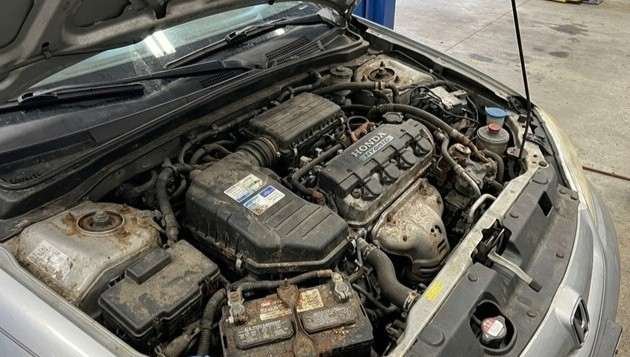
12-volt battery. This is the used-hybrid landmine. A weak 12-volt can trigger hybrid warnings, odd gauges, and no-starts that look like a $5,000 pack. Ask when it was replaced. If the answer is “never” on a five-year-old car, price a battery and a proper reset/inspection.
Hybrid-system inspection. Listen for the pack fan, confirm the engine stops and restarts smoothly, and have a shop that owns the right software look before you buy, not after.
Brake fluid (often around three years), spark plugs at Honda intervals, and transmission/e-CVT service as specified in that year’s manual still exist. “Lifetime fluid” is a phrase that sells cars, not a physics law.
Honda Hybrid Reliability, Recalls, and Used Honda Hybrid Problems
Are used Honda hybrids reliable? Many are ordinary Hondas with extra electrical hardware. That is a good starting point. It is not a certificate.
Keep four buckets separate.
Documented recalls and campaigns. Fuel pumps, airbags (including Takata on older cars), software, and cameras have appeared across Honda’s lineup — hybrid and not. A recall is VIN-specific. Look it up. An open fuel-pump or airbag campaign is not a negotiating anecdote. Honda needs to complete it.
Routine wear. 12-volt batteries, tires, brakes, struts, AC, infotainment glitches. Hybrids do these too.
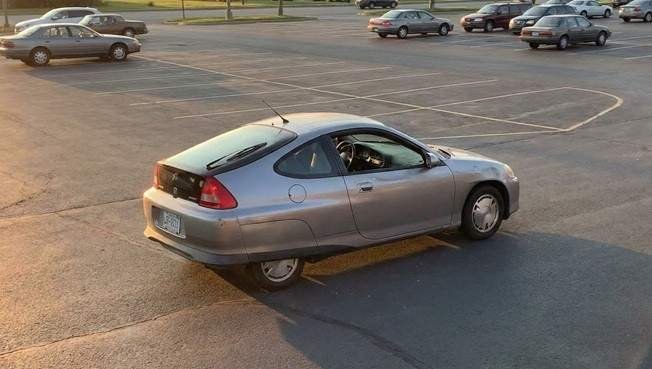
Owner-reported patterns, not universal defects. Older Civic Hybrid and Insight IMA packs that lose assist. 12-volt-related warning lights on newer two-motor cars. Infotainment freezes. Some 2014–2015 Accord Hybrid owners reported hybrid-system trouble in that early two-motor year — inspect those like a first-year design, not like a 2020 Accord Hybrid. Second-gen CR-V Hybrid shoppers report the usual new-generation rattles and electronics niggles; that is a test-drive item, not a proof of pack failure.
Model-specific homework. Do not copy a 2010 Civic Hybrid IMA thread onto a 2022 CR-V Hybrid. Do not assume a Clarity’s plug-in pack behaves like an Insight’s.
Honda’s broader reputation for durable four-cylinders still matters: the gasoline half of a maintained Accord Hybrid or CR-V Hybrid is a known type of engine, not an experimental one. The hybrid half is why you pay for a specialist inspection.
What to Check Before Buying a Used Honda Hybrid
A generic used-car inspection is not enough. Add hybrid-specific steps.
| Area | What to do |
|---|---|
| Paperwork | VIN, title, in-service date, remaining hybrid warranty, recall printout |
| 12-volt | Age, voltage, history of random warnings that “went away” |
| High-voltage clues | Warning lights, fan noise, MPG history, reduced assist |
| Cold start | Engine-on/off transitions, idle quality, exhaust smoke |
| Test drive | Parking-lot EV creep (two-motor), highway merge, regen braking feel, HVAC on full |
| Brakes | Pads/rotors plus whether the pedal feels normal when the battery is full (regen behavior changes) |
| Tires | Age, match, alignment wear; AWD tread depth on CR-V Hybrid |
| Cooling | Hybrid coolant level/condition where accessible; debris at pack vents |
| Undercarriage | Rust, impact to pack area, wet carpets (flood) |
| PHEV only | Charge port, charging confirmation, electric range on a full charge vs the original rating |
| Scan | Honda-capable diagnostic, not only a $20 generic OBD stick |
If the seller will not allow an independent or Honda dealer pre-purchase inspection, you already have the most expensive data point in the deal.
How to Investigate Hybrid Battery Health
A basic OBD-II scan that says “no engine codes” does not certify a hybrid pack. Powertrain codes and hybrid-module data are not the same thing. Many hybrid warnings live in modules a cheap scanner never meets.
What actually helps:
- Drive it like you live. Twenty minutes, cold if you can, with AC or heat, city and a merge. Watch whether the engine shuts off at stops (on systems that should).
- 12-volt first. Have it tested. Replace-then-retest is a legitimate diagnostic step; a seller who just “cleared codes this morning” is a story.
- Honda factory-level or hybrid-capable scan. State of health, sensor codes, and history matter. Some independents can do this. Many tire shops cannot.
- Service records. Battery cooling, hybrid coolant, and prior IMA/hybrid repairs. A replaced pack with a warranty is a feature if you can prove it.
- PHEV charge test. If it plugs in, plug it in. Compare indicated electric range to what that model year was rated for, knowing age reduces range.
Honda dealers can perform hybrid-system checks. That visit is cheaper than guessing. Aftermarket “battery testers” popular in the Prius world are less universal on Honda two-motor cars. Do not skip the Honda-capable shop because a YouTube video tested a Toyota.
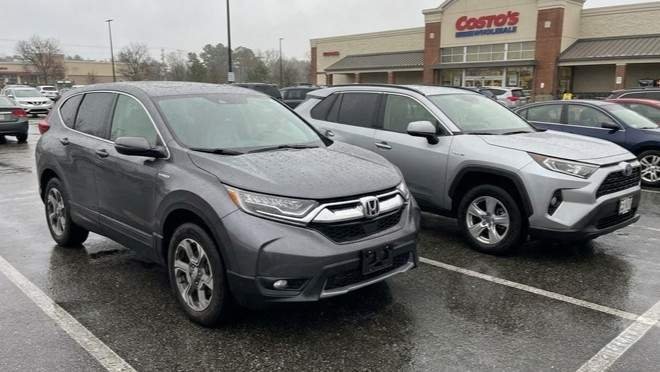
Honda Hybrid vs Gas Honda: Purchase Price, Fuel, and Complexity
Is a used Honda hybrid cheaper to own than a gas Honda? Only if your miles, fuel prices, and repair luck say so.
| Factor | Used Honda hybrid | Comparable gas Honda |
|---|---|---|
| Purchase price | Often higher for the same year/miles | Often the value play on the lot |
| Fuel | Wins most in city/suburban use | Wins more as highway share and low annual miles rise |
| Brakes | Often slower pad wear | Ordinary brake bills |
| Maintenance | Oil, plus hybrid coolant / 12V sensitivity | Familiar, slightly simpler |
| Complexity | More modules, more expensive misses | Easier independent diagnosis |
| Best fit | 12,000–20,000 mixed miles, traffic, fuel you feel every week | Low miles, highway, or a buyer who wants the simplest Honda |
Example — commuter, not a quote. You drive 14,000 miles a year, much of it in traffic, and keep cars four years. A used Accord Hybrid that is $2,000 more than a gas Accord can make that back in fuel if gas is expensive and the hybrid actually delivers mid-40s in your driving. If you drive 7,000 miles of winter highway and the pack is untested, the gas Accord is the calmer spreadsheet.
Example — family SUV. A used CR-V Hybrid versus a gas CR-V is a cargo-and-car-seat decision first. The hybrid’s extra cost has to clear fuel savings and the fact that a gas 1.5T CR-V has its own homework (oil dilution complaints on some years). Compare the two actual VINs, not the nameplate.
Honda Hybrid vs Toyota Hybrid
There is no supported trophy for “best used hybrid brand.” There are differences you will feel in the shop.
Track record and parts ecosystem. Toyota’s Prius/Camry/RAV4 hybrid world has more independent battery rebuilders, more used packs, and more technicians who have seen 200,000-mile examples. That can lower the fear premium.
How they drive. Many shoppers find late Honda two-motor Accords smoother or more “normal sedan” than some Toyota hybrids. That is taste. Drive both.
Used price. Honda hybrids are often a little cheaper than the Toyota equivalent with similar miles, because the market pays extra for Toyota’s hybrid reputation. Sometimes that Toyota premium is earned. Sometimes you are paying for a badge on a neglected RAV4 Hybrid.
Residual and ease of resale. Toyotas are easier to sell in many regions. A clean Accord Hybrid still sells. A messy CR-Z IMA car is a hobby.
PHEV vs hybrid. Toyota and Honda both sold plug-ins. Do not cross-shop a Clarity with a non-plug RAV4 Hybrid and call it a brand verdict.
If you need the thickest independent-repair safety net, Toyota’s volume helps. If you found a documented 2019 Insight or 2021 CR-V Hybrid at the right price, Honda’s system is not a reason to walk. Inspection still is.
Used Honda Hybrid Price
Used Honda hybrid price is a cloud, not a sticker.
What moves it:
- Year and generation (2011 Civic Hybrid ≠ 2022 CR-V Hybrid)
- Mileage and in-service date
- Trim (Touring leather versus LX)
- FWD vs AWD on CR-V Hybrid
- Accident history and title
- Remaining factory hybrid warranty
- Region (high-MPG cars cost more where gas is painful)
- Service records, 12-volt age, tires
- Whether it is a PHEV
A “fair” number is what similar VINs sold for last month in your region, minus the inspection’s repair list. Dealer advertised price is not out-the-door. Doc fees and a “nitrogen” package do not make the pack healthier.
Hybrids often depreciate slower than equivalent gas cars when fuel is expensive, and faster when the pack is old and untested. That is the market being rational.
Honda Hybrid Battery Warranty and Remaining Coverage
Honda hybrid battery warranty terms have typically been longer than bumper-to-bumper, and they are not the same on every year or in every state.
Historically, many Honda hybrids carried federal hybrid-component coverage on the order of 8 years / 80,000 or 8 years / 100,000 miles, with longer 10 year / 150,000 mile battery coverage in California and other states that follow California rules. That is a pattern, not your VIN.
Verify:
- In-service date (warranty clock starts there, not at your purchase)
- Honda’s official remaining coverage for that VIN
- Whether you are in a CARB state if you are counting on 10/150
- Whether a prior owner already used a pack replacement (get the paperwork)
- That a dealer “3-month/3,000-mile” used warranty is not being confused with Honda’s hybrid coverage
If the car is 9 years old in a non-CARB state, assume you own the pack unless Honda’s portal says otherwise. Price accordingly.
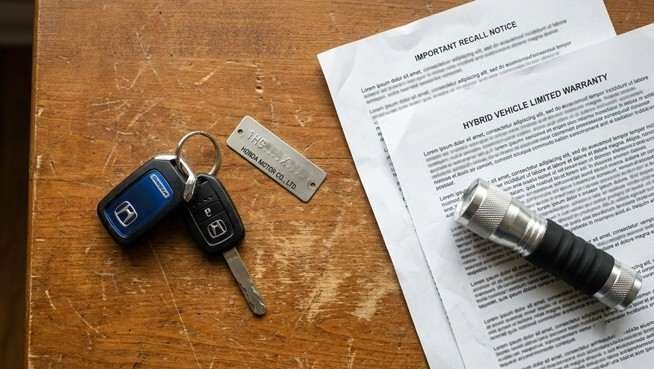
Honda Hybrid Recalls: Check the VIN
Use NHTSA.gov and Honda’s owner recall lookup. Do it yourself even if the seller hands you a Carfax.
Look for open campaigns on airbags, fuel pumps, software, cameras, and hybrid-related updates. Have Honda complete open safety recalls before you take the title — or put it in the contract.
A completed recall is normal. An unrepaired airbag recall on a “great deal” Civic Hybrid is not a deal.
A history report still does not replace a lift inspection. Flooded hybrids are a special kind of no.
Used Honda Hybrid Buying Mistakes to Avoid
- Buying the MPG number instead of the generation. A 2008 Civic Hybrid and a 2021 Accord Hybrid do not share a battery story.
- Ignoring the 12-volt battery because the traction pack is the scary headline.
- Trusting a generic OBD scan as battery health.
- Assuming remaining hybrid warranty without the in-service date and Honda’s VIN tool.
- Skipping hybrid coolant and pack-fan inspection.
- Cross-shopping a Clarity PHEV with a non-plug CR-V Hybrid as if they were the same used Honda hybrid.
- Paying Toyota-hybrid money for a Honda with no records.
- First-year two-motor examples (notably early Accord Hybrid) at the same price as a later, better-documented year.
- Mismatched tires on an AWD CR-V Hybrid.
- Salvage, flood, or “small hit in the rear” near a pack. Have a shop look.
- Seller refuses a pre-purchase inspection. That is the whole negotiation.
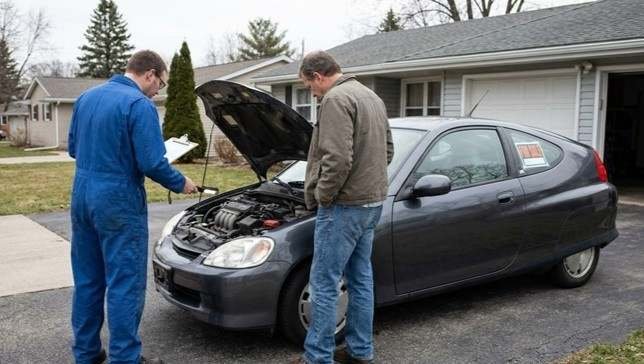
When a Used Honda Hybrid Makes Sense
It may make sense when:
- You drive enough mixed or city miles to use the electric assist (the 12,000–15,000-mile commuter is the textbook case).
- The generation is the two-motor era you meant to buy, not an IMA leftover priced like one.
- Records exist, the 12-volt is healthy or priced in, and a Honda-capable shop signed off.
- Remaining factory hybrid coverage still has real time/miles left — or the price assumes it does not.
- You compared a gas Honda and still wanted the hybrid after fuel math, not before.
Investigate further — or walk — when:
- Hybrid warnings, mystery no-starts, or “I replaced the 12-volt and it still does it.”
- No inspection allowed.
- PHEV that will not charge, or a pack-adjacent collision.
- The premium over a gas Civic/Accord/CR-V is larger than a few years of fuel in your driving.
- You expected Toyota-style independent pack replacement pricing on a late lithium Honda without calling shops first.
A family looking at a used CR-V Hybrid should sit in the second row, fold the cargo floor, and only then argue about 3 mpg. A commuter looking at an Insight or Civic Hybrid should care more about cold-start behavior and a documented scan than about leather.
Used Honda Hybrid Buyer Checklist
- Identify the exact model years and system (IMA vs two-motor vs PHEV)
- Run VIN: NHTSA + Honda recalls + history report
- Confirm remaining hybrid/battery warranty with Honda, in-service date
- Itemized out-the-door price
- 12-volt age and test
- Honda-capable hybrid scan, not a parts-store stick alone
- Cold start, EV creep if equipped, highway merge, HVAC on
- Tires, brakes, rust, pack-vent debris, flood clues
- Maintenance Minder history, oil, hybrid coolant
- Independent or dealer pre-purchase inspection
- Fuel-economy expectation from fueleconomy.gov for that year, not a Facebook claim
- Written answer to: what happens if the pack is weak?
A used Honda hybrid is worth considering when the car in front of you matches the system you think you are buying, the battery story is inspected rather than assumed, and the fuel savings show up in your mileage — not in a national average.
Shop the Honda hybrid used market as individual VINs: Insight, Civic, Accord, CR-V, CR-Z, and plug-in Clarity cars are not interchangeable. Verify year, maintenance, warranty, recalls, 12-volt health, hybrid behavior on a real drive, and the total cost to own. The right pre-owned Honda hybrid is the one that is still a good idea after a shop has seen it. The wrong one is any hybrid whose only proof of health is a clean dashboard in a dim lot.
Related Post