
A cheap used HR-V can look like the easiest compact SUV on the lot. Then you notice the tires are two different dates, the CVT shudders on a hill, the backup camera is fogged, and the “one-owner” story does not match the title. The listing was $16,900. The next 90 days might cost more than the discount you thought you won.
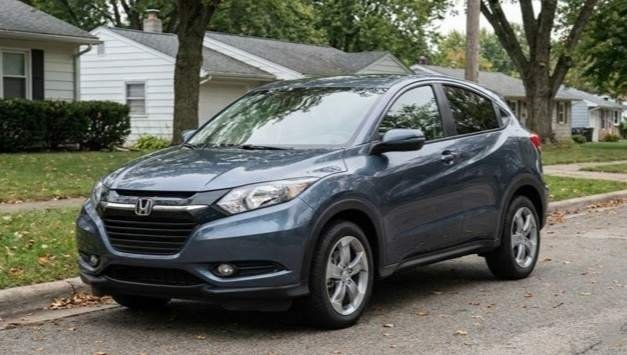
That is why shopping a pre-owned Honda HR-V is not a race to the lowest price. Year, generation, maintenance, accident repair, remaining recalls, AWD hardware, and out-the-door fees decide whether this little Honda stays cheap. This Honda HR-V buying guide is for U.S. buyers who want those answers before they spend the money.
Specifications, equipment, EPA ratings, and recall campaigns are model-year specific. Confirm the VIN, window sticker claims, and current NHTSA/Honda recall status for the exact vehicle.
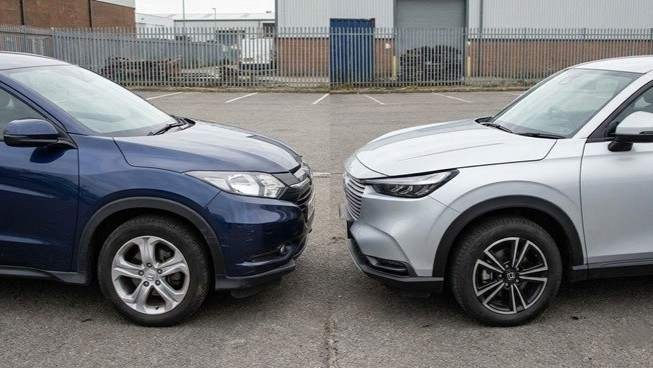
HR-V Honda used Generations: What Changed
The U.S. Honda HR-V is two different vehicles that share a name.
First generation (2016–2022)
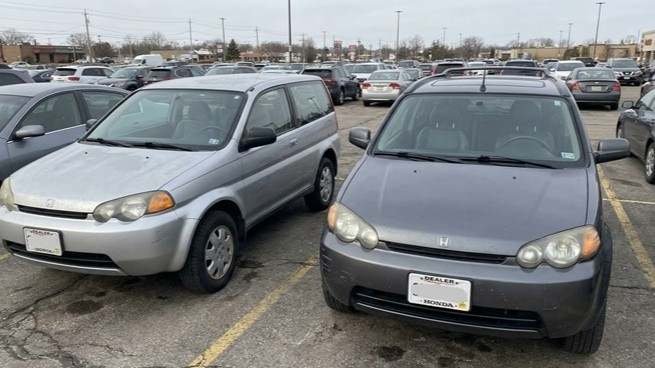
The original HR-V is a Fit-based tall hatch with crossover styling. It uses a 1.8-liter four-cylinder (about 141 hp) and a CVT. You can get front-wheel drive or Honda’s Real Time AWD.
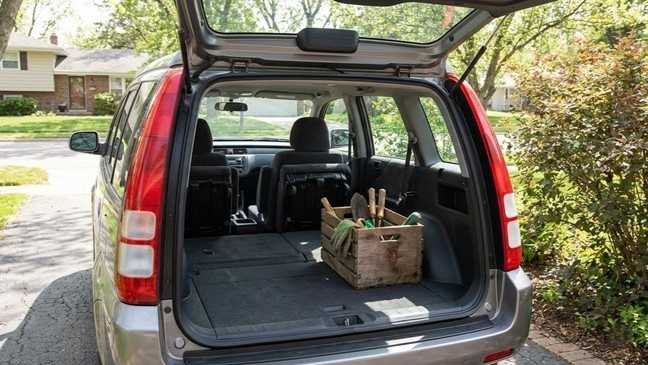
This generation’s party trick is the Magic Seat. The rear cushions can fold up, which is useful for a plant, a mini-fridge, or a dog crate standing on the floor. Cargo volume behind the second row is modest — think mid-20 cubic feet — but the flexibility is real.
Early years (especially 2016) are simpler: fewer driver-assist features, smaller screens, more first-year software and fit-and-finish complaints. A 2019 refresh brought styling updates, more available Honda Sensing, and generally nicer equipment on EX and above. Powertrain basics stayed the same through 2022.
Second generation (2023–present)
The 2023 redesign moved the HR-V onto a Civic-based architecture. It is longer, quieter in a grown-up way, and more conventional inside. The engine is a 2.0-liter four-cylinder (about 158 hp) with a CVT. Honda Sensing is standard.
You gain passenger space and a more modern cabin. You lose some of the first generation’s origami cargo tricks. Fuel economy on the window sticker is also a step backward versus many 2016–2022 FWD examples, because the new truck is heavier and more powerful.
If a seller treats a 2017 and a 2024 as “the same HR-V,” they are not shopping with you. They are reading the badge.
Which Used Honda HR-V Years Deserve a Look
There is no official “best used Honda HR-V” year that fits every driveway. There are better matches.
2016–2018. These are the least expensive clean examples in many markets. They also concentrate first-year electronics complaints, fewer standard safety features, and more years of potential rust in the salt belt. A documented 2017 LX can still be a rational commuter. A neglected 2016 with mismatched tires and no CVT service is not a Honda bargain. It is a cheap compact SUV.
2019–2022. For a lot of buyers, this is the value band of the first generation: the refresh, more Honda Sensing availability on higher trims, and the same simple 1.8-liter recipe. You are still buying a small, modestly powered crossover. You are not buying a 2024 interior.
2023. First year of a redesign. You get the better platform, standard Sensing, and more space. You also get first-year software, rattles, and the used-price premium that comes with being “the new one.” Do not reject 2023 automatically. Do inspect it like a new generation, not like a 2021 with a facelift.
2024 and newer. Usually the most money. Remaining factory warranty, fresher tires, and fewer calendar-aged fluids. Only worth it if the price gap versus a clean 2021–2022 is something you can defend.
Condition still beats the calendar. A 2018 EX-L with records can be a smarter HR-V used car than a 2023 Sport that was curbed for 40,000 delivery miles and never saw a Honda shop.
Honda HR-V Reliability: What the Record Actually Shows
Honda HR-V reliability is generally in the “ordinary Honda compact” bucket: simple engines, a CVT that is less infamous than some rivals, and repair costs that stay reasonable if the car was serviced.
That is not the same as “these never break.”
Separate the evidence:
- Recalls and manufacturer campaigns are documented. They are VIN-specific. A recall does not mean the model is junk. An open recall means you do not take delivery until Honda addresses it.
- Technical service bulletins describe patterns Honda’s dealers have seen. They are not a diagnosis of the car in front of you.
- Owner complaints (NHTSA, forums, reviews) show what people report. A cluster of infotainment complaints is a shopping note. It is not proof every screen dies at 80,000 miles.
- Wear — brakes, tires, struts, batteries, AC clutches — is what compact SUVs do in city traffic.
The 1.8-liter first-gen engine is a timing-chain design and, in maintained examples, a known quantity. The 2.0-liter in 2023-up HR-Vs is related to Civic naturally aspirated engines, which is a better pedigree than a mystery turbo from a brand you cannot get parts for.
The CVT is the ownership item people worry about. Honda’s units have a better street reputation than the worst of the 2010s Nissan CVTs. They still dislike neglected fluid, overheating, and “it shudders but it’s been like that.” A scan, a test drive onto a highway on-ramp, and service records matter more than a slogan about Honda reliability.
HR-V Honda used Common Problems
Treat this as a shopping list, not a guarantee that your VIN is doomed.
Documented / campaign-type items
Many Honda four-cylinders from the late 2010s were included in fuel-pump campaigns. Some HR-V years also appear in airbag, camera, or software recalls. Do not memorize a blog list. Run the VIN at NHTSA.gov and Honda’s owner recall lookup. If the seller “thinks it was done,” get the dealer printout.
Known service patterns (not every vehicle)
Infotainment and backup cameras on first-gen cars: blank screens, Bluetooth dropouts, cameras that fog or fail. Confirm the camera on a cloudy day, not just in the sun.
Air conditioning: owner reports and shop patterns on some 2016–2021 cars include compressors or cooling performance that fades in traffic. Run the AC on max through the whole test drive.
Rear suspension clunks over speed bumps: worn bushings or related hardware. Common on small crossovers. Not a reason to invent a frame problem — and not a reason to ignore it.
Paint: chipping and clear-coat complaints show up on Hondas of this era, especially certain colors. Owner-reported. Inspect hood and leading edges in daylight.
Rear brakes: city-driven HR-Vs eat pads and rotors because they are taller and heavier than the Fit they were related to. Budget it.
Second-generation owner reports
On 2023-up examples, shoppers report road noise, infotainment freezes, cabin rattles, and the usual first-year software updates. Some of that is annoyance. Some of it is a dealer flash. Neither is a substitute for a test drive on concrete highway.
Wear-and-tear that sellers call “normal”
Tires older than six years, a 12-volt battery that craters in January, cloudy headlights, a noisy wheel bearing, and a cabin filter that looks like a dryer lint trap. Normal, yes. Free, no. Price them.
Honda HR-V Years to Avoid? A More Useful Way to Think About It
Search Honda HR-V years to avoid and you will get blunt lists. Real shopping is blunter in a different way.
Be extra careful with:
- First model year of each generation (2016, 2023) unless the price, records, and inspection are better than a one-year-newer car
- Any year with open recalls, especially airbags or fuel pump
- High-mile CVTs with no fluid service and a shudder
- Salt-belt cars with soft rear quarters and crusty brake lines
- Rebuilt titles sold as “minor bumper”
That is not “never buy 2016.” It is “do not pay 2019 money for 2016 risk.” A cheap, inspected 2016 FWD LX with new tires can be the right used compact SUV. A 2023 AWD Sport with a rebuilt title and a story is the year to avoid regardless of the brochure.
HR-V Honda used Price: What You’ll Actually Pay
There is no single used HR-V price. Anyone quoting one number without year, miles, trim, and ZIP code is guessing.
What moves the number:
| Factor | How it usually plays out |
|---|---|
| Year / generation | 2023+ commands a step up; 2016–2018 are the discount bin if clean |
| Mileage | 40,000 vs 120,000 is thousands of dollars, not a rounding error |
| Trim | EX-L leather and sunroof hold more than LX; not always worth it |
| AWD vs FWD | AWD costs more to buy and a little more to run |
| Condition | Tires, brakes, windshield, and paint do more than floor mats |
| Accidents | Structural repair should be a discount, not a shrug |
| Region | Rust-free Sun Belt cars often list higher; Midwest needs inspections |
| Records | One-owner Honda dealer history is worth more than a fresh oil sticker |
| Market | Spring and local demand swing listings week to week |
As a directional 2026 shopping picture only — not a quote — many U.S. listings cluster roughly like this: older first-gen cars in the low-to-mid teens, late first-gen in the high teens to low $20,000s, and second-gen examples well into the $20,000s. Destination does not apply used, but dealer doc fees, tax, and “reconditioning” do.
Ask for the out-the-door number. A $17,995 HR-V with $1,200 in fees and bald tires is a $20,000 decision.
How Many Miles Is Too Many for a Used Honda HR-V?
Honda HR-V mileage is too high when the maintenance did not happen — not when the odometer ticks past a round number.
A direct answer: there is no universal cutoff. A 110,000-mile 2018 HR-V with CVT service, brake records, and a clean underbody can be a better buy than a 62,000-mile 2016 that sat, leaked, and never saw fresh transmission fluid. Past 150,000 miles you are buying condition and the next services, not a slogan that “Hondas run forever.”
Highway miles are usually kinder than short-trip city miles. Sitting is not preservation. Rubber, brakes, and batteries age on the calendar.
For a first-gen 1.8 with records, 120,000–160,000 is a conversation, not an automatic no. For a 2023 with 80,000 hard rideshare miles and infotainment glitches, the lower number is not automatically safer. Match wear to the odometer: driver’s seat, pedal rubber, steering wheel, tires.
Honda HR-V Fuel Economy: EPA vs Real World
Do not mix generations. The window stickers are not the same car.
First generation (2016–2022), 1.8-liter CVT — typical EPA ratings:
| Drivetrain | City | Highway | Combined |
|---|---|---|---|
| FWD | about 28 mpg | about 34–35 mpg | about 31 mpg |
| AWD | about 27 mpg | about 31–32 mpg | about 29 mpg |
Exact stickers vary slightly by year. Read the door-jamb Fuel Economy label or fueleconomy.gov for that model year.
Second generation (2023–up), 2.0-liter CVT — typical EPA ratings:
| Drivetrain | City | Highway | Combined |
|---|---|---|---|
| FWD | 26 mpg | 32 mpg | 28 mpg |
| AWD | 25 mpg | 30 mpg | 27 mpg |
Confirm the specific year. Honda has not been in the business of surprising people with Prius numbers here.
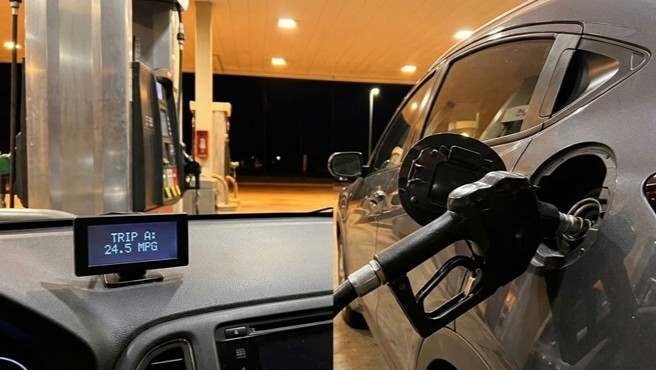
Real-world: mixed U.S. driving often lands a few mpg below the combined rating. Winter, short trips, roof racks, 80-mph Interstates, and worn oil all take a bite. AWD with all-seasons in January is not a 35-mpg highway loop. If used cars under 20k with good mpg is your real search, a first-gen FWD HR-V or a Civic/Corolla hybrid may beat a 2023 AWD Sport on fuel even if the newer cabin feels nicer.
Honda HR-V Trims: What Is Worth Paying For?
Pay for hardware you will use. Do not pay for a sunroof you will never open.
First gen (typical U.S. names): LX, EX, EX-L, and later Touring.
- LX: the commuter. Cloth, simpler audio, cheapest used. Fine if you add good tires.
- EX: often the sweet spot — alloys, better audio, sunroof on many, and Honda Sensing on later EX cars.
- EX-L: leather. Nice in Arizona. Hot in a black car with a failed AC.
- Touring: extra chrome, nav on some, the most money for a 1.8-liter CVT. Only if the car is cleaner, not just shinier.
Second gen: LX, Sport, EX-L.
- LX: 17-inch wheels, standard Sensing, smaller screen on early second-gen LX. Best value if you do not need leather.
- Sport: looks and wheels. Check tire prices. 18-inch rubber costs more and rides worse on potholes.
- EX-L: leather, moonroof, bigger screen, convenience features. Worth it if you keep the car. Not worth it if those extras are broken.
Honda Sensing (adaptive cruise, lane keeping, collision braking) is the used-market feature that actually changes a commute. A backup camera that works is not optional in 2026. Leather is optional. Awd is a climate decision, not a trim trophy.
Honda HR-V AWD vs FWD
Honda HR-V AWD vs FWD is the most overthought choice after color. Honda’s Real Time AWD is an on-demand system. It is mostly FWD until slip, then it can send torque rearward. It is useful in snow, gravel, and heavy rain. It is not Subaru-style full-time AWD, and it will not save worn all-season tires.
FWD makes sense if you live where snow is an event, you will buy proper tires, and you want the EPA’s better number plus one less differential to service.
AWD makes sense if you have unpaved drives, regular snow, or you already know you will not swap tires every November. Used AWD costs more. Fuel economy is a little worse. Rear differential fluid is a real maintenance line. On the test drive, confirm the system engages (a gravel lot or wet-road launch, safely) and that there are no binding noises in tight parking-lot turns.
If the only snow you see is on a ski-weekend rental, put the AWD premium into tires and brakes instead.
Honda HR-V Inspection Checklist
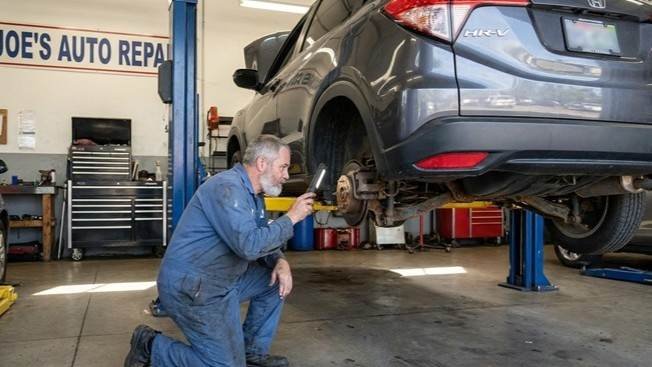
Use this Honda HR-V inspection checklist in daylight. Bring a flashlight.
Exterior. Panel gaps, overspray in door jambs, mismatched paint, hood chips, rust at rear wheel arches, wet spare well, cloudy headlights.
Tires. Same brand and date codes on all four. Uneven inner-edge wear on a used compact SUV usually means alignment or worn rear bushings. AWD cars should not mix tread depths carelessly.
Brakes. Pedal pulse, rear rusted rotors, grinding. Peek at pads.
Engine. Cold start. Exhaust smoke, ticking that does not quiet, oil around the valve cover, sweet coolant smell, milky cap, Maintenance Minder ignored for 40%.
Transmission (CVT). Delayed Drive, flare, rubber-band surge, flare on a 40-to-60 merge, burnt smell. Highway cruise at 65–75. If it shudders and the seller says “they all do that,” leave.
Suspension and steering. Clunks over speed bumps (first-gen rear is a known shop visit), wandering, a crooked steering wheel on a straight road.
Air conditioning. Max cold in traffic, not just in a 30-second lot idle.
Electronics, infotainment, cameras. Every window, every USB, Bluetooth, factory camera guidelines, infotainment reboot. On Sensing-equipped cars, let adaptive cruise actually hold a gap on the highway.
Safety systems and warning lights. Key-on bulb check: lights must come on, then go out. Airbag, ABS, EPS, and Honda Sensing warnings that stay on are not “sensors.”
Underbody. Exhaust leaks, rusty brake lines, damp struts, dented oil pan, aftermarket welds.
Accident clues. Over-spray, new foam still in a fender, a hood that does not line up, cloudy new VIN stickers, a title that does not match the story.
Then stop being a hero and pay a shop.
VIN, Recalls, and Vehicle History
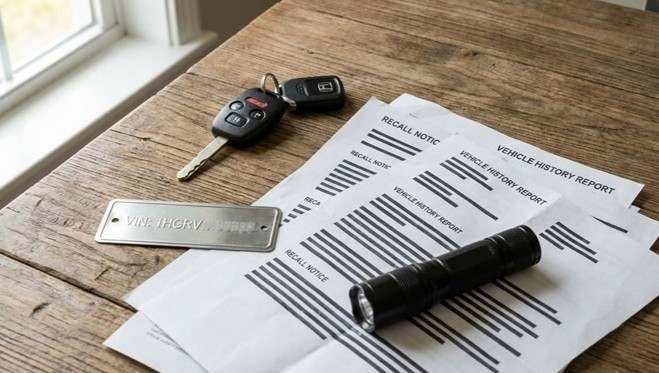
Before you argue about $400, run the VIN.
- NHTSA.gov recall lookup
- Honda’s official recall/VIN tool
- A vehicle-history report (Carfax, AutoCheck, or equivalent)
- Title in the seller’s name
Look for salvage, flood, lemon, odometer rollback, airbag deployment, and mileage that does not match inspection stickers. Fleet and rental use is not an automatic disqualifier. It is extra inspection.
A clean history report means no reported event. Unreported curb launches and parking-lot hits still exist. The report filters. It does not replace a lift.
Open recalls: airbags and fuel pumps are not negotiating chips. They are “Honda does this before I buy,” or you walk.
Why a Pre-Purchase Inspection Matters
A professional pre-purchase inspection is the best money in this process, especially above 80,000 miles or on any AWD example.
An independent Honda-familiar shop will look at CVT behavior hot and cold, rust you cannot see from a crouch, AC pressures, and whether the underbody matches a “highway commuter” story. $150–$250 is cheaper than a compressor, a cluster of wheel bearings, or a “rebuilt” surprise.
If the seller refuses, you have the diagnosis. Dealer, private, Facebook, it does not matter. No inspection, no deal.
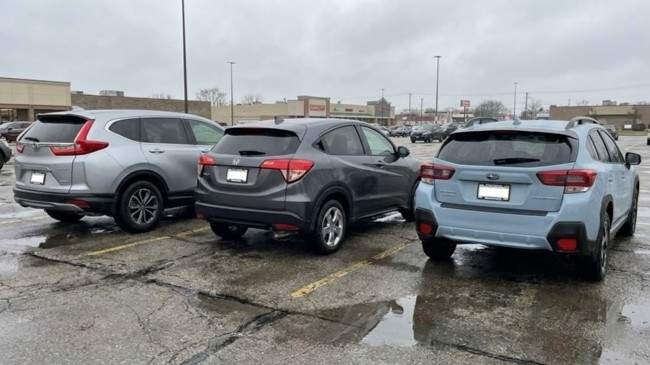
Used HR-V vs CR-V, Corolla Cross, CX-30, Crosstrek, Kona and Seltos
Shop the HR-V against what it actually is: a small two-row crossover, not a three-row family hauler.
| Vehicle | What you are really buying | Watch-outs |
|---|---|---|
| Honda CR-V | More space, stronger used demand, more power on 1.5T years | Costs more; 1.5T oil-dilution homework on some years |
| Toyota Corolla Cross | Similar size, Toyota used pricing | Less cargo cleverness than gen-1 HR-V; prices stay high |
| Mazda CX-30 | Better to drive, nicer cabin on many trims | Tight rear seat; inspect like any used Mazda for rust in snow states |
| Subaru Crosstrek | Standard AWD, clearance, winter credibility | CVT manners; 2.0 can feel slow; rust |
| Hyundai Kona | Features per dollar, leftover warranty on newer ones | Long-term costs vs Honda; inspect turbo years carefully |
| Kia Seltos | Space and equipment for the money | Same Korean-warranty logic; AWD and trim vary widely |
The CR-V is the upgrade if the HR-V’s back seat and cargo feel small on the test sit. The Crosstrek is the winter alternative if Honda’s part-time AWD does not match your road. The Mazda is for people who care about steering. Kona and Seltos are for people who want gadgets and a lower payment. None of them makes a rotten HR-V a good HR-V.

Honda HR-V Maintenance Cost
Honda HR-V maintenance cost is one of the reasons people shop this used compact SUV. Oil changes follow the Maintenance Minder (often in a 5,000–10,000-mile band depending on trips). Cabin filters, brake fluid (about every three years), coolant, and spark plugs are ordinary Honda.
Budget the unglamorous extras:
- CVT fluid on a schedule a Honda tech respects, not “lifetime” folklore
- Rear differential fluid on AWD
- Tires (AWD and Sport wheels cost more)
- Rear brakes in city use
- 12-volt battery
- AC service if cooling is weak
Independent labor on a 1.8-liter HR-V is usually kinder than German compact-SUV money. A neglected CVT or a failed compressor is still real money. Price the next services into the offer instead of being shocked in month two.
Questions to Ask the Seller
- Why is it for sale, and how long have you had it?
- How many keys, and is the title in your name?
- Highway, city, or mixed? Any towing or rideshare?
- CVT fluid — when, by whom, with what fluid?
- AWD rear diff service?
- Open recalls? Can I see a Honda dealer VIN printout?
- Accident repairs, glass, airbags?
- AC, camera, infotainment glitches?
- Tire age and last alignment?
- May I take it to an independent shop for a pre-purchase inspection?
- Out-the-door price, in writing, with fees itemized?
If the answer to the inspection question is no, you can skip the rest.
Used HR-V Buying Checklist
Scan this before you drive over.
- Generation and year understood (2016–2022 vs 2023+)
- Trim and Honda Sensing confirmed in person
- FWD vs AWD chosen on purpose
- Your out-the-door ceiling, including tax, fees, tires, brakes
- VIN: NHTSA + Honda recalls
- History report you ran yourself
- Title, owners, mileage that matches wear
- Cold start and highway CVT test
- AC, camera, infotainment, warning lights
- Tires, brakes, rust, paint, panel gaps
- Independent inspection
- Maintenance records (oil, CVT, brakes, AWD)
- Both keys, spare, manuals
- Itemized purchase contract, no extras you did not request
A used HR-V works when you buy the boring version of the story: the right generation for your budget, records that match the odometer, a CVT that behaves on the merge, recalls closed, and an inspection you did not skip.
Verify model year, maintenance history, VIN and recall status, vehicle history, mechanical condition, mileage, trim, drivetrain, and the real out-the-door cost. The best used Honda HR-V is not the one with the most ads around it. It is the one that is still cheap after you have checked.
Related Post