
The Volkswagen Tiguan has become a quiet success story in the United States. It delivers German engineering, a refined ride, practical three-row seating on longer-wheelbase models, and the kind of solid, upscale feel that many compact crossovers promise but few deliver. As the 2027 model year approaches, Volkswagen is preparing a significant update to the third-generation 2027 Volkswagen Tiguan that sharpens its design, expands efficient and hybrid powertrain options, elevates interior technology, refines the 4Motion all-wheel-drive system, and strengthens its appeal for American families, commuters, and adventure-oriented buyers.
This comprehensive USA-focused guide covers the latest projected details on the new design language, powertrains and hybrid options, exterior execution, interior and tech suite, AWD features, market positioning, key rivals, and owner upgrades—insights drawn from Volkswagen’s MQB Evo platform trajectory, electrification strategy, U.S. market feedback, and segment trends that have not been widely assembled elsewhere.
Design Philosophy
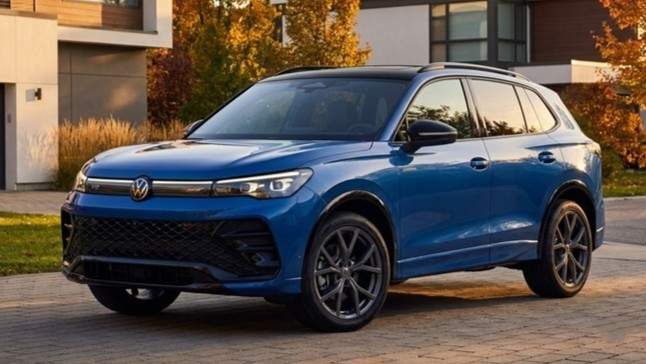
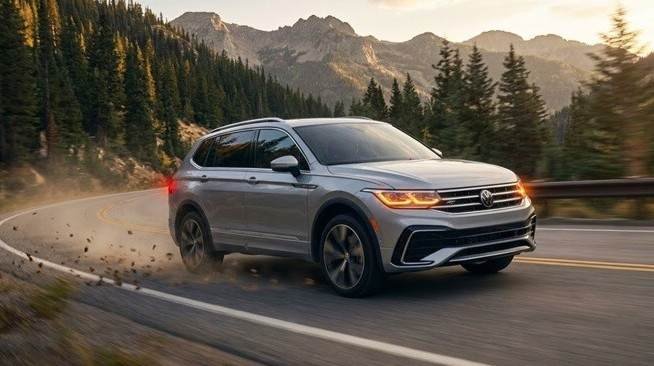
The 2027 Volkswagen Tiguan builds on the cleaner, more vertical design language introduced with the latest generation while adding greater presence and aerodynamic sophistication. Designers have refined the front end with a bolder interpretation of Volkswagen’s illuminated grille crossbar, sharper LED headlights featuring customizable IQ.LIGHT signature patterns, and a more sculpted bumper that improves both style and airflow.
The overall silhouette remains compact-crossover practical yet sits slightly lower and wider for a more athletic stance. Strong character lines run cleanly along the flanks, emphasizing a planted posture and short overhangs that aid both aesthetics and approach angles. In the U.S. market the Tiguan will continue to offer the longer-wheelbase configuration with available third-row seating that American families prefer, alongside a standard-wheelbase option. New two-tone roof combinations, matte exterior finishes, and R-Line styling packages give the crossover a more premium and customizable appearance. The design goal is clear: create a Tiguan that looks more expensive and modern in suburban driveways while retaining the timeless, high-quality Volkswagen identity that ages gracefully.
Exterior Details
Built on the evolved MQB Evo platform, the 2027 Volkswagen Tiguan increases use of high-strength steels and weight-saving materials for improved rigidity, crash performance, and efficiency. Aerodynamic enhancements—including active grille shutters, a flatter underbody, optimized side mirrors, and a subtle roof spoiler—contribute to better highway fuel economy and reduced wind noise during long interstate trips common across the United States.
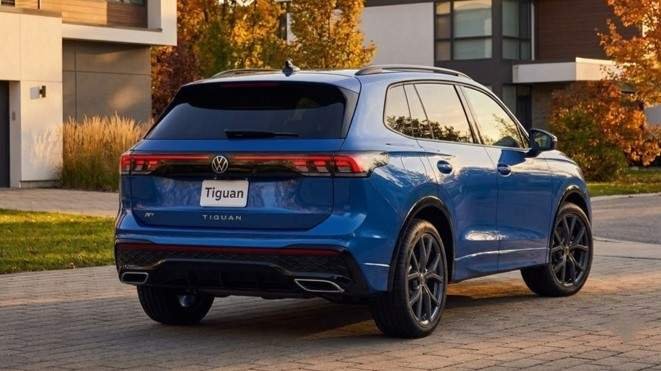
Full LED lighting with available adaptive matrix IQ.LIGHT technology becomes more widely standard, providing excellent illumination on dark rural roads and automatic high-beam control. Wheel designs range from 17-inch aero-efficient alloys on hybrid models to 19- or 20-inch darker machined designs on SEL and R-Line trims, wrapped in all-season tires tuned for mixed U.S. weather. Available features include a hands-free power liftgate, panoramic fixed or opening sunroof, roof rails rated for cargo boxes or bike racks, and new exterior lighting animations controllable via the Volkswagen app.
A projected “Adventure” or rugged-appearance package adds body cladding, unique badging, and slightly enhanced underbody protection while preserving the car’s car-like driving dynamics. Practical U.S.-focused touches such as available trailer-hitch preparation, multiple camera views for parking and hitching, and improved charge-port or fuel-door integration round out the exterior. These updates make the 2027 Volkswagen Tiguan look fresher and more premium without losing the versatile, family-friendly character American buyers appreciate.
Powertrains and Hybrid Options
The powertrain strategy for 2027 centers on refined turbocharged engines paired with meaningful electrification. The core engine remains a updated 2.0-liter TSI turbo four-cylinder, now expected to deliver smoother power and better real-world efficiency through revised tuning and thermal management. Outputs are projected in the 200–250 horsepower range depending on tune, with strong low-end torque ideal for merging and light towing.
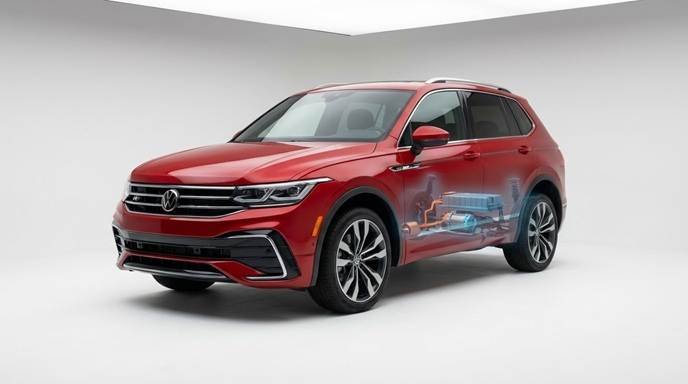
The big news is expanded hybrid availability. A full hybrid system pairs the 2.0-liter engine with an electric motor and battery pack, targeting combined output around 220–260 horsepower while delivering significant fuel-economy gains—projected mid-30s to low-40s mpg combined on front-wheel-drive models. A plug-in hybrid (PHEV) variant is highly likely for the U.S. market, offering an estimated 25–40 miles of electric-only range for daily commuting and silent neighborhood driving, with the gas engine seamlessly providing extended range and performance.
Volkswagen’s experience with the larger Atlas and European Tiguan PHEVs informs a system calibrated specifically for American driving patterns, including frequent short trips and sustained highway speeds. Regenerative braking is more finely adjustable via steering-wheel paddles or drive modes, and the system supports DC fast charging on PHEV models for added convenience. A lighter, more affordable base turbo engine may remain for budget buyers. Towing capacity is expected to stay competitive at around 1,500–3,500 lbs depending on configuration. This flexible powertrain approach gives U.S. buyers genuine choice between pure efficiency, plug-in versatility, and strong everyday performance.
AWD Features
Available 4Motion all-wheel drive remains a key selling point. The 2027 system builds on Volkswagen’s proven setup with faster engagement, smarter torque distribution, and better integration with hybrid powertrains. Under normal conditions the Tiguan operates efficiently in front-wheel drive; when slip is detected or when the driver selects a more dynamic mode, up to 50 percent of torque can be sent to the rear axle almost instantly.
Enhanced driving profile selection includes Eco, Comfort, Sport, Off-road, and Individual modes that adjust throttle response, transmission behavior, steering weight, AWD logic, and hybrid assist. An Off-road mode optimizes traction for light trails, gravel, snow, and wet grass—common conditions for American owners. Hill-descent control, hill-start assist, and improved trailer stability help build confidence. Ground clearance remains practical for a compact crossover (around 7.5–8 inches), striking a balance between easy entry/exit and light-duty capability. For U.S. buyers this means year-round security on snowy roads, muddy campsites, and steep driveways without the fuel-economy penalty of a full-time 4WD system.
Interior and Technology
Inside, the 2027 Volkswagen Tiguan takes a noticeable step forward in material quality and technology. Higher-grade soft-touch surfaces, available genuine wood or open-pore trim, improved sound insulation, and more sophisticated ambient lighting create a cabin that feels closer to luxury crossovers. Seating is more supportive for long drives, with available power adjustments, heating, ventilation, and massaging front seats. The longer-wheelbase U.S. models continue to offer flexible second- and third-row seating, with easy-fold mechanisms and competitive cargo volume.
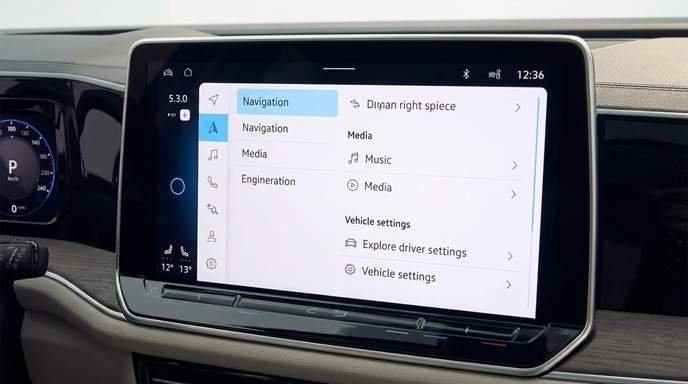
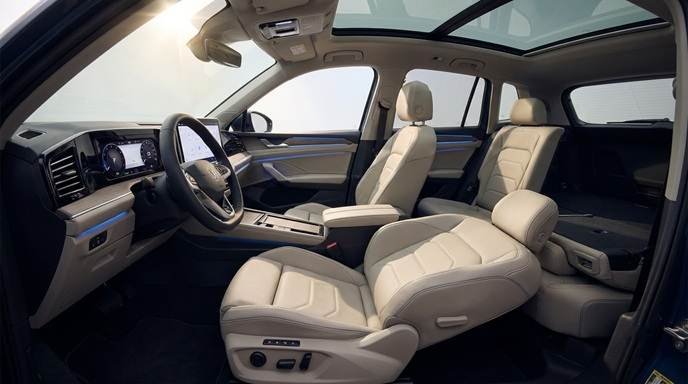
The technology suite centers on a dual-screen layout: a fully digital 10.25-inch (or larger) instrument cluster and a prominent center touchscreen (projected 12 to 15 inches) running the latest MIB5 or IDA software. Wireless Apple CarPlay and Android Auto, faster processors, over-the-air updates, and a cleaner interface come standard on most trims. A premium Harman Kardon audio system, multiple USB-C ports throughout, a Wi-Fi hotspot, and an available head-up display address modern family needs.
Unique projected U.S.-focused features include enhanced Volkswagen Car-Net remote services with better cabin and battery preconditioning, Digital Key smartphone access, a high-resolution 360-degree Area View camera system, and expanded voice control. Travel Assist (adaptive cruise with lane centering) receives improved functionality for American highways. Physical controls for climate and volume remain alongside haptic touch points because Volkswagen understands real-world usability. The result is a quieter, more intuitive, and more premium cabin ideal for daily commuting and cross-country road trips.
Upgrades and Package Strategy
Volkswagen is expected to maintain a clear trim structure—S, SE, SEL, and R-Line—while expanding value-packed packages. Popular options will include a Cold Weather package (heated seats, heated steering wheel, all-weather mats), a Technology package (larger screen, premium audio, advanced driver aids), a Panoramic Sunroof package, and an R-Line appearance package with unique styling, wheels, and interior accents.
A new “Adventure” or Black Edition package could add darker exterior trim, unique badging, and all-terrain-inspired tires. Adaptive damping suspension on higher trims broadens the ride from comfortable family hauler to more composed highway cruiser. Factory accessories—roof racks, cargo organizers, all-weather floor liners, and trailer hitches—let owners personalize while preserving warranty coverage. These upgrades allow buyers to tailor the Tiguan for maximum efficiency, family comfort, or light adventure.
Market Position
Projected pricing for the 2027 Volkswagen Tiguan is expected to start in the low-to-mid $30,000 range and climb toward $45,000–$50,000 for loaded SEL R-Line PHEV models (before any incentives). It targets young families, urban and suburban professionals, empty-nesters downsizing from larger SUVs, and buyers seeking German engineering without luxury-brand pricing.
Volkswagen’s improving reliability reputation, strong dealer network, competitive warranty, and the Tiguan’s reputation for refined driving dynamics give it a solid edge. It sits as a more premium-feeling alternative to mainstream compact crossovers while remaining more attainable than Audi or BMW options. The longer-wheelbase three-row configuration continues to differentiate it in a segment full of two-row-only rivals.
Key Rivals
Primary rivals include the Toyota RAV4 (benchmark reliability and hybrid efficiency, more conservative design), Honda CR-V (spacious and refined, strong resale), Ford Escape (value and hybrid options, less premium feel), Chevrolet Equinox (affordable and feature-rich), Mazda CX-5 or CX-50 (engaging dynamics and upscale interior), Hyundai Tucson and Kia Sportage (stylish and tech-loaded, longer warranties), and the Subaru Forester (standard AWD and adventure image).
The Tiguan’s expected advantages are more refined ride and handling, higher-quality interior materials, available three-row seating, sophisticated 4Motion AWD, and strong hybrid/PHEV efficiency. Its challenges include matching Toyota’s long-term reliability perception and the pure value pricing of some domestic rivals. For buyers who prioritize driving enjoyment, premium feel, and versatile packaging, the 2027 Volkswagen Tiguan remains one of the most compelling choices.
The 2027 Volkswagen Tiguan is not a radical reinvention—it is a thoughtfully evolved compact crossover that addresses owner feedback while amplifying what already made it a favorite. Sharper design, expanded hybrid and PHEV powertrains, refined 4Motion AWD, a quieter and more tech-rich interior, and carefully chosen upgrade paths position it as America’s most well-rounded German compact crossover.
Exact horsepower figures, battery sizes, fuel-economy ratings, dimensions, features, and pricing will be confirmed closer to Volkswagen’s official reveal. What is already clear is the intent: keep the Tiguan as the sophisticated, practical, and increasingly efficient choice for U.S. buyers who want more than just basic transportation. For families and individuals seeking European refinement, modern technology, and everyday versatility in one stylish package, the 2027 Volkswagen Tiguan looks ready to strengthen its position as a segment standout.
Related Post