
The Dodge Durango has long stood apart in the crowded U.S. three-row SUV segment by delivering something most family haulers lack: authentic muscle-car attitude. With its available HEMI V8 power, rear-drive roots, aggressive styling, and surprisingly capable all-wheel-drive systems, the Durango has carved a loyal following among American buyers who want space for the family and thrills for the driver. For the 2027 Dodge Durango model year, Dodge and parent company Stellantis are preparing a meaningful update that modernizes the design, introduces new electrified powertrain options, elevates interior technology, refines AWD performance, and strengthens the Durango’s unique position as the performance-oriented three-row SUV.
This comprehensive USA-focused guide delivers the latest projected details on the new design language, powertrains and hybrid options, exterior execution, interior and tech suite, AWD features, market positioning, key rivals, and owner upgrades—insights synthesized from Stellantis’ STLA Large platform direction, Hurricane engine family, electrification roadmap, and real-world American buyer priorities that have not been widely detailed elsewhere.
Muscle Heritage Meets Modern Aggression
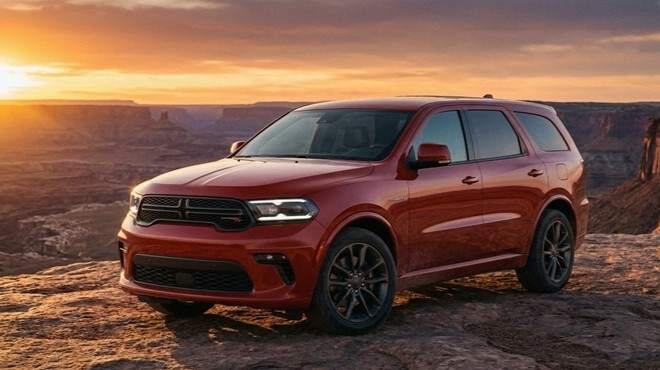
The 2027 Dodge Durango doubles down on its “Widebody” muscle-SUV identity while adopting cleaner, more aerodynamic surfaces that improve efficiency and visual sophistication. The front end evolves the signature crosshair grille into a bolder, more three-dimensional form with available illuminated accents and a lower, wider stance that emphasizes performance. Slim, high-intensity LED headlights feature distinctive daytime running light signatures that can be personalized, giving the Durango instant road presence day or night.
Designers have sharpened the character lines along the flanks, added more pronounced fender flares (especially on R/T and SRT-inspired trims), and refined the rear with a full-width LED taillight bar and dual or quad exhaust outlets depending on powertrain. Proportions remain full midsize with three-row capability, yet the overall look feels lower, wider, and more athletic than the current generation. In the U.S. market the Durango will continue to offer high-impact colors—including new matte and two-tone options—plus available Hellcat-inspired or SRT badging on performance variants. The design goal is unmistakable: create a three-row SUV that looks like it belongs in the same family as the Charger and Challenger while meeting modern family and efficiency expectations.
Exterior Details
Built on an evolved version of the current architecture or transitioning toward Stellantis’ STLA Large platform elements, the 2027 Dodge Durango increases use of high-strength steels and weight-saving materials for improved rigidity, safety, and handling. Aerodynamic upgrades—active grille shutters, optimized underbody panels, and reshaped mirrors—help reduce drag and wind noise during long interstate runs common across the United States.
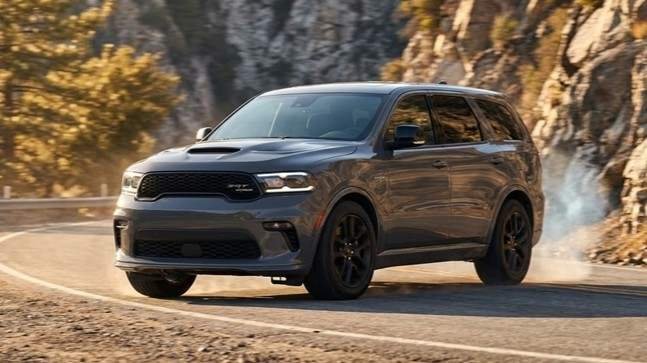
Full LED lighting with adaptive or matrix functionality becomes more widely available, tuned for dark rural roads and automatic high-beam performance. Wheel choices expand from 18- or 20-inch designs on base models to 21- or 22-inch lightweight alloys on R/T, Citadel, and SRT packages, wrapped in high-performance all-season or summer tires. Available power running boards, a hands-free power liftgate, roof rails rated for cargo boxes or bikes, and enhanced tow-hitch integration address real family and lifestyle needs.
A projected “Track Pack” or performance exterior package adds unique front and rear fascias, side skirts, a rear spoiler, and larger brakes, while a more adventure-oriented package offers underbody protection and all-terrain tires. These exterior updates make the Durango look more premium and aggressive in suburban driveways while remaining practical for boat ramps, mountain roads, and daily school runs.
Powertrains and Hybrid Options
The heart of the Durango has always been its powertrains, and 2027 Dodge Durango brings the biggest evolution yet. The legendary 5.7-liter and 6.4-liter HEMI V8s are expected to continue in performance-oriented trims for enthusiasts who want pure muscle, but the volume story shifts toward Stellantis’ twin-turbo Hurricane inline-six engines and new hybrid systems.
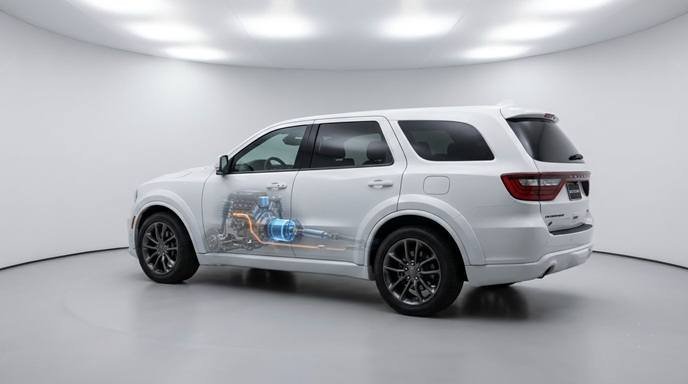
The standard powertrain is projected to be a refined twin-turbo 3.0-liter Hurricane I6 producing strong horsepower and torque with better efficiency than the outgoing V8s. The headline addition is a robust hybrid option—likely a mild-hybrid or full PowerHybrid system pairing the Hurricane engine with an electric motor and battery pack. Combined output is estimated in the 400–500+ horsepower range depending on configuration, with instant electric torque that sharpens throttle response and improves low-speed drivability. A plug-in hybrid (PHEV) variant is under consideration for the U.S. market, potentially offering 25–40 miles of electric-only range for commuting while delivering full performance when needed.
Towing capacity should remain a strong suit at 8,000–8,700+ lbs when properly equipped, aided by hybrid torque fill and enhanced cooling. Fuel economy is expected to jump meaningfully into the low-to-mid 20s mpg combined on hybrid models—valuable savings for American families who cover high annual miles. Regenerative braking will be driver-adjustable, and drive modes (including a dedicated Track or SRT mode) will alter power delivery, exhaust sound, and hybrid assist. This flexible strategy lets buyers choose pure V8 drama, efficient Hurricane power, or electrified performance without abandoning the Durango’s muscle DNA.
AWD Features
Available all-wheel drive remains central to the Durango’s appeal. The 2027 system builds on the current performance-tuned setup with faster engagement, smarter torque distribution, and better integration with hybrid powertrains. It can operate in rear-drive mode for efficiency and fun, then seamlessly send power forward when slip is detected or when the driver selects a more aggressive mode.
Enhanced drive modes (Auto, Sport, Track, Snow, Tow, and available Custom or Off-Road) adjust throttle mapping, transmission shift points, AWD bias, stability control, and hybrid torque delivery. An electronic limited-slip rear differential on higher trims sharpens corner exit traction, while hill-descent control and trailer-sway mitigation improve confidence. Ground clearance stays practical for a performance-oriented SUV (around 8+ inches), with available skid protection. For U.S. owners this means year-round capability on wet roads, light snow, gravel, and mountain passes, plus the rear-drive dynamics enthusiasts crave on dry canyon roads.
Interior and Technology
Inside, the 2027 Dodge Durango takes a clear step forward in quality and technology while retaining its driver-centric character. Higher-grade soft-touch materials, available real leather or performance suede, contrasting stitching, and improved sound insulation create a more premium cabin. Seating for up to seven or eight remains flexible, with available second-row captain’s chairs, power-folding third-row seats, and supportive front sport seats offering heating, ventilation, and power adjustments.
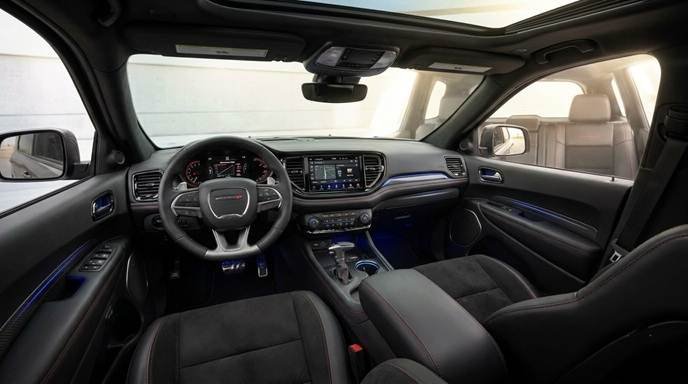
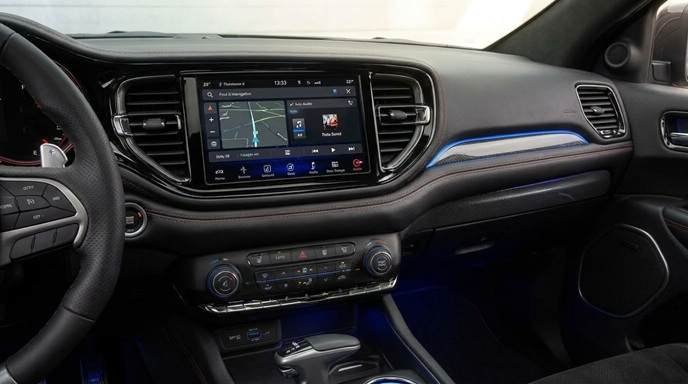
The technology suite centers on a large dual-screen layout: a fully digital driver cluster and a prominent center touchscreen (projected 12.3 to 14.5 inches) running the latest Uconnect system. Wireless Apple CarPlay and Android Auto, over-the-air updates, cloud navigation, and faster processors come standard on most trims. A premium audio system (available Alpine or higher), multiple USB-C ports across all rows, a Wi-Fi hotspot, and an available head-up display address family connectivity.
Unique projected features include a performance pages display with g-force, timers, and hybrid power-flow graphics, Digital Key smartphone access, remote start and cabin preconditioning via the Dodge app, an advanced multi-camera system with trailer views, and enhanced driver aids. Physical controls for climate, drive modes, and volume remain because Dodge understands real-world usability. The cabin feels more luxurious and quieter for long road trips while still offering the bolstered, driver-focused environment that sets the Durango apart from softer family SUVs.
2027 Dodge Durango Specs
| Category | Specification |
|---|---|
| Vehicle Type | Midsize 3-Row Performance SUV |
| Platform | Evolved current architecture / STLA Large elements |
| Layout | Front-engine, RWD / Available AWD |
| Powertrains | Twin-Turbo Hurricane I6 / HEMI V8 / Hybrid |
| Hybrid System | Mild-Hybrid or Full PowerHybrid + possible PHEV |
| System Output (Hybrid) | 400 – 500+ hp combined (estimated) |
| Engine Options | 3.0L Twin-Turbo Hurricane I6 / 5.7L or 6.4L HEMI V8 |
| Torque | 450 – 600+ lb-ft (estimated) |
| Battery | High-voltage lithium-ion (hybrid/PHEV) |
| EV Range (PHEV est.) | 25 – 40 miles (if offered) |
| Transmission | 8-speed automatic |
| Drivetrain | Rear-Wheel Drive or Performance AWD |
| Drive Modes | Auto, Sport, Track, Snow, Tow, Custom, Off-Road |
| 0-60 mph | Mid-4 to mid-5 second range (performance hybrid est.) |
| Towing Capacity | 8,000 – 8,700+ lbs (properly equipped) |
| Fuel Economy (est.) | Low-to-mid 20s mpg combined (hybrid) |
| Suspension | Independent front & rear |
| Ground Clearance | Approx. 8.0 – 8.5+ inches |
| Interior | Driver-centric premium 3-row cabin |
| Seating | 6- or 7-passenger |
| Displays | Fully digital cluster + 12.3–14.5-inch touchscreen |
| Infotainment | Latest Uconnect system |
| Pricing (U.S. MSRP projected) | $40,000 – $80,000+ |
| Key Trims / Packages | SXT, GT, R/T, Citadel, SRT / Hellcat-inspired |
| Target On-Sale | 2027 model year |
Upgrades and Package Strategy
Dodge is expected to maintain a clear performance ladder—SXT, GT, R/T, Citadel, and a high-performance SRT or Hellcat-inspired flagship—while expanding packages. Popular options will include a Tow Boss package (enhanced cooling, brake controller, hitch cameras), a Premium Group (leather, advanced audio, panoramic roof), a Technology Group (larger screens, advanced driver aids, HUD), and a Track Pack (upgraded brakes, suspension, wheels, aero).
A Nightshade or Blacktop appearance package and available two-tone interiors give buyers personalization. Adaptive dampers on higher trims broaden the ride from comfortable daily driver to firm performance settings. Factory accessories—performance exhaust, lightweight wheels, cargo systems, and all-weather protection—let owners tailor the Durango while preserving warranty coverage. These upgrades allow families to configure everything from a stylish daily hauler to a canyon-carving performance SUV.

Market Position
Projected pricing for the 2027 Dodge Durango is expected to start in the low-to-mid $40,000 range and climb past $70,000–$80,000 for loaded hybrid or SRT models. It targets buyers who want three-row practicality without sacrificing driving excitement—performance-oriented families, enthusiasts who need space, and those who prefer rear-drive dynamics and available V8 power over car-like crossovers.
Dodge’s muscle-brand heritage, strong residual values on performance models, and the growing appeal of hybridized power give the Durango a distinct edge. It sits as the more engaging alternative to mainstream three-row SUVs while remaining more attainable and practical than pure luxury performance SUVs. Production stays focused on U.S. demand for vehicles that deliver both utility and emotion.
Key Rivals
Primary rivals include the Jeep Grand Cherokee L (shared roots, more off-road focus), Chevrolet Traverse and Ford Explorer (spacious and feature-rich, less performance DNA), Toyota Grand Highlander and Honda Pilot (reliability and efficiency, softer character), Kia Telluride and Hyundai Palisade (value and luxury feel, front-drive bias), and performance-tinged options like the BMW X5 or Genesis GV80.
The Durango’s expected advantages are available high-output hybrid and V8 powertrains, rear-drive-biased dynamics, aggressive styling, strong towing, and a more engaging drive than most three-row competitors. Its challenges include matching the pure reliability reputation of Toyota and the ultra-premium interiors of some rivals. For buyers who want a three-row SUV that still feels like a Dodge, the 2027 Dodge Durango remains uniquely compelling.
The 2027 Dodge Durango is not a complete reinvention—it is a carefully evolved muscle SUV that preserves the soul enthusiasts love while adding the efficiency, technology, and refinement modern American families demand. Bolder design, flexible Hurricane and hybrid powertrains, refined AWD, a quieter and more tech-forward interior, and thoughtful upgrade paths position it as the most exciting three-row SUV in its class.
Exact horsepower figures, battery details, range, towing ratings, dimensions, features, and pricing will be confirmed closer to Dodge’s official reveal. What is already clear is the intent: keep the Durango as America’s performance-first family hauler—one that delivers space, capability, and genuine driving thrills in a single package. For U.S. buyers tired of bland crossovers and still craving muscle-car attitude with room for the whole crew, the 2027 Dodge Durango looks ready to charge ahead.
Related Post