
While spy-shot artists and YouTube speculators flood the internet with wild “full redesign” fantasies for the 2027 Toyota Tacoma, the real story is far more strategic—and far more interesting. Toyota isn’t chasing headlines with a dramatic overhaul. Instead, the 2027 model year represents a calculated mid-cycle evolution of the groundbreaking fourth-generation Tacoma (launched for 2024). This refresh sharpens an already class-leading platform without the risk or cost of a full redesign.
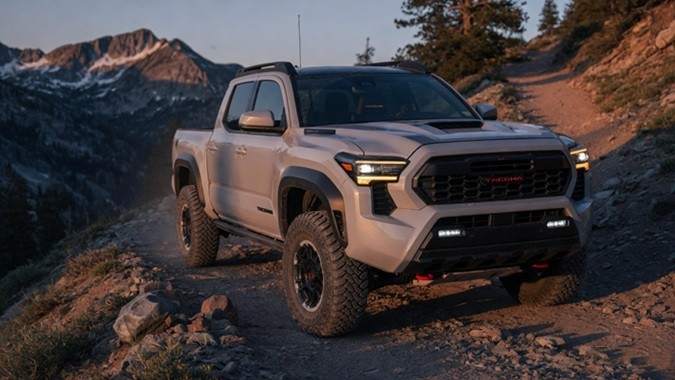
The result? A truck that doubles down on what made the current Tacoma the segment’s reliability and capability benchmark while adding meaningful upgrades in powertrain refinement, tech integration, exterior presence, and off-road intelligence. This isn’t just another model year update. It’s Toyota reinforcing its position as the thinking person’s midsize truck in an era when rivals chase flashier (and sometimes less durable) alternatives.
Why the 2024 Redesign Still Matters in 2027
The fourth-gen Tacoma moved to the TNGA-F body-on-frame platform shared with the Tundra and Land Cruiser. This delivered a stiffer chassis, dramatically improved on-road manners (especially with the multi-link coil-spring rear suspension on most trims), and a modern interior that finally feels competitive with—not behind—cars.
For 2027 Toyota Tacoma, expect no fundamental platform change. Toyota’s product cadence for body-on-frame trucks typically spaces major redesigns 6–8 years apart. The current architecture is still young and highly capable. A mid-cycle refresh in 2027 aligns perfectly with industry norms (see the upcoming 2027 Chevrolet Colorado refresh) and allows Toyota to address owner feedback, tighten a few loose ends, and expand the hybrid’s appeal without touching the core engineering.
This approach is smart business. It protects resale values, maintains parts commonality for fleets and owners, and lets Toyota focus resources on software, calibration, and targeted hardware tweaks that deliver noticeable improvements to buyers.
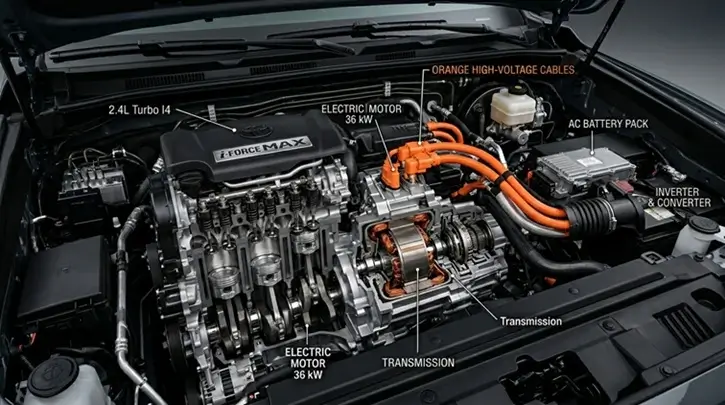
Powertrain Evolution: Refinement Over Revolution
The current powertrains are already excellent. The base 2.4-liter turbocharged inline-four makes 228 hp in SR models. Most others get the higher-output version producing 278 hp and 317 lb-ft of torque. The i-FORCE MAX hybrid pairs the same 2.4T with an integrated electric motor for a combined 326 hp and 465 lb-ft of torque—numbers that shame many older V6 Tacomas while delivering real-world efficiency.
What changes for 2027 Toyota Tacoma?
Toyota is unlikely to add a V6 return or full plug-in hybrid yet. Instead, expect evolutionary calibration work:
- Subtle ECU and hybrid system mapping improvements for smoother low-speed throttle response and better integration between gas and electric power.
- Possible 5–8% efficiency gains through software, minor lightweighting, and aerodynamic tweaks—pushing real-world combined economy closer to 23–25 mpg in mixed driving for hybrid models.
- Expanded availability or standard hybrid power on more trims (especially TRD Off-Road and Trailhunter), making the torque-monster hybrid less of a premium exclusive.
- Refined “Hybrid Trail” or low-speed electric modes that let the truck creep silently and precisely over technical terrain using electric torque only, reducing mechanical wear and noise in campgrounds or sensitive areas.
The hybrid’s instant torque delivery is its real off-road superpower. In technical crawling, the electric motor fills torque gaps that a pure gas engine can’t match without downshifting or clutch modulation. For 2027 Toyota Tacoma could enhance this with more granular control modes and better thermal management for sustained low-speed work.
Towing remains strong at around 6,000–6,500 lbs (hybrid models are competitive here thanks to electric assist). Payload hovers near 1,700 lbs depending on configuration. These aren’t class-leading on paper, but real-world durability and the hybrid’s effortless pulling power often matter more to owners.
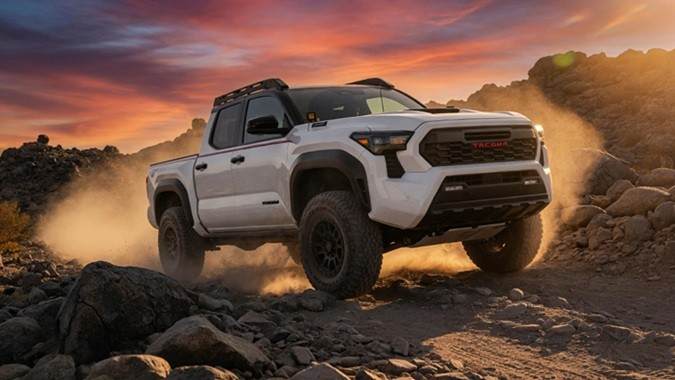
Exterior: Aggression and Smarter Styling
The current Tacoma already looks tougher and more modern than its predecessor. For 2027 Toyota Tacoma, anticipate a subtle but effective facelift focused on presence and function rather than gimmicks.
Expected updates include:
- A revised front fascia with a bolder or more parametric grille treatment (possibly with illuminated Toyota lettering or active aero elements for highway efficiency).
- Updated full-LED headlight signatures—matrix or adaptive beams with new daytime running light graphics that give the truck a more distinctive face at night.
- Revised front and rear bumpers optimized for approach/departure angles or with integrated recovery points that look more integrated.
- New wheel designs that balance aero efficiency with off-road durability (especially important for hybrid models chasing every mpg).
- Fresh color options, including new earthy or adventure-inspired hues and possibly expanded matte or two-tone packages for TRD and Trailhunter trims.
These aren’t radical changes, but they freshen the truck’s appearance for buyers who want the latest look without waiting for the next generation. The aggressive stance, high ground clearance, and wide fenders stay—core Tacoma DNA that continues to differentiate it from the more car-like Honda Ridgeline or the aging Nissan Frontier.
Interior & Technology: Adventure Basecamp
The current generation made huge strides with a 14-inch touchscreen option, wireless Apple CarPlay/Android Auto, a JBL system featuring a removable Bluetooth speaker (genius for tailgating or campsite use), and available head-up display.
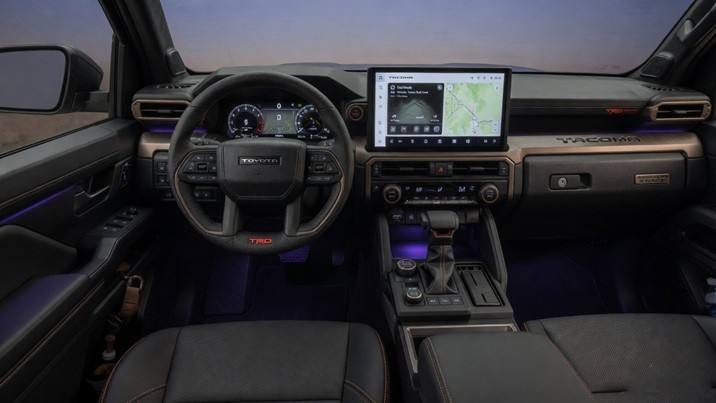
For 2027 Toyota Tacoma will likely push further:
- Wider adoption of the large touchscreen and a higher-resolution digital gauge cluster as standard on more trims.
- Software updates that add more off-road-specific interfaces—enhanced Multi-Terrain Monitor with predictive trail lines, integrated inclinometer/terrain data logging, and possibly over-the-air (OTA) updates for powertrain maps or new drive modes.
- Improved cabin materials in higher trims (more durable, easy-to-clean surfaces suited to muddy boots and wet dogs).
- Better noise insulation and vibration damping, building on the already-improved ride quality from the coil-spring suspension.
- Expanded connectivity: Remote monitoring via the Toyota app that includes hybrid battery status, tire pressures, and geo-fencing alerts—features overlanders and remote workers will appreciate.
The interior becomes less “truck” and more “mobile command center” without losing its rugged character. The detachable JBL speaker already hints at this lifestyle direction; 2027 could expand on it with better integration for action cameras, drones, or portable power stations.
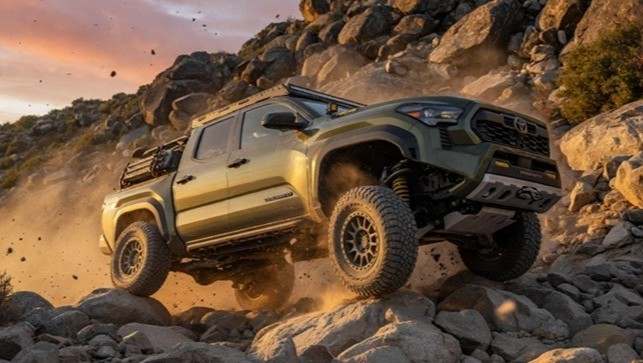
AWD/4WD Systems & Off-Road Intelligence
All hybrid Tacomas come with 4WD standard—an important differentiator. Non-hybrid models offer RWD or 4WD with locking rear differentials, crawl control, and Multi-Terrain Select on appropriate trims.
For 2027, expect smarter electronic integration:
- Enhanced torque vectoring or predictive traction control that uses the hybrid motor’s instant response alongside traditional locking diffs.
- Refined crawl control and new “Hybrid Low” modes that prioritize electric torque for ultra-precise, low-noise maneuvering.
- Possible expansion of camera-based terrain preview or sensor fusion that helps the truck anticipate slip and adjust power delivery proactively.
These systems build on the current excellent hardware (TRD Pro and Trailhunter models already punch well above their price in serious off-roading). The 2027 Toyota Tacoma updates would make the truck more intuitive for less-experienced drivers while giving experts finer control.
2027 Toyota Tacoma Specs
| Specification | Base / SR (Gas) | Higher Output Gas (Most Trims) | i-FORCE MAX Hybrid |
|---|---|---|---|
| Engine | 2.4L Turbo I4 | 2.4L Turbo I4 | 2.4L Turbo I4 + Electric Motor |
| Horsepower | 228 hp | 278 hp | 326 hp (combined) |
| Torque | ~270 lb-ft | 317 lb-ft | 465 lb-ft (combined) |
| Transmission | 8-speed Automatic or 6-speed Manual | 8-speed Automatic | 8-speed Automatic (motor integrated) |
| Drivetrain | RWD or 4WD | RWD or 4WD | 4WD standard |
| 0-60 mph (est.) | ~7.5–8.0 sec | ~6.8–7.2 sec | ~7.0–7.2 sec |
| Specification | Gas Models | i-FORCE MAX Hybrid |
|---|---|---|
| Max Towing Capacity | Up to 6,500 lbs | Up to 6,000 lbs |
| Max Payload | Up to 1,705–1,710 lbs | Up to 1,705–1,710 lbs |
| Fuel Tank | ~18.2 gallons | ~18.2 gallons |
| EPA Fuel Economy (est.) | 18–21 city / 23–26 hwy | 22/24 city/hwy (up to 23 combined) |
| Onboard Power (Hybrid) | N/A | 2,400W AC inverter standard |
Pricing & Strategic Upgrades
The Tacoma has long owned the “reliable workhorse that can also play hard” positioning. The hybrid powertrain adds a new layer: effortless torque and better efficiency without the complexity or range anxiety of full EVs.
Pricing for 2027 will likely see a modest increase ($1,000–2,000 across the range) to account for added content and inflation, with the SR starting in the mid-$35,000s and loaded TRD Pro/Trailhunter hybrids climbing into the mid-to-high $50,000s.
Strategic upgrades buyers should watch for:
- More standard advanced safety and driver-assistance features (Toyota Safety Sense evolution).
- Improved underbody protection or corrosion resistance packages.
- Bed innovations (stronger tie-downs, better lighting, or expanded 120V/240V power options).
- OTA capability that keeps the truck feeling fresh years after purchase.
In a segment where the Ford Ranger offers strong on-road manners and the Chevy Colorado is getting its own 2027 refresh, the Tacoma’s combination of proven durability, massive aftermarket support, hybrid torque, and Toyota resale strength remains unmatched for long-term ownership.
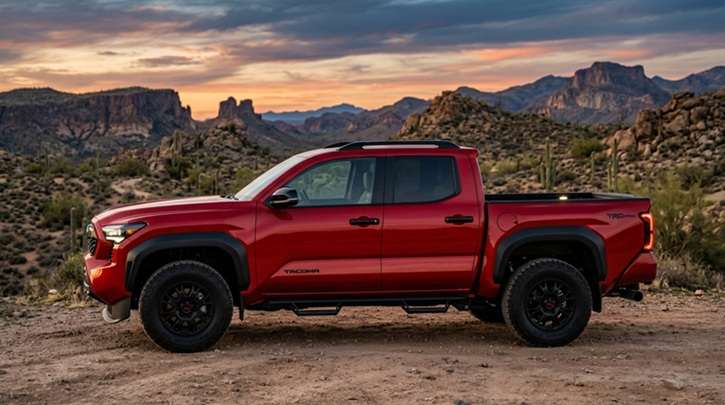
How It Stacks Up Against Key Rivals
| Model | Powertrain Options | Max HP / Torque | Max Towing | Approx. Starting Price (2026 MY) |
|---|---|---|---|---|
| Toyota Tacoma | 2.4T I4 or Hybrid | 326 hp / 465 lb-ft (hybrid) | 6,500 lbs | ~$35,000+ |
| Ford Ranger | 2.3T I4 or V6 | ~315 hp / 400+ lb-ft | Up to 7,500 lbs | ~$34,000+ |
| Chevy Colorado | Turbo I4 (2027 refresh coming) | ~310 hp | ~7,700 lbs | ~$32,000+ |
| Jeep Gladiator | 3.6L V6 | 285 hp / 260 lb-ft | ~7,700 lbs | ~$38,000+ |
| Honda Ridgeline | 3.5L V6 | 280 hp / 262 lb-ft | 5,000 lbs | ~$39,000+ |
- Ford Ranger: Excellent on-road dynamics and available V6 power in some markets. Lacks the Tacoma’s hybrid torque advantage and legendary long-term reliability reputation.
- Chevrolet Colorado (2027 refresh): Getting meaningful updates, but historically trails Toyota in resale and dealer service experience for truck buyers.
- Jeep Gladiator: Unique removable top/doors and Wrangler off-road DNA, but compromised on-road manners, lower towing/payload in some configs, and thirstier fuel economy.
- Honda Ridgeline: Smoothest daily driver with car-like refinement and innovative bed features, but significantly less serious off-road capability and lower towing.
The Tacoma doesn’t win every spec-sheet battle. It wins the ownership battle—year after year, mile after mile.
The 2027 Toyota Tacoma won’t arrive with a dramatic new look or revolutionary powertrain that breaks the internet. That’s exactly why it will succeed. Toyota is taking the strongest midsize truck platform it has ever built and methodically sharpening it—refining the hybrid experience, freshening styling, deepening tech integration, and enhancing off-road intelligence.
This is a truck for buyers who value substance over speculation. It’s for the overlander who needs reliable torque and efficiency on remote trails, the tradesperson who wants a durable daily with serious weekend capability, and the family that plans to keep their truck for a decade or more.
Official details will emerge closer to the typical late-summer/fall 2026 reveal window for 2027 models. Until then, the smart money is on Toyota continuing to do what it does best: build the truck that owners keep longest and trust most when it matters.
What feature would you most want to see added or improved in the 2027 Toyota Tacoma? Drop your thoughts below—whether it’s more hybrid availability, specific tech, or a wild off-road package idea. The conversation around this refresh is just getting started, and the real story is more compelling than any render.
Related Post