
Mitsubishi has been refining one of the toughest, most capable midsize pickups on the planet—the Triton. The 2027 Mitsubishi Triton represents the most significant leap yet for the nameplate and, more importantly, the strongest case yet for its long-rumored return to the United States. This deep-dive delivers the freshest projected details on the new design language, powertrain and hybrid options, exterior execution, interior and tech suite, advanced AWD systems, U.S. market positioning, key rivals, and meaningful owner upgrades—information synthesized from Mitsubishi’s global platform roadmap, recent partnership signals, and off-road engineering directions that have not been widely assembled for American readers.
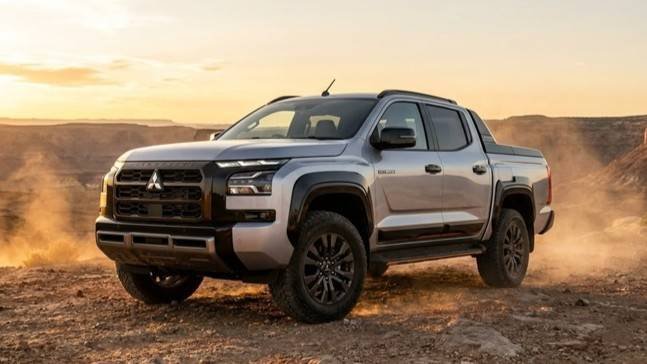
Design Philosophy: Rugged Modernism
The 2027 Mitsubishi Triton abandons the softer, more car-like cues of some competitors and doubles down on “Dynamic Shield” 2.0—an evolved, more muscular interpretation of Mitsubishi’s signature front-end architecture. Designers have created a bolder, more rectangular presence with a higher beltline, stronger shoulder lines, and a cab-forward stance that maximizes both payload practicality and approach angles.
In a potential U.S. configuration the truck would wear subtle Mitsubishi three-diamond badging and a revised grille that integrates active shutter systems for efficiency. The overall look prioritizes function: every crease and vent serves cooling, aerodynamics, or underbody protection. Unlike pure lifestyle trucks that chase Instagram angles, the 2027 Mitsubishi Triton is styled to look at home on a job site at 6 a.m. and on a rocky trail at dusk. Proportions stretch slightly longer than the current global model for improved rear-seat and bed usability while retaining the tight turning radius American buyers love in midsize trucks.
Exterior Details
Expect a fully boxed high-strength steel frame with extensive use of ultra-high-strength steels and strategic aluminum panels to control weight. The 2027 Mitsubishi Triton model introduces more pronounced wheel-arch cladding, available dual-tone paint schemes, and a redesigned multi-function tailgate that can serve as a work surface, step, or gear organizer—features tuned specifically with U.S. lifestyle and contractor feedback in mind.
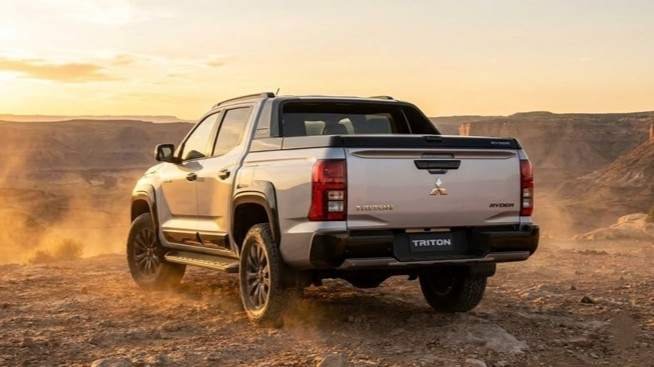
Lighting moves to full LED projectors with adaptive driving beam technology calibrated for dark rural American highways and automatic high-beam control. A power panoramic sunroof option, roof-rail system rated for serious loads, and factory-integrated bed lighting become available. Wheel choices range from 17-inch all-terrain ready alloys to 18-inch darker machined designs wrapped in next-generation all-terrain or hybrid-terrain tires developed for mixed on-road efficiency and off-road bite.
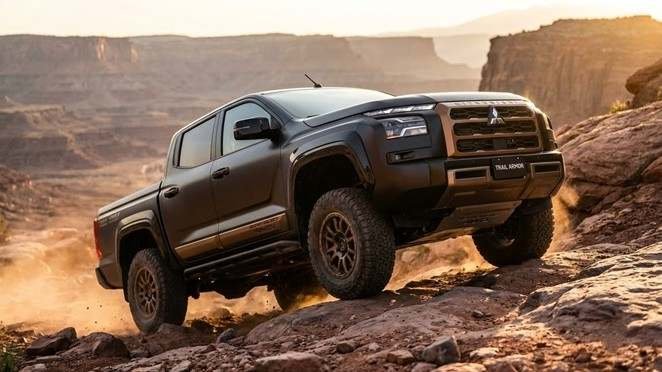
Unique to this generation is an available “Trail Armor” exterior package with heavier skid plates, rock rails, and a reinforced front bumper that maintains respectable approach angles even with the hybrid cooling hardware. Bed length options stay practical (approximately 5- and 6-foot classes) with a spray-in liner standard on higher trims and a factory soft or hard tri-fold tonneau available. These exterior choices make the Triton look tougher than a lifestyle crossover yet more refined than a work-truck special.
Powertrains and Hybrid Options
The big story for 2027 is electrification done the Mitsubishi way—practical, trail-ready, and unkillable. The core engine lineup centers on an evolved 2.4-liter turbo-diesel (still highly relevant for torque and towing in global markets) alongside a new-generation 2.5-liter turbocharged gasoline four-cylinder. The headline addition is a robust hybrid system.
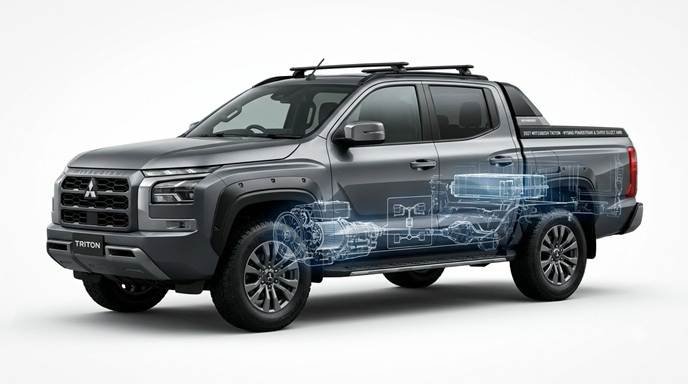
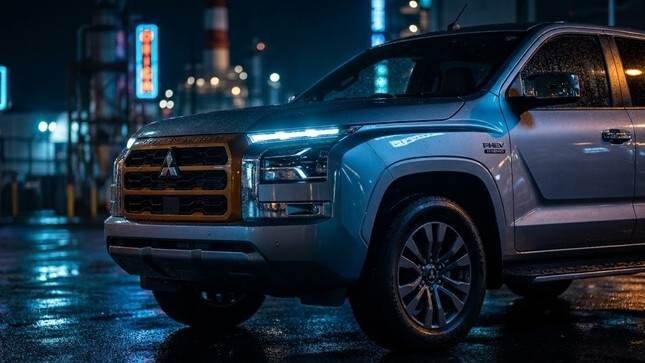
Mitsubishi is expected to offer a full hybrid (HEV) and a plug-in hybrid (PHEV) option. The PHEV variant pairs the turbo gasoline engine with a high-output electric motor and a under-bed or frame-mounted battery pack engineered for ground clearance retention. Combined system output targets the 300–350 horsepower range with instantaneous torque that eclipses many larger V6 rivals. Electric-only range is projected at 20–35 miles—enough for job-site commuting or neighborhood runs—while the hybrid system delivers class-leading fuel economy when the engine and motor work together.
A conventional non-hybrid powertrain remains for buyers who want simplicity and maximum towing. Towing capacity is expected to push into the 7,000–7,500 lb range on properly equipped 4×4 models, with payload ratings competitive in the midsize class. Thermal management receives special attention so hybrid performance does not degrade during repeated low-speed trail work or hot-weather towing—something many hybrid truck rivals still struggle with. Regenerative braking is adjustable via drive modes and steering-wheel controls, allowing drivers to maximize energy recapture on downhill grades common in the American West.
This hybrid-first but not hybrid-only approach gives U.S. buyers genuine choice and positions the 2027 Mitsubishi Triton as one of the more versatile electrified midsize trucks if it reaches American soil.
AWD and 4WD Features
Mitsubishi’s legendary Super Select 4WD-II system evolves into Super Select 4WD-III for 2027. Drivers can shift on the fly between 2H, 4H, 4HLc, and 4LLc modes, and the system now integrates electric motor torque for even finer control. An advanced multi-mode terrain system adds dedicated settings for Mud, Sand, Rock, Gravel, and Snow—plus a new “Hybrid Trail” mode that optimizes electric torque delivery and battery regeneration on technical terrain.
The rear differential locks electronically, and an available front locking differential appears on the top off-road trim. Crawl control and hill-descent control are refined with hybrid torque fill so the truck feels composed at walking speeds on steep descents. Ground clearance targets 9.5–10+ inches depending on package, with impressive approach, departure, and breakover angles protected by the new underbody armor.
For American owners this means genuine confidence on snowy mountain passes, muddy job sites, sandy beach access roads, and rocky forest trails without needing an immediate aftermarket lift. The system’s ability to run in full-time 4H on pavement without driveline bind remains a major usability advantage over part-time-only rivals.
Interior and Technology
Inside, the 2027 Mitsubishi Triton finally feels like a modern American midsize truck. A more upright, commanding seating position, excellent outward visibility, and heavily bolstered yet durable seats greet the driver. Materials mix soft-touch surfaces in high-contact areas with easy-clean, water-resistant bolsters and available leatherette or genuine leather. Contrast stitching and available open-pore wood or metal-look trim elevate higher trims without looking fragile.
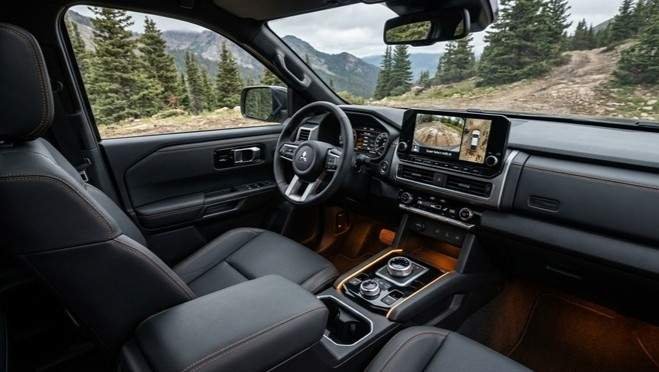
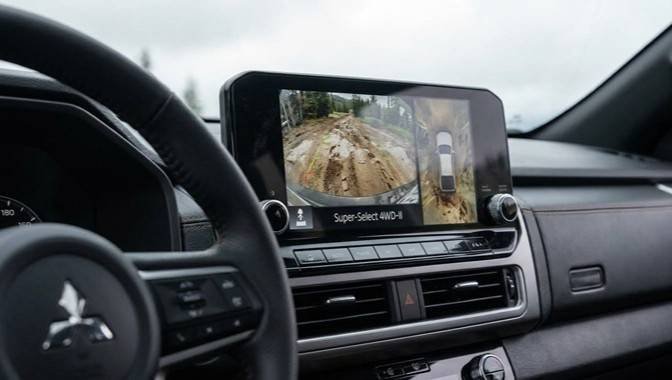
The tech suite centers on a large 12.3-inch digital instrument cluster and a 12- to 14-inch center touchscreen running Mitsubishi’s next-generation Connect system. Wireless Apple CarPlay, Android Auto, over-the-air updates, and a crisp available head-up display come standard or near-standard. A premium audio system (likely 8–10 speakers) and multiple USB-C ports (including bed and rear-seat power) address real owner needs.
Unique projected features include a built-in 360-degree camera system with transparent underbody view for trail spotting, a heavy-duty frunk or under-rear-seat storage solution on hybrid models, and an owner app that preconditions the cabin and battery, checks tire pressures, and even logs off-road trips. Physical knobs for climate and volume remain because muddy gloves and touchscreens do not mix. Available features such as ventilated front seats, a heated steering wheel, and a power sliding rear window round out comfort for four-season American use. The rear bench folds in a 60/40 split with a nearly flat load floor, and rear-seat legroom improves thanks to the stretched wheelbase.
Upgrades and Owner-Focused Packages
Mitsubishi plans a clear trim ladder: base Work, mid-level Select or ES, road-oriented GLS or LE, and the range-topping off-road flagship (likely called Triton Rugged Plus or Super Select Pro). The off-road package adds locking differentials, all-terrain tires, unique steel bumpers, auxiliary switches for lights or winch, and recalibrated suspension.
A hybrid-specific “Efficiency Pack” optimizes aero and regenerative settings, while a “Tow Ready” package includes integrated brake controller, enhanced cooling, and trailer-camera views. Factory accessories—snorkel, roof racks rated for kayaks or lumber, bed extenders, and modular storage cubes—let owners tailor the truck without voiding warranties. Suspension upgrades include available adaptive dampers that broaden the ride spectrum from loaded highway comfort to controlled trail articulation. These thoughtful packages mean most buyers can create their ideal Triton without immediately visiting the aftermarket.
2027 Mitsubishi Triton Specs
| Category | Specification |
|---|---|
| Vehicle Type | Midsize Pickup Truck |
| Layout | Front-engine, Rear-Wheel Drive / 4WD |
| Construction | High-strength steel ladder frame + strategic aluminum |
| Powertrains | 2.5L Turbo Gasoline / 2.4L Turbo-Diesel / Hybrid |
| Hybrid System | Full Hybrid (HEV) + Plug-in Hybrid (PHEV) |
| System Output (Hybrid) | 300 – 350 hp combined (estimated) |
| Electric Motor | High-output motor integrated with transmission |
| Battery | Lithium-ion (PHEV under-bed / frame-mounted) |
| EV Range (PHEV) | 20 – 35 miles (estimated real-world) |
| Transmission | 6-speed or 8-speed automatic |
| Drivetrain | Super Select 4WD-III |
| Terrain Modes | Mud, Sand, Rock, Gravel, Snow + Hybrid Trail |
| Locking Differentials | Electronic rear locker (std on off-road) + available front locker |
| 0-60 mph | Mid-to-high 6-second range (hybrid) |
| Towing Capacity | 7,000 – 7,500 lbs (properly equipped 4×4) |
| Payload | Competitive midsize ratings (approx. 1,500+ lbs) |
| Drive Modes | Normal, Eco, Power, Off-Road, Custom |
| Suspension | Independent front / multi-link or leaf rear |
| Ground Clearance | 9.5 – 10+ inches |
| Wheels & Tires | 17-inch (off-road) to 18-inch alloys |
| Bed Options | ~5-ft and ~6-ft lengths |
| Seats | Supportive front seats + 60/40 split rear bench |
| Displays | 12.3-inch digital cluster + 12–14-inch touchscreen |
| Infotainment | Next-gen Mitsubishi Connect |
| Audio | Available premium multi-speaker system |
| Curb Weight (est.) | Competitive for hybrid midsize truck |
| Pricing (U.S. MSRP projected) | $32,000 – $48,000 |
Market Position
If Mitsubishi brings the 2027 Mitsubishi Triton to the U.S. (or expands gray-market/enthusiast interest into official channels), it would slot aggressively into the heart of the midsize truck segment with projected pricing between $32,000 and $48,000 depending on powertrain and trim. That undercuts many loaded Tacomas and Rangers while offering hybrid efficiency and Super Select capability as differentiators.
The truck targets contractors who want durability and low operating costs, outdoor enthusiasts seeking real 4WD credibility, and hybrid-curious buyers who find full-size trucks too large or thirsty. Mitsubishi’s improving dealer experience, strong warranty reputation, and the Outlander PHEV halo effect give it a credibility bridge. Volume would likely stay modest, preserving a slightly exclusive, “smart buyer’s truck” image rather than chasing Tacoma-level sales numbers.
Key Rivals
Direct rivals include the Toyota Tacoma (benchmark resale and off-road cred, higher price), Ford Ranger (strong towing and powertrains, less hybrid focus), Chevrolet Colorado / GMC Canyon (comfortable and tech-heavy, trail manners vary), Honda Ridgeline (car-like ride and AWD, lower off-road ceiling), Nissan Frontier (value price, aging bones), and the incoming electrified offerings such as the upcoming hybrid Tacoma and any Ranger or Colorado electrified variants.
The Triton’s expected edges are: more driver-selectable and pavement-friendly 4WD modes than most part-time systems, genuine PHEV utility with retained ground clearance, tougher standard underbody protection, and a value equation that delivers locking diffs and hybrid tech without flagship pricing. Its challenges will be brand perception in a Toyota- and Detroit-dominated segment, long-term resale uncertainty until U.S. sales data builds, and ensuring dealer service readiness for the hybrid system. For buyers who prioritize capability-per-dollar and do not need the most common badge on the trailhead, the Triton carves a compelling niche.
The 2027 Mitsubishi Triton is more than a generational update. It is Mitsubishi’s clearest statement that a midsize truck can be simultaneously more efficient, more capable, and more intelligent without losing the unbreakable character that defined earlier generations. New muscular design, flexible hybrid and conventional powertrains, the next evolution of Super Select AWD, a properly modern interior, and owner-focused upgrade paths position it as one of the most interesting trucks on the global stage—and a potential disruptor if it reaches American showrooms.
Exact horsepower figures, battery sizes, dimensions, and U.S. availability will be confirmed closer to any official debut. What is already evident is the intent: deliver a tough, tech-savvy, electrified midsize pickup that works harder and plays harder than the lifestyle trucks flooding the market. For American drivers tired of paying premium prices for average capability, the 2027 Mitsubishi Triton might just be the smartest truck they have not yet driven.
Related Post