
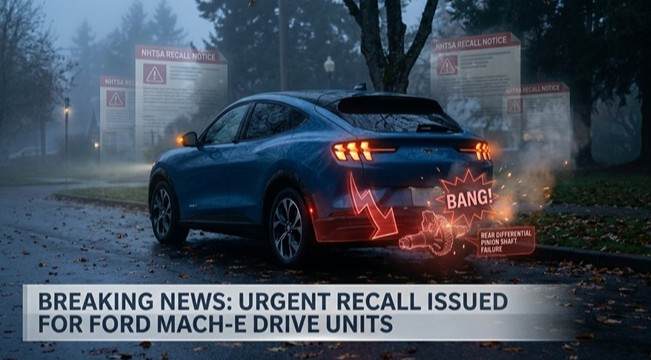
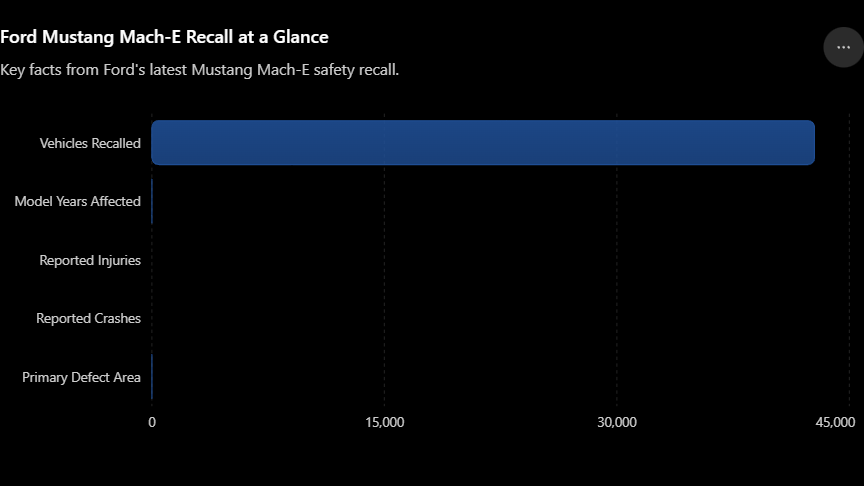
Ford is once again in the spotlight for a safety recall on its popular electric crossover, the Mustang Mach-E. This time, nearly 43,000 vehicles from the 2021–2023 model years are being pulled back because of a potentially serious issue with the rear differential. Specifically, the pinion shaft in rear-wheel-drive (RWD) models could fracture due to bending fatigue, leading to a sudden loss of power or even the vehicle rolling away when parked if the parking brake isn’t engaged.
While recalls are common in the auto industry—especially for early-generation EVs—this one hits at a core mechanical component in a vehicle marketed as a fun, Mustang-inspired daily driver. For American drivers who embraced the Mach-E as an accessible entry into electric performance, this news raises fresh questions about long-term reliability as these cars age beyond their warranty periods.
According to documents filed with the National Highway Traffic Safety Administration (NHTSA), the rear differential’s pinion shaft may bend and eventually break under stress. Ford became aware of the problem after a failed shaft was discovered in a 2023 Mach-E in Europe earlier this year. The issue affects about 42,784 RWD-equipped Mach-Es built between March 2020 and August 2025.
Owners might notice warning lights on the dashboard, including diagnostic trouble codes like P174E, P0A2F, P019C, or P27B2. In the worst case, the “bang” sound referenced in early reports could signal a sudden loss of drive power while on the highway, or the vehicle creeping forward or backward in Park without the parking brake set. That rollaway risk is particularly concerning for families or anyone parking on inclines.
This isn’t the first headache for Mach-E owners. Previous recalls have addressed everything from high-voltage battery contactors overheating during fast charging, door latch failures that could trap passengers (especially kids), half-shaft issues, and even park position problems in newer models. Ford has worked through many of these with software updates and hardware fixes, but the cumulative effect is starting to paint a picture of teething problems in what was supposed to be a flagship EV.
For many U.S. buyers, the Mach-E represented freedom from gas stations, strong acceleration, and that signature Mustang styling at a relatively approachable price. Early adopters in states like California, Texas, and Florida raved about the driving dynamics. But reliability concerns are mounting.
Online forums and owner groups are buzzing with mixed experiences. Some RWD Mach-E drivers report no issues even at higher mileages, while others describe strange noises from the rear end or reduced power. One owner in the Midwest told me (anecdotally, via community posts) that their 2022 model started making odd whining sounds around 40,000 miles, though it hasn’t failed yet. With the recall now official, anxiety levels are rising—especially for those whose vehicles are out of the initial bumper-to-bumper coverage.
Ford’s response so far has been proactive. Dealers will inspect and either repair or replace the rear differential assembly with a more robust pinion shaft design. The work is free of charge, and owner notification letters are expected to go out soon. In the meantime, the company advises using the parking brake consistently and paying attention to any dashboard warnings.
Broader Implications for the EV Market
This recall comes at a pivotal time for the American EV landscape. With federal incentives shifting, competition from Tesla, Hyundai-Kia, and new domestic players intensifying, and consumers increasingly focused on total cost of ownership, reliability stories matter more than ever.
The Mach-E was Ford’s bold bet on electrifying its iconic brand. Sales have been solid but not explosive, and production has ramped up with updates like improved range and tech refreshes in later years. However, repeated recalls risk eroding consumer confidence, particularly among mainstream buyers who aren’t die-hard EV enthusiasts.
Compare this to traditional ICE vehicles: Differential failures aren’t unheard of in gas-powered trucks or performance cars, but they often occur at much higher mileages. In EVs, where the powertrain is simpler in some ways but involves high-torque electric motors delivering instant power, components like differentials face unique stresses. Ford engineers are clearly iterating quickly, but the public perception is that early EVs still carry more unknowns.
On the positive side, EVs generally have fewer moving parts and lower maintenance costs overall. A differential repair, while inconvenient, is far less complex (and expensive long-term) than a transmission rebuild in a conventional vehicle. Ford’s willingness to address the issue head-on—before widespread failures—deserves credit.
What Should Mach-E Owners Do Now?
- Check Your VIN: Visit the NHTSA website or Ford’s recall portal and enter your vehicle identification number to see if your specific Mach-E is affected.
- Stay Vigilant: Use the parking brake every time you park. Monitor for warning lights or unusual noises from the rear. If you experience a loss of power, safely pull over and contact roadside assistance.
- Schedule the Repair: Once notifications arrive or you confirm eligibility, book an appointment promptly. Many dealers are EV-trained and should handle this efficiently.
- Document Everything: Keep records of any related symptoms. This can help if additional issues arise down the road.
For prospective buyers eyeing a used Mach-E, this recall could actually be good news—it means the problematic part will likely be replaced under warranty for affected vehicles. Just verify the recall status before purchasing.
Ford has poured billions into its EV future, from the F-150 Lightning to ambitious plans for next-generation platforms. The Mustang Mach-E remains a compelling package with sharp handling, spacious interior, and that emotional connection to the Mustang name. But moments like this underscore that the transition to electric isn’t just about batteries and software—it’s about perfecting every mechanical interface under new operating conditions.
As summer road trips wind down and families head back to school routines, this recall serves as a timely reminder: Even in the EV era, foundational components like differentials still demand respect. Ford promises a durable fix, and owners will be watching closely to see if the Mach-E can deliver on its long-term promise without any more unexpected “bangs.”
In the end, no car is perfect, and recalls are part of the safety net that protects drivers. For the tens of thousands of Mach-E owners across America, the key question is whether this latest chapter builds resilience into the vehicle or adds another layer of hesitation. Ford has the opportunity to turn this into a story of responsive engineering—here’s hoping they seize it.
Related Post