
The Toyota Corolla Cross has quietly become one of the smartest buys in the crowded U.S. compact crossover segment. It delivers Corolla-level reliability, excellent fuel economy, available all-wheel drive, and practical packaging at a price that undercuts many flashier rivals. For the 2027 Toyota Corolla Cross model year, Toyota is preparing the most substantial evolution yet of this nameplate—one that sharpens the design, elevates the hybrid powertrain, modernizes the interior and tech, refines AWD performance, and strengthens its value proposition for American families, commuters, and first-time crossover buyers. This in-depth guide covers the projected new design language, powertrain and hybrid advancements, exterior details, interior and technology upgrades, AWD system improvements, U.S. market positioning, key rivals, and owner-focused packages—details drawn from Toyota’s TNGA platform trajectory, hybrid roadmap, and North American buyer feedback that have not been widely compiled elsewhere.
Design Philosophy: Confident, Athletic
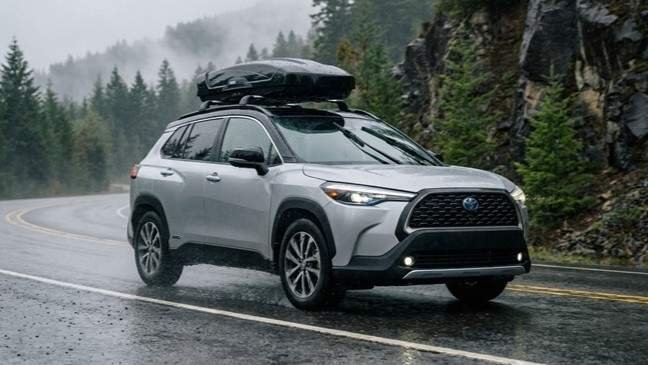
The 2027 Toyota Corolla Cross moves beyond the somewhat cautious styling of the first generation and adopts a more assertive, athletic presence while staying true to Toyota’s “Robust Active” design direction. The front end features a bolder interpretation of the hammerhead-inspired grille with a wider lower intake, sharper LED lighting signatures, and more pronounced character lines that give the crossover greater road presence without looking aggressive for the sake of it.
Proportions remain compact and easy to maneuver in city parking or crowded suburban lots, yet the 2027 model is expected to sit slightly lower and wider for improved stance and handling confidence. Designers have tightened the overhangs, raised the beltline modestly for a more planted look, and introduced cleaner surfacing that ages well. In the U.S. market the Cross will continue to wear understated Toyota badging and offer a range of sophisticated color options, including new two-tone roof combinations and exclusive metallic finishes tuned for American tastes. The overall effect is a crossover that looks more premium and purposeful than its predecessor while remaining instantly recognizable as a practical Toyota.
Exterior Details
Expect extensive use of high-strength steel in the TNGA-C platform with strategic reinforcements for improved crash performance and reduced noise. The 2027 Toyota Corolla Cross exterior introduces more functional aerodynamic elements—active grille shutters, underbody panels, and carefully shaped side mirrors—that contribute to better highway efficiency, a priority for long American commutes and road trips.
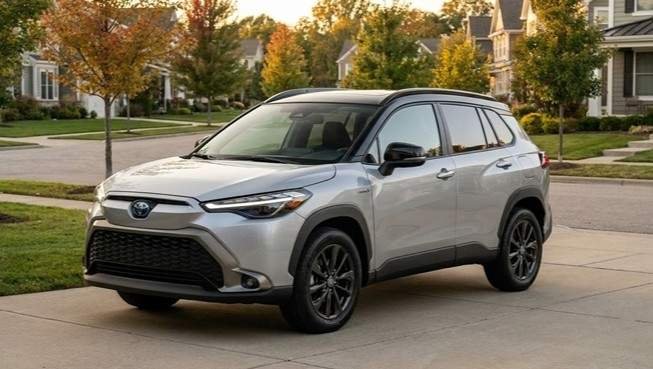
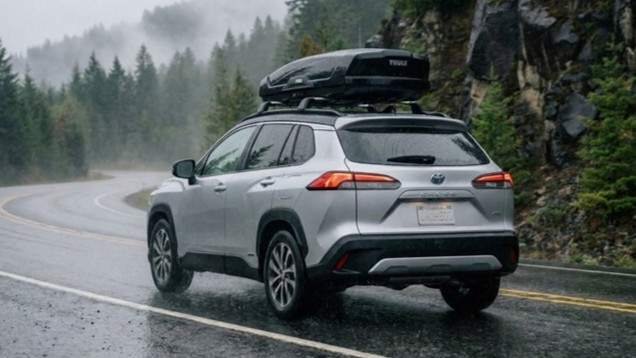
Full LED headlights with adaptive or sequential turn-signal capability become widely available, along with LED taillights that feature a distinctive light-bar signature. Wheel designs range from 17-inch aero-efficient alloys on hybrid models to 18-inch darker machined or two-tone designs on higher trims, wrapped in all-season tires optimized for wet-weather grip and low rolling resistance. Roof rails are standard or available across the lineup and rated for practical loads such as bike racks or cargo boxes.
A unique projected feature for the U.S. is an available “All-Weather” exterior package that adds higher-grade underbody protection, mudguards, and a slightly raised ride height option while preserving the car’s low center of gravity. Power liftgate with hands-free operation, available panoramic fixed or opening glass roof, and factory-tinted rear glass round out the convenience features American buyers expect. These exterior choices make the Corolla Cross look more upscale and capable without sacrificing the easy-to-live-with dimensions that make it popular in cities and suburbs alike.
Powertrains and Hybrid Options
Toyota’s hybrid expertise remains the star of the 2027 Toyota Corolla Cross. The core powertrain lineup is expected to center on an evolved fifth-generation Toyota Hybrid System paired with a refined 2.0-liter four-cylinder engine. Combined system output is projected in the 200–220 horsepower range—noticeably stronger than the current generation—while delivering even better real-world fuel economy.
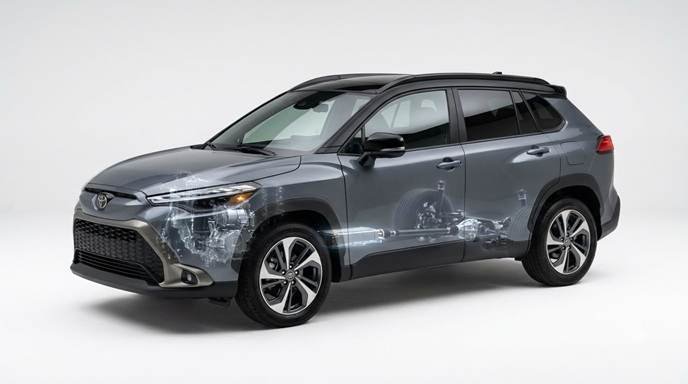
A conventional non-hybrid 2.0-liter gasoline option will likely remain for buyers who prefer simplicity or maximum affordability, but the hybrid is positioned as the volume seller in the U.S. thanks to its seamless power delivery, strong low-end torque, and outstanding efficiency. Electric-only operation at low speeds and during light cruising becomes smoother and more frequent, aided by a higher-capacity lithium-ion battery pack with improved thermal management for hot Southern summers and cold Northern winters.
Toyota is not expected to offer a plug-in hybrid version of the Corolla Cross for 2027 (that role stays with larger models like the RAV4 Prime), keeping the standard hybrid simple, lightweight, and cost-effective. Fuel economy targets point to mid-40s mpg combined in front-wheel-drive hybrid form and low-to-mid 40s with AWD—figures that continue to lead much of the segment. Regenerative braking is more tunable via drive modes, and the system is calibrated specifically for American driving patterns, including frequent stop-and-go traffic and sustained highway speeds. This hybrid focus gives U.S. buyers genuine savings at the pump without range anxiety or the higher price of a full EV.
AWD Features- Intelligent AWD Refined
Available Electronic On-Demand All-Wheel Drive remains a key selling point. The 2027 system builds on Toyota’s proven setup with faster engagement, smarter torque distribution, and better integration with the hybrid powertrain. Under normal conditions the Cross operates in efficient front-wheel drive; when slip is detected or when the driver selects a more dynamic mode, up to 50 percent of torque can be sent to the rear axle almost instantaneously.
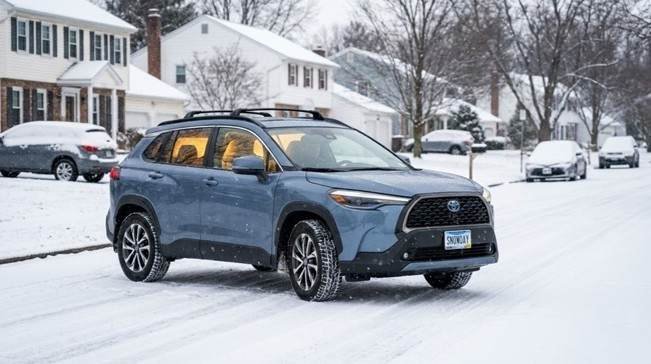
New for this generation is expected multi-terrain select functionality or enhanced drive modes (Normal, Eco, Sport, and an available Snow/Mud setting) that adjust throttle response, hybrid power split, and AWD behavior. Hill-start assist, downhill assist control, and improved traction management make the vehicle more confident on wet roads, light snow, gravel driveways, and steep driveways common across the U.S. Ground clearance stays practical for a compact crossover (around 8 inches), striking a balance between easy entry/exit and light-duty capability. For American owners this means year-round confidence without the fuel-economy penalty of a full-time 4WD system or the bulk of a larger SUV.
Interior and Technology
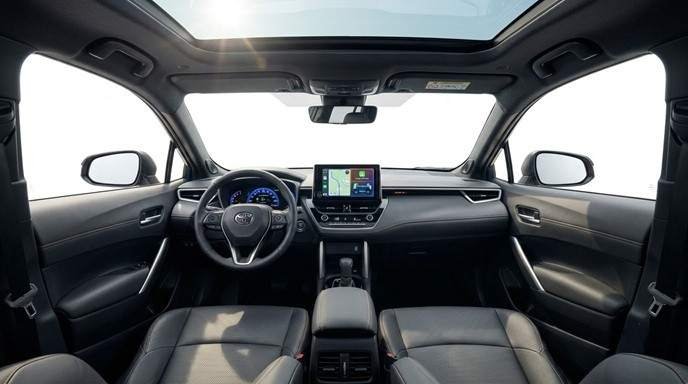
Inside, the 2027 Toyota Corolla Cross takes a meaningful step forward in perceived quality and technology. The cabin features a more driver-centric layout with higher-grade soft-touch materials on the dashboard and door panels, improved noise insulation, and available contrasting stitching that elevates the feel beyond typical compact-crossover expectations. Seating is supportive for long drives, with available power-adjustable, heated, and ventilated front seats and a rear bench that offers competitive legroom and a 60/40 split-folding design for cargo flexibility.
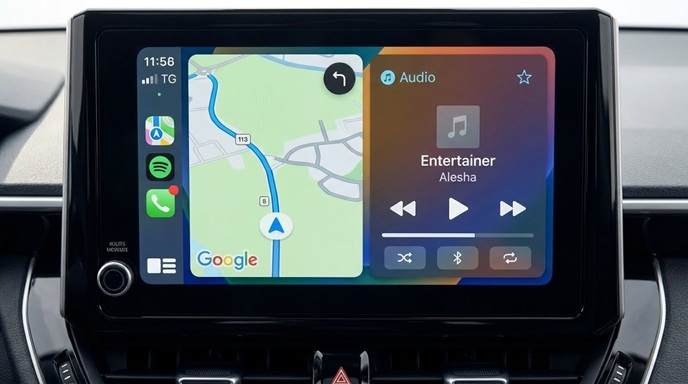
The technology suite is anchored by a larger digital instrument cluster (fully digital on higher trims) and a standard or available 10.5- to 12.3-inch touchscreen running the latest Toyota Audio Multimedia system. Wireless Apple CarPlay and Android Auto, cloud-based navigation, over-the-air updates, and a cleaner menu structure come standard on most trims. A premium audio option, multiple USB-C ports (including rear-seat fast charging), and a Wi-Fi hotspot address modern connectivity needs.
Unique projected U.S.-focused features include an enhanced Digital Key capability via smartphone, advanced cabin preconditioning through the Toyota app, a clearer multi-camera 360-degree view system for tight parking, and available panoramic view monitor with underbody visualization. Toyota Safety Sense 3.0 (or its successor) expands with improved intersection support, proactive driving assist, and better pedestrian/cyclist detection tuned for American road conditions. Physical climate controls remain alongside the touchscreen because Toyota understands drivers still want quick, tactile adjustments. The result is a cabin that feels more refined and tech-forward while staying intuitive and durable for daily family use.
Upgrades and Package Strategy
Toyota is expected to streamline the trim ladder while offering clear, value-packed upgrades: LE, XLE, and a sportier or more adventure-oriented SE/XSE equivalent, plus hybrid-specific branding. Popular packages will include a Weather package (heated seats, heated steering wheel, all-weather floor mats, and enhanced defrosters), a Technology package (larger screen, premium audio, advanced parking assist), and a Convenience package (power liftgate, roof rails, auto-dimming mirror).
A new “Nightshade” or dark-accent package and an available two-tone roof option give buyers personalization without aftermarket work. Suspension tweaks on sport-oriented trims improve body control, while hybrid models receive specific aero wheels and underbody panels. These factory upgrades allow owners to tailor the Corolla Cross for commuting efficiency, family comfort, or light adventure while preserving Toyota’s legendary reliability and warranty coverage.
2027 Toyota Corolla Cross Specs
| Category | Specification |
|---|---|
| Vehicle Type | Compact Crossover SUV |
| Platform | TNGA-C |
| Layout | Front-engine, FWD or Available AWD |
| Powertrains | 2.0L Dynamic Force 4-cylinder + Hybrid |
| Hybrid System | 5th-Generation Toyota Hybrid System |
| System Output (Hybrid) | 200 – 220 hp combined (estimated) |
| Gasoline Engine | 2.0-liter inline-4 |
| Electric Motor(s) | Front motor (FWD) + rear motor (AWD) |
| Battery | Lithium-ion |
| Transmission | eCVT (Hybrid) / Direct-Shift CVT or 10-speed auto (gas) |
| Drivetrain | Front-Wheel Drive / Electronic On-Demand AWD |
| Drive Modes | Normal, Eco, Sport + Snow/Mud (AWD) |
| 0-60 mph | High 7-second range (Hybrid est.) |
| Fuel Economy (est.) | Mid-40s mpg combined (FWD Hybrid) |
| Fuel Economy (Gas) | Low-to-mid 30s mpg combined (est.) |
| EV Mode | Low-speed electric-only operation |
| Suspension | Independent MacPherson strut front / multi-link rear |
| Ground Clearance | Approx. 8.0 – 8.3 inches |
| Brakes | Four-wheel disc with regenerative braking |
| Wheels & Tires | 17-inch (Hybrid aero) to 18-inch alloys |
| Exterior Highlights | Bold hammerhead-inspired grille, full LED lights, available two-tone roof, power liftgate, roof rails |
| Interior | Modern, higher-quality cabin |
| Seats | Supportive front seats + 60/40 split rear bench |
| Displays | Digital instrument cluster + 10.5–12.3-inch touchscreen |
| Infotainment | Latest Toyota Audio Multimedia |
| Tech Features | Digital Key, 360° camera, cabin preconditioning via app, Wi-Fi hotspot |
| Audio | Standard + available premium JBL system |
| Safety | Toyota Safety Sense 3.0 (or successor) |
| Cargo Space | Competitive compact-crossover volume |
| Dimensions (est.) | Slightly refined proportions, similar overall length |
| Curb Weight (est.) | Lightweight for class, especially Hybrid |
| Pricing (U.S. MSRP projected) | $25,000 – $35,000 |
Market Position
Priced projected in the $25,000 to $35,000 window depending on powertrain and trim, the 2027 Toyota Corolla Cross continues to target value-conscious buyers who want Toyota durability, strong residual values, and hybrid efficiency without stepping up to a RAV4. It appeals to young families, urban and suburban commuters, empty-nesters downsizing from larger SUVs, and anyone seeking a low-stress daily driver with available AWD.
Toyota’s unmatched dealer network, reputation for longevity, and high resale values give the Corolla Cross a practical advantage. It sits comfortably below the RAV4 in size and price while offering more space and capability than a standard Corolla hatchback or sedan. In a segment full of stylish but sometimes less-proven alternatives, the Cross doubles down on the attributes American buyers actually keep cars for: reliability, efficiency, and low cost of ownership.
Key Rivals
Primary rivals include the Honda HR-V (stylish and refined, less hybrid focus), Mazda CX-30 (premium driving dynamics and interior, higher price and lower efficiency), Subaru Crosstrek (standard AWD and adventure image, less polished hybrid option), Hyundai Kona and Kia Seltos (feature-rich and stylish, long-term reliability still catching up to Toyota), Volkswagen Taos (spacious, mixed ownership experience), and the Chevrolet Trax or Buick Envista (value pricing, less AWD and hybrid sophistication).
The 2027 Toyota Corolla Cross expected advantages are class-leading hybrid fuel economy, proven long-term durability, smoother power delivery, stronger resale, and a more comprehensive standard safety suite. Its challenges remain slightly less “exciting” styling or driving dynamics compared with Mazda or Hyundai products and less standard AWD than Subaru. For buyers who prioritize peace of mind, real-world efficiency, and a vehicle that simply works year after year, the 2027 Toyota Corolla Cross remains one of the most rational choices in the segment.
The 2027 Toyota Corolla Cross is not a radical reinvention—it is a thoughtful, thoroughly updated evolution that makes an already smart vehicle even more compelling for American roads. Sharper design, a stronger and more efficient hybrid system, refined AWD capability, a quieter and more tech-rich interior, and carefully chosen upgrade paths position it as the compact crossover that continues to deliver maximum practicality per dollar.
Exact horsepower, fuel-economy ratings, dimensions, features, and pricing will be confirmed closer to the official reveal and on-sale date. What is already clear is Toyota’s intent: keep the Corolla Cross as the no-nonsense, high-value, hybrid-powered compact crossover that U.S. buyers can depend on for years. For shoppers tired of hype-driven vehicles that sacrifice substance for style, the 2027 Toyota Corolla Cross looks ready to remain one of the smartest keys you can put in your pocket.
Related Post