
The 2027 Toyota Prius Prime PHEV is Toyota’s plug-in Prius: a compact hatchback that can cover a typical U.S. commute on electricity, then keep going on gasoline without hunting for a charger. That is the whole pitch. Plug in overnight, drive to work on electric power, and treat the gas tank as backup for weekends, road trips, and the days you forget the cord.
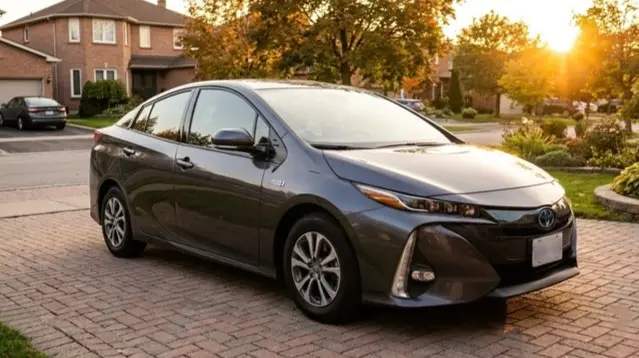
Toyota officially sells the U.S. car as the Prius Plug-in Hybrid. Shoppers, listings, and old badges still say Prius Prime. Same vehicle. If you are comparing a 2027 Toyota Prius Plug-in Hybrid window sticker with a “Prius Prime” search, you are not looking at two different models. This is a car for people with somewhere to plug in — a garage, a driveway, or a workplace charger — and a daily routine that fits inside a roughly 40-mile electric window. If that sounds like you, the numbers below are the ones that matter. If it does not, the regular hybrid Prius is still the simpler Toyota.
What’s New for the 2027 Toyota Prius Prime PHEV?
The 2027 model is not a redesign. It is the current fifth-generation Prius plug-in with a short, useful equipment update. Confirmed 2027 changes include dual-zone automatic climate control and a new Inked exterior color. Dual-zone matters more than a paint chip. Previous Prius Plug-in Hybrids asked the whole cabin to share one temperature. For a two-commuter household, being able to set driver and passenger sides separately is a real daily improvement, not brochure filler.
Everything else is largely carryover unless Toyota’s U.S. site lists it as new for 2027: the 2.0-liter hybrid system, 13.6-kWh battery, 220 horsepower net, SE / XSE / Nightshade / XSE Premium grades, Toyota Safety Sense 3.0, and the same hatchback packaging. Do not expect a new platform, a bigger battery, or a jump to 60 miles of electric range. Toyota has not announced that. If a listing claims a 2027-only horsepower bump or a new trim Toyota has not published, treat it as an error until it appears on toyota.com.
2027 Toyota Prius Prime Price and Trim Levels
The 2027 Prius Prime price — officially the Prius Plug-in Hybrid — starts at $33,980 MSRP for the SE. That is the manufacturer’s suggested retail price before destination, options, dealer fees, and taxes. Destination is extra. Transaction prices move with inventory and regional incentives.
- SE — the value play: 17-inch wheels, the longest electric-range rating in the lineup, and the equipment most commuters actually need
- XSE — sportier look, larger wheels, more comfort and display content
- Nightshade — blacked-out styling over the XSE idea
- XSE Premium — the loaded car: nicer interior, audio, and convenience items
Toyota has published the SE starting figure. Confirm XSE, Nightshade, and XSE Premium MSRPs on the current U.S. configurator before you budget. Do not use a screenshot from a previous model year as a 2027 quote.
| Grade | Starting MSRP | What you are paying for |
|---|---|---|
| SE | $33,980 | Longest rated EV range, 17-in wheels, core safety and infotainment |
| XSE | Higher than SE; confirm on Toyota.com | Larger wheels, richer cabin/tech, shorter rated EV range |
| Nightshade | Confirm on Toyota.com | XSE-like equipment with black exterior trim |
| XSE Premium | Highest; confirm on Toyota.com | Premium interior, audio, and convenience features |
A well-optioned XSE Premium can land several thousand above the SE before you leave the lot. If electric range and monthly cost are the reason you want a PHEV, start with SE and add only what you will use. Federal or state plug-in incentives are separate from MSRP. Eligibility changes. See the tax-credit section in the FAQs rather than subtracting $7,500 from $33,980 on a napkin.
2027 Prius Prime Electric Range
Toyota’s published EPA-estimated electric range for the 2027 Prius Prime is up to 44 miles for the SE and 39 miles for the other listed grades. Those are estimates, not a contract.
The gap is mostly wheels and extra equipment. SE’s smaller 17-inch wheels are easier to roll. XSE-style 19-inch wheels look better and cost you rated miles. If your round-trip commute is 35 miles, that five-mile EPA difference can be the line between “never using gas on weekdays” and “the engine wakes up on the last hill.”
- Speed. Highway miles at 75 mph use far more energy than 35-mph suburban streets. A 44-mile rating can shrink quickly on an Interstate commute.
- Temperature. Cabin heat in January is the silent range killer. Air conditioning in Phoenix heat costs energy too, just usually less than a resistance heater.
- Hills. A mountain drive into Denver or a steep garage ramp is not the EPA cycle.
- Climate settings. Preconditioning while plugged in (warming or cooling the cabin on shore power) saves battery miles. Doing it on the road does not.
- Wheels, cargo, and driving style. Roof boxes, extra passengers, and hard acceleration all tax the pack.
Plan around your worst season, not the window sticker. If winter commuting is 40 miles of mixed highway, do not buy this car assuming 44 electric miles every morning. If you have a 20-mile each-way suburban commute and a garage outlet, the SE’s rating is the reason this PHEV exists. When the battery is depleted, the car does not strand you. It becomes a regular hybrid and keeps driving on gasoline.
2027 Toyota Prius Prime MPG
Two labels show up on a Prius Plug-in Hybrid sticker, and they answer different questions. MPGe (miles per gallon equivalent) measures how far the car goes on a quantity of electricity equal to a gallon of gasoline, while it is using the battery. It is useful for comparing plug-in cars with each other. It is not what you will average if you never plug in.
MPG in hybrid mode is the gasoline figure after the plug-in battery is empty. That is the number that matters on a road trip, or for an owner who forgets to charge.
- Charge every night and drive 25 miles a day, and a large share of annual miles can be electric. Gasoline use can be tiny.
- Charge once a week and drive 80 miles a day, and you will live on hybrid MPG, with a short electric burst after each plug-in.
- Never charge, and you paid extra for a battery you are using as a heavy hybrid. The regular Prius will usually cost less and use less gas in that scenario.
Confirm the exact 2027 city/highway/combined MPG and MPGe on the window sticker and fueleconomy.gov. Wheel size and grade change the label. Do not treat an SE number as an XSE number.
Engine, Battery and Performance
The 2027 system combines a 2.0-liter four-cylinder gasoline engine, electric motors, and a 13.6-kWh lithium-ion battery. Toyota rates net combined output at 220 horsepower. below a certain speed and load, with charge in the pack, the car can move on the electric motor alone. When you need more power, or the battery is low, the gasoline engine starts. You do not shift gears in the usual sense; Toyota’s hybrid transaxle blends engine and motor. There is no charging plug required to keep driving — only to refill the plug-in portion of the battery.
220 horsepower is the reason this generation no longer feels like the old “slow Prius” joke. It is quick enough to merge onto a U.S. Interstate with confidence. It is not a sports compact. Normal and Eco modes keep it calm. Power / Sport-style modes (wording depends on the car’s menus) wake the system up for passing. A brake-hold and selectable regen strength, where equipped, matter more in traffic than a 0–60 brag.
The 13.6-kWh pack is modest next to a plug-in SUV. That is why charging is relatively short and why electric range sits in the 39–44-mile EPA band instead of 50-plus. It is sized for commuting, not for a battery-electric weekend.
2027 Prius Prime Charging Time and Home Charging Costs
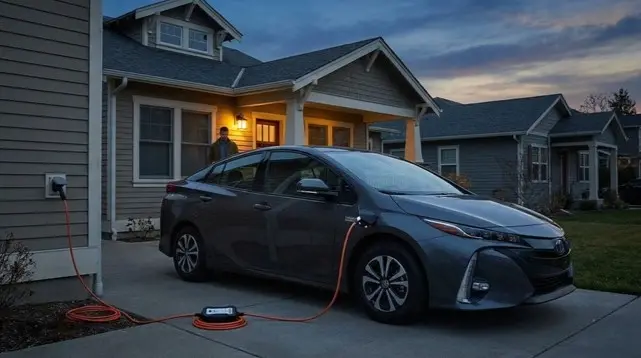
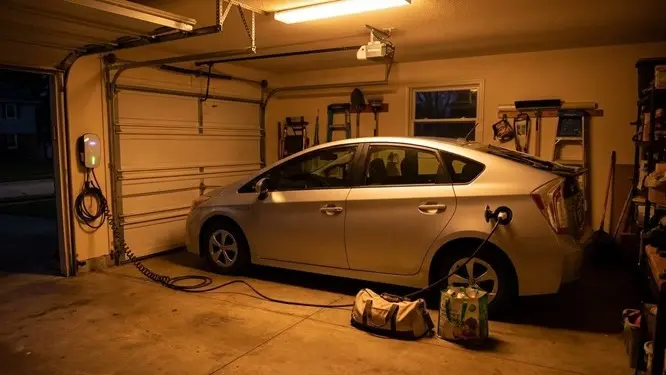
Toyota’s published approximate charging times are about 11 hours on a 120-volt household outlet and about four hours on Level 2 (240-volt) under ideal conditions. Those are manufacturer estimates. Cold weather, a very empty battery, a shared circuit, or a weaker EVSE can stretch them.
You do not have to install a wall charger if your daily electric miles are modest and you can leave the car on a standard outlet overnight. Eleven hours is a full workday-plus-evening. For many SE owners doing 30 electric miles a day, even a 120-volt top-up is enough.
Level 2 is worth considering if:
- You regularly drain the pack
- You want a full charge before a morning meeting after getting home at 10 p.m.
- Several EVs share the house
- Your 120-volt circuit is already busy
Not every panel can add a 240-volt circuit. That is a licensed electrician conversation, not a Toyota spec. Apartment and street-parking shoppers should assume they may not charge at home at all.
Prius Prime home charging cost is simple math:
Cost = electricity used (kWh) × your utility rate ($/kWh)
A full session is not always 13.6 kWh. Charging losses and the usable window mean you pay for what the meter records. Electricity rates vary widely — a few cents in some hydro markets, 30-plus cents in high-cost states, and more on peak time-of-use plans.
Illustrative example only (not a Toyota figure):
If a charge adds 11 kWh and your rate is $0.16/kWh, that session costs about $1.76. Public DC fast charging is usually irrelevant here; this car is built around overnight AC charging, not Tesla-style road-trip plugs. The onboard charger is modest. Plan home or workplace Level 1/2, not 150-kW stalls.
Prius Prime SE vs. XSE vs. Nightshade vs. XSE Premium
SE is the commuter spec. You get the 44-mile EPA electric estimate, smaller wheels, and the lowest 2027 Toyota Prius Prime price Toyota has published ($33,980 before destination). Buy this if the PHEV math is the point.
XSE trades some rated range (39 miles) for larger wheels, a more finished cabin, and typically the bigger displays and extra convenience the SE may skip. Shop this if you want the car to look and feel less like a science project and you can live with the range cut.
Nightshade is the styling grade: black badges, wheels, and trim. Underneath, think XSE mission, not a different powertrain. Range follows the non-SE rating (39 miles). Buy it if the look is the option you would have added anyway.
XSE Premium stacks leather-or-comparable upholstery, upgraded audio, and the convenience list (often items such as a panoramic roof, advanced parking camera, or premium seats — confirm 2027 standard vs. optional on the build sheet). It is the right car if you already know you want a loaded Prius and you are not stretching to afford the plug-in premium.
Quick buyer map
- Budget and max EV miles: SE
- Tech and comfort without the full Premium bill: XSE
- Blacked-out styling: Nightshade
- Loaded hatchback: XSE Premium
Test-drive SE and XSE back to back. The range difference is on the label. The wheel-and-seat difference is what you feel.
Interior, Technology and Safety Features
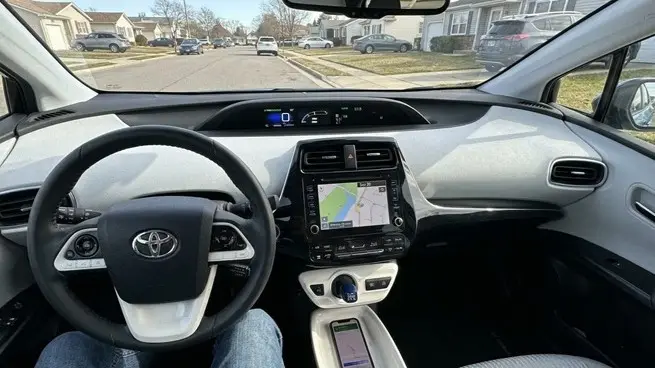
The cabin is a low, wide hatchback, not a crossover. Front seats are supportive for commuting. Rear-seat room is acceptable for adults on shorter trips; a tall passenger behind a tall driver will notice the coupe-like roofline. The hatch is the practical win: groceries, a folded stroller, and weekend bags fit more easily than in a small sedan.
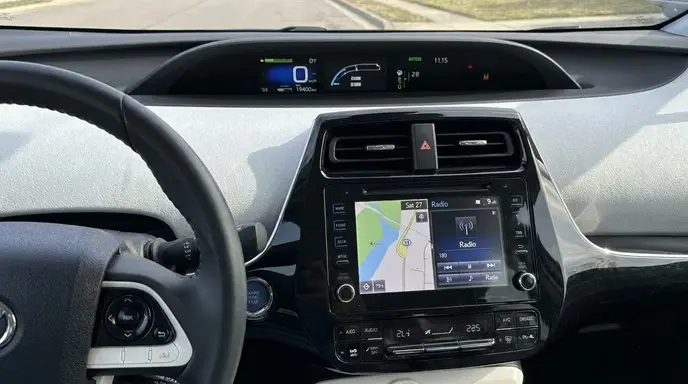
Carryover tech on this generation includes a digital driver information display, a central touchscreen (larger on upper grades), wireless smartphone charging on many versions, and USB-C ports. Wireless Apple CarPlay and Android Auto availability is trim-dependent on recent Prius Plug-in Hybrids — verify on the 2027 window sticker. Dual-zone climate control is the 2027 comfort headline.
Toyota Safety Sense 3.0 is the standard assistance suite: automatic emergency braking with pedestrian detection, adaptive cruise control, lane tracing, road-sign assist, and related highway helpers. Blind-spot monitoring and rear cross-traffic alert are the extra pair you should confirm as standard or extra by grade. A 360-degree camera, if offered, shows up on higher cars. These systems reduce fatigue. They do not drive the Prius for you.
Audio upgrades (JBL or equivalent, depending on the published 2027 list) and a head-up display, where equipped, sit on XSE Premium-type builds. Do not assume they are on SE. Warranty coverage on recent Toyotas has been a 3-year/36,000-mile basic limited warranty, 5-year/60,000-mile powertrain, and longer hybrid-battery coverage (often 8 years/100,000 miles federally, with extended terms in some states). Confirm the 2027 card at purchase.
2027 Prius Prime vs. Regular Prius Hybrid
| 2027 Prius Plug-in Hybrid (Prime) | Regular Prius Hybrid | |
|---|---|---|
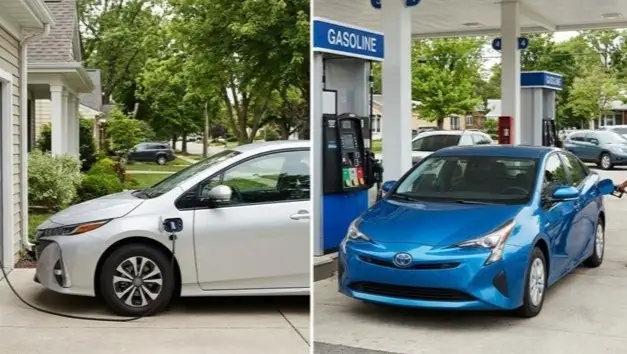
| Plug | Yes | No |
| Electric-only commuting | EPA-estimated 39–44 miles | A mile or two at low speed, not a commute |
| When the battery is empty | Runs as a hybrid on gas | Always a hybrid |
| Net power | 220 hp | Lower than the plug-in (regular Prius is the 196-hp-class 2.0 hybrid) |
| Purchase price | Starts $33,980 SE before dest. | Typically thousands less |
| Best owner | Nightly charging, short-to-medium commute | No plug, long highway days, lower entry price |
The plug-in costs more to buy and pays you back only if you use the plug. The regular Prius is still one of the easiest, most efficient gas cars you can own, with no charger, no extra battery weight to haul around uncharged, and less money at the Honda-Toyota compact end of the market.
Choose Prime if most weekdays fit in the electric window and you can charge. Choose the hybrid Prius if you cannot plug in, you live on I-80, or the extra MSRP wipes out years of fuel savings.
2027 Toyota Prius Prime Specs
| Specification | 2027 Toyota Prius Plug-in Hybrid (Prime) |
|---|---|
| U.S. official name | Prius Plug-in Hybrid |
| Common shopper name | Prius Prime |
| Body style | Compact 5-door hatchback / liftback |
| Seating | 5 |
| Drivetrain | Front-wheel drive |
| Powertrain | Plug-in hybrid (PHEV) |
| Engine | 2.0-liter 4-cylinder |
| Battery | 13.6 kWh lithium-ion |
| Net combined output | 220 hp |
| Plug-in charging | Yes (120V or 240V AC) |
| Runs on gas when battery is empty? | Yes — continues as a hybrid |
| EPA-estimated electric range | Up to 44 miles (SE) / 39 miles (other listed grades) |
| MPGe | Confirm 2027 label on fueleconomy.gov; varies by grade/wheels |
| Hybrid-mode MPG (battery depleted) | Confirm 2027 label; not the same as MPGe |
| Charging time (manufacturer estimate) | About 11 hours on 120V / about 4 hours on Level 2 (240V) under ideal conditions |
| DC fast charging | Not the intended use; this PHEV is built around home/workplace AC charging |
| Starting MSRP | $33,980 (SE), before destination |
How Much Money Can You Save With the 2027 Prius Prime?
Savings are not a Toyota promise. They are electricity versus gasoline, minus the extra money you paid for the PHEV.
Charging cost = kWh × local rate.
Gasoline cost = gallons × local gas price.
- SE-like commute: 40 miles per weekday, 250 days/year = 10,000 commute miles
- You charge every night, so those miles are mostly electric
- Electricity used: about 11 kWh per full commute charge (rounded; not a lab figure)
- Electricity: $0.16/kWh → about $1.76 per workday → about $440/year
- Same 10,000 miles in a 52-mpg hybrid at $3.50/gallon → about 192 gallons → about $672/year
- Commute energy savings in this example: roughly $230/year
Now add weekend and road-trip gasoline, which both cars burn. Then subtract the thousands you spent to get the plug-in over a regular Prius. At ~$230 a year in this narrow commute example, the payback is slow unless your gas price is high, your electric rate is low, your miles are electric-heavy, or an incentive shrinks the price gap.
Change any assumption — $0.30 power, $2.80 gas, 80-mile days, or charging twice a week — and the story flips. Prius Prime fuel savings are real for the right household and trivial for the wrong one. Run your utility rate and odometer before you congratulate yourself.
Pros and Cons of the 2027 Toyota Prius Prime
Pros
- EPA-estimated 44 miles of electric range on SE — enough for many U.S. commutes
- Gasoline backup: no range anxiety, no DC-fast-charge dependency
- 220 hp makes it easier to live with than older Priuses
- Hatchback practicality in a compact footprint
- Relatively short Level 2 charge time (about four hours, estimated)
- Can charge on a household 120-volt outlet if you can leave it overnight
- Toyota Safety Sense 3.0 and a mature hybrid service network
Cons
- Costs more than a regular Prius; payback depends on charging
- XSE-family grades drop to a 39-mile EPA electric estimate
- Electric range falls in cold weather and at highway speed
- Cabin is still a compact hatch, not a small SUV
- No substitute for a battery-electric car if you want 200-plus electric miles
- Tax-credit eligibility is not guaranteed
- Apartment dwellers without a plug lose the PHEV’s main advantage
Is the 2027 Toyota Prius Prime PHEV Worth Buying?
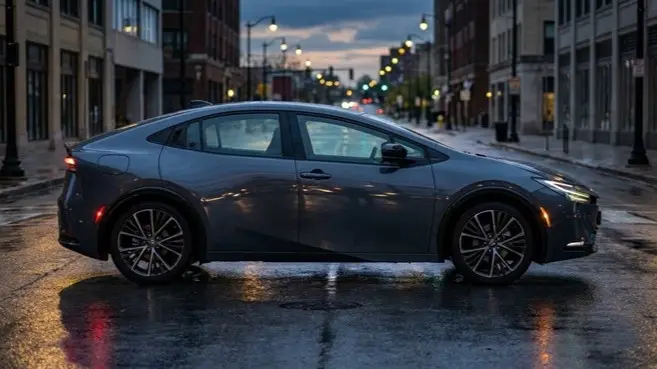
Yes, if you can charge at home or work and most weekdays fit inside ~35 miles. The SE is the version that makes the most sense. Dual-zone climate control is a welcome 2027 touch. You still get gasoline for trips. Probably not, if you cannot plug in. Buy the regular Prius — or another efficient hybrid — and skip the extra battery.
Think hard, if you routinely drive 80-mile highway days. You will use hybrid MPG a lot. The plug-in premium is harder to justify unless electricity is cheap and you still charge every night for the first 40 miles. Compare carefully with the regular Prius if the price gap is wide in your ZIP code and incentives are zero. Drive both. Sit in the back. Look at the 2027 window sticker, not a 2024 review.
The 2027 Toyota Prius Prime PHEV is worth buying as a commuter appliance with a gas safety net, not as a fashion EV and not as a cheap Prius. Match the car to the outlet, or do not buy it.
Frequently Asked Questions
Q.1. What is the electric range of the 2027 Prius Prime?
EPA-estimated up to 44 miles for SE and 39 miles for the other listed grades. Weather, speed, wheels, and climate use will change what you see.
Q.2. How long does the 2027 Prius Prime take to charge?
Toyota estimates about 11 hours on 120 volts or about four hours on Level 2, under ideal conditions. Real-world times vary.
Q.3. Does the 2027 Prius Prime need a home charging station?
No. A 120-volt outlet can work overnight. A 240-volt Level 2 charger is more convenient if you drain the battery often. Many homes need an electrician to add 240 volts.
Q.4. What is the starting price of the 2027 Prius Prime?
$33,980 MSRP for the SE, before destination and options. Higher grades cost more.
Q.5. Can the Prius Prime run on gasoline when the battery is depleted?
Yes. It continues as a hybrid on gasoline. You are not stranded.
Q.6. Is the 2027 Prius Prime eligible for a tax credit?
Do not assume it is. Federal Clean Vehicle Credit rules depend on assembly, battery sourcing, MSRP caps, vehicle classification, and buyer income, and they change. Check the current IRS rules and fueleconomy.gov for this VIN and model year. State and utility rebates are separate.
Q.7. What is the difference between the Prius Prime and Prius Plug-in Hybrid?
In the U.S., they are the same product. Toyota’s current official name is Prius Plug-in Hybrid. Prime is the name shoppers still use.
The 2027 Toyota Prius Prime PHEV is a 220-hp plug-in hatchback with a 13.6-kWh battery, EPA-estimated 44 miles of electric range on the SE, and a $33,980 starting MSRP before destination. It is at its best on a charged weekday commute. It is ordinary the moment you cannot plug in. If that commute is yours, configure an SE, confirm 2027 EPA labels and incentive eligibility, and price a 120-volt outlet before you shop XSE Premium toys. If it is not, the regular Prius is still the cleaner decision.
Related Post