
The 2027 Hyundai Kona arrives as a thoughtfully updated version of one of the most popular subcompact crossovers in the United States—aimed at young professionals, urban couples, first-time SUV buyers, and efficiency-minded drivers who want bold design, strong standard features, and low running costs without stepping up to a larger Tucson. While most online coverage still leans on 2024–2026 information, this in-depth guide focuses on the meaningful changes expected for the 2027 model year in the U.S. market: a refreshed exterior design with more mature lighting and proportions, refined powertrains including an improved hybrid option, a quieter and more tech-forward interior, smarter available AWD calibration for American weather, clearer market positioning, how it compares to key rivals, and the real-world upgrades that address owner feedback.
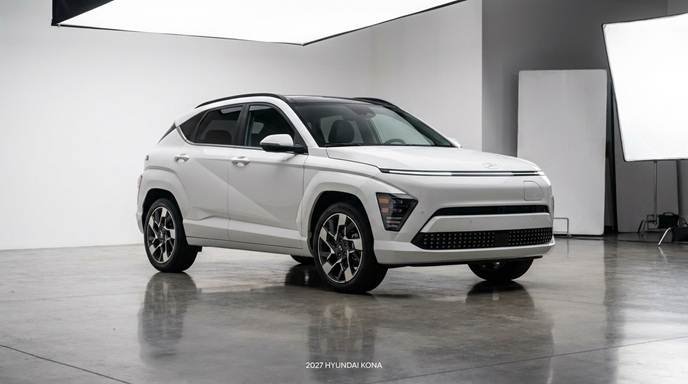
This is a mid-cycle evolution rather than an all-new generation. Hyundai has concentrated on polishing the second-generation Kona’s already strong foundation—making it quieter on the highway, more efficient in mixed driving, sharper in appearance, and more intuitive with the latest technology—while keeping the compact footprint that makes it easy to park in U.S. cities and suburbs. Here’s everything American shoppers need to know.
Exterior Design- More Road Presence
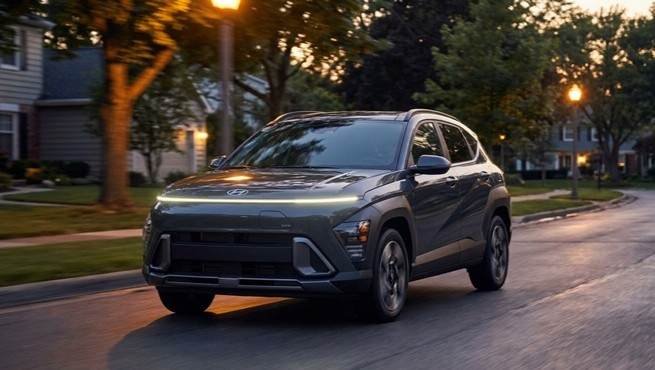
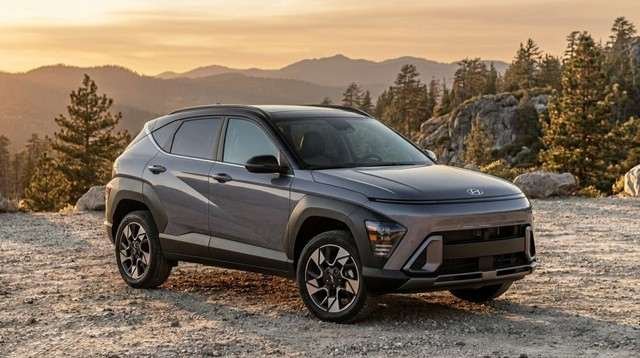
Hyundai has given the 2027 Hyundai Kona a more confident and sophisticated exterior that still feels youthful and distinctive on American roads. The front fascia receives a revised interpretation of the brand’s parametric grille, now slightly wider and more horizontal, framed by slimmer, sharper LED headlights with new daytime running light signatures that create a wider visual stance. These lights incorporate a more intricate pixel-like pattern that looks premium at night and helps the Kona stand out in traffic without appearing overdone.
The hood is subtly more sculpted, and the front bumper integrates cleaner air intakes and available fog lamp housings that give lower trims a finished look. Along the sides, character lines are simplified for a smoother, more upscale appearance, while the wheel arches remain muscular enough to accommodate larger available wheels. Standard 18-inch alloys appear on more trims, with new 19-inch designs (including darker machined finishes) offered on Limited and N Line models. A fresh set of exterior colors—including a new matte-inspired urban gray and a vibrant performance blue—joins the palette, along with an available black roof dual-tone option that remains popular among U.S. buyers.
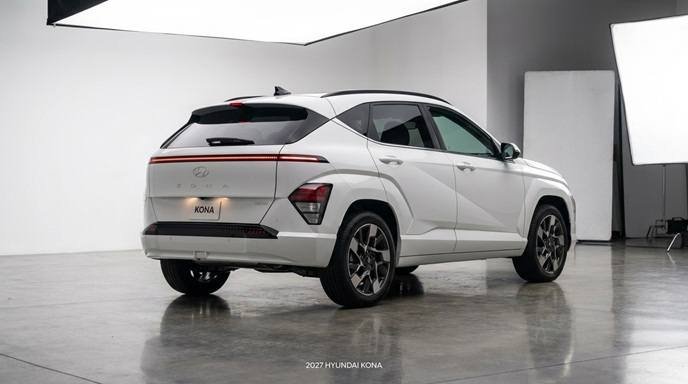
At the rear, the connected taillight bar is thinner and more refined, with updated internal graphics and a cleaner hatch surface. The rear bumper gains more structured reflectors and dual-tip exhaust bezels on turbo and N Line versions. Ground clearance stays practical for light snow and imperfect roads, and the overall length and width remain compact so the Kona continues to fit easily in garages, downtown parking structures, and tight suburban spots. Aerodynamic work includes active grille shutters and underbody panels that help both the gas and hybrid powertrains deliver better real-world highway efficiency—valuable for longer interstate trips common across the U.S.
The available N Line package adds unique front and rear fascias, side skirts, rear spoiler, and exclusive wheels for buyers who want a sportier look without going full electric or performance-crossover.
Powertrains- More Responsive Hybrid Option
The 2027 Hyundai Kona offers a well-rounded powertrain lineup tailored to American driving needs, with clear emphasis on the hybrid for maximum efficiency. The base engine remains a naturally aspirated 2.0-liter four-cylinder, now with revised mapping for smoother low-end response and better refinement, producing around 147 horsepower. It pairs with a CVT tuned for more natural feel under acceleration.
The popular 1.6-liter turbocharged four-cylinder continues, offering roughly 190 horsepower and stronger mid-range punch for confident highway merging and mountain driving. It is matched to an eight-speed automatic and is the foundation for the sportier N Line trim.
The standout for most U.S. buyers is the updated Kona Hybrid. It combines a 2.0-liter Atkinson-cycle engine with a more powerful electric motor and a higher-capacity battery pack. Combined system output is estimated in the 140–150 horsepower range (with a noticeable torque bump), delivered through a six-speed dual-clutch or refined hybrid transmission. The system feels more responsive off the line and in stop-and-go traffic, while electric-only operation at low speeds is smoother and more frequent. Hyundai has improved thermal management so the hybrid performs more consistently in cold northern winters and hot southern summers—two real-world pain points for American owners.
Fuel economy remains a major selling point. Expect the Hybrid to target 45–48 mpg city and 40–43 mpg highway in front-wheel-drive form, with AWD versions still delivering impressive low-40s combined. These numbers translate into meaningful savings for high-mileage commuters. Towing is modest (around 1,500–2,000 pounds when properly equipped) but sufficient for small trailers or bikes. No full plug-in hybrid or dedicated N performance model is expected for 2027 in the same body style; Hyundai is directing higher-performance and EV shoppers toward the Kona Electric and Ioniq lineup while keeping the gas and hybrid Kona focused on accessibility and range confidence.
Interior and Technology- Quieter Cabin
Step inside the 2027 Hyundai Kona and the improvements are immediately noticeable in material quality, noise isolation, and technology integration. The dashboard adopts a more horizontal dual-screen layout with a larger central touchscreen (projected 12.3-inch class) and a matching digital instrument cluster on higher trims. Both run Hyundai’s latest dual-pane software with faster response, sharper graphics, and improved voice recognition. Wireless Apple CarPlay and Android Auto are standard across the board, along with a wireless charging pad on most trims.

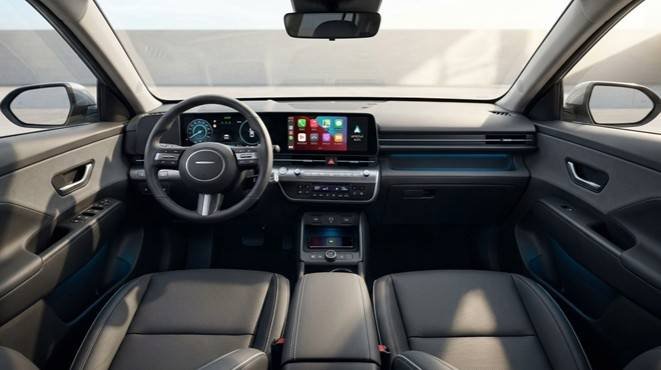
Seats receive better cushioning and available leatherette or leather upholstery with heating and ventilation on upper models. Front seats offer improved bolstering and longer cushions for highway comfort, while the rear bench provides decent legroom for the class and easy-to-clean surfaces. Hyundai has added more sound-deadening material, acoustic glass, and revised door seals so the cabin stays significantly quieter at 70–75 mph—an important upgrade for long American road trips and daily freeway commuting.
Practical touches abound: more USB-C ports front and rear, a 12-volt outlet, clever storage cubbies, and a power-adjustable driver’s seat with memory on Limited trims. The cargo area remains versatile with a low load floor, under-floor storage, and 60/40 split-folding rear seats. Ambient lighting is more customizable, and an available Bose premium audio system delivers clearer sound.
Hyundai’s Highway Driving Assist and Smart Cruise Control are refined, with available blind-spot view monitor and remote smart parking assist on higher trims. Over-the-air update capability keeps the system current. The overall cabin feels more premium than the price suggests while remaining durable and family-friendly.
AWD Features-Real U.S. Conditions
Available all-wheel drive on the 2027 Hyundai Kona is more sophisticated than a simple wet-weather aid. The system can proactively send power to the rear wheels when slip is detected and includes drive mode selections (Eco, Normal, Sport, and Snow) that adjust throttle, transmission behavior, and AWD torque split. In Snow mode, response is gentler and stability is prioritized—ideal for northern states and mountain regions.
The AWD calibration works seamlessly with both the turbo and hybrid powertrains, maintaining good efficiency on dry roads by decoupling when full traction is unnecessary. Ground clearance and tire options remain practical for light gravel roads, snow-covered driveways, and beach access. Hill-start assist and downhill brake control add confidence on steep grades. While not a serious off-roader, the Kona AWD gives U.S. buyers genuine security in rain, snow, and light trails without the fuel penalty of heavier crossovers.
Market Position- Feature-Rich Compact Crossover
In the crowded U.S. subcompact and compact crossover segment, the 2027 Hyundai Kona sits as a design-forward, technology-heavy, value-oriented choice. It targets buyers who want something more distinctive than a Corolla Cross or Seltos, more feature-rich than basic competitors, and more affordable than a fully loaded Tucson or sporty EV. Hyundai leans into long warranty coverage, strong standard safety tech, and high feature content per dollar—advantages that resonate strongly in the current economic climate.
The 2027 Hyundai Kona appeals to urban and suburban drivers who prioritize ease of parking, fuel efficiency, stylish looks, and modern connectivity. It also serves as an attractive conquest vehicle for shoppers leaving aging sedans or older compact SUVs.
2027 Hyundai Kona Specs
Powertrain & Performance
| Specification | Details |
|---|---|
| Base Engine | 2.0L Naturally Aspirated I4 |
| Base Horsepower | 147 hp (est.) |
| Base Torque | 132 lb-ft (est.) |
| Turbo Engine | 1.6L Turbocharged I4 |
| Turbo Horsepower | 190 hp (est.) |
| Turbo Torque | 195 lb-ft (est.) |
| Hybrid System | 2.0L Atkinson-Cycle I4 + Electric Motor |
| Hybrid Combined Output | 140 – 150 hp (est.) |
| Transmissions | CVT (2.0L) / 8-Speed Automatic (1.6T) / Hybrid Transmission |
| Drivetrain | Front-Wheel Drive (Standard) / Available AWD |
| 0-60 mph (est.) | 7.6 – 9.5 seconds (depending on powertrain) |
| Towing Capacity | 1,500 – 2,000 lbs (when properly equipped) |
| Fuel Economy (Hybrid FWD, est.) | 45–48 city / 40–43 highway / 43–46 combined mpg |
| Fuel Economy (Hybrid AWD, est.) | 42–45 city / 38–41 highway / 40–43 combined mpg |
| Fuel Tank Capacity | 12.4 – 13.2 gallons |
Rivals: How the 2027 Hyundai Kona Stacks Up
Key competitors include the Toyota Corolla Cross, Honda HR-V, Kia Seltos and Soul, Volkswagen Taos, Mazda CX-30, Chevrolet Trax and Trailblazer, and the Nissan Kicks.
- Versus Toyota Corolla Cross: The Kona offers bolder styling, more standard tech, and a stronger hybrid efficiency story. Corolla Cross counters with Toyota reliability perception and resale.
- Versus Honda HR-V: HR-V feels refined and practical. The Kona answers with more powertrain choices (especially turbo and hybrid), sharper design, and generally higher feature content at similar prices.
- Versus Kia Seltos: Both share corporate DNA. The Kona feels more premium and modern in design and interior tech; Seltos often undercuts slightly on price and offers a bit more cargo space in some configurations.
- Versus Mazda CX-30: CX-30 wins on driving dynamics and upscale feel. The Kona fights back with more space, better fuel economy (hybrid), stronger warranty, and lower average transaction prices.
- Versus Volkswagen Taos: Taos offers European driving manners. The Kona provides more tech, better efficiency options, and stronger value.
The Kona’s unique strengths remain its distinctive design, hybrid efficiency, generous features, and Hyundai’s comprehensive warranty.
Key Upgrades
Meaningful 2027 upgrades include:
- Fresher exterior lighting and cleaner body design for stronger presence.
- More responsive hybrid system with better cold-weather performance.
- Larger dual screens and faster, more intuitive software.
- Significantly improved highway quietness and seat comfort.
- Smarter AWD logic and additional drive modes.
- Expanded standard safety and convenience features.
- Higher-quality interior materials and more charging ports.
- New wheel designs and appearance packages that reduce the need for aftermarket upgrades.
These changes directly target owner comments about road noise, tech responsiveness, and all-weather confidence.
Trims & Expected U.S. Pricing (MSRP)
| Trim | Powertrain | Drivetrain | Estimated Starting Price |
|---|---|---|---|
| SE | 2.0L | FWD | $24,500 – $26,000 |
| SEL | 2.0L / 1.6T / Hybrid | FWD / AWD | $26,500 – $29,500 |
| Limited | 1.6T / Hybrid | FWD / AWD | $30,500 – $33,500 |
| N Line | 1.6T | FWD / AWD | $31,000 – $34,000 |
| Hybrid Limited (Fully Loaded) | Hybrid | AWD | $34,500 – $37,000+ |
Pricing Expectations, Trims
Expect the 2027 Hyundai Kona to start in the mid-$20,000 range for a well-equipped SE gas model, with SEL and Limited trims climbing into the low-to-mid $30,000s. The Hybrid will likely command a modest premium but deliver rapid payback through fuel savings. N Line models will sit at the top of the gas range. Fully loaded Hybrid Limited AWD versions should stay under $35,000–$37,000 before incentives—excellent value in the segment.
For most American buyers, the sweet spot is a SEL or Limited Hybrid with AWD, the dual-screen setup, and advanced safety package. Test drive both the hybrid and turbo to feel the difference in response, and spend highway time evaluating cabin quietness. Check current Hyundai incentives, warranty details (still among the best), and real-world fuel economy in your climate. The strong dealer network and over-the-air support add ownership peace of mind.
The 2027 Hyundai Kona refines an already compelling package into something more mature, quieter, more efficient, and more enjoyable for daily U.S. driving. It keeps the bold design and high feature content that made it a standout, while delivering meaningful upgrades in powertrain smoothness, interior quality, technology, and all-weather capability. For buyers seeking a stylish, efficient, tech-rich compact SUV that doesn’t demand a premium-brand budget, the updated Kona deserves serious consideration.
When the 2027 model reaches dealerships, take one for a proper highway and city test drive. The improved refinement and hybrid responsiveness are the kinds of details that specification sheets never fully capture—and they are exactly where this Kona continues to win over American drivers.
Related Post