
The Ford Everest has long been one of the most capable body-on-frame SUVs you can buy outside North America. For the 2027 model year (really the significant MY2026.5 updates rolling out in mid-2026 in key markets like Australia), Ford didn’t chase a flashy full redesign. Instead, they listened to real owners and delivered the upgrades that matter most: serious reliability improvements, smarter tech distribution, bolder styling details, and broader access to the excellent 3.0-litre V6 diesel.
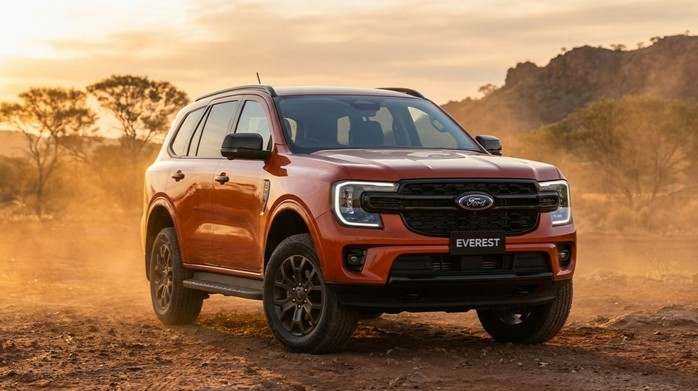
This isn’t another clickbait “all-new” story filled with AI-generated nonsense. This is the real story of what changed, why it matters, and how the 2027 Ford Everest positions itself against the Toyota LandCruiser Prado, Isuzu MU-X, and others.
What’s Actually New for the 2027 Ford Everest?
Ford Australia (the lead market for the Everest) has rolled out meaningful updates rather than just new colours and wheels. The biggest story is under the bonnet, but there are also trim structure changes, more standard tech, and blacked-out styling that gives the SUV a tougher, more modern stance.
- New entry-level Active trim replacing older base grades
- Bi-turbo 2.0L diesel axed — replaced by a more reliable single-turbo version
- 3.0L V6 diesel now available across more of the range
- Blacked-out exterior elements and refined design details
- More models get the 12-inch touchscreen, 360° camera, and tyre pressure monitoring
- Continued focus on the Tremor off-road variant
These changes arrive as the Everest continues its strong run in Australia and other right-hand-drive markets. It remains a proper 7-seater body-on-frame SUV built on the Ranger platform — not a unibody crossover.
Exterior Design: Evolutionary but Tougher
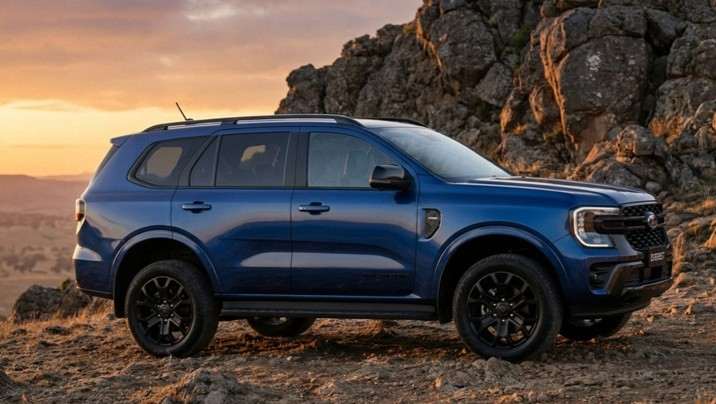
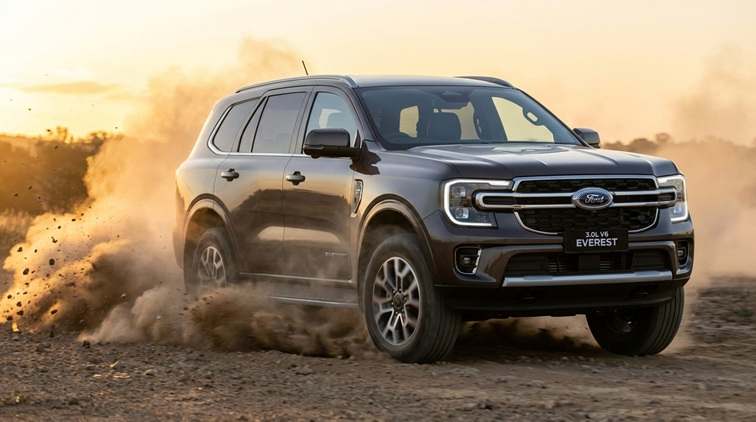
The 2027 Ford Everest doesn’t get a radical new face, but the updates make it look more purposeful. Higher trims feature prominent blacked-out grilles, mirror caps, and badging. The Sport and Tremor models especially benefit from this treatment, giving them a more aggressive, Raptor-inspired presence without going full performance-SUV.
Key exterior updates and capability figures:
- Ground clearance: 229–255 mm (Tremor higher)
- Wading depth: 800 mm (class-competitive and genuinely useful in flood-prone regions)
- Approach angle: ~30–32°
- Departure angle: ~25–26°
- Braked towing capacity: 3,500 kg across the range when properly equipped
The Tremor variant stands out with wider track (around 1,650 mm), Bilstein position-sensitive dampers, General Grabber AT3 tyres, and extra underbody protection. It’s Ford’s answer to buyers who want Prado-level on-road manners but more serious off-road hardware straight from the factory.
Interior & Practicality
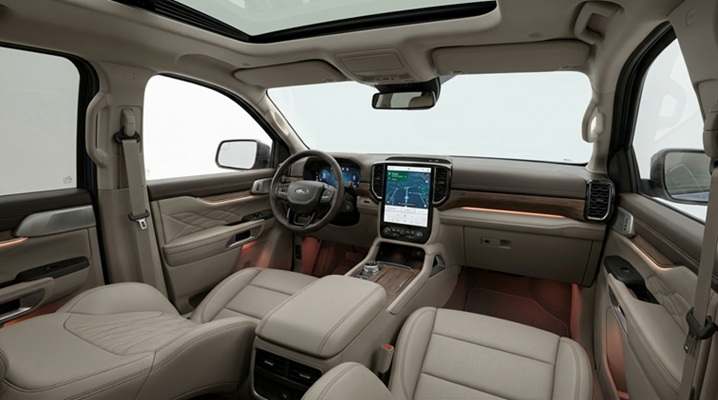
The cabin remains one of the Everest’s strongest points. The third row is genuinely usable for adults on shorter trips (better than many rivals), and the second row slides and reclines. Boot space with all seats up is competitive, and it swallows a full set of golf bags or weekly shopping with ease.
The new Active trim brings leather-accented seating and a 12-inch touchscreen to lower price points — previously you had to step up significantly for that screen size. Higher grades (Sport, Tremor, Platinum, Wildtrak) already feel premium with soft-touch materials, quiet cabin insulation, and supportive seating for long highway hauls.
One area Ford has improved indirectly is refinement through the new powertrain calibration. The single-turbo diesel is described by Ford as more responsive and refined in real-world driving than the old bi-turbo in many conditions.
Technology & Infotainment
The big touchscreen (now 12 inches on more variants) runs Ford’s latest SYNC system with wireless Apple CarPlay and Android Auto. A digital instrument cluster is standard, with customisable views including off-road status displays.
Advanced driver aids (Ford Co-Pilot360 or equivalent) include:
- Adaptive cruise control with stop/go
- Lane-keeping assist
- Automatic emergency braking
- 360° camera (now on more models)
- Tyre Pressure Monitoring System (expanded availability)
The Everest doesn’t have the most flashy interface in the segment, but it’s logical, responsive, and pairs well with physical buttons for key off-road functions — a big plus when you’re bouncing down a trail.
Reliability Finally Comes First
This is the part almost no one is talking about in depth yet. Ford has dropped the 2.0-litre bi-turbo diesel (previously 154 kW / 500 Nm) that powered many base and mid-spec Everests and Rangers. That engine used a controversial “wet belt” timing system that sits in oil and has been a source of long-term ownership anxiety for some buyers.
In its place: An updated 2.0-litre single-turbo diesel making 125 kW and 405 Nm.
Why this matters:
- It uses a timing chain instead of a wet belt (major reliability win)
- New fuel injection system and steel pistons for better thermal properties
- Derived from the proven Transit van engine family
- Ford says it delivers more usable torque across a broader rev range and better refinement
- Official fuel economy is slightly improved in testing
The 3.0-litre V6 turbo-diesel (184 kW / 600 Nm) remains the hero engine and is now available on more trims. It’s the one most reviewers and owners rave about — effortless towing, strong mid-range, and that glorious V6 soundtrack under load.
Both engines pair exclusively with the excellent 10-speed automatic. Full-time 4WD is standard on higher grades.
Hybrid future? Nothing official for 2027, but it’s highly likely in the next 2–3 years. The Ranger platform is exploring mild-hybrid and plug-in hybrid options. A hybrid Everest would make perfect sense for urban family use while keeping diesel torque for serious towing and off-roading.
AWD & Off-Road Capability
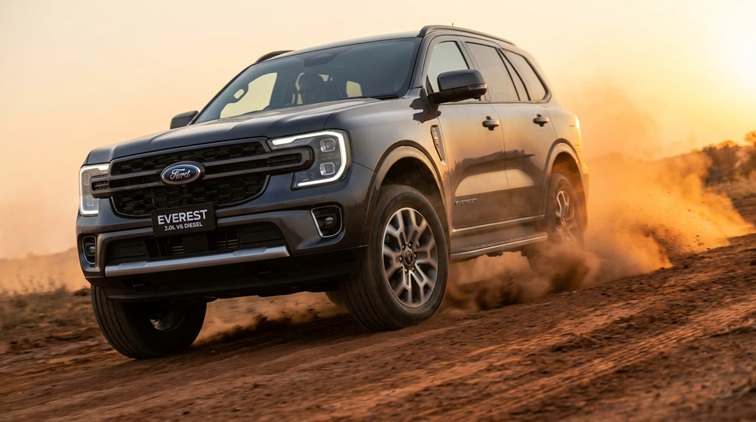
The Everest’s 4WD system is one of its biggest strengths. Most 4WD models use a full-time electronic system with a rear locking differential on higher grades. Drive modes include Normal, Eco, Tow/Haul, Slippery, Mud/Ruts, and more (Tremor adds extra off-road calibrations).
Real-world strengths:
- 800 mm wading depth (maintain steady low speed)
- Excellent approach/departure angles
- Strong low-range feel even without traditional low-range gearing on some setups (full-time 4WD helps)
- Rear locker + traction management = very capable in sand, mud, and rocks
- 3,500 kg towing with proper cooling and chassis upgrades on V6 models
The Tremor takes it further with lifted suspension, all-terrain tyres, and Bilstein dampers. It’s genuinely competitive with dedicated off-road SUVs while still being a comfortable 7-seater daily driver.
2027 Ford Everest Specs
| Category | 2.0L Single-Turbo Diesel (New) | 3.0L V6 Turbo Diesel (Updated Availability) |
|---|---|---|
| Engine Type | 2.0L 4-cylinder turbo-diesel | 3.0L V6 turbo-diesel |
| Power | 125 kW (168 hp) @ 3,500 rpm | 184 kW (247 hp) @ 3,250 rpm |
| Torque | 405 Nm @ 1,750–2,500 rpm | 600 Nm @ 1,750–2,250 rpm |
| Transmission | 10-speed automatic | 10-speed automatic |
| Drivetrain | Full-time / Electronic 4WD | Full-time 4WD |
| Fuel Type | Diesel | Diesel |
| Claimed Fuel Economy | ~6.8–7.8 L/100 km (combined) | ~8.0–8.8 L/100 km (combined) |
| Braked Towing Capacity | 3,500 kg | 3,500 kg |
| Seating | 5 or 7 seats | 5 or 7 seats |
Off-Road & Capability Specs
| Measurement | Standard Models | Tremor Variant |
|---|---|---|
| Ground Clearance | 229 mm | 255 mm |
| Wading Depth | 800 mm | 800 mm |
| Approach Angle | ~30.2–30.4° | ~32° |
| Departure Angle | ~25.3–26° | ~26.8° |
| Ramp Breakover Angle | ~22.2° | Higher |
| Track Width (Front/Rear) | ~1,620 mm | ~1,650 mm |
| Underbody Protection | Standard | Enhanced |
Market Position & Rivals
The 2027 Ford Everest slots into the premium body-on-frame 7-seater segment. In Australia it’s a sales success story. In markets like the Middle East, South Africa, and parts of Asia, it’s prized for durability and capability.
Main rivals:
- Toyota Land Cruiser Prado — More refined on-road, legendary resale, but often more expensive and less powerful standard engines
- Isuzu MU-X — Excellent value and reliability reputation, but less premium interior and weaker V6 alternative
- Mitsubishi Pajero Sport — Cheaper entry, but older platform and less refined
The Everest often wins on value + power + tech combination, especially now that the more reliable single-turbo base engine and wider V6 availability sweeten the deal. The new Active trim should help it capture more price-sensitive buyers who still want genuine capability.
Pricing & Availability
Pricing varies significantly by country. In Australia, expect the range to start in the low-to-mid AUD $50,000s for the new Active 2.0L and climb into the high $70,000s–$80,000s+ for loaded V6 Platinum or Tremor models (plus on-roads). Check local Ford dealers for exact figures as the updated models arrive through 2026.
Should You Buy the 2027 Ford Everest?
Buy it if:
- You need serious towing (3.5 tonnes), genuine off-road ability, and 7-seat practicality
- You value long-term reliability (the new chain-driven diesel addresses a key concern)
- You want strong performance without going full luxury-SUV price
- You live in or travel to areas with poor roads, flooding, or need to tow regularly
Consider alternatives if:
- You prioritise ultimate on-road refinement and resale (Prado)
- You want the absolute cheapest capable 7-seater (some MU-X deals)
- You’re waiting for a hybrid version (likely 2028–2029)
The Smart Update Everest Owners Were Waiting For
Ford didn’t need to reinvent the 2027 Ford Everest. They needed to make it more reliable, more accessible, and even more capable in the areas that matter to real buyers. The 2027 model year updates do exactly that.
The switch to the chain-driven single-turbo diesel is the most important change most reviews will gloss over — but it’s the one that will matter most to owners keeping these vehicles for 5–10 years in tough conditions. Pair that with wider V6 availability, more standard tech, and the existing class-leading capability, and the updated Everest is arguably the best it’s ever been.
Whether you’re a family needing a weekend warrior, a tradie who tows heavy loads, or an adventurer who actually uses the off-road hardware, the 2027 Ford Everest deserves a very close look.
Related Post