
The Dodge Dakota name still resonates with American truck buyers who remember a midsize pickup that delivered full-size attitude, available V8 power, and genuine versatility without the bulk of a Ram 1500. After years of absence, the midsize truck segment has exploded with the Toyota Tacoma, Ford Ranger, Chevrolet Colorado, and Nissan Frontier. Now, signals from Stellantis, the success of the Ram brand, and growing demand for more emotionally charged midsize trucks point to a highly anticipated revival.
The 2027 Dodge Dakota is shaping up as a true muscle-truck contender—one that blends aggressive styling, modern electrified powertrains, advanced 4WD systems, and daily usability tailored specifically for U.S. drivers. This in-depth guide delivers fresh projected details on the new design language, powertrain and hybrid options, exterior execution, interior and tech suite, AWD features, market positioning, key rivals, and owner upgrades—insights synthesized from Stellantis’ STLA platform direction, Hurricane engine family, Ram truck expertise, and American buyer trends that have not been widely compiled elsewhere.
Design Philosophy
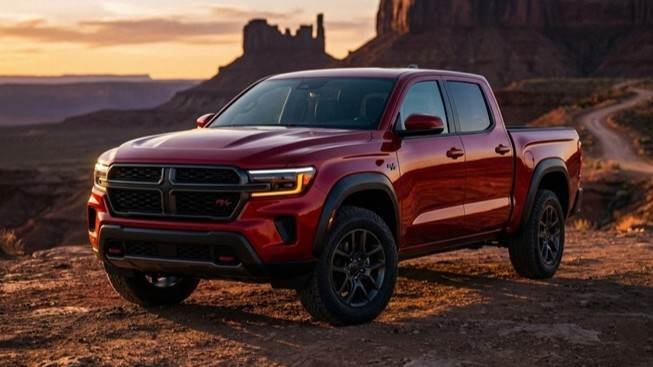
The 2027 Dakota abandons any notion of being a soft lifestyle truck and instead embraces a bold, upright “Raging Bull” design language scaled perfectly for the midsize class. The front end features a prominent crosshair grille that sits high and wide, flanked by slim, aggressive LED headlights with customizable daytime running light signatures. Designers have given it a strong hood bulge, pronounced fender flares, and a muscular shoulder line that makes the truck look planted and powerful even when standing still.
Proportions strike a smart balance: compact enough for easy maneuvering in city job sites and crowded parking lots, yet substantial enough to project confidence on the highway or trail. A crew-cab configuration will dominate U.S. sales, with a practical mid-length bed optimized for both work and weekend gear. In the American market the Dakota will wear clear Dodge badging and available R/T or performance-inspired cues, setting it apart from more conservative Japanese and Detroit rivals. The overall look feels like a Ram 1500 that hit the gym and lost the extra weight—distinctive, tough, and unmistakably Dodge.
Exterior Details
Built on a body-on-frame architecture derived from Stellantis’ latest truck platforms, the 2027 Dakota makes extensive use of high-strength steel with strategic aluminum components to control weight while maintaining durability. Aerodynamic refinements—including active grille shutters, underbody panels, and carefully shaped mirrors—improve highway efficiency and reduce wind noise during long interstate hauls.
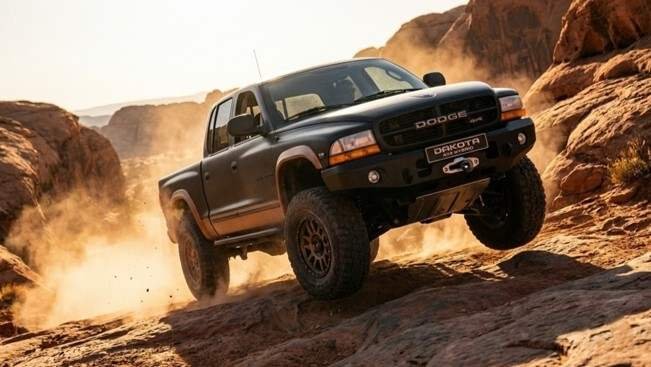
Full LED lighting with available adaptive beams becomes standard on higher trims, providing excellent illumination for early-morning job sites and dark rural roads. Wheel options range from 17- or 18-inch all-terrain designs on work-focused models to 20-inch dark alloys on R/T and lifestyle packages, wrapped in next-generation all-terrain or hybrid-terrain tires. Available power-deploying running boards, a multi-function tailgate that converts into a work surface or step, spray-in bedliner, bed lighting, and heavy-duty tie-downs address real contractor and outdoor needs.
A projected “Trail Ready” or R/T exterior package adds steel bumpers, skid plates, rock rails, unique badging, and recovery points while preserving strong approach and departure angles. Two-tone paint schemes, matte finishes, and high-impact colors give buyers personalization options rarely seen in the midsize segment. These exterior choices make the Dakota look tougher than a lifestyle crossover yet more refined and stylish than a pure work truck.
Powertrains and Hybrid Options
The powertrain lineup is where the 2027 Dakota truly differentiates itself. The foundation is Stellantis’ twin-turbo 3.0-liter Hurricane inline-six, offered in standard and high-output forms. Expected output ranges from approximately 350 to 420+ horsepower with strong torque that arrives early—perfect for towing and hauling.
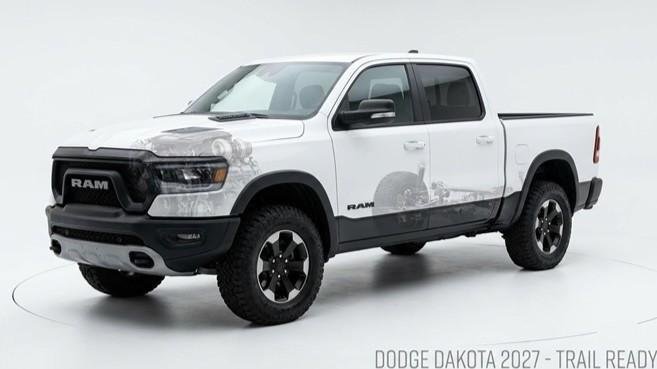
The headline feature is a robust hybrid system. A full hybrid or PowerHybrid setup pairs the Hurricane engine with an electric motor and battery pack, targeting combined output in the 400–450 horsepower range with instant electric torque that transforms low-speed response and job-site maneuverability. A plug-in hybrid (PHEV) option is a strong possibility for the U.S. market, delivering an estimated 25–40 miles of electric-only range for commuting or silent neighborhood driving while retaining full towing capability when the engine joins in.
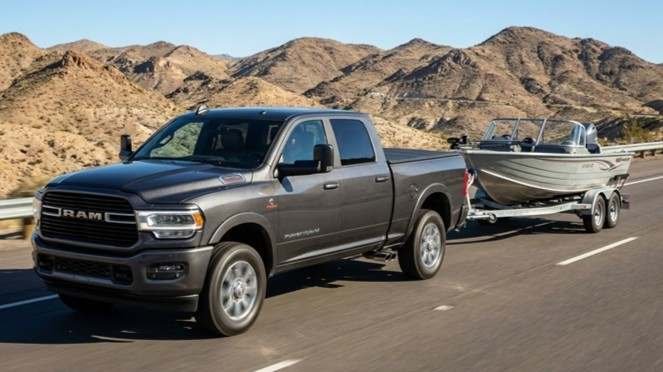
A lighter, more affordable turbo-four option may anchor the lineup for budget-conscious buyers. Towing capacity is projected at 7,000–7,500+ lbs when properly equipped, with payload figures competitive in the midsize class. Fuel economy should reach the low-to-mid 20s mpg combined on hybrid models—valuable savings for high-mileage American drivers. Regenerative braking is adjustable via drive modes and paddles, and thermal management is upgraded for consistent performance during repeated towing in hot climates or mountain grades. This flexible strategy gives U.S. buyers genuine choice between pure power, efficiency, and plug-in versatility.
AWD Features
Available four-wheel drive is a core strength. The 2027 Dakota is expected to offer a modern part-time or full-time 4WD system with a two-speed transfer case on off-road packages, allowing shift-on-the-fly operation between 2H, 4H, and 4L.
Enhanced multi-mode terrain management includes settings for Mud, Sand, Rock, Snow, and a Tow/Haul calibration that optimizes hybrid torque and transmission behavior. An electronic locking rear differential comes standard on higher off-road trims, with an available front locker on the range-topping model. Hill-descent control, hill-start assist, and crawl control receive hybrid torque fill for greater precision on steep or technical terrain. Ground clearance targets 9–10+ inches depending on package, protected by available skid plating. For American owners this means confidence on snowy job sites, muddy trails, sandy beach access, and rocky forest roads without requiring immediate aftermarket lifts. The system’s ability to run efficiently on pavement while offering true low-range capability keeps the Dakota versatile year-round.
Interior and Technology
Inside, the 2027 Dakota delivers a modern American truck cabin that balances durability with comfort. A commanding seating position, excellent outward visibility, and supportive seats greet the driver. Materials mix soft-touch surfaces in high-contact areas with easy-clean, water-resistant bolsters and available leatherette or genuine leather. Contrast stitching and available carbon or metal-look trim elevate higher trims without looking fragile.
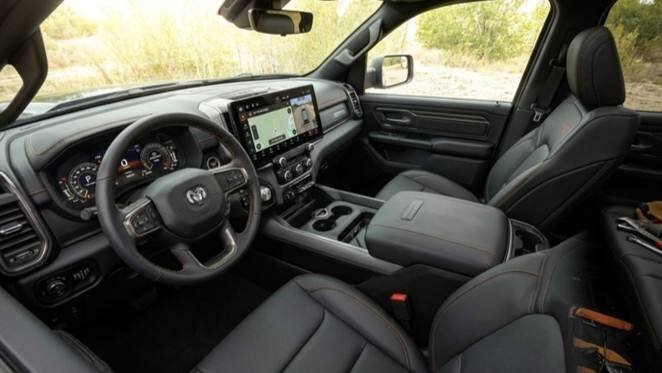
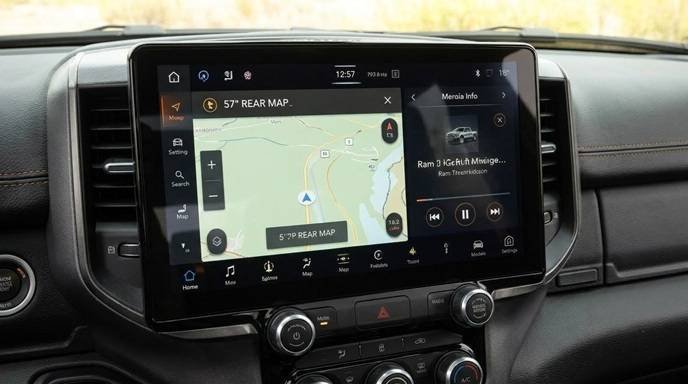
The technology suite centers on a large digital instrument cluster and a 12- to 14.5-inch center touchscreen running the latest Uconnect system. Wireless Apple CarPlay and Android Auto, over-the-air updates, cloud navigation, and a crisp available head-up display come standard or widely available. A premium audio system, multiple USB-C ports (including bed power), and a Wi-Fi hotspot address real owner needs.
Unique projected features include a 360-degree camera system with transparent underbody view for trail or job-site spotting, off-road data pages, Digital Key smartphone access, remote cabin and battery preconditioning via the Dodge app, and an integrated trailer-brake controller with camera views. Physical knobs for climate, volume, and drive modes remain because muddy gloves and pure touchscreens do not mix. Available ventilated and heated seats, a heated steering wheel, and a power sliding rear window round out comfort for four-season U.S. use. The rear bench folds for expanded cargo, and crew-cab legroom is competitive. The cabin feels tough enough for work yet refined enough for family road trips.
Upgrades and Owner-Focused Packages
Dodge is expected to offer a clear trim ladder: base Tradesman or Work, mid-level SXT or GT, lifestyle R/T, and a hardcore off-road or performance flagship (possibly R/T Trail or Scat Pack-inspired). Packages will include a heavy-duty Tow package (enhanced cooling, brake controller, hitch cameras), a Technology package (larger screens, premium audio, advanced driver aids), a Comfort package, and a Trail Ready package with locking diffs, all-terrain tires, skid plates, and auxiliary switches.
Adaptive dampers on higher trims broaden the ride from loaded highway comfort to controlled trail articulation. Factory accessories—bed extenders, modular storage, roof racks, lighting kits, and performance exhaust—let owners personalize without voiding warranties. These upgrades mean most buyers can build their ideal Dakota for contracting, overlanding, or weekend adventures right from the factory.
2027 Dodge Dakota Specs
| Category | Specification |
|---|---|
| Vehicle Type | Midsize Pickup Truck |
| Platform | Body-on-frame (Stellantis truck architecture) |
| Layout | Front-engine, RWD / 4WD |
| Powertrains | Twin-Turbo Hurricane I6 / Turbo 4-cylinder / Hybrid |
| Hybrid System | Full Hybrid / PowerHybrid + possible PHEV |
| System Output (Hybrid) | 400 – 450 hp combined (estimated) |
| Hurricane I6 Output | 350 – 420+ hp |
| Torque | 400 – 500+ lb-ft (estimated) |
| Battery | High-voltage lithium-ion (hybrid/PHEV) |
| EV Range (PHEV est.) | 25 – 40 miles |
| Transmission | 8-speed automatic |
| Drivetrain | Rear-Wheel Drive or 4WD with 2-speed transfer case |
| Terrain Modes | Mud, Sand, Rock, Snow, Tow/Haul, Custom |
| Locking Differentials | Electronic rear locker (std on off-road) + available front locker |
| 0-60 mph | Mid-to-high 5-second range (hybrid est.) |
| Towing Capacity | 7,000 – 7,500+ lbs (properly equipped) |
| Payload | Strong midsize ratings (approx. 1,500+ lbs) |
| Fuel Economy (est.) | Low-to-mid 20s mpg combined (hybrid) |
| Drive Modes | Normal, Eco, Sport, Tow, Off-Road, Custom |
| Suspension | Independent front / solid or multi-link rear |
| Ground Clearance | 9.0 – 10+ inches |
| Brakes | Four-wheel disc with heavy-duty cooling |
| Wheels & Tires | 17–18-inch (off-road) to 20-inch alloys |
| Exterior Highlights | Bold crosshair grille, slim LED lights, hood bulge, fender flares, multi-function tailgate, Trail Ready package, power running boards |
| Bed | Mid-length (approx. 5–6 ft class) |
| Interior | Commanding, durable crew-cab cabin |
| Seats | Supportive front seats + folding rear bench |
| Displays | Digital instrument cluster + 12–14.5-inch touchscreen |
| Infotainment | Latest Uconnect system |
| Tech Features | 360° camera with transparent underbody view, off-road pages, Digital Key, cabin/battery preconditioning via app |
| Audio | Available premium multi-speaker system |
| Safety | Latest Stellantis advanced driver-assistance suite |
| Cargo / Bed Volume | Practical midsize capacity |
| Dimensions (est.) | Compact midsize footprint, muscular proportions |
| Curb Weight (est.) | Competitive for hybrid midsize truck |
| Pricing (U.S. MSRP projected) | $32,000 – $55,000 |
| Key Trims / Packages | Tradesman/Work, SXT/GT, R/T, Trail Ready / Scat Pack-inspired |
| Target On-Sale | 2027 model year (speculative revival) |
Market Position
Projected pricing for the 2027 Dakota is expected to start in the low-to-mid $30,000 range and climb to $48,000–$55,000 for loaded hybrid or off-road models. It targets contractors who want durability and low operating costs, outdoor enthusiasts seeking real 4WD credibility with muscle style, and hybrid-curious buyers who find full-size trucks too large or thirsty.
Dodge’s performance heritage, Ram truck engineering credibility, and the emotional appeal of the Dakota name give it a strong foothold. It would slot as the more stylish and powerful alternative to mainstream midsize trucks while remaining more attainable than premium options. Volumes would likely stay moderate, preserving a slightly exclusive “smart muscle-truck” image.
Key Rivals
Direct rivals include the Toyota Tacoma (benchmark resale and off-road cred, higher price), Ford Ranger (strong towing and powertrains), Chevrolet Colorado / GMC Canyon (comfortable and tech-heavy), Nissan Frontier (value pricing), Honda Ridgeline (car-like ride, lower off-road ceiling), and upcoming hybridized versions of these trucks.
The Dakota’s expected edges are bolder muscle styling, available high-output Hurricane and hybrid power with strong torque, more engaging driving dynamics, locking differentials at competitive prices, and genuine Dodge attitude. Its challenges will be rebuilding brand awareness after a long absence and matching Toyota’s long-term resale reputation. For buyers who want capability, efficiency, and excitement in one midsize package, the Dakota carves a compelling niche.
The 2027 Dodge Dakota is more than a nameplate revival. It represents Stellantis’ answer to the question of how a midsize truck can deliver muscle-car emotion, modern hybrid efficiency, and real-world versatility without compromise. New aggressive design, flexible Hurricane and hybrid powertrains, capable 4WD systems, a tough yet tech-rich interior, and owner-focused upgrade paths position it as one of the most interesting trucks on the horizon for American buyers.
Exact horsepower figures, battery sizes, towing ratings, dimensions, features, and pricing will be confirmed closer to any official reveal. What is already clear is the intent: deliver a midsize truck that works hard, plays harder, and turns heads doing it. For U.S. drivers who miss the original Dakota’s spirit and want contemporary power and technology to go with it, 2027 could mark the triumphant return of a true American muscle truck—ready for job sites, trails, and everything in between.
Related Post