
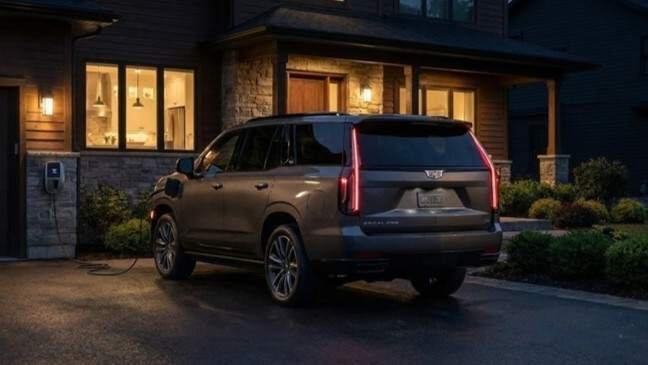
The power has been out for six hours after another round of record heat and strained transformers. The refrigerator is losing the fight. Kids’ devices are dying. Someone two houses down has a gasoline generator hammering away like a leaf blower convention. Then an Escalade rolls into the driveway, a cable gets plugged into a transfer switch most neighbors have never heard of, and the house lights come back on—quietly. No roar. No fumes. Just the big Cadillac feeding power back into the essential circuits.
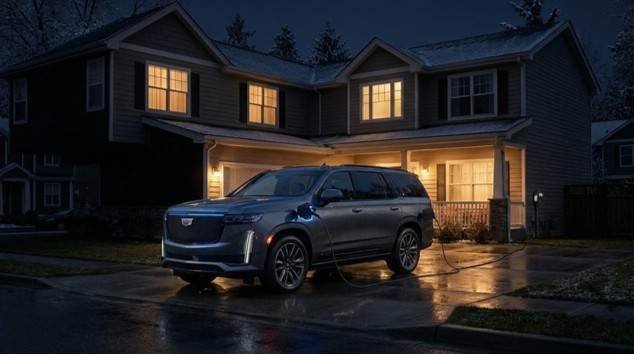
Every early rumor roundup and speculative video on the 2027 Cadillac Escalade stays in the familiar lane: bigger screens, fresh sheet metal, possible hybrid help, more Super Cruise polish. Fair enough. Those things matter. But they miss the quieter, more practical shift that could matter more to the people who actually write the checks for these vehicles. American households are dealing with a more fragile grid—heat waves in Texas and Arizona, public safety power shutoffs in California, winter storms in the Northeast, hurricane season along the Gulf and East Coast. The next Escalade is positioned to become more than a status SUV. It could become rolling backup power that happens to look like a luxury barge.
This is the angle that has stayed uncovered. Here’s what we can reasonably expect from the 2027 Cadillac Escalade, grounded in GM’s current trajectory, the existing Escalade IQ direction, and the real needs of U.S. owners, while keeping the home-power story front and center.
Exterior-Presence First
Cadillac is not going to shrink the Escalade. The 2027 Cadillac Escalade is expected to keep its full-size footprint and vertical presence while sharpening the details. Think a cleaner evolution of the current bold face: tighter lighting signatures, possibly a more integrated grille treatment that works for both gas and electrified versions, and revised front and rear fascias that reduce visual bulk without losing the “I arrived” stance American buyers want.
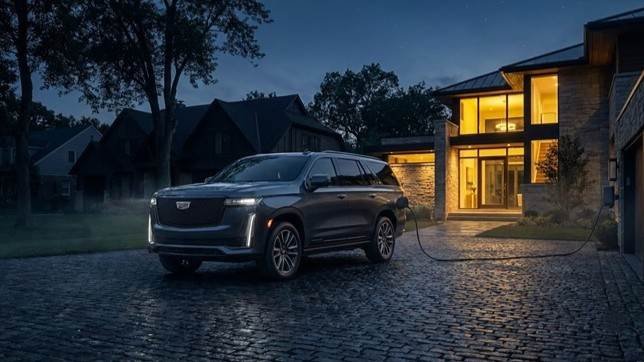
LED lighting should take another step forward—adaptive elements that cut through rain and fog better, and signature animations that feel current without trying too hard. Wheel options will likely stretch into the 24-inch range for the top trims, with all-terrain and winter packages still available because real owners in Colorado, Michigan, and upstate New York actually use these things in snow. Roof rails, power running boards, and available dual exhaust outlets (on gas versions) stay part of the language.
The functional upgrade that ties into the blackout story is the charging hardware. Expect clearer provision for high-power bidirectional ports. GM has already shown vehicle-to-home capability on other Ultium trucks. Bringing a clean, usable version to the Escalade would let owners plug into a home transfer switch or compatible bidirectional charger and run lights, refrigerators, medical devices, routers, and a few window units without dragging a generator out of the garage. The exterior design will hide that hardware elegantly—because no Escalade buyer wants their luxury SUV looking like a job-site trailer.
Powertrains and the Hybrid
This is where the home-power story gets real. The 2027 Cadillac Escalade is expected to continue offering a strong internal-combustion foundation while expanding electrified choices.
The proven 6.2-liter V8 should remain available for buyers who want familiar power and towing muscle, likely paired with a refined 10-speed automatic and the latest cylinder-deactivation and stop-start tuning for slightly better real-world numbers. A diesel rumor floats around every now and then, but gasoline and electrified paths look more probable for Cadillac’s brand direction.
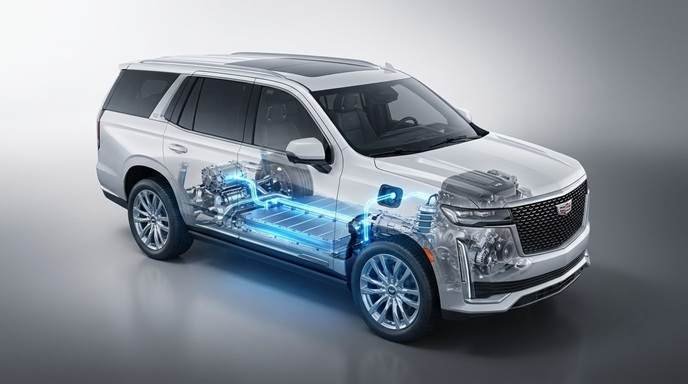
The bigger development is hybrid and plug-in hybrid options. GM has been clear that it wants electrification across its truck and SUV lineup without forcing every buyer into a full EV overnight. A robust hybrid system—or a plug-in hybrid with meaningful electric range—would give the Escalade the ability to run silently on electric power around town and still deliver long-distance range and towing confidence. More importantly for this discussion, any high-voltage battery pack of meaningful size opens the door to vehicle-to-home energy transfer.
The Escalade IQ already demonstrated that Cadillac can put a large Ultium battery under an Escalade body. For 2027, a refreshed or next-wave IQ variant plus a smarter hybrid option would let families choose their level of electrification. In a blackout, a charged battery pack becomes a quiet generator. Depending on battery size and home load, that could mean powering critical circuits for many hours or even a couple of days if the family manages loads carefully. That is a different value proposition than simply advertising horsepower.
Towing and payload should stay class-competitive. Escalade buyers haul boats, trailers, and family gear. Any new powertrain will be expected to protect those numbers while adding the efficiency and backup-power capability.
Interior and Tech: Quiet Luxury
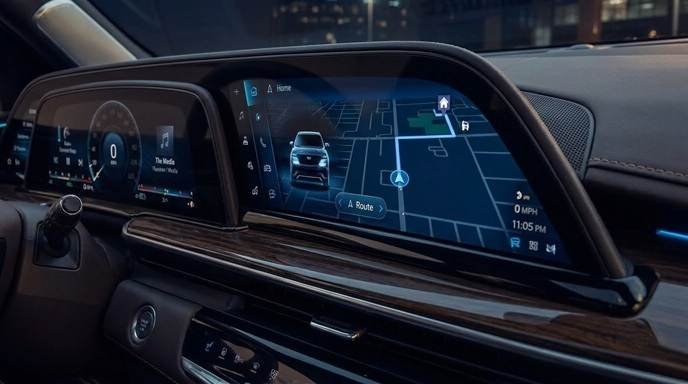
Step inside and the 2027 Cadillac Escalade should feel like a rolling lounge that also happens to be a command center. Cadillac has already pushed massive displays with the current generation’s curved OLED setup. Expect the next step: higher resolution, faster response, better customization, and tighter integration with Google built-in or the latest GM interface. Wireless connectivity, multiple user profiles, and over-the-air updates will be table stakes.
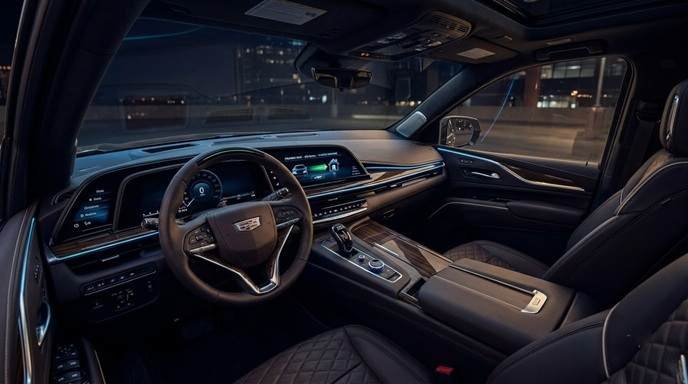
Materials will continue climbing—better open-pore woods, carefully chosen leathers or high-end synthetics, and real metal accents that don’t rattle after three Minnesota winters. Seating for seven or eight with available executive-style second-row recliners, massage, and heating/ventilation remains a core selling point. Power-folding third row, abundant USB-C ports, and thoughtful storage still matter when the vehicle is also serving as a family hub during an outage.
The tech feature that deserves more attention is energy management. A clear, simple in-vehicle screen (and phone app) that shows how much power the Escalade is sending to the house, estimated time remaining, and which circuits are active would turn a complicated idea into something a tired parent can use at 11 p.m. during a storm. Super Cruise and its eventual hands-free expansions on more divided highways will keep improving, but the sleeper hit may be the vehicle’s ability to keep the home office online so a parent doesn’t lose a workday when the neighborhood goes dark.
Audio systems will stay premium (AKG or equivalent), and noise control should get even better so the cabin remains a sanctuary whether you’re on a road trip or parked in the driveway running the house.
2027 Cadillac Escalade Specs
| Category | Expected Specification |
|---|---|
| Model Year | 2027 |
| Body Style | Full-size Luxury SUV (Standard & ESV length expected) |
| Drivetrain | Rear-Wheel Drive / Intelligent All-Wheel Drive (AWD standard on most trims) |
| Platform | Updated full-size truck/SUV architecture with Ultium-compatible support |
Powertrain Options (Expected)
| Powertrain | Output (Est.) | Transmission | Drive System |
|---|---|---|---|
| 6.2L V8 Gas | 420–450 hp / 460+ lb-ft | 10-speed automatic | RWD / AWD |
| Hybrid (V8 or I6 + Electric) | 500–550 hp combined | 10-speed auto / e-assist | AWD |
| Plug-in Hybrid (PHEV) | 550–600+ hp combined | Multi-speed / EVT | AWD |
| Escalade IQ (Full Electric) | 750+ hp (dual motor) | Single-speed | AWD |
Battery & Vehicle-to-Home (V2H) Capability
| Feature | Expected Detail |
|---|---|
| Battery Type | Ultium lithium-ion (Hybrid / PHEV / IQ) |
| Usable Battery (PHEV est.) | 20–30+ kWh |
| Usable Battery (IQ est.) | 200+ kWh |
| Bidirectional Charging | Expected (Vehicle-to-Home / Vehicle-to-Load) |
| Home Power Output (est.) | 7.2–19.2 kW depending on configuration |
| Estimated Backup Duration | 8–20+ hours for essential circuits (lights, fridge, internet, medical devices) |
| Charging Port | AC bidirectional + DC fast charging capable |
Capability
| Spec | Expected Number |
|---|---|
| Max Towing Capacity | 8,000–8,500 lbs (gas/hybrid) |
| Payload | 1,500–1,800 lbs |
| Fuel Economy (Gas est.) | 14–16 city / 19–22 highway |
| Hybrid/PHEV Efficiency | Significantly improved + electric range |
| Electric Range (IQ est.) | 450+ miles |
AWD and Real-World Capability
Full-time or intelligent all-wheel drive will remain central. Cadillac’s current systems already send power where it’s needed and pair it with available air suspension and magnetic ride control for a surprisingly composed highway ride. The 2027 version should refine the tuning further—quicker response in snow and heavy rain, better off-pavement manners for dirt roads to the lake house, and tighter integration with the electrified powertrains so torque delivery feels seamless.
Terrain modes, trailer-backing assists, and a robust camera system (including available night vision or enhanced trailering views) help when weather turns ugly. For blackout scenarios, the same AWD confidence that gets you home through a storm also means the vehicle can be positioned and used as a power source even if driveways are icy or flooded. High ground clearance and available underbody protection keep the hardware safe.
Market Position, Rivals, and the Upgrade Path
The Escalade sits at the top of the American full-size luxury SUV heap. Its rivals are familiar: Lincoln Navigator, Jeep Grand Wagoneer, Mercedes-Benz GLS, BMW X7, and the increasingly serious Genesis GV80/90 space, plus the electrified newcomers. The Escalade’s advantages have long been road presence, interior space, towing strength, and that unmistakable Cadillac brand signal in U.S. suburbs and cities.
The 2027 model’s opportunity is to add a practical layer those rivals have not fully owned yet in the public conversation: energy resilience. Lincoln and Jeep will bring their own hybrid stories. The German brands will emphasize driving dynamics and prestige tech. None of them have claimed the “this SUV kept my house running” narrative in a way that resonates with American grid realities. Cadillac can.
Upgrades that will matter to buyers include:
- Genuine bidirectional charging hardware and software support for vehicle-to-home.
- A hybrid or PHEV option with enough battery to be useful in an outage.
- Clearer owner education and dealer support for home installation of transfer switches or compatible chargers.
- Warranty language that does not punish owners for using the battery to power their house within stated limits.
- Insurance and utility conversations—some insurers already look favorably on whole-house generators; a vehicle that can do similar duty may eventually earn similar recognition.
- Regional packages (heat-management packages for the Southwest, cold-weather packages for the Upper Midwest and Northeast) that also consider battery performance in extreme temperatures.
Pricing will stay premium. Expect the range to start in familiar high-territory and climb quickly once you add wheels, executive seating, advanced driver aids, and any electrified powertrain. The value argument shifts, however, when the same vehicle that makes the school run and the lake-house trip can also keep the sump pump and CPAP machine running during a multi-day outage.
Most coverage will obsess over horsepower figures and screen sizes. The more interesting conversation is how the 2027 Escalade fits into the actual lives of the families who buy it. These are often multi-generational households, people with home offices, parents with kids who need devices for school, or owners who simply refuse to let a blackout ruin food or comfort.
Vehicle-to-home is not magic. It requires a compatible home setup, proper installation, and realistic expectations about how long a battery can support a house. Cold weather reduces capacity. Running the entire air-conditioning system will drain things faster than running lights, fridge, and internet. Yet even a limited, well-managed backup capability is a genuine quality-of-life upgrade in places where the grid has become less predictable.
Cadillac has the brand permission to make this feel luxurious rather than utilitarian. Quiet power delivery, a polished app experience, and seamless integration with the vehicle’s existing tech would let owners feel smart instead of stressed when the lights go out.
What Could Go Wrong and What Still Needs Clarity
Utilities sometimes resist bidirectional setups or create paperwork hurdles. Older homes may need electrical panel upgrades. Battery degradation questions will need honest answers from GM. And not every owner will want to pay for the home-side hardware. A good piece of journalism (and a good ownership experience) admits those friction points instead of glossing over them.
Still, the direction is clear. GM has already demonstrated the technology elsewhere. Bringing it to the Escalade in a usable, well-supported way would give Cadillac a story none of the usual preview articles are telling.
The next Escalade will be bigger than its screens and its grille. It will still deliver the space, the towing capacity, the highway presence, and the leather-lined calm that American buyers expect. It should also offer smarter powertrains, sharper design, stronger AWD capability, and tech that feels current.
The fresh reason to pay attention is simpler: in a country dealing with more frequent weather-driven outages, the ability to come home and quietly keep the house alive is a luxury feature that outperforms another inch of chrome. Status used to mean being seen. In 2027 it may also mean being the house on the street that still has lights on.
That is the 2027 Cadillac Escalade story that has not been fully told yet—one that treats the vehicle as both a luxury statement and a practical energy asset for the way Americans are actually living. When the next heat dome or winter storm settles in, the families who planned ahead may find their Escalade doing the most important work of the night while the neighborhood generators scream. Quietly.
Related Post