
The compact SUV segment is where a lot of American households actually shop. Not the three-row giants. Not the tiny subcompacts. The middle: something that can commute all week, take a family on a weekend trip, and still fit in a normal garage. That is why the 2027 Hyundai Tucson matters. Hyundai has introduced an all-new fifth-generation Tucson for the U.S. market, and it is not a mild refresh. The company is changing the sheet metal, stretching the proportions, rebuilding the cabin, updating the technology stack, and putting even more weight on electrified powertrains. For shoppers comparing it with a Toyota RAV4, Honda CR-V, or Mazda CX-5, that is a big deal.
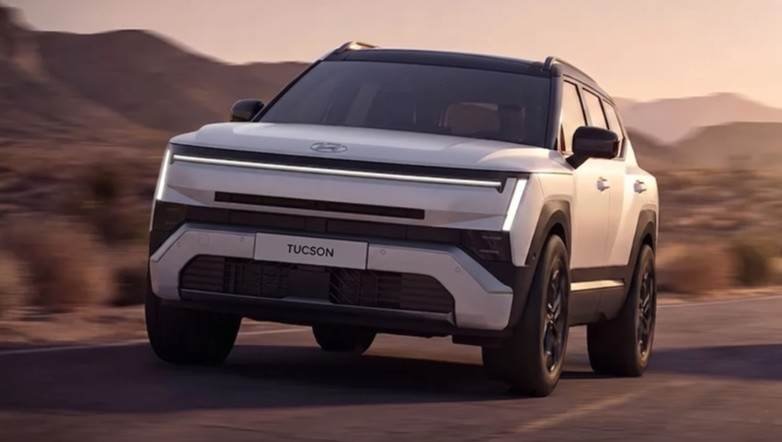
Hyundai has shown the new Tucson and outlined the direction. It has not yet published a complete U.S. order guide with final MSRP, EPA fuel-economy labels, or every trim-by-trim specification. That gap is exactly why a careful buyer’s guide is useful. The goal here is not hype. It is to separate what is confirmed, what is a manufacturer target, what is a reasonable estimate, and what is still unannounced.
If you are trying to decide whether to wait for the 2027 Hyundai Tucson, buy a leftover current-generation model, or cross-shop the usual Japanese rivals, this is the full picture.
What’s New for the 2027 Hyundai Tucson?
The 2027 model is a new generation, not a facelift of the current Tucson. That distinction matters. A refresh usually means new lights, a revised grille, and extra screens. A new generation is when the architecture, proportions, interior layout, and powertrain strategy can all move at once. The biggest changes fall into six areas.
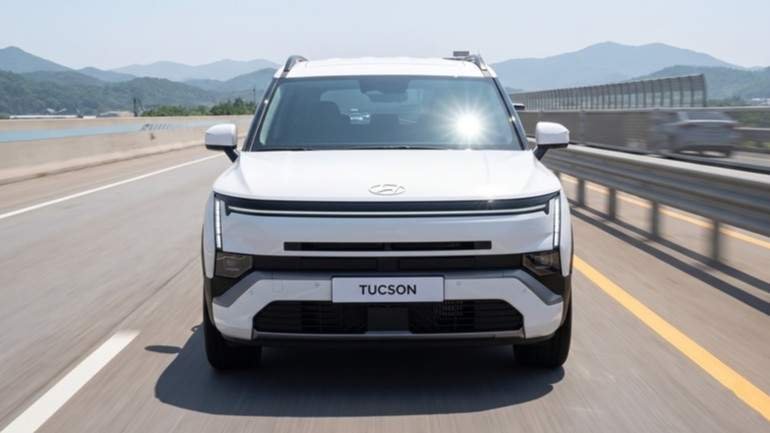
1. Exterior redesign
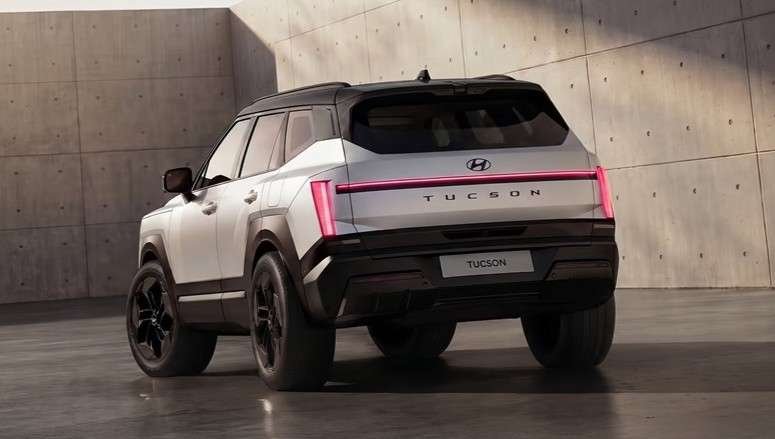
The 2027 Hyundai Tucson redesign replaces the current generation’s already distinctive look with a cleaner, more premium face. Hyundai’s latest lighting signature is the headline: a slim, full-width lamp graphic up front, tighter body surfaces, and a more planted stance. The rear is simpler and more horizontal. Higher trims are expected to get larger wheels, richer lighting details, and more body-color surfacing. The XRT Pro, covered later, takes the opposite path with extra cladding and a more adventure-oriented appearance.
2. Larger dimensions
Hyundai has positioned the fifth-generation Tucson as a roomier compact SUV. Exact U.S. figures belong in the official specification sheet, which Hyundai USA has not fully released at this writing. What is clear from the reveal is the intent: a longer wheelbase feel, more rear-seat usefulness, and a cargo hold that can compete more directly with the CR-V and RAV4. Until the U.S. numbers are published, treat any millimeter-by-millimeter comparison as incomplete.
3. Redesigned interior
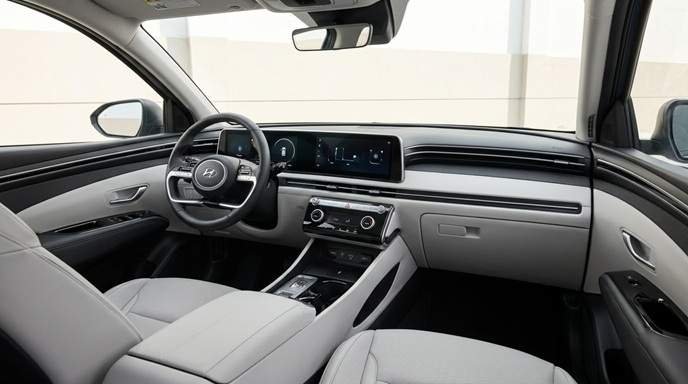
The 2027 Hyundai Tucson interior is one of the most important reasons to wait. Hyundai is moving the Tucson further upmarket with a wider digital display setup, a cleaner dashboard, more storage, and materials that look less like “compact SUV” and more like a smaller Santa Fe. Family buyers should care less about the styling sketches and more about rear-seat space, USB-C ports, cargo floor height, and whether the climate controls remain easy to use.
4. Technology
The new Tucson is built around Hyundai’s latest connected-car software, branded Pleos Connect, plus a more capable voice assistant, expanded driver-assistance features, and the kind of parking/reversing aids that used to live only on costlier crossovers. Some of those systems are confirmed in Hyundai’s global presentation. U.S. availability by trim is not fully confirmed.
5. Hybrid powertrain
The 2027 Hyundai Tucson Hybrid is not a side story. It is central to the product. Hyundai has spent the last few years making the Tucson Hybrid one of the more appealing alternatives to a RAV4 Hybrid or CR-V Hybrid, in part because it uses a conventional automatic instead of an e-CVT. The new generation is expected to keep that hybrid-first momentum.
6. XRT Pro
Hyundai is no longer treating “rugged” as a set of stickers. The 2027 Hyundai Tucson XRT Pro is the trim that tries to pull outdoor-minded buyers away from a Subaru Outback, a Honda Passport TrailSport, or a more expensive midsize SUV. It is still a compact crossover. It is not a Wrangler. But it is the most off-road-oriented Tucson Hyundai has offered in this class.
Taken together, the 2027 model is Hyundai’s attempt to keep the Tucson in the conversation against a new RAV4 cycle and a still-strong CR-V.
2027 Hyundai Tucson Release Date
So when can U.S. buyers actually get one?
Confirmed: Hyundai has revealed the all-new Tucson as a 2027 model. That means it is intended for the 2027 model year in the United States, not as a late 2026 carryover of the current generation.
Estimated: In this segment, a world premiere is usually followed by Korean or global production first, then U.S. arrivals several months later. For most Hyundai crossovers, that pattern puts dealer inventory in the second half of the calendar year before the model year fully ramps. A reasonable expectation is late 2026 arrivals at U.S. dealerships, with broader availability into 2027.
Not yet announced: Hyundai USA has not published a locked-in on-sale date, first-retail-delivery month, or a complete allocation calendar. Those dates often land closer to job-one production, after pricing and EPA testing are finished.
If you need a vehicle this spring or summer, the 2027 Tucson is not a now-car. If your lease is up in the fall or you can wait for first-year inventory, it becomes a real option. First-year compact SUVs also tend to be short on some colors and loaded trims, so early shoppers should expect less negotiating room than they would find on a leftover current Tucson.
2027 Hyundai Tucson Price and Trim Levels
This is the section everyone scrolls to, and it is also the section that requires the most caution.
Not yet announced: Hyundai USA has not issued official 2027 Tucson MSRP. Any number you see presented as a locked sticker price is not an official Hyundai figure.
Confirmed direction: The Tucson will remain a mainstream compact SUV, not a luxury vehicle. Hyundai’s pattern is to keep a reachable entry price, then stack value into mid-level trims so the Tucson feels better-equipped than a base RAV4 or CR-V.
Estimated pricing context, not official MSRP:
The outgoing Tucson has typically started in the high $20,000s to around $30,000 for a gas model, with hybrids several thousand dollars higher and top hybrids/PHEVs landing in the low-to-mid $40,000s depending on options. A new generation usually adds some cost because of more equipment, more structure, and more technology. A realistic planning range for shoppers, not an official price list, looks like this:
| Trim / powertrain (expected, not confirmed) | How to think about it | Planning range (estimate only) |
|---|---|---|
| Base gas FWD | Commuter / first-price shopper | Low $30,000s |
| Mid gas or hybrid | The volume sweet spot | Mid $30,000s |
| XRT / XRT Pro | Adventure styling, likely AWD | Mid-to-upper $30,000s |
| Limited hybrid | Family / luxury-leaning | Around $40,000 and up |
| Any PHEV, if offered | Tax-credit and plug-in shoppers | TBD |
Those are planning numbers for budgeting and comparison shopping. They are not Hyundai MSRP.
Expected trims, pending U.S. confirmation
Hyundai’s recent Tucson lineup has used names such as SE, SEL, XRT, Limited, plus hybrid versions of several of those. The fifth generation is expected to keep a similar ladder and add XRT Pro as a distinct off-road-flavored model. Calligraphy branding has appeared on other Hyundais; whether the Tucson gets it in the U.S. is unconfirmed.
What shoppers should watch for when the order guide lands:
- Which trims offer the hybrid
- Whether AWD is standard on XRT Pro
- Package content on SEL versus Limited
- Destination fee, which is not part of the advertised starting price
- First-year option packages that quietly add $2,000 to $4,000
If a dealer quotes a 2027 Tucson price before Hyundai’s official announcement, ask whether it is an estimate, a conversion from another market, or a lot sticker. Those are not the same thing.
2027 Hyundai Tucson Engine and Performance
Hyundai has not published the full U.S. 2027 Hyundai Tucson specs sheet, so this section is about the likely powertrain strategy and the driving character buyers already know, not invented horsepower figures.
Gasoline engine
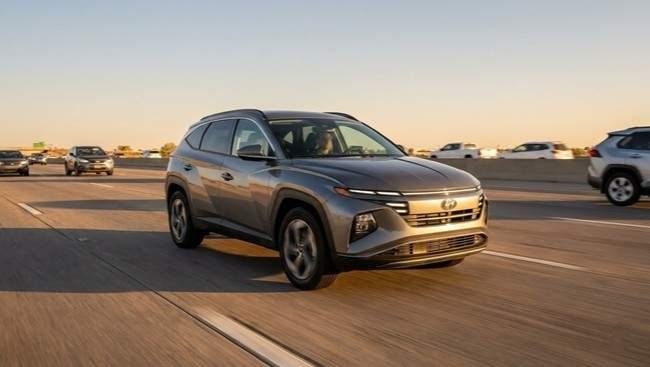
The current U.S. Tucson relies on a 2.5-liter four-cylinder in non-hybrid form, rated at 187 horsepower and 178 lb-ft of torque, paired with an eight-speed automatic. That combination is adequate. It is not quick. With FWD it is fine for commuting and school runs. With AWD and a full load, it feels like a mainstream compact SUV, not a performance crossover.
Until Hyundai USA confirms otherwise, shoppers should assume a similar naturally aspirated four-cylinder remains the value powertrain for 2027. Treat any new horsepower claim as unconfirmed until it appears on Hyundai’s U.S. site.
Hybrid system
The hybrid is the more important engine story and gets its own section below. In short: Hyundai’s recent Tucson Hybrid has used a 1.6-liter turbocharged four-cylinder plus an electric motor for a combined 231 horsepower and 271 lb-ft of torque, sent through a six-speed automatic. That setup is one of the Tucson’s genuine advantages. It delivers stronger midrange pull than the gas 2.5 and avoids the drone some drivers dislike in Toyota’s e-CVT.
Transmission
Do not assume the 2027 model automatically switches to an e-CVT. Hyundai has differentiated itself by keeping a conventional automatic in the Tucson Hybrid. If that carries over, it will remain a talking point versus the RAV4 Hybrid and CR-V Hybrid.
FWD and 2027 Tucson AWD
Expect front-wheel drive on lower gas and some hybrid trims, with Hyundai’s HTRAC all-wheel-drive system available or standard higher up. For most U.S. buyers, Tucson AWD is a weather-and-dirt system: snow, gravel, wet ramps, light trails. It is not a low-range off-road setup.
Expected driving characteristics
The current Tucson is quiet, comfortable, and easy to see out of. Steering is light. Ride quality is one of its strengths, especially compared with older, jittery compact SUVs. The 2027 redesign is intended to feel more substantial, with better isolation and a more premium highway manner. If Hyundai increased wheelbase and sound insulation as the reveal suggests, the Tucson should remain a comfort-first family SUV rather than a sport-tuned Mazda rival.
Anyone who wants a sporty compact crossover should still look hard at the CX-5 or wait to drive both. Anyone who wants a relaxed, well-equipped daily driver is in Tucson territory.
2027 Hyundai Tucson Hybrid
If you only read one powertrain section, make it this one. The 2027 Hyundai Tucson Hybrid is the version most shoppers should seriously consider, especially if they do mixed commuting, live in a high-gas-price state, or want stronger torque without jumping to a turbo gas engine.
Hybrid powertrain
Hyundai’s recent formula is a turbocharged 1.6-liter gasoline engine, an electric motor, a small hybrid battery, and a six-speed automatic. Combined output on the outgoing U.S. Tucson Hybrid is 231 hp and 271 lb-ft. Hyundai has said the new-generation hybrid is more efficient. It has not, at this writing, published the final U.S. horsepower, torque, motor output, or battery capacity for 2027.
That distinction matters. A manufacturer can improve efficiency with aerodynamics, gearing, battery chemistry, and software without changing the brochure horsepower.
Electric motors and battery
The Tucson Hybrid is a conventional hybrid, not a plug-in. It can crawl, creep, and operate electrically at low speeds, then blend the engine in as you add throttle. It does not have a meaningful all-electric commuting range. If you want a plug, you want a PHEV, which is a separate question later in this guide.
Battery size on the current Tucson Hybrid is modest, as it is on most non-plugin hybrids. Hyundai USA has not confirmed the 2027 pack size.
Transmission
The six-speed automatic remains a reason some drivers prefer the Tucson Hybrid to a RAV4 Hybrid. You get more distinct gear changes and a more familiar power delivery. The trade-off is that Toyota’s system is extremely polished in city traffic and often wins the EPA spreadsheet.
FWD / AWD
Expect both. In the current generation, choosing AWD costs some fuel economy and adds winter security. That pattern should continue. If you live in the Snow Belt, pay for AWD. If you live in San Diego and never leave pavement, FWD hybrid is the value play.
Fuel-economy target versus EPA
Hyundai has talked about class-competitive or class-leading efficiency for the new hybrid in global materials. Those statements are manufacturer targets, often tied to non-U.S. test cycles. They are not EPA figures. Do not shop as if the 2027 Tucson Hybrid MPG is already on a window sticker.
Towing
Do not assume the hybrid tows more than the gas model. On the current Tucson, hybrid towing has generally been modest and in the same neighborhood as the gas version. Until Hyundai publishes 2027 ratings, plan around light recreational towing only.
Who should consider the hybrid
- Commuters with 12,000 to 20,000 miles a year
- Families who want stronger passing power than the 2.5-liter gas engine
- Buyers who like Hyundai’s warranty and do not want a CVT
- Shoppers who keep cars long enough for fuel savings to matter
- Anyone cross-shopping a RAV4 Hybrid or CR-V Hybrid
Who might skip it: drivers who want maximum towing, people who only drive 6,000 miles a year, or buyers who find a heavily discounted gas leftover Tucson.
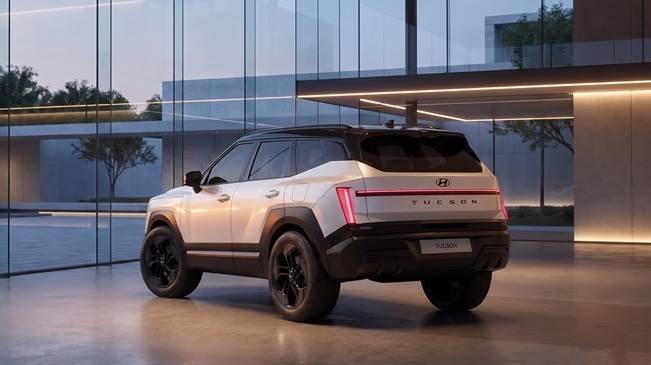
2027 Hyundai Tucson MPG
Fuel economy will be one of the most searched questions around this vehicle. It also happens to be one of the easiest places for the internet to invent numbers.
Manufacturer targets
Hyundai has indicated that the new hybrid is more efficient than the model it replaces. That is a direction, not a rating.
EPA figures
Not yet available. The EPA has to test U.S.-spec vehicles. Until those labels exist, any “official” 2027 Tucson Hybrid MPG number you see in a forum is speculation.
For context only, the recent Tucson Hybrid has been one of the more efficient vehicles in class, with combined ratings typically in the mid-to-high 30s depending on drivetrain, and some FWD ratings at or near 38 mpg combined. The gas 2.5 has been far more ordinary, usually in the mid-20s combined.
Use those as a baseline for expectations, not as 2027 results.
Real-world MPG
Real-world Tucson Hybrid numbers in the current generation often land close to the sticker on highway trips and can beat the sticker in warm-weather city driving. Cold winters, roof boxes, AWD, and short trips all cut into hybrid gains. That will not change in 2027. A hybrid is still a heat engine with a battery assist.
If fuel economy is your main reason for waiting, wait for the EPA label. Do not buy based on a Korean or European test cycle converted by a YouTube thumbnail.
2027 Hyundai Tucson XRT Pro
The 2027 Hyundai Tucson XRT Pro is Hyundai’s answer to a question compact-SUV buyers keep asking: “Can I have the practical Tucson, but make it look like I actually leave the pavement?”
Styling
Expect unique bumpers, extra plastic cladding, darker trim, unique wheels, roof rails, and a more upright, adventure-ready face. This is the trim that photographs well on a dirt access road. That has value. Just do not confuse design with crawl-ratio hardware.
AWD
XRT Pro is expected to emphasize all-wheel drive. That is the right call. A rugged-looking FWD crossover is a contradiction most buyers will not accept. Confirm it on the final U.S. sheet before you order.
Off-road-oriented equipment
This is where shoppers need a sober eye. Documented XRT-style equipment in Hyundai’s compact SUVs has usually meant:
- Unique bumpers with slightly better approach geometry
- All-season or all-terrain tires
- Skid-type lower cladding
- Unique suspension tuning or ride height on some models
- Recovery hooks or unique lighting
Ground clearance
Do not treat a specific clearance number as official until Hyundai USA publishes it. If the XRT Pro does ride higher, it will still be a crossover height, not a midsize truck height.
Tires
All-terrain tires, if fitted, help on gravel, forest roads, and snow. They add noise and can reduce fuel economy. That trade-off is the whole point of this trim.
Towing
XRT Pro styling does not magically raise towing capacity. Towing is a powertrain, cooling, and certification question. Wait for the published rating.
Intended buyer
The XRT Pro makes sense for:
- People who camp, ski, fish, or use unpaved cabin roads
- Shoppers who like the look of a Wilderness/TrailSport/Outback but want Hyundai’s warranty and features
- AWD buyers who want their Tucson to look less suburban
It does not make sense if you think it will replace a 4Runner, Wrangler, or Bronco on rocks. There is no evidence the Tucson is becoming a serious rock crawler. There is no low range, no solid axle, and no body-on-frame architecture. Treat XRT Pro as a capable all-weather crossover with better clothes.
2027 Hyundai Tucson Interior
The interior is where Hyundai has been winning converts, and the fifth-generation Tucson is clearly aimed at people who sit in a RAV4 and want something warmer.
Cabin redesign
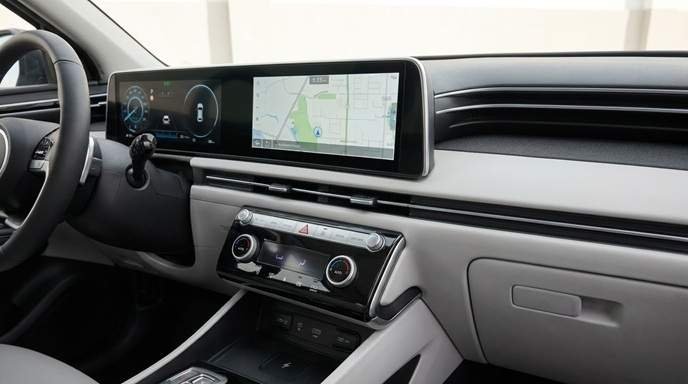
The 2027 Hyundai Tucson interior moves toward a wide, horizontal dashboard with a more integrated display layout, a lower visual clutter line, and a more expensive-looking center console. Hyundai has been shifting its crossovers toward a “lounge plus screens” formula: digital information in front of the driver, physical or easy-reach climate controls, and a center stack that does not feel like a tablet glued onto last decade’s dashboard.
Front-seat comfort
Hyundai seats in this class are generally broad and long-haul friendly rather than sport-bolstered. Expect available heating, ventilation on upper trims, power adjustment, and a driving position with a good view of the hood corners. Tall drivers should still do a real test fit. Screen-heavy dashboards can steal some forward sightlines if the display housing is too tall.
Rear-seat space
This is a family vehicle. The current Tucson already has generous rear legroom for a compact SUV. Hyundai’s message with the new generation is “even more usable.” Until U.S. dimensions are out, the fair statement is this: the Tucson is being sized to keep adults comfortable in back, with room for a rear-facing child seat behind a typical-height driver. That is the comparison that matters more than a 0.4-inch brochure change.
Cargo capacity
2027 Tucson cargo space is still awaiting a full U.S. publication. The current Tucson is already competitive, with roughly 38.7 cubic feet behind the rear seats and about 74.8 cubic feet with the second row folded, depending on configuration and measurement method. Hyundai is expected to protect or improve those numbers because cargo is one of the first things CR-V shoppers compare.
Useful cargo details to check in person:
- Height of the load floor
- Whether the rear seats fold flat
- Underfloor storage
- Liftgate opening height for garages
- Grocery-hook and cargo-cover availability
Storage and family practicality
Look for a deep center console, door bins that take bottles, a usable tray for phones, and enough USB-C ports that two kids and two adults are not fighting over one socket. Hyundai has been good about this. A compact SUV that looks great in photos and has nowhere to put a purse is not a family SUV.
Available comfort features
Upper trims in this class now routinely offer:
- Dual-zone climate control
- Heated front seats and steering wheel
- Ventilated front seats
- Power liftgate
- Panoramic sunroof
- Premium audio
- Ambient lighting
Confirm which of those are standard versus packaged on the 2027 U.S. trims. Hyundai sometimes puts a lot of equipment on SEL-level cars, which is exactly why the Tucson has been a value play.
2027 Hyundai Tucson Technology
Hyundai is using the 2027 Tucson to drag a volume SUV into its newest software world.
Infotainment screen and digital driver display
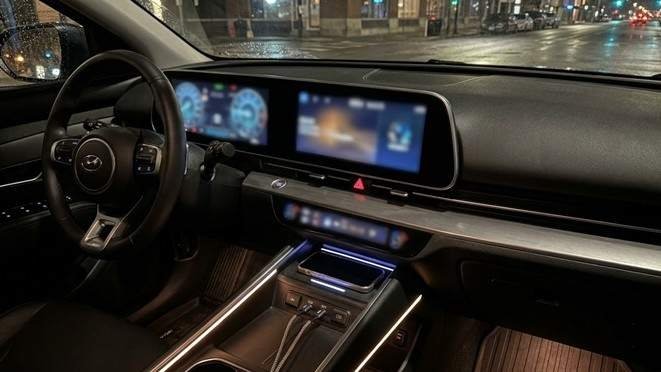
The new cabin is built around a wide digital cluster and a large center touchscreen. Hyundai’s recent dual-screen layouts have been 12.3 inches for the gauges and 12.3 inches for infotainment, sometimes with an additional climate/control display. Treat the exact U.S. screen sizes as confirmed only when the American brochure says so. The direction is unmistakable: more pixels, more integration, fewer leftover analog holes.
Pleos Connect
Pleos Connect is Hyundai’s newer connected infotainment and services platform. The point for buyers is not the brand name. It is over-the-air updates, a more modern interface, connected navigation/services, and a longer software life than older head units. Ask the dealer what functions require a subscription after the trial period. That is the unsexy but important question.
AI voice assistant
Hyundai has been moving toward a more natural-language assistant that can handle climate, navigation, and vehicle functions without the old “after the beep” awkwardness. How well it works in U.S. English, with American accents and road names, is a test-drive item. Do not buy the car because a launch video made the assistant look omniscient.
Apple CarPlay and Android Auto
U.S. shoppers should expect wireless Apple CarPlay and Android Auto, because that is now table stakes in this class. Confirm wireless versus wired on the base trim. Some automakers still restrict wireless connectivity to higher trims or particular software versions.
Wireless charging and USB-C
Expect a wireless phone pad on mid and up trims, plus multiple USB-C ports front and rear. If you have kids, rear USB-C is not a luxury. It is how you keep the tablet alive on a four-hour drive.
Available premium technology
Depending on trim, Hyundai’s recent playbook includes Digital Key, a head-up display, a surround-view monitor, Blind-Spot View Monitor, remote parking assist, and upgraded audio. U.S. availability by trim remains unconfirmed until Hyundai publishes the American features list. Global launch cars often show equipment that arrives later, or only on Limited.
One practical warning: more software means more things to learn and more things that can glitch in year one. That is true of every new-generation vehicle, not just Hyundai.
2027 Hyundai Tucson Safety Features
Hyundai’s recent crossovers have been densely equipped with driver assistance, and the 2027 Tucson is expected to continue that.
Do not confuse equipment with crash-test scores. No IIHS or NHTSA rating should be claimed until those organizations actually test a U.S.-spec 2027 Tucson.
Expected and recently offered Hyundai safety technology in this class includes:
- Automatic emergency braking with pedestrian and cyclist detection
- Blind-spot monitoring and rear cross-traffic alert
- Lane-keeping assistance and lane-following assist
- Adaptive cruise control, often with stop-and-go
- Highway Driving Assist on higher trims
- Safe Exit / rear occupant alerts
- Available surround-view camera
Parking technology
Hyundai and Kia have pushed parking assists harder than some rivals. Remote smart parking, surround cameras, and automated parking are the features that impress in a crowded Costco lot. They also vary widely by trim. Do not assume a base Tucson parks itself.
Memory Reversing Assist
This is one of the more interesting new-era Hyundai features. Memory Reversing Assist can reverse the vehicle along the path it just drove, which is genuinely useful in a narrow driveway, a crowded job site, or a trail that dead-ends. It is not autonomy. It is a convenience system. Confirm U.S. trim availability before you shop specifically for it.
The honest safety pitch for the Tucson is this: Hyundai typically loads these SUVs with assistance tech at lower prices than some rivals. The remaining questions are calibration quality, IIHS headlight performance, and how the new body structure scores once labs test it.
| Category | 2027 Hyundai Tucson |
|---|---|
| Model year | 2027 |
| Generation | All-new 5th generation |
| Vehicle type | Compact SUV |
| U.S. release date | Expected late 2026 into 2027 |
| Starting MSRP | Not published |
| Body style | 5-door crossover |
| Seating | 5 |
| Drivetrain | FWD and AWD |
| AWD system | Hyundai HTRAC likely |
| Gas engine | Likely 2.5L 4-cylinder carryover or update |
| Hybrid | Yes, core powertrain |
| PHEV | Possible globally; U.S. availability unconfirmed |
| Transmission, gas | Likely 8-speed automatic |
| Transmission, hybrid | Likely 6-speed automatic |
| Fuel economy | EPA labels not published |
| Towing | Not published; current Tucson is about 2,000 lbs |
| Cargo space | Not published; current Tucson is about 38.7 / 74.8 cu ft |
| Crash-test ratings | Not tested/published yet |
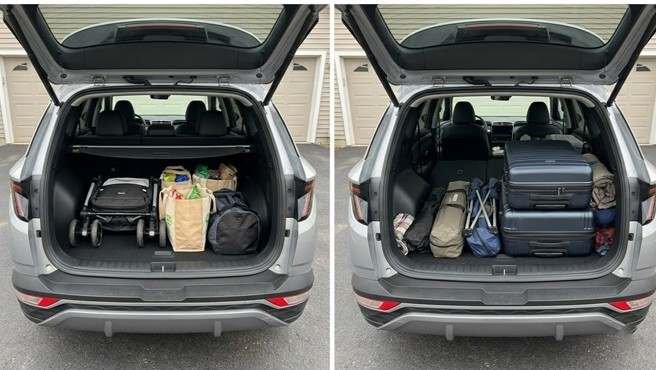
2027 Hyundai Tucson Dimensions and Cargo Space
Shoppers comparing the 2027 Tucson with the outgoing model want a simple answer: did it get bigger in the places families feel?
Confirmed direction: yes, Hyundai is presenting the fifth generation as roomier and more adult in its proportions.
Not yet fully announced: the complete U.S. 2027 Tucson dimensions.
For a useful baseline, here is the recent U.S. Tucson, which is the vehicle the 2027 model has to beat:
| Measurement | Recent Tucson (approx.) |
|---|---|
| Length | 182.7 in |
| Width | 73.4 in |
| Height | 65.6 in |
| Wheelbase | 108.5 in |
| Front / rear legroom | about 41.4 / 41.3 in |
| Cargo behind rear seats | about 38.7 cu ft |
| Cargo max | about 74.8 cu ft |
Those current-generation numbers already explain why the Tucson sold. Rear legroom is excellent for the class. Cargo is competitive with the CR-V and better than some sportier rivals.
What to look for in the 2027 figures:
- Wheelbase: a longer wheelbase usually means a more stable highway ride and more rear-seat room.
- Overall length: too long and it stops being easy to park.
- Rear-seat space: the Tucson cannot afford to lose its adult-friendly second row.
- Cargo capacity: folding-seat volume matters for Costco runs and strollers.
- Width: more width can mean better shoulder room and a more planted stance, at the cost of tight garages.
Until Hyundai USA posts the sheet, any viral infographic with exact 2027 numbers should be treated as unofficial.
2027 Hyundai Tucson Towing Capacity
Towing is where compact-SUV marketing gets sloppy. A Tucson is not a Tahoe.
Official 2027 ratings: not fully published by Hyundai USA at this writing.
Current-generation context: recent Tucson gas and hybrid models have generally been rated around 2,000 pounds. That is enough for some uses and not enough for others.
What a 2,000-pound rating actually means:
- Yes, with the right hitch and brakes if required: a small utility trailer, a couple of dirt bikes, a pop-up or very light camping trailer, a personal watercraft on a light trailer, a modest load of lawn equipment.
- No: a large travel trailer, a pair of heavy jet skis on a hefty trailer, a dual-axle contractor trailer, or “it looked fine behind that truck on Instagram.”
By powertrain
Do not assume the hybrid tows more because it has more combined torque. Towing certification depends on cooling, transmission, and hitch hardware. Some hybrids are rated the same as gas. Some are rated lower. Wait for the 2027 chart.
By drivetrain
AWD does not automatically increase towing capacity. It can help with launch traction on a boat ramp. The rating still comes from the powertrain package.
If towing is central to your purchase, the Tucson may be the wrong class. A midsize SUV, a minivan in some cases, or a midsize truck will be happier. If you occasionally pull a small trailer to the hardware store or a kayak to the lake, the Tucson’s rating, once confirmed, is likely to be in the normal compact-SUV conversation.
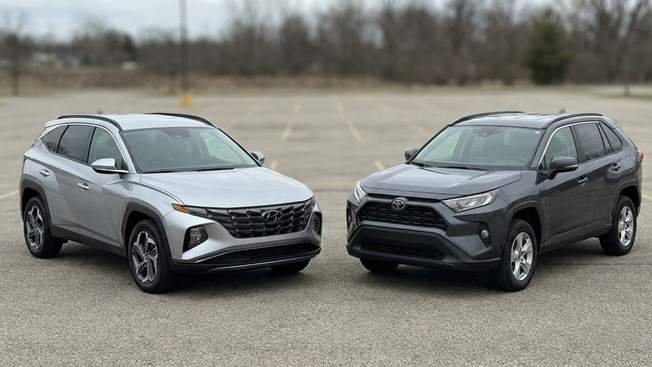
2027 Hyundai Tucson vs Toyota RAV4
This is the comparison most U.S. shoppers will make. The RAV4 is the segment’s default answer. Toyota just cycled the nameplate into a new generation as well, with a much heavier hybrid emphasis. That makes the 2027 Tucson vs RAV4 debate more even, and more confusing, than it was five years ago.
Powertrain and hybrid
Both will be hybrid-led conversations. Toyota’s hybrid reputation is bulletproof. Hyundai’s recent Tucson Hybrid counters with stronger advertised combined torque and a conventional automatic. Drive both. The power-delivery difference is something you feel in the first minute.
Fuel economy
Toyota often wins the EPA chart. Hyundai has been closer than people expect and sometimes more pleasant day to day. Final 2027 labels will decide the spreadsheet. Your commute will decide the rest.
AWD
Both offer it. Toyota’s system has a long winter reputation. Hyundai’s HTRAC is competent in snow and rain. Neither is a mountain goat.
Cargo
These two usually fight within a few cubic feet. The CR-V often wins max-cargo conversations; RAV4 and Tucson trade blows depending on generation. Wait for published 2027 volumes.
Technology
Hyundai typically offers flashier screens and more features per dollar. Toyota typically offers simpler long-term software and stronger resale. If you want the cabin to feel new, Hyundai. If you want the brand to feel safe at trade-in, Toyota.
Towing
Some RAV4 configurations, especially certain hybrids or Woodland-style trims, have advertised higher towing than a typical Tucson. If you tow near 3,500 pounds, look at the actual RAV4 rating and do not assume the Tucson matches it.
Pricing
Toyota often transacts above MSRP less than it used to, but RAV4 demand still supports strong residuals. Hyundai usually undercuts on features and warranty. The 10-year/100,000-mile Hyundai powertrain warranty remains a real Tucson advantage.
There is no overall winner. There is a winner for a specific buyer.
2027 Hyundai Tucson vs Honda CR-V
The CR-V is the practicality benchmark.
Powertrain
The CR-V Hybrid’s 2.0-liter hybrid makes 204 horsepower and is tuned for smoothness and efficiency. The Tucson Hybrid’s recent 231-hp, 271-lb-ft setup feels stronger when you need to merge. Honda’s e-CVT is polished. Hyundai’s automatic is more traditional.
Fuel economy
CR-V Hybrid FWD has been a 40-mpg-city kind of vehicle on the EPA label. That is excellent. The Tucson Hybrid has been close on combined figures in some configurations, less so in others. Again: wait for 2027 EPA numbers.
AWD
Both offer it. Honda’s AWD is unobtrusive and winter-credible. Same story as above: weather insurance, not off-roading.
Cargo and interior
This is Honda’s house. The CR-V’s rear seat, load floor, and “it just works” cabin have converted families for decades. The 2027 Tucson interior is trying to beat Honda on style and technology while matching it on space. If the fifth-generation Tucson does not at least match CR-V cargo usefulness, Honda keeps those buyers.
Technology
Hyundai is more aggressive. Honda is more conservative and, to some owners, more frustratingly slow to modernize. If you want wireless everything and a wide screen, Tucson. If you want proven physical controls and a cabin that does not chase trends, CR-V.
Towing
Recent CR-V ratings have often been modest, around 1,000 to 1,500 pounds depending on configuration. A 2,000-pound Tucson, if that carries over, would actually have an edge for light trailers. Confirm both 2027 ratings.
Pricing
Honda holds value extremely well. Hyundai gives you more toys. Shop the out-the-door price and the five-year cost, not just the monthly payment.
2027 Hyundai Tucson vs Mazda CX-5
This comparison is about character.
Powertrain
The CX-5 has been about a responsive 2.5-liter, with a turbo option for people who want punch. Hybrid has not been Mazda’s U.S. strength in this model. The Tucson, especially in hybrid form, will beat it on fuel economy and often on feature content. The Mazda will likely beat it on steering feel.
Size
The Tucson has grown into one of the more spacious compact SUVs. The CX-5 is tighter in the back seat and cargo area. If you regularly carry adults behind you, that gap is the whole decision.
Interior
Mazda still sets the “small premium” standard with materials and driving position. Hyundai is closing the gap with design and screens, but in a different way. Mazda feels like a smaller luxury car. Hyundai feels like a mini Santa Fe.
Technology
Hyundai wins on screen size, assistance features, and value tech. Mazda has improved, but it is not trying to be a gadget showroom.
Efficiency
Advantage Tucson Hybrid, assuming EPA labels follow the current trend. A gas CX-5 can be pleasant and still thirstier.
AWD
Mazda’s AWD is excellent in the rain and snow and contributes to the car-like feel. Hyundai AWD is more of a traction tool.
Pricing
A loaded CX-5 can look expensive next to a loaded Tucson. A base CX-5 can still charm someone who hates giant tablets. If driving pleasure is first and cargo is second, Mazda. If space, warranty, hybrid MPG, and features are first, Tucson.
Will There Be a 2027 Hyundai Tucson Plug-In Hybrid?
Maybe globally, not confirmed for the U.S. at launch. The current-generation Tucson has offered a PHEV in the United States, typically as a higher-spec model with a combined 261 horsepower and a useful but not huge electric range. That vehicle exists because Hyundai certified it for this market.
For the fifth generation:
- Other markets often get a Tucson PHEV because Europe and Korea treat plug-in hybrids as a compliance and tax product.
- The U.S. market is a separate decision. Hyundai has to consider federal tax-credit rules, battery supply, dealer charging education, and whether shoppers would rather just buy a Tucson Hybrid or a fully electric Ioniq.
Confirmed: a PHEV has been part of the Tucson family recently in America.
Not yet announced: a 2027 Tucson PHEV with U.S. pricing, range, and timing.
If you need a plug-in now, shop the current Tucson PHEV or a rival like the CR-V Hybrid, RAV4 Prime if available in your area, or a small electric SUV. If you can wait, watch Hyundai USA’s 2027 powertrain list. Do not assume the U.S. launch lineup includes a PHEV just because a global motor show car had a charging port.
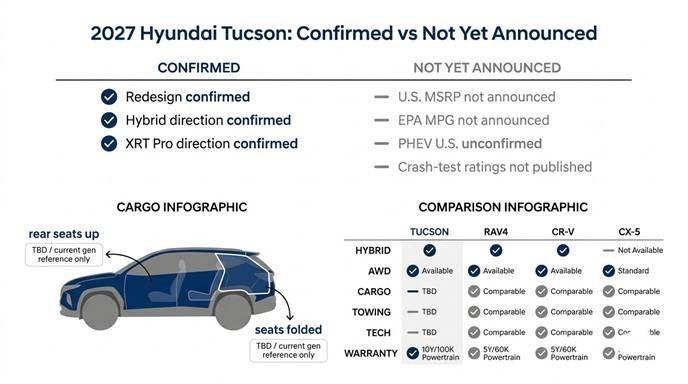
Who Should Consider the 2027 Hyundai Tucson?
Commuters
The hybrid is the play. Quiet cabin, easy driving position, expected strong fuel economy, and enough tech to make stop-and-go less annoying. FWD if your weather is mild.
Families
This is the core Tucson buyer. Rear-seat space, LATCH usability, cargo for strollers, a power liftgate, and a warranty that outlasts the first set of car seats. Limited or a well-optioned SEL hybrid will probably be the family sweet spot.
Hybrid shoppers
If you are already in a RAV4 Hybrid / CR-V Hybrid / Tucson Hybrid triangle, the 2027 model is worth a test drive for the interior and the automatic transmission. Bring a highway on-ramp and a parking garage into the test loop.
AWD buyers
Snow-state shoppers, mountain-weekend drivers, and anyone on unpaved roads should look at AWD hybrids and the XRT Pro. The Tucson will not replace a truck. It will replace a sedan that scared you last February.
Road-trip drivers
Hyundai’s highway manners, adaptive cruise, and cargo space make the Tucson a credible two-lane-America car. Test the driver’s seat for three hours, not three minutes. Check wind noise around the panoramic roof if so equipped.
XRT Pro shoppers
Buy this if you want the Tucson to look and feel more outdoor-capable and you actually use dirt roads, ski lots, or campsites. Skip it if you just like gray plastic and never leave the subdivision. The extra tire noise will annoy you.
2027 Hyundai Tucson Pros and Cons
Pros
- All-new generation, not a cosmetic patch
- Hybrid remains a central, sensible powertrain
- Interior is moving upscale in design and technology
- Warranty remains a Hyundai strength (10-year/100,000-mile powertrain on the current program)
- Feature content per dollar should stay aggressive
- XRT Pro gives the lineup a clearer outdoor identity
- Rear-seat and cargo usefulness are core to the Tucson’s pitch
- Conventional automatic in the hybrid (if carried over) is a real differentiator
Cons
- Final U.S. pricing is not out, so the value story is incomplete
- EPA MPG is not out, so the efficiency story is incomplete
- First-year new-generation electronics can be buggy
- Towing, if it stays around 2,000 pounds, is light-duty only
- XRT Pro could be more style than hardware
- Resale still generally trails Toyota and Honda
- A PHEV may not arrive for U.S. buyers at launch
- Base gas engine, if carried over near 187 hp, will feel ordinary
That is a balanced car, not a miracle machine.
2027 Hyundai Tucson Hybrid Specs
| Hybrid spec | Current U.S. Tucson Hybrid | 2027 Tucson Hybrid |
|---|---|---|
| System type | Conventional hybrid, not plug-in | Conventional hybrid expected |
| Gas engine | 1.6L turbo 4-cylinder | Not fully confirmed |
| Combined horsepower | 231 hp | Not published |
| Combined torque | 271 lb-ft | Not published |
| Electric motor | Yes, blended with engine | Yes |
| Battery | Small hybrid pack | Size not published |
| Plug-in charging | No | No, unless a separate PHEV is added |
| Transmission | 6-speed automatic | Expected to continue |
| FWD available | Yes | Expected |
| AWD available | Yes | Expected |
| City/highway/combined MPG | Recent FWD often around high 30s combined | Manufacturer says more efficient; no EPA label yet |
| Real-world MPG | Often near sticker in mild weather; lower in winter/AWD/short trips | Unknown until owner data exists |
| Best for | Commuters, families, RAV4/CR-V hybrid shoppers | Same buyer, plus people waiting for the new interior |
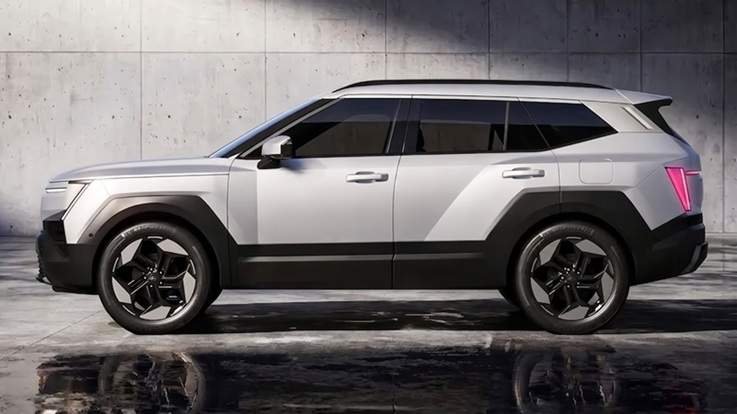
Should You Wait for the 2027 Hyundai Tucson?
Wait if:
- Your current car is fine for a few more months
- You specifically want the new interior and hybrid
- You are coming out of a lease in late 2026 or 2027
- The XRT Pro is the only Tucson that interests you
- You want to compare it against the newest RAV4 with full EPA labels
Consider a current Tucson, or another brand, if:
- You need a vehicle immediately
- A dealer has a discounted leftover hybrid with the equipment you want
- You are uneasy about first-year production
- Towing or PHEV range is a must-have today
- You have a price in writing on a CR-V or RAV4 that already fits
A neutral framework: do not wait for the 2027 Tucson because the internet said it will “kill the RAV4.” Wait because the fifth generation changes the things you actually touch — the cabin, the hybrid, the size, the tech. If those things are not your priority, a well-priced current model is still a good compact SUV.
The 2027 Hyundai Tucson is Hyundai’s next big swing in the most important SUV category in America. It is a new generation with a real redesign, a more premium interior, a hybrid-first strategy, and an XRT Pro trim for buyers who want more dirt-road attitude.
When does it arrive? As a 2027 model year vehicle, with U.S. dealer timing still not locked in. Late-2026 arrivals are a reasonable expectation, not a confirmed calendar date.
How much could it cost? Official MSRP is not out. Budget as if a new generation will start in the low $30,000s and climb into the $40,000s for loaded hybrids, then wait for Hyundai’s actual numbers.
What changed? Sheet metal, interior, technology, proportions, and the lineup’s hybrid/XRT emphasis.
Is there a hybrid? Yes — the 2027 Hyundai Tucson Hybrid is a core model. Final U.S. output and battery specs are still pending.
How efficient is it? Unknown in EPA terms. Manufacturer targets suggest improvement. Do not shop fake MPG numbers.
What is the XRT Pro? The most rugged-looking Tucson, likely AWD-focused, aimed at outdoor-minded compact-SUV buyers. Not a rock crawler.
How much can it tow? Wait for the official chart. Plan on light recreational towing unless Hyundai publishes something more ambitious.
How does it compare with the RAV4 and CR-V? Toyota still owns peace-of-mind and resale. Honda still owns everyday practicality. The Tucson’s weapons are features, warranty, cabin design, and a hybrid that drives differently from the Japanese e-CVTs.
As Hyundai releases final U.S. pricing, EPA ratings, trim details, and availability, those are the numbers that will turn this from a well-informed preview into a complete shopping list. Check back for those updates before you put down a deposit — and when they land, compare them against a RAV4 and a CR-V on the same day, on the same roads, with the same child seats in the back. That test, not a launch photo, is how you choose a compact SUV.
Related Post