
Cars used to be about horsepower, chrome, and the smell of gasoline. In 2026, the coolest ones feel more like rolling supercomputers that happen to have wheels. They run software that improves overnight, talk to your house, park themselves, update their own brains over the air, and in some cases drive you home while you doom-scroll.
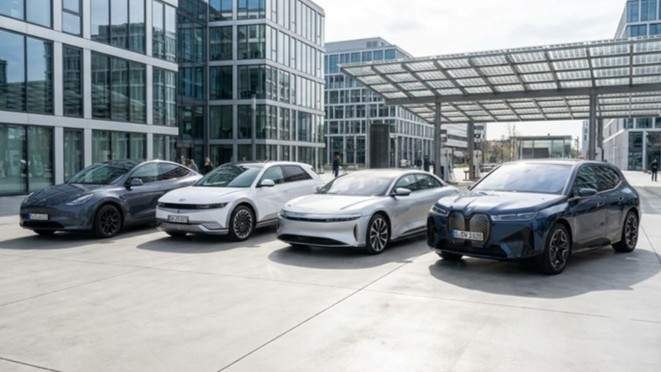
If you get weirdly excited about thermal management systems, AI training compute, 800-volt architectures, or a perfectly tuned haptic scroll wheel, this guide is for you. We’re calling these machines geek cars 2026 — vehicles that stand out because of their technology, engineering depth, software smarts, or just pure nerd appeal.
What Is a Geek Car in 2026?
A “geek car” isn’t an official industry category. It’s a useful label for any vehicle that makes tech-obsessed drivers, car nerds, and gadget fans light up. These are the cars you buy as much for the brain as for the body.
In 2026 that usually means advanced EVs or hybrids, serious over-the-air update capability, strong driver-assistance systems, beautiful or uniquely engineered interfaces, high-performance computing platforms, or some delightful piece of over-engineered hardware that didn’t need to exist but we’re glad it does.
What Makes a Car a “Geek Car”?
We scored every vehicle on seven homemade geek pillars:
- Technology – sensors, chips, cameras, radar, lidar
- Innovation – new ideas or clever execution
- Software – UI, OTA updates, ecosystem
- Performance – how the tech makes it faster, smarter, or more efficient
- Infotainment – screens, voice, games, productivity
- Engineering – battery, motors, chassis, thermal systems
- Uniqueness – the “only this car does that” factor
The higher a car ranks across those categories, the geekier it is.
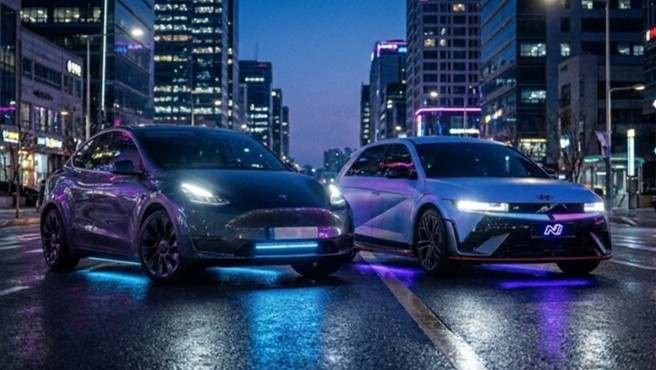
25 Best Geek Cars of 2026
Here are the 25 coolest geek cars you can actually buy or seriously shop in the U.S. market in 2026 (or that are confirmed/expected to be on sale). Specs and prices are approximate and based on the latest confirmed or widely reported information. Anything still fluid is clearly marked.
1. Tesla Model Y (Juniper / updated)
Still the default geek mobile. Massive AI training fleet, end-to-end neural nets, pure vision stack, and the biggest real-world OTA track record.
Why geek: Full Self-Driving (supervised) keeps getting smarter.
Powertrain: Dual-motor AWD, ~300–350+ mile range expected.
Interesting feature: Cabin camera + actual useful voice commands.
Drawback: Build quality and cabin materials still lag Germans.
Price: Starting high $40ks to mid $50ks.
Best for: Software maximalists.
2. Tesla Cybertruck
The most polarizing truck on earth is also one of the most interesting engineering exercises.
Why geek: 48-volt architecture, steer-by-wire, adaptive air suspension, PowerShare bidirectional.
Powertrain: Tri-motor versions still absurdly quick.
Interesting feature: The exoskeleton and vault.
Drawback: Size and range when loaded.
Price: Mid $70ks–$100k+.
Best for: People who want their truck to feel like a prop from a sci-fi movie.
3. Rivian R1S / R1T (Gen 2)
End-to-end adventure tech done right.
Why geek: Quad-motor setup, tank turn, Camp Mode, genuine off-road brains.
Powertrain: Large pack options, strong real-world range.
Interesting feature: Gear Tunnel and power outlets everywhere.
Drawback: Service network still growing.
Price: High $70ks–$90ks.
Best for: Outdoor tech geeks.
4. Lucid Air
The efficiency and packaging king.
Why geek: 900+ volt architecture, DreamDrive Pro, glass canopy, absurd range.
Powertrain: Up to 500+ miles in some configs (EPA).
Interesting feature: The way it sips electrons at 80 mph.
Drawback: Brand recognition and resale still maturing.
Price: Low $70ks to well over $100k.
Best for: Range and engineering nerds.
5. BMW iX
The rolling lounge that also happens to be deeply programmable.
Why geek: iDrive 8.5/9, excellent mixed-reality graphics, bowers & Wilkins, serious computing power.
Powertrain: Dual-motor, strong sustained performance.
Interesting feature: The crystal iDrive controller still feels special.
Drawback: Polarizing exterior.
Price: Mid $70ks+.
Best for: Luxury tech hedonists.
6. Mercedes-Benz EQS / EQE
Hyperscreen supremacy.
Why geek: The pillar-to-pillar display, MB.OS, cabin filtering, rear-axle steering.
Powertrain: Efficient and refined.
Interesting feature: The way the whole dash becomes a theater.
Drawback: Complexity and potential subscription fatigue.
Price: High $70ks to $120k+.
Best for: Screen maximalists.
7. Porsche Taycan (updated)
Proof that EVs can still feel analog-exciting.
Why geek: 800-volt charging, incredible thermal management, chassis brain.
Powertrain: Devastatingly quick and repeatable.
Interesting feature: The compact charging speed on a road trip.
Drawback: Price and firm ride on some wheels.
Price: Mid $90ks+.
Best for: Driving purists who still want tech.
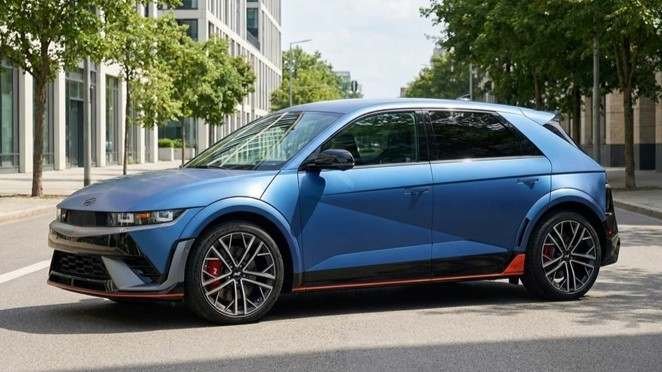
8. Hyundai Ioniq 5 N (and updated Ioniq 5)
The most playful EV software on the market.
Why geek: N Active Sound, drift mode, pedal map, battery preconditioning excellence.
Powertrain: Dual-motor, track-capable.
Interesting feature: You can make it sound like a combustion car or a spaceship.
Drawback: N version is firm.
Price: Mid $40ks (standard) to low $60ks (N).
Best for: Gamers who drive.
9. Kia EV6 GT and EV9
Sibling tech with different attitudes.
Why geek: 800-volt, ultra-fast charging, projector headlights (EV9), deep customization.
Powertrain: Strong dual-motor options.
Interesting feature: The EV9’s lounge mode and camera monitor system.
Drawback: GT ride quality.
Price: $40ks–$70ks+.
Best for: Design-forward families and enthusiasts.
10. Cadillac Escalade IQ / Lyriq-V
American luxury meets serious compute.
Why geek: 55-inch pillar-to-pillar LED display, Unreal Engine graphics, Super Cruise.
Powertrain: Powerful Ultium dual-motor.
Interesting feature: The pure theater of that screen.
Drawback: Size and efficiency.
Price: $100k+ for IQ.
Best for: Tech-loving road-trippers who want presence.
11. Chevrolet Corvette E-Ray
Hybrid AWD Corvette. That sentence alone is geek.
Why geek: Front motor + V8, stealth mode, advanced chassis control.
Powertrain: Combined output well over 650 hp.
Interesting feature: Electric-only creeping in stealth.
Drawback: Still gets thirsty when you play.
Price: Mid $70ks+.
Best for: Analog-meets-digital gearheads.
12. Ford Mustang Mach-E Rally / updated
The EV pony that went rally.
Why geek: MagneRide, unique drive modes, BlueCruise evolution.
Powertrain: Extended range dual-motor.
Interesting feature: Rally-inspired suspension and sounds.
Drawback: Not as polished as some European rivals.
Price: Mid $40ks–$60ks.
Best for: Fun-focused EV buyers.
13. Volvo EX90
Safety geek heaven.
Why geek: Lidar standard, twin NVIDIA Orin, next-gen Pilot Assist.
Powertrain: Dual-motor, solid range.
Interesting feature: The most sensors ever put on a family SUV.
Drawback: Conservative looks.
Price: High $70ks+.
Best for: Safety and sensor nerds.
14. Polestar 3 / 4
Google-built + Scandinavian design.
Why geek: Clean Android Automotive, dual-motor performance, unique proportions (4).
Powertrain: Quick and efficient.
Interesting feature: The rear-window-less hardtop coupe-SUV that somehow works.
Drawback: Brand still niche.
Price: $60ks–$80ks+.
Best for: Design + software purists.
15. Audi Q6 e-tron / A6 e-tron
PPE platform excellence.
Why geek: New electronics architecture, AR HUD, second-gen virtual cockpit.
Powertrain: 800-volt, fast charging.
Interesting feature: The way the digital displays finally feel next-gen.
Drawback: Price creep.
Price: Mid $60ks+.
Best for: Fans of digital cockpits.
16. Genesis GV60 and Electrified GV70
Face-scanning, crystal sphere, Bang & Olufsen.
Why geek: Facial recognition entry, boost mode, beautiful UI.
Powertrain: Dual-motor with fun character.
Interesting feature: The crystal gear selector that looks like a prop.
Drawback: Dealer experience varies.
Price: $50ks–$70ks.
Best for: Style + tech bargain hunters.
17. BMW i4 M50 / Neue Klasse previews
The driver’s EV.
Why geek: Superb chassis integration, iDrive, upcoming heart of the Neue Klasse tech.
Powertrain: Dual-motor performance.
Interesting feature: It still feels like a BMW first.
Drawback: Range not class-leading.
Price: Mid $50ks–$70ks.
Best for: Driving geeks going electric.
18. Subaru Solterra (updated)
The geeky outdoor EV.
Why geek: Standard Symmetrical AWD, X-Mode for EVs, ground clearance.
Powertrain: Dual-motor.
Interesting feature: It feels like a Forester that forgot about gas.
Drawback: Efficiency and interior tech trail leaders.
Price: Mid $40ks.
Best for: Adventure-oriented EV converts.
19. Honda Prologue (updated)
GM Ultium + Honda manners.
Why geek: Free Super Cruise for period, Google built-in, practical packaging.
Powertrain: Dual-motor AWD.
Interesting feature: The most “normal” high-tech EV you can buy.
Drawback: Design still divisive.
Price: Mid $40ks–$50ks.
Best for: Practical tech shoppers.
20. Chevrolet Equinox EV / Blazer EV SS
Super Cruise on a budget.
Why geek: GM’s hands-free system at accessible prices, Ultium modularity.
Powertrain: Multiple battery options.
Interesting feature: Super Cruise is still wizardry on a long highway.
Drawback: Interior quality varies.
Price: Low $30ks–$50ks.
Best for: Value-focused tech adopters.
21. Volkswagen ID. Buzz
The retro-futuristic van.
Why geek: Modular MEB, charming software personality, upcoming AWD and bigger battery.
Powertrain: Improving range.
Interesting feature: It makes people smile and has serious EV bones.
Drawback: Early range was disappointing.
Price: Mid $50ks+.
Best for: Lifestyle and nostalgia geeks.
22. Lucid Gravity
The Air’s three-row sibling.
Why geek: Same 900-volt wizardry in SUV form, expected DreamDrive excellence.
Powertrain: High range dual- or tri-motor.
Interesting feature: Packaging efficiency.
Drawback: New model premium.
Price: Expected $80k+.
Best for: Family range nerds.
23. Porsche Macan Electric
The ICE Macan replacement done properly.
Why geek: PPE platform, Porsche chassis tuning, fast charging.
Powertrain: Dual-motor performance.
Interesting feature: It drives like a Porsche even though it’s heavy.
Drawback: Expensive.
Price: High $70ks+.
Best for: Brand loyalists going electric.
24. Tesla Model S / X Plaid (updated hardware)
Still the acceleration and compute benchmark.
Why geek: Highest volume AI inference hardware in cars, yoke or wheel, massive screen.
Powertrain: Tri-motor insanity.
Interesting feature: The sheer number of real-world miles training the neural nets.
Drawback: Interior polarizing.
Price: $80k–$100k+.
Best for: Performance + AI geeks.
25. Coming Dark Horses (Scout, new Apple-related rumors free zone, or high-end Chinese if they clear tariffs)
Keep an eye on Scout Motors (VW-backed American EV trucks) and any unexpected high-tech entrants that clear U.S. regulations in 2026. The geek list never stays static.
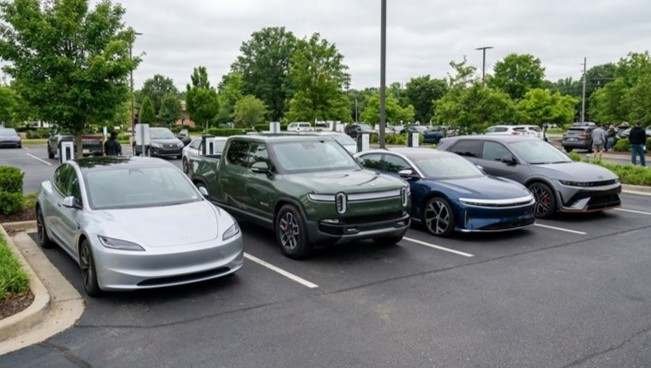
Best Geek Cars for Tech Lovers
Tesla Model Y, Mercedes EQS, BMW iX, Cadillac Escalade IQ, Lucid Air.
Best Geek Cars for EV Enthusiasts
Lucid Air, Hyundai Ioniq 5 N, Porsche Taycan, Rivian R1S, Kia EV6.
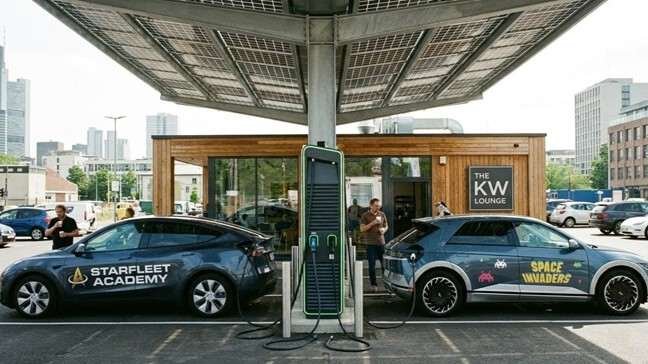
Best Geek Cars for Performance Nerds
Corvette E-Ray, Tesla Plaid, Ioniq 5 N, Porsche Taycan, BMW i4 M50.
Best Geek Cars Under $40,000
Chevrolet Equinox EV, base Hyundai Ioniq 5, certain Tesla inventory, Honda Prologue base (with incentives).
Best Geek Cars Under $50,000
Model Y, Ioniq 5, EV6, Mach-E, Genesis GV60, Prologue.
Best Luxury Geek Cars
Lucid Air, Mercedes EQS, BMW iX, Cadillac Escalade IQ, Porsche Taycan.
Best Geek Cars for Daily Driving
Tesla Model Y, Hyundai Ioniq 5, BMW i4, Genesis GV70 Electrified, Acura/ Honda-based EVs.
Geek Cars With the Best Infotainment
Tesla, Mercedes Hyperscreen, BMW iDrive, Cadillac’s Unreal Engine dash, Rivian’s clean UI.
Geek Cars With the Most Futuristic Technology
Tesla (AI), Lucid (efficiency + voltage), Mercedes (displays), Volvo EX90 (lidar + compute), Cybertruck (architecture).
Are Geek Cars Actually Better?
Advantages
They are safer in more situations, more efficient, constantly improving, more entertaining, and often faster. The best ones make you feel like you’re living in the future.
Disadvantages
Software bugs are real. Subscription features are annoying. Repairs can be expensive when computers and bodywork meet. Some owners feel overwhelmed by screens. Privacy questions remain. Depreciation on newer EV tech can be steep.
Geek cars are better when you value the technology. They are worse when you just want simple, durable transportation.
Which Geek Car Should You Buy?
- Software first, everything else second → Tesla
- I want range and engineering flex → Lucid
- I want to smile and attack corners → Ioniq 5 N or Corvette E-Ray
- I need three rows and theater → Escalade IQ or EV9
- I want adventure → Rivian
- I want luxury that feels special → BMW iX or Genesis
- I’m practical but still want cool → Model Y or updated Ioniq 5
Test drive at least three. The “right” geek car is the one whose software and personality you actually enjoy living with every day.
Frequently Asked Questions
Q.1. What is a geek car?
A vehicle that stands out for its technology, software, engineering, or gadget appeal rather than traditional luxury or status alone.
Q.2. What are the best geek cars in 2026?
Tesla Model Y, Lucid Air, Hyundai Ioniq 5 N, Rivian R1S, BMW iX, Mercedes EQS, and the Corvette E-Ray lead most lists.
Q.3. What is the most technologically advanced car in 2026?
It depends on the metric, but Tesla (AI), Lucid (efficiency architecture), and Mercedes (interface) are the usual podium.
Q.4. What car has the best technology?
For pure software and autonomy progress: Tesla. For hardware + software balance: Lucid or BMW.
Q.5. What are the best cars for tech enthusiasts?
Model Y, iX, EQS, Air, Ioniq 5 N, Rivian.
Q.6. Are geek cars expensive?
They range from the $30ks (with incentives) to well over $100k. Plenty of excellent options exist under $50k–$60k.
Q.7. What is the best affordable geek car?
Tesla Model Y (frequently incentivized), Hyundai Ioniq 5, and Chevrolet Equinox EV.
Related Post