
Ferrari just made a high-profile leadership move that has the automotive world buzzing. On June 23, the Italian marque announced that longtime Chief Marketing and Commercial Officer Enrico Galliera is stepping down after more than 16 years. His replacement, effective July 1, is Massimiliano Di Silvestre, the former head of BMW Group Italy.
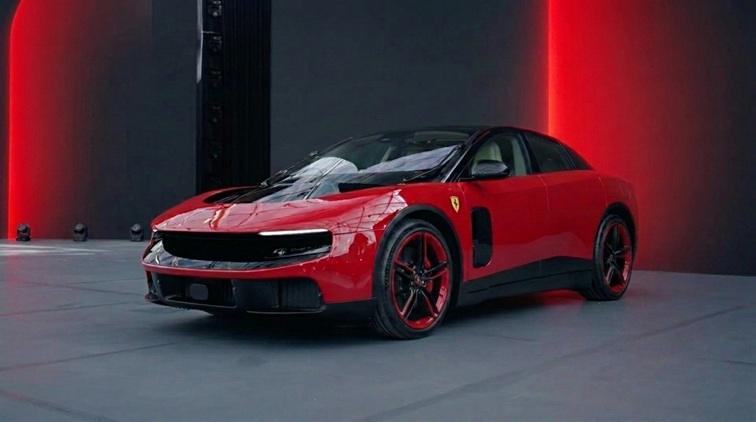
The timing? Just weeks after Ferrari unveiled its first-ever electric vehicle, the Luce, on May 26 in Rome. The car’s polarizing design triggered a wave of online mockery, memes, and investor unease that sent Ferrari’s stock (NYSE: RACE) tumbling roughly 8% in a single day.
Is this a classic case of a marketing chief taking the fall for a botched launch? Ferrari insists Galliera’s exit was a planned personal decision to “embark on a new chapter.” But in the court of public (and investor) opinion, the connection feels impossible to ignore.
The Luce (Italian for “light”) is a $630,000–$640,000 four-door, five-seat EV with over 1,000 horsepower and around 329 miles of range. Designed in collaboration with former Apple chief designer Jony Ive and his firm LoveFrom, it features a minimalist, almost Apple-like aesthetic: smooth flowing surfaces, a glassy upper half, flush details, and a higher stance than traditional low-slung Ferraris.
The interior is genuinely stunning — clean, driver-focused with physical controls and that signature Ive minimalism. But the exterior? That’s where the backlash exploded. Many enthusiasts called it “not a Ferrari,” “an Apple Store on wheels,” or worse. Former Ferrari chairman Luca di Montezemolo publicly warned it risked “the destruction of a legend.” Social media filled with AI redesigns that added more drama, vents, and aggression.
The launch itself didn’t help. Ferrari had already teased the name, Jony Ive interior, and performance specs months earlier. By the time the Rome reveal rolled around, the only big new thing was the exterior — and it became the sole focus of criticism. To make matters worse, no journalists were allowed to drive the car, leaving the brand’s core promise — “it still drives like a Ferrari” — resting entirely on faith.
For U.S. enthusiasts, this hits differently. America remains one of Ferrari’s strongest markets, full of buyers who love the theater: the V12 howl on a canyon road, the dramatic styling that turns heads in Miami or Beverly Hills, the sense of occasion that comes with every drive. A silent, minimalist five-seater EV challenges that emotional contract.
Many American owners and collectors aren’t just buying transportation — they’re buying into a 75-year heritage of passion, sound, and visual drama. The Luce feels like it was engineered for a new generation of tech-wealth buyers who might appreciate the clean design and advanced engineering more than the traditional Ferrari “experience.”
That cultural tension is real. Tech-forward buyers in California and New York might actually love the Ive-influenced cabin and the idea of a sophisticated, understated Ferrari. Traditionalists? They’re already circling the wagons around their V8 and V12 models, potentially driving up values for classic Ferraris on the secondary market.
Galliera helped shape Ferrari’s modern commercial success and global prestige. Bringing in Di Silvestre — who knows the U.S. market well from his BMW Italy role — suggests Ferrari wants fresh marketing DNA as it navigates electrification.
BMW has had its own polarizing EV moments (remember the iX debates?), but it has also successfully positioned its electric vehicles as desirable luxury products in America. Di Silvestre’s experience bridging German engineering precision with emotional marketing could prove useful.
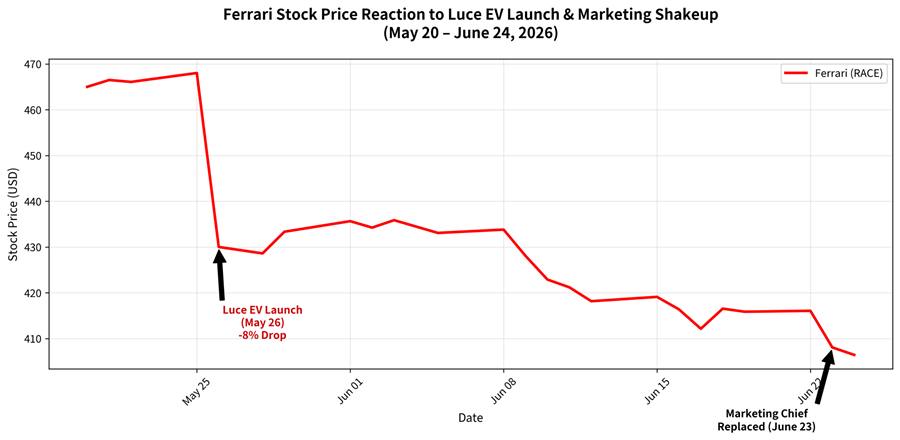
The real lesson from the Luce launch isn’t just about design. It’s about communication. In today’s world — especially in the U.S., where YouTube reviewers, Instagram, and TikTok drive perception — you can’t drip-feed specs for months and then hide the driving experience on reveal day. That hands the narrative to the loudest critics.
CEO Benedetto Vigna has repeatedly said customer interest and orders remain strong, and the Luce is very much his car — part of a deliberate push into a software-defined, electric future while (importantly) keeping ICE models alive.
The marketing leadership change gives Ferrari a chance to reset the conversation. Expect Di Silvestre to emphasize the driving emotion, the engineering excellence, and perhaps a more authentic rollout for future models (including letting people actually drive them).
For American buyers, this moment is revealing. Ferrari isn’t abandoning its soul — it’s testing whether that soul can exist in silence. The Luce may not be for everyone, but the brand’s willingness to take risks while protecting its core ICE lineup shows it’s playing a long game.
The prancing horse is evolving. Whether U.S. buyers embrace the quiet version or stick with the screaming classics will shape Ferrari’s next chapter — and this leadership move is clearly Ferrari’s attempt to make sure the story is told better next time.
Related Post