
What happens when one of America’s best-selling compact SUVs drops its gasoline-only option and goes fully hybrid? Honda is about to find out with the 2028 Honda CR-V Hybrid, the seventh generation of a model that has long been a fixture in U.S. driveways. Honda has announced a new platform, a redesigned body, and a lineup built around hybrid power.
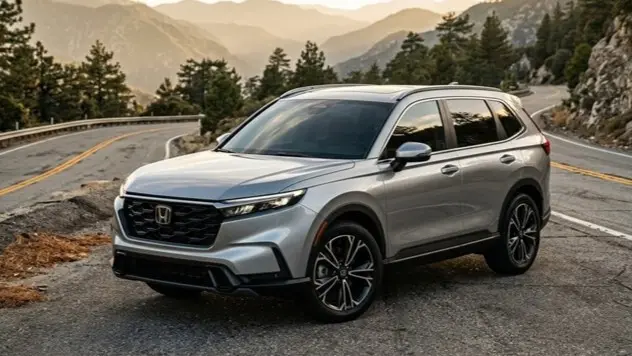
For drivers who want better fuel economy without a plug or a charging plan, that matters. A hybrid still fills up at the same gas stations, but it relies on its battery and electric motors to reduce how often the gasoline engine works hard, especially in stop-and-go traffic. That makes a hybrid-only CR-V a meaningful shift, not a minor refresh.
Honda has confirmed the broad direction, but final specifications, pricing, trim lineup, and dealer arrival dates are not yet available. Shoppers deciding now have to weigh a known vehicle against one that is still taking shape. So is it worth waiting? That depends on how far you drive, what you need from an SUV, and whether today’s gas-only CR-V is still the better deal. Below, we separate what Honda has said from what is reasonable to expect and what remains speculation.
What Honda Has Officially Confirmed
Based on Honda’s announcement, the 2028 CR-V will be the seventh generation of the model, with a redesigned exterior and a new vehicle platform, which is the underlying structure that determines dimensions, suspension geometry, and how the body is built. Honda says hybrid power will be offered across the lineup.
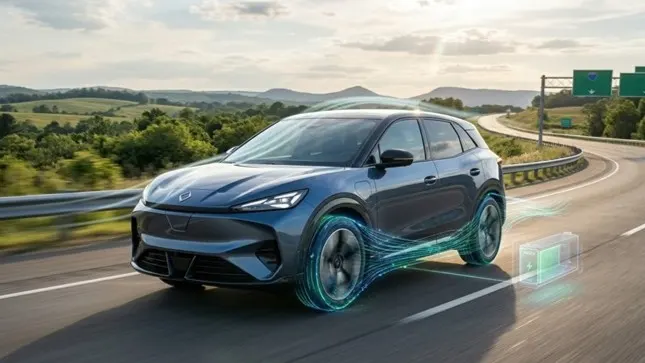
The powertrain is the most important part of the announcement. Honda describes a fifth-generation two-motor hybrid system with new electric all-wheel-drive (AWD) technology. Honda also says the new system is targeted to improve fuel efficiency by more than 10 percent compared with the outgoing hybrid system. That is a target, not an EPA rating, and the testing basis needs to be checked against Honda’s official materials.
Honda expects the new model to arrive in 2027 as a 2028 model. Honda also says hybrid versions already account for more than half of CR-V sales. That figure, as reported in Honda’s announcement, helps explain the decision. If most buyers already choose the hybrid, offering only hybrids simplifies production and gives Honda one main powertrain to optimize.
Industry-wide, tightening fuel-economy and emissions standards are also pushing automakers toward electrified powertrains. That is useful context, but it is not Honda’s stated reason, and no official Honda document in the available material ties the decision to a specific regulation. The limits matter just as much. Honda has not released final horsepower, torque, EPA ratings, dimensions, cargo volume, battery capacity, trim names, or pricing for the 2028 model. Anything beyond the announced items should be treated as expectation until Honda publishes it.
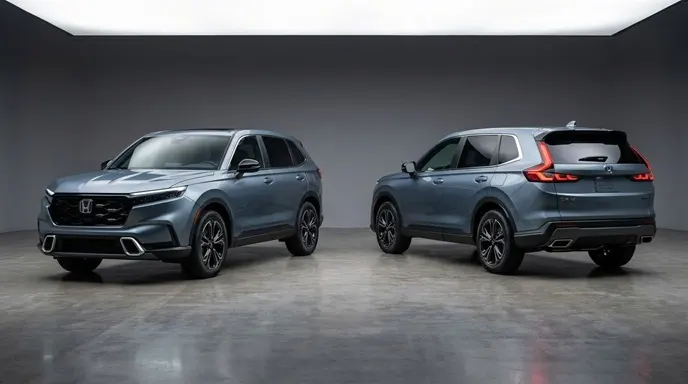
2028 Honda CR-V Redesign: What Could Change Outside
A new generation usually brings visible changes, but Honda’s public information does not yet provide a full exterior design breakdown. Treat the items below as areas buyers should watch, not confirmed features.
Front-end styling is the most noticeable change in most redesigns. Expect a new grille, bumper, and headlight arrangement, along with a different daytime running light signature. Rear styling, including taillights and the liftgate, usually changes with a new generation too. None of these details should be taken as confirmed until Honda releases official images.
Body proportions are harder to judge from the outside. Designers can shift the roofline, greenhouse (the glass area), and wheel size to change how an SUV looks. Wheel designs will likely change, and so will aerodynamics. Honda has said the new design includes aerodynamic improvements, which can help highway efficiency and reduce wind noise at speed. Ground clearance and overall dimensions are not announced. This matters for buyers who drive on rough roads or park in tight garages, so do not assume the 2028 model will match the current CR-V’s measurements.
The platform is where the redesign has the biggest practical effect. A new platform can change the wheelbase (the distance between the front and rear axles), which affects rear-seat legroom and ride quality. It can also make the body stiffer, which often improves handling and reduces road noise. The tradeoff is weight. Hybrid components add mass, and Honda will need to offset that with engineering. A heavier vehicle can feel less nimble, but a well-tuned suspension and stiffer structure can make weight less noticeable on the road.
For shoppers, the question is whether the new platform delivers more usable space and a quieter, more composed ride. Those answers will come only with official dimensions and reviews of the production model.
Honda has not published official 2028 CR-V Hybrid specs, pricing, or a release date and what is a projection (clearly labeled), with calculators you can adjust.
Reality Check: Confirmed, Reported, Unconfirmed
Search results for “2028 CR-V Hybrid” often mix rumor with fact. This board keeps them apart.
Confirmed baseline Established
- The current CR-V Hybrid pairs a 2.0L Atkinson-cycle four-cylinder with two electric motors.
- It uses a fixed-gear e-CVT-style setup with no conventional belt CVT.
- FWD and AWD versions are offered.
- It sits alongside a gas-only 1.5L turbo CR-V.
Reported direction Verify
- Honda has said it plans to expand its hybrid lineup and introduce a next-generation hybrid system around 2027, targeting better efficiency and lower cost.
- Honda has also scaled back some EV timelines in favor of hybrids.
- Which models get the new hybrid system first, and when, is not something I can confirm.
Unconfirmed Estimate
- Whether a 2028 CR-V is a refresh or a full redesign.
- 2028 engine output, mpg, battery size and pricing.
- Trim names and the on-sale date.
- Anything quoted as an exact 2028 number without an official source.
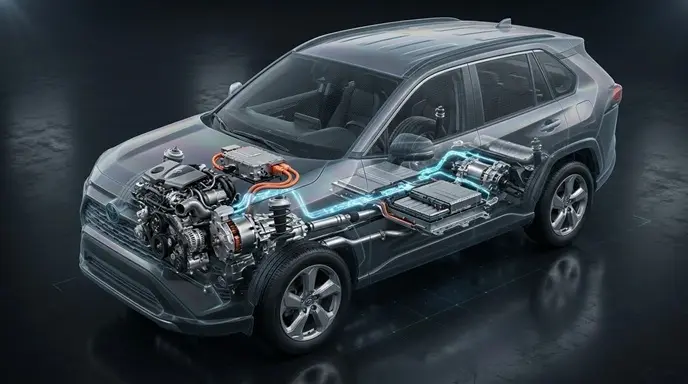
New Honda Hybrid Powertrain: How It Works
Honda’s two-motor hybrid is different from the “power-split” layout many people assume. Pick a driving mode to see which parts are working.
Mode logic Established in principle. Exact switching points depend on speed, battery charge and load.
Today’s baseline vs. what a next-gen update could target Estimate
Baseline is from the current CR-V Hybrid Verify. “Possible” values are my scenario, not Honda numbers.
What Honda could improve (and why) Estimate
- Efficiency: engine friction, motor losses, and power-electronics efficiency are the usual gains.
- Cost and weight: smaller or cheaper motors and a lighter battery pack lower the hybrid premium.
- Refinement: better engine-start smoothness and less highway engine drone.
- Software: predictive energy management using navigation and traffic data.
Gas vs. Hybrid: Is the Gasoline Engine Disappearing?
In the CR-V, the gas engine is not disappearing by 2028, but the hybrid’s share keeps growing. The honest answer is “shrinking role, not gone,” and the pace depends on prices, demand and policy.
Gas CR-V today Verify
1.5L turbo four, about 190 hp, CVT, roughly 30 mpg combined (FWD). Lower purchase price, more familiar, bigger cargo area than the hybrid in some measurements.
Hybrid CR-V today Verify
2.0L plus two motors, about 204 hp, roughly 37–40 mpg combined, smoother low-speed driving, higher price. Often the more popular choice among CR-V buyers.
MPG: How Much Fuel Could the New Hybrid Save?
Set your driving, then choose how much better a 2028 hybrid might be. Today’s EPA numbers are approximate Verify; the 2028 line is a projection Estimate.
Fuel cost over your ownership period
Gallons used per 100 miles (lower is better)
Interior, Comfort and Technology
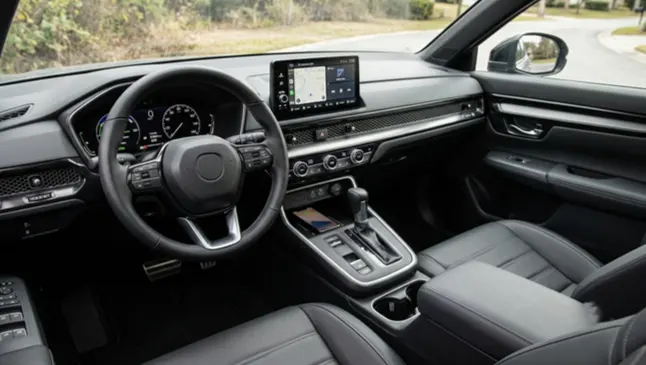
The current CR-V’s cabin is known for clean layout, physical climate controls, and a roomy rear seat. A 2028 update would likely build on that. Below is today’s picture and a projected wish list.
Today’s strengths Verify
- Honeycomb-style vents and physical knobs for climate and volume.
- Large rear-seat legroom for the class.
- Higher trims add larger driver display, premium audio, heated seats, panoramic roof, wireless charging.
- Touchscreen with smartphone mirroring on most trims; exact screen size depends on trim.
Likelihood of upgrades by 2028 Estimate
Editorial odds, not announcements.
Comfort priorities: build your own checklist
Safety and Driver-Assistance Technology
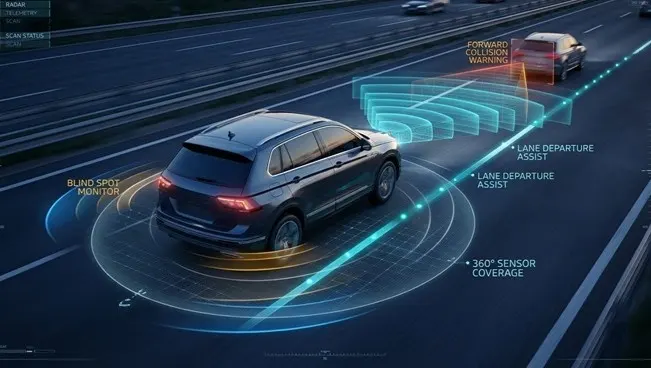
Honda includes a suite of driver-assist features on the current CR-V. A 2028 version would likely keep and expand it. Check official crash ratings for the exact year before relying on any claim.
| Feature | What it does | Status today | Likely by 2028 |
|---|
Where to verify safety ratings Established
- NHTSA (nhtsa.gov): crash-test star ratings, recalls and complaints by VIN.
- IIHS (iihs.org): crash tests, headlight ratings and front-crash prevention tests.
- Honda owner site: open recalls and service bulletins for your VIN.
Safety must-have checklist
Price, Trims and Release Date
There is no official 2028 pricing. This projector starts from approximate current hybrid trim prices and applies inflation and a possible content bump, so you can see a plausible range.
| Trim (approx.) | Today | Projected low | Projected mid | Projected high |
|---|
Monthly payment estimator
Excludes tax, fees, and any destination charge. Illustrative only.
Release-date outlook
- 2023: sixth-generation CR-V launches, including the hybrid Established
- 2025–2026: trim and equipment updates to the current generation Verify
- Around 2027: Honda’s reported timing for its next-generation hybrid system Verify
- Late 2027 to 2028: earliest plausible arrival window for a 2028-model-year CR-V update. Honda often launches a model year in the preceding year. Estimate
- About 2029–2030: plausible window for a full next-generation CR-V if the 2028 car is only a refresh Estimate
2028 Honda CR-V Hybrid vs. Toyota RAV4 Hybrid vs. Hyundai Tucson Hybrid
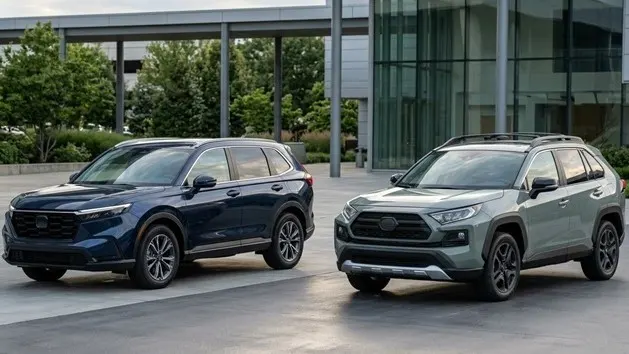
A 2028 CR-V does not exist yet, so the comparison uses today’s CR-V Hybrid against the current competitors. Competitor figures are approximate Verify, especially for the redesigned 2026 RAV4 Hybrid.
| Item | Honda CR-V Hybrid | Toyota RAV4 Hybrid | Hyundai Tucson Hybrid |
|---|---|---|---|
| Powertrain | 2.0L + two motors | 2.5L hybrid system | 1.6L turbo + motor |
| Warranty (battery, typical) | About 8 yr / 100k mi; longer in some states | About 10 yr / 150k mi | About 10 yr / 100k mi |
| Strength | Roomy cabin, smooth ride, simple controls | Efficiency and resale reputation | Tech, warranty and value |
| Watch-out | Higher price than gas; modest towing | Demand can limit discounts | Efficiency edge is smaller |
Verify Powertrains, warranties and prices all change by year and region. Confirm on each maker’s site.
Find my best fit Estimate
Set what matters to you. Scores per category are my editorial ratings (1–10). The 2028 CR-V column is a projection.
Who Should Wait for the 2028 Honda CR-V Hybrid?
Waiting only makes sense if your situation allows it and the upgrades matter to you. Answer five questions for a leaning, not a guarantee.
Technical Detail
Core specifications of the current CR-V Hybrid Verify, plus plain-language explanations.
| Item | Current CR-V Hybrid (approx.) | Why it matters |
|---|---|---|
| Engine | 2.0L Atkinson-cycle inline-4 | Atkinson timing trades peak power for efficiency, which suits hybrids |
| Electric motors | Two (generator + traction) | One generates electricity, one drives the wheels |
| System output | ~204 hp, ~247 lb-ft | Motor torque makes it feel quick from a stop |
| Transmission | Fixed-gear e-CVT-style, no belt CVT | Smooth, simple, reliable design |
| Battery | Small lithium-ion pack, roughly 1 kWh | Buffers energy, not for long EV-only trips |
| AWD | Real-time AWD available | Adds traction; costs a little mpg |
| Towing | About 1,000 lb | Fine for small utility trailers only |
| Drive modes | Normal, Econ, Sport, Snow | Changes throttle and energy use |
| Regen | Steering paddles adjust regeneration | Lets you control engine-braking feel |
Ownership notes Estimate
- Hybrid brakes often last longer because regen does part of the work.
- Oil changes follow the maintenance minder, not a fixed schedule.
- Tire choice and pressure can swing mpg by a few percent.
Glossary
- Atkinson cycle: an efficiency-focused combustion cycle.
- e-CVT: an electronically managed gear arrangement.
- Regen: turning braking energy back into electricity.
- kWh: battery energy; bigger means more EV range.
FAQ
Is the 2028 Honda CR-V Hybrid officially confirmed?
I’m not aware of an official 2028 CR-V Hybrid announcement with specs or pricing. Honda publicly plans more hybrids, but treat any exact 2028 numbers as unverified until Honda publishes them.
Will it be a full redesign?
Unknown. The current generation launched for 2023, which makes a mid-cycle update around 2027–2028 plausible, with a full redesign later. That is an estimate.
Will the gas CR-V go away?
Not by 2028 in my estimate. The hybrid share keeps rising, but Honda has not announced a gas-engine phase-out for the CR-V.
Is it a plug-in hybrid?
The regular CR-V Hybrid is not a plug-in. Honda has a separate CR-V e:FCEV fuel-cell plug-in model in limited markets. Check Honda for current details.
Is the CR-V Hybrid better than the RAV4 Hybrid?
It depends on priorities. The CR-V is praised for cabin space and ride comfort; the RAV4 typically leads on efficiency and resale reputation. Use the comparison tool above.
Should I buy a 2025 or 2026 CR-V Hybrid now?
If you need a car soon, yes: it’s a proven hybrid. Waiting only makes sense if you can wait a year or more and want the newest hardware.
Who Should Wait for the 2028 Honda CR-V Hybrid?
Current CR-V gasoline owners who drive a lot in traffic may find the hybrid appealing, but the decision depends on trade-in value, financing, and how much a new platform would change daily use. If your current vehicle works well, there is no urgency to switch.
Current CR-V Hybrid owners should consider whether the 2028 model’s improvements justify a trade. The efficiency gain is a target, and the change from a current hybrid may be modest. Unless you want the newest platform or features, your current model is likely still a good choice.
Buyers who need a new SUV immediately should not wait for a model that has no confirmed arrival date. Shop the current CR-V, the RAV4, the Tucson, and the Sportage, and buy the one that fits your budget and needs.
Commuters who travel long distances may benefit from the hybrid’s efficiency in traffic, but they should compare the 2028 model’s final highway ratings before deciding.
Families looking for a practical compact SUV should focus on rear-seat space, cargo layout, safety ratings, and warranty coverage. Those details are not final for the 2028 model, so compare current models carefully and keep an eye on Honda’s announcements.
Buyers who prefer conventional gasoline power should know that the 2028 CR-V will not offer a gas-only version based on the current announcement. A gas-powered compact SUV from another brand may be the better fit.
Drivers interested in AWD should wait for official details on the new electric AWD system and its availability across trims before deciding.
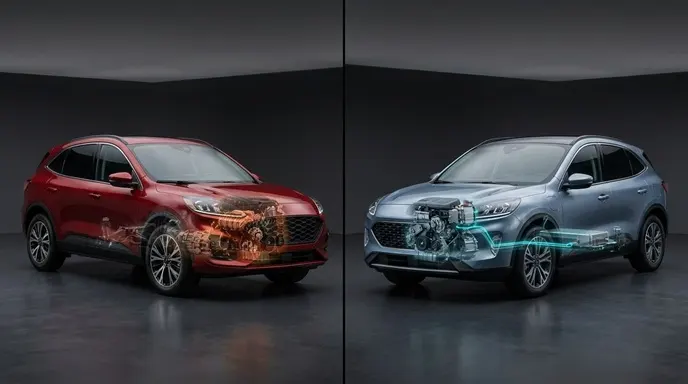
Waiting makes sense if you can afford to delay, your current vehicle no longer fits your needs, and the hybrid efficiency gain matters to you. Buying a discounted current-generation model makes sense if you need a vehicle soon, want to lock in a known price, or prefer a vehicle that has already been tested by owners and reviewers.
The 2028 Honda CR-V marks a major change. Honda has confirmed a seventh generation, a new platform, a hybrid-only lineup, a fifth-generation two-motor hybrid system, new electric AWD technology, and a target of more than 10 percent better efficiency than the outgoing hybrid. Those are significant steps for a model that already sells in large numbers.
Some details remain unknown, including pricing, trim lineup, final EPA ratings, dimensions, and the exact arrival date. Buyers should treat those gaps seriously and avoid paying for a vehicle based on speculation. The safest approach is to compare the current CR-V, its hybrid version, and rivals like the RAV4, Tucson, and Sportage, then decide which fits your needs today.
If Honda delivers meaningful efficiency and comfort gains on the new platform, the 2028 CR-V could become one of the most important compact hybrid SUVs in the American market. Keep an eye on Honda’s newsroom for official updates, and compare current hybrid SUVs side by side before you commit.
Related Post