
Would you rather save thousands of dollars with a compact adventure-ready SUV, or spend more for a larger Subaru with room for road trips and family life? That choice sits at the center of the 2027 Subaru Crosstrek vs Outback decision. Both vehicles use Subaru Symmetrical All-Wheel Drive, a system that sends power to all four wheels continuously, so both can handle wet pavement, gravel, and snow. The similarities end there. The Crosstrek is smaller and generally less expensive, and it is the only one of the two with a hybrid version in the current U.S. lineup. The Outback is larger, offers more cargo room, and includes an available turbocharged engine.
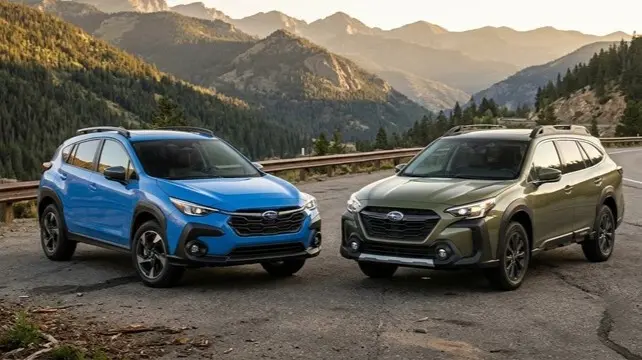
This guide compares the two on size, engine and performance, fuel economy, hybrid availability, interior and cargo space, price, and off-road capability. It also explains the cost of ownership and which Subaru fits which buyer. Throughout, I separate confirmed specifications from estimates and expectations so you can make a decision based on verified information.
The Crosstrek is the smaller, lower-priced Subaru crossover. The Outback is the larger midsize crossover-wagon with more room and a turbo option.
Exterior design and dimensions
Approximate figures for current-generation models. The 2027 Crosstrek is treated as a carryover and the 2027 Outback as a mid-cycle refresh.
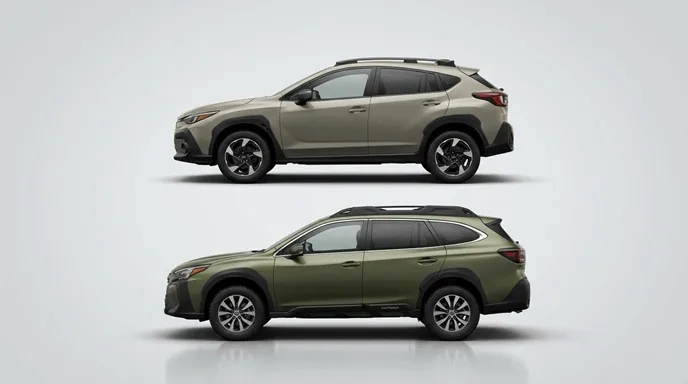
The Crosstrek is a compact crossover with a short, upright body. The Outback is a larger midsize vehicle with a longer wheelbase, wider stance and taller roof. Base ground clearance is almost the same, so the Outback’s advantage is space, not lift. It has SUV cues such as cladding and roof rails, but its long roofline reads as a tall wagon, while the Crosstrek looks like a small SUV from every angle.
| Dimension | Crosstrek | Outback | Difference |
|---|---|---|---|
| Length | ~178 in | ~192 in | Outback +14 in |
| Wheelbase | ~105 in | ~109 in | Outback +4 in |
| Width (no mirrors) | ~70.5 in | ~73.6 in | Outback +3 in |
| Height | ~62 in | ~66 in | Outback +4 in |
| Ground clearance (base) | ~8.7 in | ~8.7 in | Similar |
Engine and performance
Gasoline engines. Power figures are approximate and acceleration times are estimates.
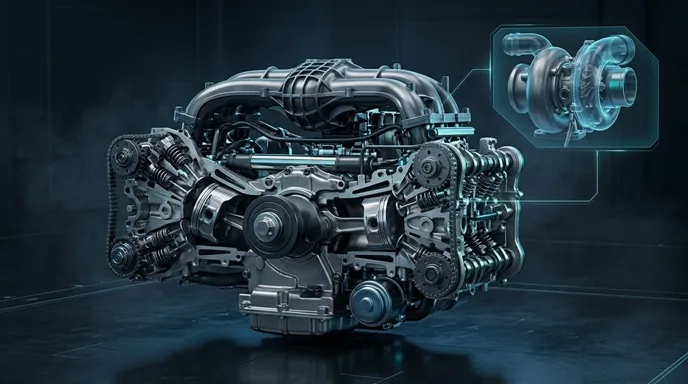
Both use a boxer engine with Symmetrical All-Wheel Drive and a CVT. The Crosstrek and base Outback use a 2.5-liter engine. The Outback offers a 2.4-liter turbo on higher trims.
| Spec | Crosstrek 2.5 | Outback 2.5 | Outback 2.4T |
|---|---|---|---|
| Horsepower | ~182 hp | ~182 hp | ~260 hp |
| Torque | ~178 lb-ft | ~176 lb-ft | ~277 lb-ft |
| 0–60 mph (est.) | ~8.5 s | ~8.3 s | ~6.5 s |
| Fuel | Regular | Regular | Premium recommended (verify) |
| Best for | Commuting, value | Everyday balance | Passing, towing, load |
Fuel economy
EPA-style combined estimates. Verify against the official window sticker.
The Crosstrek has the best gas-only economy. A 2027 Outback hybrid, if confirmed, would be the most efficient Outback. The turbo gives up the most mileage.
Annual energy cost: 12,000 miles, $3.40/gal, $0.18/kWh
Gasoline vs hybrid vs EV
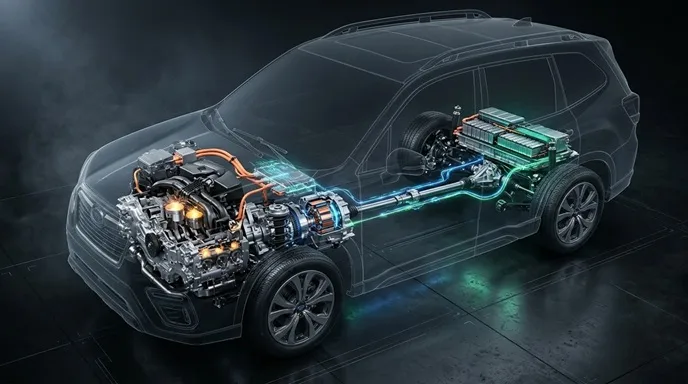
The Outback hybrid is a 2027 projection, not a confirmed U.S. model. The Solterra is Subaru’s current electric SUV.
| Factor | Gas (2.5L) | Hybrid (Outback, proj.) | Electric (Solterra) |
|---|---|---|---|
| Starting price (est.) | $26.5K / $30.5K | +$3K–$4.5K over trim | ~$39.5K (proj.) |
| Efficiency | ~27–28 mpg | ~35–38 mpg | ~3.0 mi/kWh (est.) |
| Energy cost, 12k mi | ~$1,460–$1,510 | ~$1,130 | ~$720 |
| Range / refueling | Gas stop, ~400+ mi | Gas stop, ~400+ mi | ~300 mi (est.), DC charge ~30–35 min |
| Maintenance | Oil, CVT fluid, brakes | Adds hybrid system checks | Tires, brakes, cabin filter |
Outback hybrid (proj.)
- Pro: no plug, long range, low fuel cost
- Pro: suits renters and apartment dwellers
- Con: higher price, still uses oil and fuel
- Con: hybrid system age matters over time
Solterra EV
- Pro: lowest energy cost, quiet, no oil changes
- Pro: standard AWD and a NACS port (2026 update)
- Con: needs home or reliable public charging
- Con: cold weather can cut range by 20–30%
Other Subaru electric SUVs (estimates)
Solterra
- ~74.7 kWh usable, ~300 mi
- Dual-motor AWD
Trailseeker
- ~58 kWh, ~250 mi
- From ~$33K, city and commuting
Uncharted
- ~75 kWh, ~300 mi
- From ~$43K, families and road trips
Interior, comfort and cargo
The Outback offers much more cargo and rear-seat room. Both have standard AWD.
| Feature | Crosstrek | Outback |
|---|---|---|
| Seating | 5 passengers | 5 passengers |
| Rear legroom (est.) | ~36 in | ~39 in |
| Screen (typical, verify) | ~8 in on most trims | ~11.6 in on most trims |
| Best for | 1–2 adults, light gear | Families, camping, gear |
Crosstrek Wilderness vs Outback Wilderness
The Crosstrek focuses on trail use. The Outback focuses on comfort and towing.
Crosstrek Wilderness
- 2.5L, ~182 hp
- Ground clearance ~9.2 in (est.)
- Starting ~$33.5K–$35.5K (proj.)
Outback Wilderness
- 2.4T, ~260 hp
- Ground clearance ~9.5 in (est.)
- Starting ~$41K–$44K (proj.)
Five-year ownership cost
Illustrative totals for 12,000 miles a year. Excludes financing, registration, tolls and resale timing.
| Model | Fuel | Insurance | Maint. | Deprec. | Total |
|---|---|---|---|---|---|
| Crosstrek 2.5 | $7,286 | $9,000 | $3,000 | $11,000 | $30,286 |
| Outback hybrid (proj.) | $5,667 | $10,000 | $3,200 | $12,800 | $31,667 |
| Outback 2.5 | $7,556 | $9,750 | $3,300 | $12,500 | $33,106 |
| Solterra EV | $3,600 | $11,500 | $2,000 | $16,500 | $33,600 |
| Outback 2.4T | $8,160 | $11,000 | $3,600 | $14,500 | $37,260 |
2027 starting price bands
Projected, before destination charges. Scale runs from $20K to $50K.
Frequently asked questions
Is the Outback much bigger than the Crosstrek?
Yes. It is about 14 inches longer, a few inches wider and taller, and has a longer wheelbase and much more cargo space behind the second row.
Which gets better gas mileage?
The 2.5L Crosstrek is estimated at about 28 mpg combined, slightly ahead of the 2.5L Outback. A 2027 Outback hybrid, if confirmed, would be the most efficient Outback.
Is a hybrid Crosstrek available in the U.S. for 2027?
Not confirmed. Check Subaru’s official site or a dealer before assuming it is.
Which costs less to own over five years?
In this illustrative model, the Crosstrek 2.5 is lowest. Your insurance, mileage and resale value could change the order.
Should I buy now or wait for 2027?
Buy a 2026 model if you need a car now and want the lower price. Wait for the 2027 Outback if you specifically want the hybrid or updated features.
Which one should you choose?
Choose the Crosstrek if
- You want the lowest price and running cost
- You drive alone or with one passenger most days
- You want a compact SUV for city parking
Choose the Outback if
- You carry gear, kids or pets regularly
- You want more rear room and cargo space
- You want a turbo option or a future hybrid
Does a Hybrid Premium Pay Off?
Use a simple payback formula: divide the hybrid’s price premium by the annual fuel savings. The result is the number of years it takes for savings to cover the extra cost, before accounting for financing, insurance, maintenance, and resale value. Suppose the hybrid costs $1,500 more and saves $300 per year in fuel. Payback is $1,500 ÷ $300 = 5 years. If the hybrid saves less, payback takes longer. Replace the hypothetical numbers with the verified MSRP difference and EPA ratings.
High-mileage drivers, especially those who commute in heavy traffic, are most likely to benefit. Drivers who mostly take highway trips or who keep a vehicle for only a few years may see a smaller return.
Does the 2027 Subaru Outback Offer a Hybrid?
As of my research, the Outback is not officially listed with a hybrid powertrain for the 2027 U.S. lineup. The Outback’s U.S. engine choices are the 2.5-liter naturally aspirated engine and the 2.4-liter turbo. Do not assume a future Outback Hybrid is confirmed. Subaru has not officially announced one in the sources I could check.
Buyers seeking a Subaru hybrid for 2027 may need to consider the Crosstrek Hybrid or the Forester Hybrid, depending on availability and price. Each has different size, cargo, and price characteristics.
Which Subaru Has More Cargo Space?
The Outback has more cargo room, and it is the better choice when cargo volume is the priority. Verify the exact cargo volumes with the rear seats upright and folded on Subaru’s specifications pages.
Cargo capacity alone does not tell the whole story. Shape matters, and so do the load floor height, the liftover height, and the seat-folding mechanism. A taller, boxier cargo area may hold more bulky items than a larger space with an awkward shape.
Real-World Cargo Examples
- Grocery shopping: Both vehicles handle a weekly grocery run easily. The Crosstrek can fit most loads, but the Outback offers more room for bulk purchases.
- Strollers: A compact stroller fits in either vehicle. A large jogging stroller may fit more easily in the Outback.
- Suitcases: For a family of four on a week-long trip, the Outback’s larger cargo area is easier to pack, while the Crosstrek may require a rooftop carrier or a more compact packing plan.
- Camping equipment: The Outback is better suited to tents, coolers, and camp chairs for a family. The Crosstrek works for a solo or couple’s gear.
- Bicycles: Check bike-rack compatibility and whether the seats fold. Rack choice matters as much as the vehicle.
- Pet carriers: A medium-size crate fits in the Crosstrek with the rear seats up, but the Outback offers more flexibility.
Which Is Better for Families and Frequent Travelers?
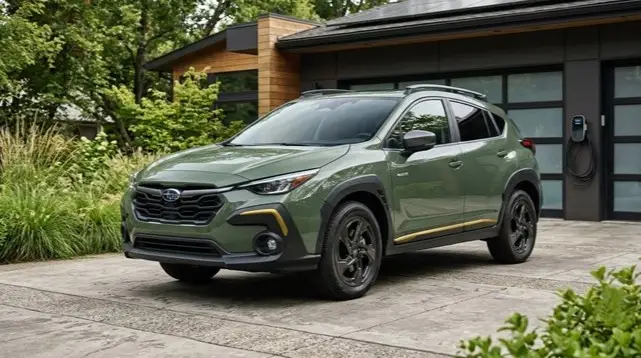
The Outback suits many families because of its extra rear-seat room, larger cargo area, and optional turbo engine. The Crosstrek is a capable family vehicle for one or two children, especially in a household where cargo needs are modest. Frequent travelers who load gear for long trips often benefit from the Outback’s space.
Do not assume the bigger vehicle is always more usable. A Crosstrek may be easier to park, faster to load at a crowded curb, and simpler to drive in a city. The best choice depends on your daily routine.
Occasional Outdoor Use vs Serious Off-Road Driving
Occasional outdoor use includes gravel forest roads, boat ramps, snowy trailheads, and unpaved campgrounds. Both Wilderness models are well suited to that work. Serious off-road driving involves obstacles, deep ruts, and steep grades. For that kind of driving, a dedicated off-road vehicle with more suspension travel and specialized equipment is a better choice.
Which Wilderness Makes More Sense?
The Crosstrek Wilderness suits buyers who want a smaller, more affordable adventure vehicle with good clearance and a compact footprint. The Outback Wilderness suits buyers who need more cargo and passenger space for camping and outdoor gear, and who accept a higher price and larger size. Towing capacity should be checked carefully for both, because it depends on configuration and equipment.
Which Subaru Costs Less to Own?
Ownership costs are often larger than the purchase price difference over time. The table below lists the categories to compare, with blank fields for verified numbers.
| Cost category | Crosstrek assumption | Outback assumption |
|---|---|---|
| Fuel | Verify EPA rating | Verify EPA rating |
| Insurance | Get quotes | Get quotes |
| Maintenance | Per owner’s manual | Per owner’s manual |
| Tires | Size-dependent | Size-dependent |
| Depreciation | Varies | Varies |
| Financing | Rate-dependent | Rate-dependent |
| Hybrid premium | Verify MSRP difference | Not applicable |
| EV charging | Not applicable | Not applicable |
Insurance: Premiums vary by driver, location, coverage, and vehicle. Get quotes for both models before deciding.
Maintenance: Compare the owner’s manual service schedules and fluid requirements. Subaru’s maintenance plans and warranty terms should be verified on Subaru’s official site.
Depreciation: Resale value depends on demand, mileage, condition, and market conditions. Check credible sources such as Kelley Blue Book or Edmunds for model-specific trends, and avoid assuming one model will hold value better without evidence.
Reliability: I have not included claims that one model is more reliable than the other because I could not verify comparative reliability data for 2027. Check NHTSA recall records and reputable reliability surveys before buying.
Overall: The Crosstrek usually costs less to buy, and its lower price may offset a higher fuel cost in some cases. The Outback costs more upfront but may be more practical for families or frequent travelers. Build your own five-year estimate using verified prices, quotes, and ratings.
Which 2027 Subaru Should You Buy?
The Crosstrek suits buyers who:
- Want a smaller vehicle that is easier to park and maneuver in town
- Have a tighter purchase budget
- Want standard AWD in a compact package
- Want the option of a conventional hybrid (Crosstrek Hybrid)
- Enjoy light outdoor adventures on gravel and snowy roads
The Outback suits buyers who:
- Need more passenger and cargo space
- Take frequent road trips
- Want a larger, more comfortable cabin
- Need an available turbocharged engine for merging and loaded driving
- Want a spacious adventure vehicle for camping and outdoor gear
The Crosstrek offers a smaller, more affordable package with standard AWD and an available conventional hybrid, which makes it appealing to commuters and budget-conscious buyers. The Outback provides a larger cabin, more cargo flexibility, and an available turbocharged engine, which suits families, frequent road-trippers, and outdoor enthusiasts who need space.
The right choice depends on your budget, family size, daily driving distance, fuel preferences, and how you travel. Before you decide, compare the trims, verify the EPA ratings and prices on Subaru’s official pages, and test-drive both models on roads you actually use.
Related Post