
A used Honda Odyssey is one of the few family vehicles that still feels like a tool instead of a compromise. It seats people, swallows strollers, and, when maintained, can keep doing that long after the first owner is gone. That reputation is why so many shoppers type used Honda Odyssey into a search bar and then stall. The name is familiar. The generations, transmissions, sliding doors, and timing-belt schedules are not.
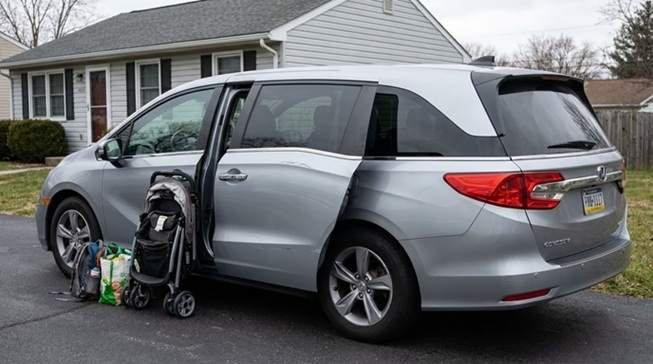
This is a buying guide, not a love letter. Honda minivans have a strong reliability reputation, and they also have documented weak spots that show up on specific years and high-mile examples. The difference between a great used Odyssey and an expensive one is rarely the badge. It is records, a clean VIN, a transmission that shifts cleanly, and doors that close like they still belong on a family vehicle. Prices below are not a national sticker. A 2016 EX-L in Arizona is not a 2018 Elite in New Jersey. Use ranges as context, then price the actual van in front of you.
Is a Used Honda Odyssey Worth Buying?
Often, yes — if you need a minivan and you buy the mechanical history, not the Carfax headline. The Odyssey’s case is practical. Recent used examples still use a 3.5-liter V-6, which is smoother and stronger than many four-cylinder rivals at highway speeds. Cabin space is excellent. The second and third rows are designed for car seats, groceries, and the unglamorous work of family transport. Resale has historically been firmer than a lot of domestic minivans, which helps if you keep the vehicle a few years and sell it again.
The catch is that “Honda” is not a warranty. Sliding-door hardware wears. Some automatic transmissions have unhappy reputations in certain years. Variable Cylinder Management (VCM) on many V-6 Odysseys is a known owner complaint for oil consumption, vibration, and engine-mount wear. A neglected timing belt on a belt-driven V-6 is not a small miss.
A used Odyssey is worth buying when:
- The VIN is clean of unresolved recalls
- Service records show oil, transmission fluid, and the big timed jobs
- Both sliding doors work from every switch, repeatedly
- The transmission does not flare, bang, or hesitate when warm
- The price reflects miles, trim, and remaining maintenance — not nostalgia
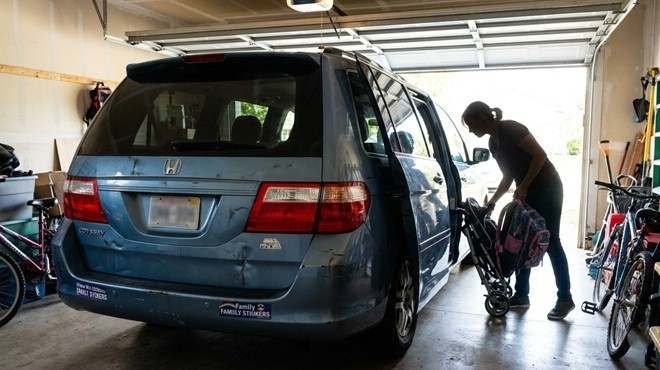
It is a weaker buy when the seller has no records, the van has been a taxi/rental/church-fleet unknown, or the discount exists because the transmission already feels tired.
What Years of the Honda Odyssey Are Available Used?
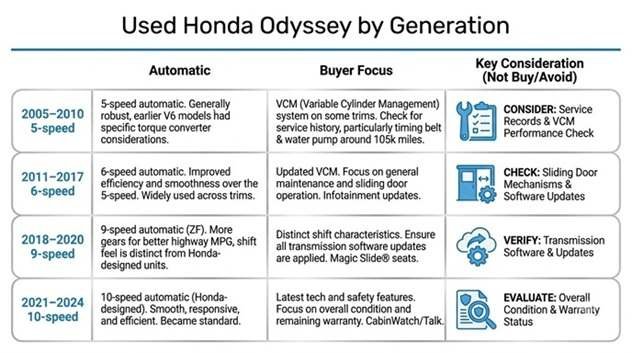
| Generation | Model years | Powertrain snapshot |
|---|---|---|
| Third | 2005–2010 | 3.5L V-6, 5-speed automatic |
| Fourth | 2011–2017 | 3.5L V-6, 6-speed automatic |
| Fifth | 2018–2024 | 3.5L V-6; 9-speed (2018–2020), 10-speed (2021–2024) |
| Current | 2025–present | Redesigned generation; confirm the window sticker on that VIN |
There are older 1999–2004 vans still circulating. Most family buyers should treat those as project or backup vehicles unless a trusted mechanic signs off.
Two details matter immediately:
- The Odyssey is front-wheel drive. If you need AWD for a steep, unplowed driveway, you are cross-shopping a Sienna, not optioning an Odyssey.
- First years of a generation (2011, 2018, and the new 2025) deserve a slower inspection, not an automatic veto.
What Is the Best Year for a Used Honda Odyssey?
There is no universal “best year.” There are better years for different budgets and risk tolerances. If you want the newest used-van features without new-van money, a well-kept 2021–2024 Odyssey is the strongest modern used target for many shoppers. Honda refreshed the fifth generation for 2021 and moved to a 10-speed automatic, which addressed a lot of the 9-speed complaints from 2018–2020. Honda Sensing is part of the fifth-gen package. Magic Slide second-row seats make car-seat life easier than the fourth gen.
If you want the most van per dollar, a documented 2014–2017 Odyssey is often the sweet spot of the fourth generation. The 2011–2013 vans are the same basic vehicle, but 2014 brought a mid-cycle update and the platform had more time in the field. Leather EX-L examples are everywhere. The 6-speed is generally better liked than the later 9-speed, with the usual Honda caveat: fluid changes matter.
If you want a late fourth-gen with fewer miles, 2016–2017 Touring and Elite models still show up, often with backup cameras, more safety tech than early 2011s, and the last of that body’s familiarity.
Criteria, not a trophy:
- Reliability history: later years of a generation usually beat year one
- Safety tech: 2018+ is the jump; 2014–2017 is acceptable; 2005–2010 is dated
- Powertrain: same V-6 family, different automatics
- Maintenance: every belt-driven V-6 needs proof of the timing-belt service
- Used value: 2021–2024 costs more because the market knows they are the easy recommend
A 2017 EX-L with records can be a better family vehicle than a 2020 Touring that was never serviced. Year is a filter. Condition is the purchase.
| Category | Typical used Honda Odyssey | Status |
|---|---|---|
| Vehicle type | Minivan / family people-mover | Confirmed |
| Drive | Front-wheel drive only | Confirmed for U.S. Odyssey |
| AWD | Not offered | Confirmed |
| Common used generations | 2005–2010, 2011–2017, 2018–2024 | Market reality |
| 2025–present | Redesigned current gen; rare used / CPO | Distinguish from older used vans |
| Engine, most used vans | 3.5-liter V-6 | Confirmed for these generations |
| Seating | 7 or 8 | Varies by second-row layout / year |
| Timing drive, 3.5L V-6 | Timing belt, not a chain | Confirmed for these V-6 Odysseys |
| Max towing, properly equipped | Often 3,500 lbs on later gens | Confirm on that year/config |
| Fuel | Regular unleaded | Typical |
| Hybrid / plug-in | Not in the used V-6 Odyssey generations above | Confirmed for those years |
| Crash-test scores | Year- and test-specific | Look up that model year; do not copy older scores |
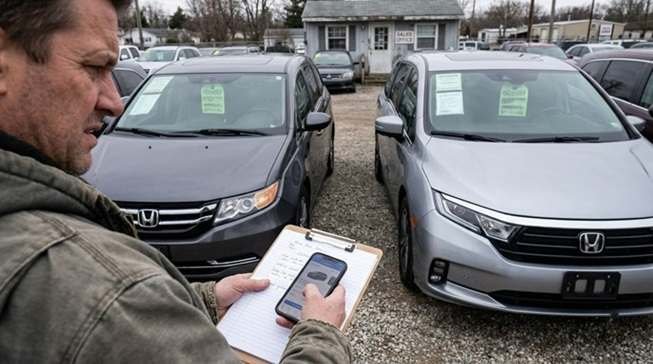
Which Honda Odyssey Years Should You Research Carefully?
2005–2006 (and, to a lesser extent, other 2005–2010 5-speeds).
This generation’s automatic transmission is the issue owners and independent shops still talk about. Failures, harsh shifts, and rebuilds show up in older discussions of this era. Honda did make running changes and some coverage varied by VIN and complaint date. A cheap 2006 with 180,000 miles and no transmission fluid history is a bet, not a bargain. If you buy this generation, budget like the transmission is a known wear item and get a specialist inspection.
2011.
First year of the fourth generation. New body, 6-speed, infotainment, and Honda’s cylinder-deactivation calibration of that period. First-year electronics, sliding-door adjustments, and VCM-related oil use are the inspection targets. Plenty of 2011s are still working. They are just not the year to buy blind.
2011–2013 VCM behavior.
Variable Cylinder Management can run the V-6 on fewer cylinders to save fuel. Owner reports on this era include higher oil consumption, fouled plugs, vibration, and worn engine mounts. Not every van does it. A cold-start test, a clean dipstick check, a look at the plugs if possible, and a mechanic listening for mount clunks will tell you more than a forum scare headline.
2018.
First year of the fifth generation, and the start of the 9-speed automatic in the Odyssey. Some drivers described jerky low-speed shifts, hesitation, and software that needed updates. Honda issued software and service campaigns on various fifth-gen items over time — which is exactly why a VIN recall check is mandatory. The 2018 cabin and Magic Slide seats are excellent. The transmission manners on a test drive decide the deal.
2018–2020 9-speed vans in general.
Do not skip these automatically. Do drive them in stop-and-go traffic, on a hill, and when fully warm. Compare that feel with a 2021–2024 10-speed if you can. Some 9-speed vans are fine after updates. Some still feel busy.
Any year with incomplete timing-belt records.
On belt-driven J-series V-6 Odysseys, this is not optional maintenance. An undocumented 105,000-mile van is not “fully serviced” because the oil was just changed.
High-use fleet, rental, and church vans.
Odysseys live hard in those jobs. Miles can be honest. Wear on doors, seats, and transmissions is often ahead of the odometer.
How Many Miles Can a Honda Odyssey Last?
A maintained Odyssey can be a 200,000-mile vehicle, and many go past that. That is an owner-pattern observation, not a Honda promise and not a reason to ignore a ticking belt or a slipping transmission.
What actually determines lifespan:
- Oil interval discipline (VCM engines are less forgiving of neglect)
- Transmission fluid service, even when the minder is optimistic
- Timing belt, water pump, and related seals on schedule
- Cooling system condition
- Sliding-door cables, motors, and rollers replaced before they fail in a parking lot
- Whether the van towed, idled for hours, or sat for months
100,000 miles on an Odyssey with records is not high for this nameplate.
150,000–180,000 is normal if the big jobs are done.
200,000-plus is possible, but you are buying remaining mechanical life, not prestige. Price it like a vehicle that will need struts, AC work, door hardware, and maybe a transmission decision during your ownership.
Mileage is too high when the price assumes Honda magic and the folder of receipts is empty.
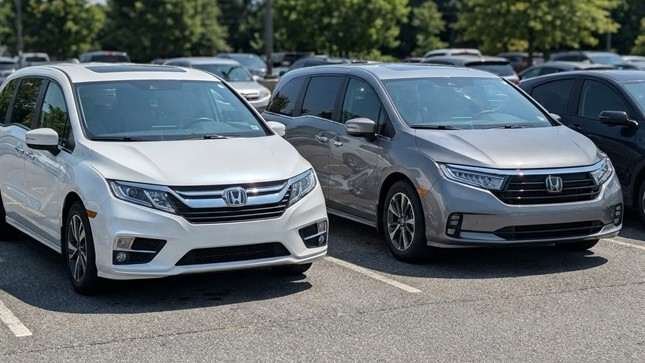
Engine and Transmission by Year
| Years | Engine | Typical output | Transmission | Towing (properly equipped) |
|---|---|---|---|---|
| 2005–2006 | 3.5L V-6 | About 255 hp class | 5-speed auto | Confirm that year |
| 2007–2010 | 3.5L V-6 with VCM on many | About 244 hp class | 5-speed auto | Confirm that year |
| 2011–2017 | 3.5L V-6 | 248 hp / 250 lb-ft | 6-speed auto | Up to 3,500 lbs on many |
| 2018–2020 | 3.5L V-6 | 280 hp / 262 lb-ft | 9-speed auto | Up to 3,500 lbs |
| 2021–2024 | 3.5L V-6 | 280 hp / 262 lb-ft | 10-speed auto | Up to 3,500 lbs |
| 2025+ | Do not assume it matches 2018–2024 | Check window sticker | Check that VIN | Check that VIN |
Common Honda Odyssey Problems to Check Before Buying
Not every Odyssey has every issue below. These are the problems that used buyers should actively inspect.
Engine-related issues
What: Oil consumption, misfires, worn engine mounts, and VCM-related vibration on many 3.5-liter V-6 vans. Coolant leaks and aging water pumps show up around timing-belt age. Rear main or valve-cover seepage appears on higher-mile engines.
Which years: VCM complaints are most discussed on 2000s–2010s V-6 Honda products, including 2011–2017 Odysseys. Later J35s can still consume oil if neglected. First-year 2011 and high-mile third-gen vans deserve extra attention.
Symptoms: Dipstick low between changes, plug fouling, a shake at idle when the engine is in three-cylinder mode, clunks from mounts on takeoff, sweet coolant smell, pink or crusty residue around the pump/belt area.
Why it matters: An engine that uses a quart every 1,000 miles is a lifestyle. Mounts and misfires get expensive if ignored. A belt-driven interference V-6 that jumps time is a catastrophic repair.
Inspection: Cold start, idle in park and in gear, highway merge, dipstick, underhood leaks, service records for plugs, mounts, and the belt job. A compression/leak-down test is reasonable on a high-mile purchase.
Pro diagnosis: Yes, if oil use is obvious, the idle shakes, or there is a misfire code.
Transmission-related issues
What: Harsh or delayed shifts, flare between gears, shudder, failure to engage, or a full rebuild. Different generations, different boxes.
Which years:
- 2005–2010 5-speed: the generation most associated with automatic failures.
- 2011–2017 6-speed: generally more trusted, still fluid-sensitive.
- 2018–2020 9-speed: owner complaints about shift quality more than classic “it grenaded” stories, though any automatic can fail.
- 2021–2024 10-speed: usually the better-mannered late used choice; still verify software updates and shift quality.
Symptoms: RPM rise without acceleration, bang into reverse, hunt in 20–40 mph traffic, burnt fluid smell, hesitation leaving a stop.
Why it matters: A minivan transmission replacement can exceed the value of an older van.
Inspection: See the dedicated test-drive section below. Check fluid condition if the dipstick/procedure allows on that year — Honda often wants a specific ATF and procedure.
Pro diagnosis: Immediate if it flares, slams, or the seller talks around the shifting.
Sliding-door problems
What: Worn rollers, stretched or frayed cables, tired motors, misaligned tracks, latch failures, door-sill weatherstrip leaks, and doors that reverse or refuse to auto-close.
Which years: All power-sliding-door Odysseys. Honda has issued door-related campaigns on various years; never assume yours was done without a VIN check.
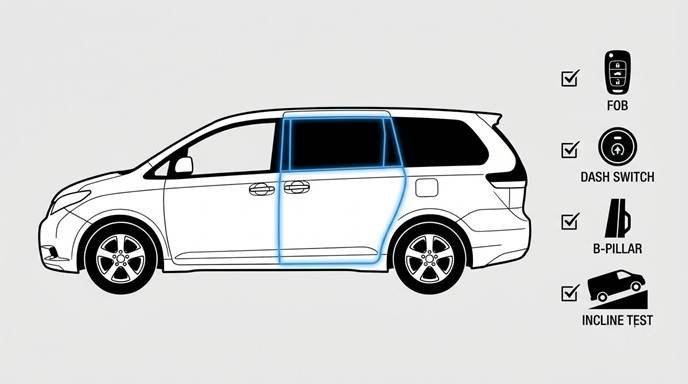
Symptoms: Grinding, slow travel, stopping halfway, working from the key fob but not the B-pillar switch, a door that needs a hip-check to latch.
Why it matters: This is the feature you use every school day. Repair is labor-heavy.
Inspection: Open and close both doors 8–10 times from every control, on a slight incline if you can. Watch the track, listen for cable pinging, check the inner door panel for speaker-rattle clues that someone was already inside.
Pro diagnosis: If a door is slow or noisy, get a body/electrical estimate before you fall in love with the leather.
Electrical and infotainment problems
What: Backup-camera glitches, rear-entertainment failures, Bluetooth dropouts, parasitic battery drain, failing window regulators, and Honda Sensing camera/radar misbehavior after windshield work.
Which years: 2011–2017 res systems and early navi units age out. 2018+ has more electronics, so a dead 12-volt battery or a windshield-mounted camera issue can disable a lot of nannies.
Symptoms: Screen blackouts, camera delay, battery dead after two days, warning lights that return after a “reset.”
Why it matters: A family van with a dark camera and a random battery death is not a small annoyance.
Inspection: Pair a phone, run the camera in bright sun and shade, leave accessories on then restart, confirm all USB ports. Ask when the 12-volt battery was replaced.
Pro diagnosis: Recurring battery drain or Honda Sensing errors.
Suspension and steering wear
What: Struts, rear springs (especially on loaded vans), sway-bar links, wheel bearings, and power-steering leaks on older third-gen vans.
Which years: Any high-mile Odyssey. Fourth- and fifth-gen vans that carried seven people and a hitch wear the rear faster.
Symptoms: Nose dive, clunk over speed bumps, humming that changes with speed, wandering on grooved highways.
Why it matters: Tires and brakes get blamed for worn struts. Alignment will not fix a dead mount.
Inspection: 10–15 minutes of broken pavement, a figure-eight in a lot, even tire wear.
Air-conditioning problems
What: Weak rear A/C, blend-door clicks, compressor wear, condenser damage from road debris.
Which years: All, because minivan rear HVAC is extra plumbing. Summer-state vans run the compressor hard.
Symptoms: Front cold, rear warm; musty smell; cycling compressor; greasy residue at line fittings.
Why it matters: An Odyssey without rear A/C in July is a different vehicle.
Inspection: Run front and rear on max cold for the entire test drive, not 30 seconds in the lot.
Brake and tire wear
What: Uneven inner-edge tire wear from alignment/bushings, pulsation from warped rotors, rusted rear hardware in salt states.
Which years: All. Odysseys are heavy.
Symptoms: Vibration under braking, pulling, 6/32″ on the outside of a tire and bald inside.
Why it matters: A “new tires” pitch can hide a $400 alignment and bushing job.
Inspection: Tread depth on all four, inner sidewalls, rotor faces, parking-brake hold on a hill.
Honda Odyssey Timing Belt: What Used Buyers Need to Know
Most used Odysseys you will shop — including the long-running 3.5-liter V-6 — use a timing belt, not a chain. Honda’s interval has varied by model year and service bulletin, commonly falling in a window that owners treat as a 60,000- to 105,000-mile (or years-based) service. The water pump, tensioner, and often the cam/crank seals are done at the same time because the labor overlap is huge.
This is a used-buyer flashpoint for three reasons:
- It is expensive enough to change the deal (often a four-figure independent-shop job; dealers can run higher).
- Many private sellers “forgot” or “the previous owner did it.”
- On an interference V-6, belt failure can destroy the engine.
What to do:
- Ask for a dated, mileage-stamped invoice, not a verbal “I think so.”
- If the van is approaching the Honda-specified interval with no proof, subtract the job from the price or walk.
- Inspect for coolant seepage at the pump if the cover is visible.
- Do not confuse a recent oil change with a belt service.
Verify the exact interval for that VIN’s model year in a Honda service schedule or with a dealer service department. Do not mix a 2008 recommendation with a 2018 one.
Honda Odyssey Maintenance Costs for Used Buyers
Honda parts are not exotic. Labor on doors, dash, and the V-6 belt job is where money goes. Typical ownership costs to plan for (independent shop ranges vary by city):
- Oil and filter: ordinary, more frequent if the van uses oil
- Tires: minivan-sized, buy quality — the vehicle is heavy
- Brakes: pads/rotors on a 4,500-pound people-mover
- Transmission fluid: Honda-spec ATF, not generic “multi-vehicle”
- Timing belt service: the budget-breaker if it is due
- Sliding-door cables/rollers/motors: unpredictable, not cheap
- 12-volt battery: more important on 2018+ electronics-heavy vans
- Rear A/C repairs: extra vs a two-row SUV
A used Odyssey with complete records can be cheaper over five years than a cheaper van that needs a transmission. The maintenance minder is a reminder, not a complete Bible. Many Honda techs still recommend more conservative transmission-fluid intervals than the longest factory message, especially on vans that idle in traffic or tow.
There is no honest single “Honda Odyssey maintenance cost” number. A 2015 EX-L at 90,000 miles with a fresh belt is a different animal from a 2010 Touring at 210,000 miles with original door cables.
Which Used Honda Odyssey Trim Should You Buy?
LX / Sport / lower trims (names vary by year):
Cloth, fewer luxury extras, sometimes missing a power door or two on older vans. Fine if the price is right and both doors still work. Used inventory is thinner because families bought EX-L.
EX / EX-L:
The used-market default. EX-L usually means leather, power sliding doors, and the feature set most families actually wanted. On many 2014–2024 vans this is the trim to hunt. HondaVAC (the in-floor vacuum) appeared on various EX-L-and-up years — confirm on the window sticker or glovebox build, because shoppers treat it as a trim given.
Touring:
More convenience and tech for the era: navigation or a larger screen in some years, upgraded audio, extra driver aids, rear entertainment on many examples. Touring can be a lot of van if the screen still works. A dead RES does not make it a bad vehicle, but it should affect price.
Elite:
Top of the fifth-gen pile: CabinWatch / CabinTalk on many, premium audio, more assistance and convenience. Used Elite pricing can chase new-van money. Buy it for the cameras and cabin, not because the V-6 is different. It isn’t.
For most used buyers, EX-L is the trim that holds the Odyssey’s value proposition: leather, both power doors, enough convenience, without Elite depreciation math.
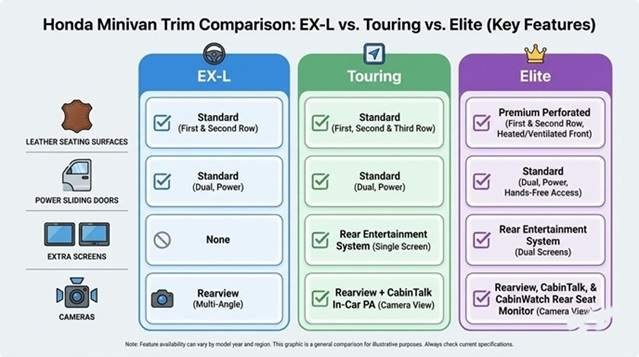
Used Honda Odyssey EX-L vs Touring vs Elite
| EX-L | Touring | Elite | |
|---|---|---|---|
| Used role | Volume family spec | Loaded fourth/fifth-gen | Flagship fifth-gen |
| Seating / doors | Power sliding doors typical | Same, plus extra convenience | Same, plus cabin monitoring on many |
| Leather | Yes | Yes | Yes, plus extras |
| Tech | Camera, later Honda Sensing on 2018+ | More screens/nav/RES historically | Most cameras, audio, aids |
| What breaks that’s unique | Vacuum on equipped years | Rear entertainment, extra electronics | More cameras/mics to fail |
| Who should buy it | Almost everyone | Families who will use RES and extra aids | Buyers who want the nicest 2018–2024 cabin |
The V-6 and the sliding-door physics do not change because the liftgate is hands-free. A Touring with a neglected 9-speed is not “better” than an EX-L with invoices. Elite is worth the jump when the price gap is small and the extra cameras/audio are things you will use. It is not worth stretching the budget if EX-L already has leather, Honda Sensing (2018+), and two healthy doors.

How Much Should You Pay for a Used Honda Odyssey?
There is no national used Honda Odyssey price that is fair for every ZIP code.
What moves the number:
- Year and generation (2021–2024 10-speed vans command a premium)
- Mileage and belt/transmission documentation
- Trim (EX-L vs Elite)
- Accident history and title
- Region (salt-belt rust vs Sun Belt paint/interior fade)
- CPO vs independent vs private party
- Remaining factory or CPO warranty
- Local supply (Odysseys are plentiful in suburbs, tighter in some cities)
A dealer asking new-adjacent money for a 2018 with 90,000 miles and no belt paperwork is not “Honda resale.” A private 2016 with 140,000 miles, two owners, and a stack of Honda-stamped invoices may be the actual deal.
How to price it:
- Pull completed listings in your area for the same year, trim, and mile band.
- Subtract known jobs (belt, tires, doors, brakes).
- Subtract accident or title discounts.
- Do not add extra for a fresh oil change and a car-wash.
Certified Pre-Owned can be worth it on 2018+ vans if the extra money buys warranty on the 9-speed/10-speed and electronics. It is harder to justify CPO premiums on a 12-year-old fourth-gen that is already outside powertrain coverage.
What Mileage Is Too High for a Used Honda Odyssey?
Mileage is too high when it is disconnected from maintenance. Rough buyer framework — not a rulebook:
- Under 80,000: focus on accidents, first-year quirks, and whether you are overpaying
- 80,000–130,000: timing-belt window for many V-6s; this is where paperwork makes or breaks the deal
- 130,000–180,000: normal for a Honda minivan; inspect transmission, doors, AC, struts
- 180,000–220,000: only with records, a conservative PPI, and a price that assumes upcoming repairs
- 250,000+: a utility van, not a “best used Honda Odyssey” recommendation for a family that needs certainty
A 210,000-mile Odyssey that towed a boat and skipped fluid changes is too high. A 175,000-mile one-owner EX-L with belt, pump, and ATF receipts can be the more rational buy.
What to Check Before Buying a Used Honda Odyssey
Do this in order. Do not skip to the test drive because the interior smells like a daycare, in a good way.
- VIN on the dash, door sticker, title, and listing — all match.
- NHTSA.gov and Honda Owners recall lookup for open campaigns.
- History report (Carfax/AutoCheck): accidents, airbag deployments, flood, rental, salvage.
- Service records: oil, ATF, timing belt/water pump, brakes, battery, sliding-door work.
- Title brand and odometer consistency.
- Cold start — not a van that has been idling since 8 a.m.
- Walk-around: rust on sills, sliding-door tracks, rear wheel arches, subframe, hitch wiring.
- Interior: third-row latch operation, child-seat LATCH, stains that suggest leaks, both power doors, rear HVAC, camera.
- Test drive long enough for the transmission to go through real gears.
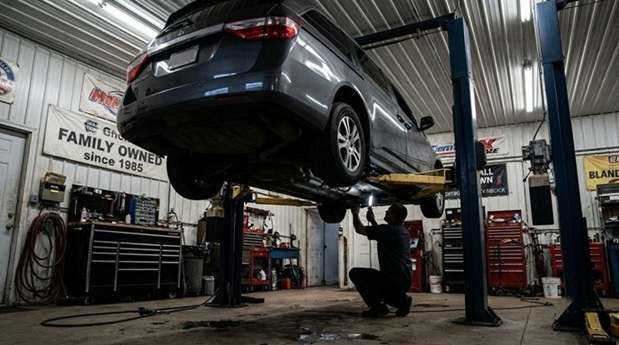
- Independent pre-purchase inspection on a lift.
If a seller refuses a PPI or a VIN check, they have answered the important question.
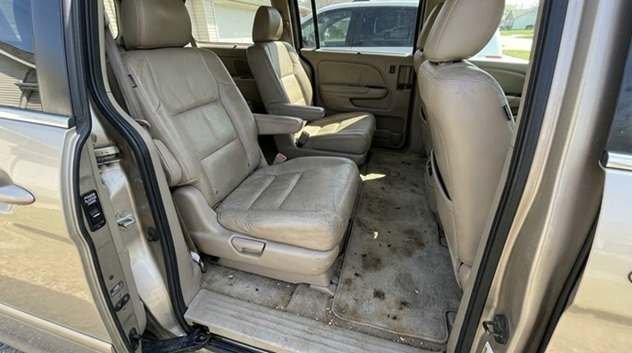
How to Check a Used Honda Odyssey’s Sliding Doors
Park on level ground first, then on a mild grade if available.
- Open and close each door from the key fob, dash switch, B-pillar switch, and interior handle.
- Repeat until you are bored. Intermittent cable issues hide in one-shot demos.
- Listen for grinding, a metallic ping, or a motor that strains then stops.
- Watch the rear edge: a door that lifts, drops, or needs a slam is out of alignment.
- Test auto-reverse with a rolled towel (not a child’s arm).
- Inspect the lower track for gravel, bent lip, or missing rubber.
- Check for water stains on the rear side-trim and spare-tire well — door seals leak.
- On power doors, disconnect a kid-lock scenario: child lock on, still operable from outside.
A door that works once in the seller’s driveway and nowhere else is a several-hundred to well-over-a-thousand-dollar parts-and-labor story. If only one door is power, confirm which one before you assume both.
How to Check the Honda Odyssey Transmission on a Test Drive
Do not buy an Odyssey from a parking-lot loop.
- Start cold. Reverse should engage without a pause you could pour coffee through.
- Drive 15–20 minutes until fully warm. Honda automatics often behave worse hot if they are sick.
- Use gentle throttle, then a 50% merge, then a passing-speed pull.
- In 20–40 mph traffic, feel for busy hunting (especially 2018–2020 9-speeds).
- Come to a complete stop, then leave immediately — delayed Drive is a warning.
- Hill hold / uphill start: does it slip, then grab?
- Overdrive / high-gear cruise: RPM should not surge.
- After the drive, recheck Park and Reverse. Burnt smell is a walk-away.
On 2005–2010 vans, be pessimistic. On 2011–2017 6-speeds, be picky about flare. On 2018–2020, decide whether the shift character is “this 9-speed” or “this 9-speed is failing.” On 2021–2024 10-speeds, still do the whole loop; new-for-the-generation is not new-for-this-example.
If the seller says “they all do that,” compare another Odyssey the same week.
How to Check a Used Honda Odyssey’s Recall History
Do not trust a Facebook comment about “the Odyssey recall.”
- Copy the 17-digit VIN.
- Run it at NHTSA.gov/recalls.
- Run it on Honda’s official owner recall lookup.
- Look for incomplete campaigns, not just past ones.
- Ask the selling dealer for a printout if they claim “all recalls done.”
- Confirm Takata airbag work on older vans, fuel-pump campaigns on some Honda V-6 years, sliding-door campaigns, and any software updates — only as they apply to that VIN.
A completed Takata repair is common on older Hondas and is not automatically a reason to reject the van. An open airbag, door-latch, or fuel-pump campaign is a reason to pause until it is performed. Recalls are free at Honda dealers when they apply. They are not a substitute for a mechanical inspection.
Should You Buy a Used Honda Odyssey From a Dealer or Private Seller?
Honda dealer / CPO:
Highest price, best chance of recall completion, possible remaining powertrain or CPO coverage. Makes the most sense on 2018–2024 vans still close to warranty logic.
Independent used dealer:
All over the map. Some inspect. Some auction-flip. PPI is not optional. Return policies vary by state; read them.
Private party:
Often the better number, and the better access to a real owner who knows when the belt was done. Worse recourse if the transmission fails on day four. Meet at a shop for the inspection. Pay with a traceable method. Do not skip the VIN/title match.
For a family daily driver, paying a little more for documented service and a clean PPI beats a private “runs great” van with no keys to the history.
Used Honda Odyssey Pre-Purchase Inspection Checklist
Take this to an independent Honda-experienced shop, not only the selling dealer’s “we inspected it” sheet.
Paper
- VIN match, title, odometer
- NHTSA + Honda recall printout
- History report
- Timing belt / water pump invoice
- ATF service
- Oil records (look for extra quarts)
Engine
- Cold start, idle, misfire, smoke
- Leaks: valve covers, pump area, oil pan
- Mounts
- Cooling system, fans, radiator fins
- Oil condition and level
Transmission
- Cold and hot shift quality
- Reverse engagement
- Leaks at cooler lines and pan
- Software updates if applicable to year
Doors and body
- Both sliding doors, 8–10 cycles
- Tracks, cables, motors
- Liftgate struts / power liftgate
- Rust: sills, tracks, rear quarters, underbody
- Windshield (camera-equipped 2018+)
Chassis
- Struts, springs, sway links
- Wheel bearings
- Brakes and tires (inner shoulders)
- Alignment evidence
Cabin and HVAC
- Front and rear A/C
- Heat to third row
- Infotainment, camera, sensors
- Third-row fold/unfold
- Seat rails and LATCH
- Vacuum on equipped EX-L/Touring/Elite
After the lift
- Written estimate for anything due in 12 months
- Walk or renegotiate before a deposit goes nonrefundable
Used Honda Odyssey vs Other Minivans
Toyota Sienna:
The other longevity play. Newer Siennas are hybrid and offer AWD. Used pre-hybrid Siennas compete with 2011–2017 Odysseys. If AWD or a hybrid is the point, Sienna wins that argument. If you want a conventional V-6 and a typically lower purchase price than an equivalent Sienna, the Odyssey is in the conversation.
Chrysler Pacifica / Town & Country:
Often cheaper used, with strong features (and a plug-in Pacifica if that matters). Long-term transmission and electrical reputation is the question shoppers bring to Chrysler minivans. Inspect even more aggressively. Stow-n-Go is the interior trick Honda does not copy.
Kia Carnival:
Newer used examples are feature-heavy and three-row SUV-like. Warranty may still be in play on younger vans. Less long-term used data than Odyssey/Sienna.
SUVs (Pilot, Highlander, Explorer):
Worse third-row access, worse cargo with people in back. Shop an SUV only if you refuse a minivan for image reasons. For actual kid logistics, the Odyssey’s sliding doors still win.
The Odyssey’s used pitch is: V-6 highway manners, parts availability, and a market that still understands the vehicle. It is not the AWD van, and it is not the hybrid van.
Is a Used Honda Odyssey Good for a Family?
Yes, that is the vehicle’s entire job.
Strengths for family use:
- Sliding doors in tight parking lots
- A third row adults can occupy on shorter trips
- Window-sticker car-seat space, especially 2018+ Magic Slide
- Strong enough V-6 for a loaded interstate merge
- Crash-safety technology that gets meaningfully better from 2014 onward and again in 2018+ with Honda Sensing
Family caveats:
- FWD only in snow — tires matter more than the Honda badge
- Power doors will be the first thing kids break
- Rear A/C is a need, not a luxury, in the South
- A van with a tired transmission is a worse family vehicle than a smaller SUV that works
If you currently drive a three-row crossover and you are tired of lifting toddlers into a high cabin, a sound used Odyssey is usually the more functional upgrade.
Used Honda Odyssey Buying Checklist
- Year/generation matches your risk comfort (2014–2017 or 2021–2024 for many buyers)
- Trim you actually need (usually EX-L)
- VIN recall-clear or scheduled
- History report without salvage/flood surprises
- Timing-belt proof or price reduced
- ATF service evidence
- Cold-start test
- 20-minute transmission drive, city and highway
- Both sliding doors, many cycles
- Front and rear A/C
- Camera and safety systems proven
- Tires even, brakes honest
- PPI on a lift
- Price compared with local sold listings, not the asking fantasy
- Insurance quote before you sign (minivans are usually reasonable; extras and teen drivers are not)
Frequently Asked Questions
What is the best year for a used Honda Odyssey?
For modern features and the 10-speed, 2021–2024 is the year band many shoppers should start with. For value, 2014–2017 is the fourth-gen band that often balances price, parts, and maturity. A documented 2019 can beat a neglected 2022. Year bands are starting points.
How many miles is too many for a Honda Odyssey?
Without records, anything past the timing-belt interval is too many. With records, 150,000–180,000 is still in play for this van. Past 200,000, only buy at a price that assumes repairs.
How long can a Honda Odyssey last?
With oil, fluid, belt, and door care, 200,000 miles and beyond is a realistic owner-pattern outcome. It is not guaranteed.
Is a Honda Odyssey reliable after 100,000 miles?
It can be, and many are. At 100,000 miles you should be talking about the belt, ATF, mounts, and doors — not whether Honda minivans “die at 100k.” They don’t, as a class. Individual vans do if ignored.
What are the most common Honda Odyssey problems?
The ones that affect used shoppers most: automatic-transmission behavior (especially 2005–2010 5-speeds and shift quality on some 2018–2020 9-speeds), sliding-door hardware, VCM-related oil use and mounts, timing-belt service gaps, and rear A/C. Infotainment and batteries show up on higher-tech fifth-gen vans.
Does the Honda Odyssey have a timing belt?
The 3.5-liter V-6 Odysseys that dominate the used market are timing-belt engines. Confirm the interval for the specific year and get proof the job was done.
How much does Honda Odyssey maintenance cost?
Routine oil and brakes are ordinary. The costs that surprise used buyers are the timing-belt/water-pump job, sliding-door repairs, and a transmission if one is failing. Budget for those by generation and mileage instead of a single average.
Is the Honda Odyssey EX-L worth buying used?
Usually yes. EX-L is the trim that put leather and power doors on the vans families actually kept. Unless you need Touring/Elite screens and cameras, EX-L is the used spec to beat.
Should I buy a Honda Odyssey with 200,000 miles?
Only with a thick folder, a PPI, healthy shifts, healthy doors, and a price that is not pretending it is a 120,000-mile van. For a household that cannot be without a vehicle next month, a lower-mile EX-L is the saner family choice.
Should I get a pre-purchase inspection on a used Odyssey?
Yes. Sliding doors, transmissions, and belt-driven V-6s hide problems that a driveway start will not show. A PPI is cheaper than a wrong yes.
What Makes a Used Honda Odyssey Worth Buying?
A used Honda Odyssey is worth buying when the van’s paperwork, transmission, timing belt, and sliding doors all agree with the asking price. Start with generation, not emotion. 2021–2024 vans are the easiest modern recommendation because of the 10-speed and the fifth-gen cabin. 2014–2017 EX-Ls are still the workhorse value if records exist. Treat 2005–2010 as a budget mechanical project, 2011 and 2018 as first-year vans that must drive and shift better than the ad, and 200,000-mile examples as priced-for-parts-and-labor unless a shop says otherwise.
Then ignore the reputation long enough to do the unglamorous work VIN recall check, history report, cold start, a real transmission test, both doors a dozen times, front and rear A/C, and a lift inspection. The Odyssey that survives that process is the one that earned Honda’s family-van reputation. The one that does not is just a minivan with a famous name.
Related Post