
Tesla Cybertruck isn’t finished just because it’s in production. That’s the clear message from lead engineer Wes Morrill in a fresh September 7, 2026 post that’s flying under the radar of most mainstream coverage. While headlines focus on pricing tweaks or software updates, Morrill is quietly highlighting how the truck is being refined in real time — a philosophy that sets it apart from every other pickup on American roads.

“The finish line isn’t getting to production,” Morrill wrote. “A product is a living thing, constantly evolving and improving.”
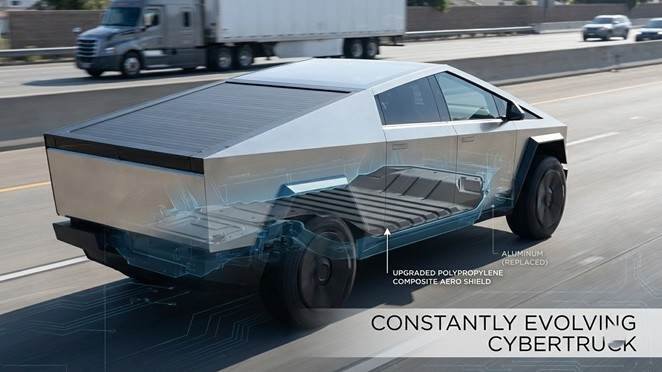
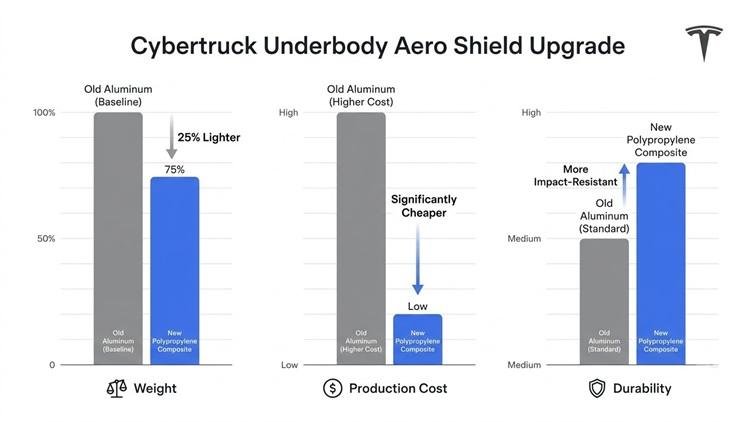
The latest example? A change most owners will never see: the aero shield (underbody panel) beneath the Cybertruck has been switched from stamped aluminum to a self-reinforcing polypropylene composite. The new material is formed by stretching polypropylene into fibers and laminating them into shape. According to Morrill, it’s more durable, significantly lighter, and far cheaper to produce than the previous aluminum version. It also allows tighter, smoother shaping around bolts and mounting points, which improves underbody airflow and delivers a small but measurable efficiency gain.1
This isn’t a one-off tweak. Morrill noted that the Cybertruck has already received numerous running changes focused on cost, reliability, serviceability, and manufacturability since deliveries began at Gigafactory Texas. The polypropylene switch is simply the most recent one he decided to highlight after owners noticed the difference.
For U.S. owners — especially those in the Midwest, Northeast, or Mountain West — the change has real-world implications. Aluminum underbody shields can dent, corrode from road salt, or develop fatigue cracks over time. The new polypropylene composite is tougher against impacts and more resistant to the kind of environmental stress American trucks face daily. Because it’s lighter, the truck should see a slight range bump in real-world driving, and the improved airflow around fasteners means less turbulence under the vehicle — a small but cumulative win for efficiency on long highway hauls.
The cost savings in manufacturing are also meaningful. Tesla isn’t raising prices because of this upgrade; instead, the company is absorbing the change into the existing production line. That’s the kind of incremental improvement that traditional automakers usually save for a mid-cycle refresh or new model year. Tesla’s approach means buyers today are getting a more refined truck than those who took delivery in late 2024 or early 2025.
This fits a broader pattern. Earlier in 2026, Tesla began fitting Cybertrucks with 4680 cells that use lithium refined at its Texas Gulf Coast facility — another step toward vertical integration that reduces reliance on overseas supply chains. Small hardware and material changes like the underbody panel are happening alongside software improvements that continue to roll out over the air.
The “Living Product” Advantage vs. Traditional Trucks
Most pickup buyers are used to waiting for annual model-year changes that often amount to new colors, minor interior tweaks, or a slightly updated infotainment system. Tesla’s method is different — and, for many American owners, more satisfying. Problems get fixed quickly, materials get upgraded when better options are validated, and improvements don’t require waiting for a dealer visit or a new model year.
Morrill’s comments also underscore how the Cybertruck’s exoskeleton design and structural battery pack make these kinds of running changes easier than on conventional body-on-frame trucks. The team can iterate on the underbody without disrupting the visible stainless-steel body or major assembly processes.
For U.S. buyers considering a Cybertruck in late 2026, this means the truck you order today will likely be better than the one delivered six months ago — and even better than the one delivered a year from now. It’s the opposite of the “buy it now before they ruin it” mindset that sometimes accompanies traditional vehicles.
If you already own a Cybertruck, there’s no action required for the underbody change — it’s a running production update. Future deliveries will simply come with the improved material. Morrill has hinted that more changes are coming, though he hasn’t detailed them yet.
For prospective buyers, the takeaway is clear: the Cybertruck isn’t a static product. Its “constantly evolving” nature means ongoing improvements in durability, efficiency, and build quality that traditional pickups rarely match. In a market where American buyers value long-term ownership and real-world toughness, that philosophy could be one of the truck’s biggest long-term advantages.
Tesla’s willingness to keep refining the Cybertruck after it reached production shows confidence in the platform — and a commitment to making every truck that leaves Texas better than the last. For U.S. owners who want their pickup to improve over time rather than just age, that’s a compelling proposition.
Related Post