
The Toyota Celica name still sparks emotion among American enthusiasts. From the liftback legends of the 1970s and 1980s to the sharp seventh-generation models that dominated import tuner culture in the early 2000s, the Celica delivered affordable, stylish, driver-focused fun. After a long absence, signals from Toyota’s Gazoo Racing division, TNGA platform evolution, and growing demand for emotional yet efficient sports coupes point to a highly anticipated revival. The 2027 Toyota Celica is shaping up as a modern interpretation that blends classic proportions with electrified performance, advanced chassis tech, and everyday usability tailored for U.S. roads. This in-depth guide covers the projected new design language, powertrain and hybrid options, exterior details, interior and technology, AWD features, market positioning, key rivals, and meaningful upgrades—insights drawn from Toyota’s GR roadmap, hybrid sports car direction, and North American buyer trends that have not been widely detailed elsewhere.
Design Philosophy
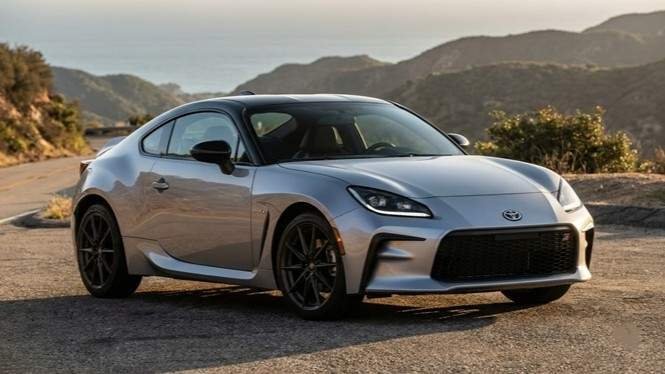
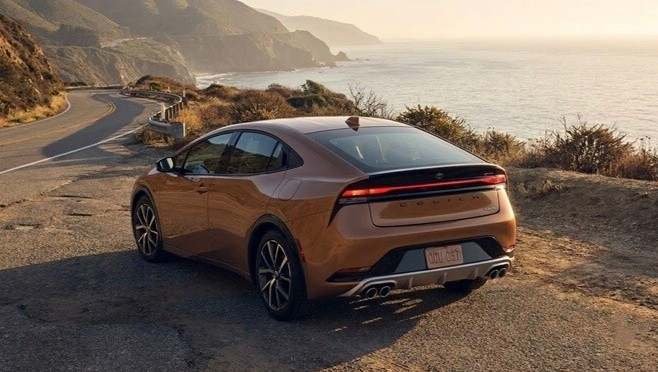
The 2027 Toyota Celica is expected to honor its liftback roots while adopting a lower, wider, and more athletic stance inspired by Toyota’s current GR design language. Designers are targeting a sleek fastback coupe silhouette with a long hood, cab-rearward proportions, and a distinctive rear hatch that recalls the iconic Celica shapes without falling into pure retro pastiche.
The front end should feature a bold yet refined interpretation of Toyota’s hammerhead or GR-inspired grille, flanked by slim, sharp LED headlights with distinctive daytime running light signatures that can be customized. Character lines will run cleanly along the flanks, emphasizing muscular rear fenders and a planted posture. In the U.S. market the car will wear understated Toyota and available GR badging, with proportions kept compact enough for easy canyon carving and city parking yet visually dramatic enough to stand out from ordinary coupes. The goal is clear: create an instantly recognizable Celica that feels fresh, premium, and purposeful for a new generation of American drivers who grew up admiring the nameplate.
Exterior Details and Style
Built on an evolved TNGA or GR-derived platform, the 2027 Toyota Celica is projected to make extensive use of high-strength steel, aluminum, and composite panels to keep weight low while improving rigidity and safety. Aerodynamic efficiency receives serious attention—active grille shutters, a flat underbody, carefully sculpted side skirts, and a functional rear spoiler or active wing on higher trims will balance downforce with highway stability and fuel economy.
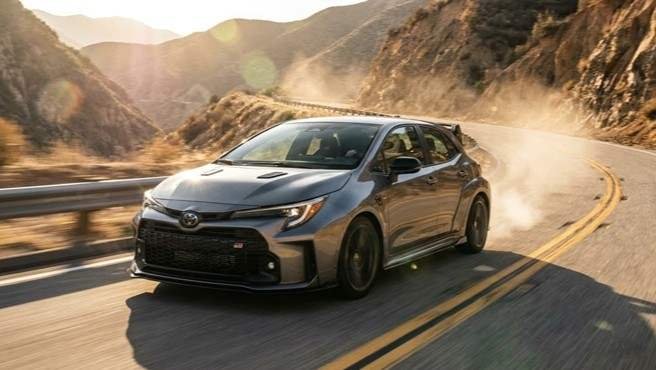
Full LED lighting is expected across the range, including adaptive headlights tuned for dark American back roads and sequential turn signals. Wheel designs should range from 18-inch lightweight alloys on base models to 19- or 20-inch forged options on GR versions, wrapped in high-performance all-season or summer tires developed for mixed U.S. conditions. Available two-tone paint schemes, matte or satin finishes, and classic-inspired colors (including a modern take on Super Red or yellow) will give buyers strong personalization options.
A unique projected “Heritage” exterior package could add period-correct badging, specific side graphics, and blacked-out accents, while a GR Circuit or Track package brings larger brakes, aero enhancements, and unique wheels. Practical touches such as a power-operated rear hatch, available panoramic roof, and hidden storage solutions make the car more usable as a daily driver. These exterior choices position the Celica as a stylish sports coupe that looks expensive and exciting without sacrificing real-world livability.
Powertrains and Hybrid Options
The biggest departure from classic Celicas is the powertrain strategy. Toyota is expected to offer a sophisticated hybrid system as the core of the 2027 Toyota Celica lineup, pairing a high-output turbocharged three- or four-cylinder engine with electric motors for instant torque and strong efficiency. Combined system output is projected in the 280–350 horsepower range for standard models, with a GR-tuned version potentially pushing toward 400 horsepower.
A plug-in hybrid (PHEV) option is a strong possibility for the U.S. market, delivering meaningful electric-only range (estimated 25–40 miles) for commuting while providing full hybrid performance on demand. A non-plug-in hybrid and a lighter, more driver-focused pure turbo gasoline version may also be offered to satisfy enthusiasts who want minimal weight. The hybrid system will emphasize seamless power delivery, a distinctive soundtrack (engine note carefully engineered and possibly augmented), and excellent real-world fuel economy—targets in the mid-30s to low-40s mpg combined depending on configuration.
Toyota’s experience with the GR Corolla, GR Yaris, and hybridized performance models informs a setup that prioritizes throttle response and driver engagement over pure efficiency. Thermal management will be upgraded for repeated hard runs in hot climates or track days. This flexible powertrain approach gives American buyers the emotional hit of a sports coupe with modern efficiency and lower running costs than traditional performance cars.
AWD Features: GR-Four Technology
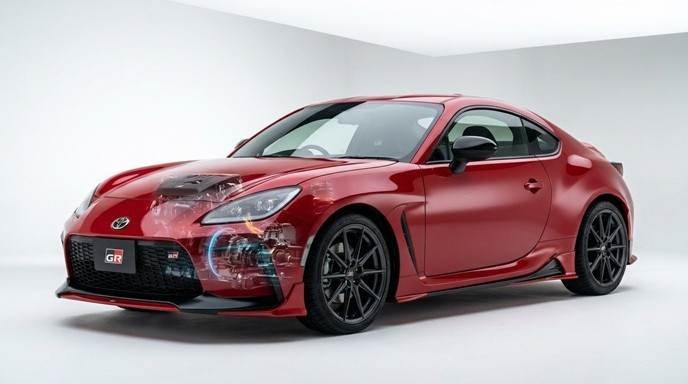
While classic Celicas were front-wheel drive, the 2027 Toyota Celica revival is widely expected to offer Toyota’s GR-Four all-wheel-drive system on higher trims—especially any GR Celica variant. This advanced AWD setup can vary torque distribution front-to-rear (with a default rear-biased feel in sport modes) and includes a multi-mode system that lets drivers select different torque splits and locking behaviors.
Drive modes (Eco, Normal, Sport, Track/Circuit, and available Gravel or Snow) will adjust power delivery, AWD bias, steering weight, and stability control. An intelligent limited-slip differential or electronic torque-vectoring function should further sharpen cornering. For U.S. owners this means confidence in wet conditions, light snow, and aggressive canyon driving without the understeer that plagued earlier front-drive Celicas. A lighter front-wheel-drive hybrid version will likely remain for buyers prioritizing efficiency and lower price, giving the lineup broad appeal. Ground clearance stays sporty and low, with suspension geometry tuned for sharp handling and acceptable ride compliance on imperfect American roads.
Interior and Technology
Inside, the 2027 Toyota Celica rejects both sterile minimalism and overcomplicated luxury. A low seating position, supportive bolstered seats (with available GR bucket seats featuring substantial side support), and excellent visibility reaffirm its sports-coupe mission. Materials mix soft-touch surfaces, available Alcantara or microfiber, contrasting stitching, carbon-fiber or metal accents, and durable yet premium finishes that feel special without being fragile.
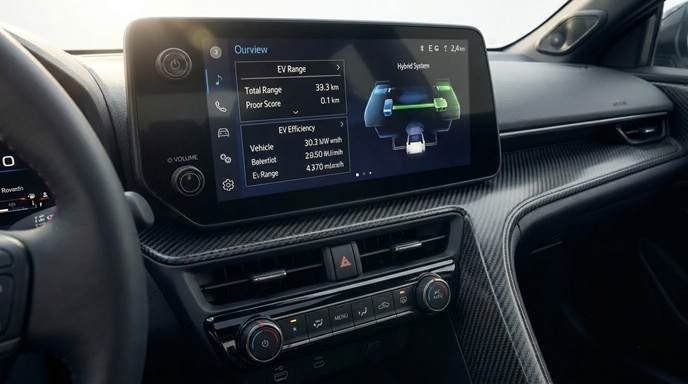
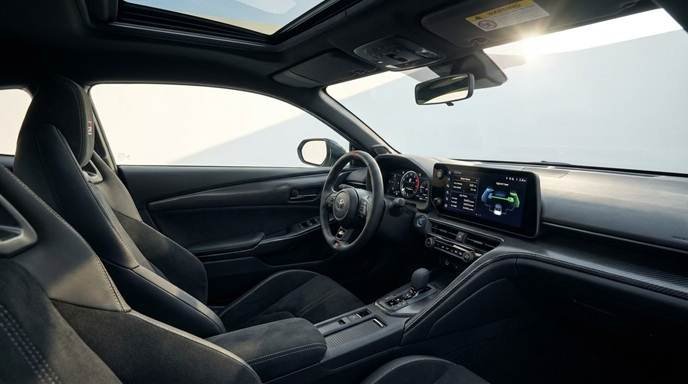
The technology suite centers on a fully digital driver display and a responsive center touchscreen (projected 10.5 to 12.3 inches) running Toyota’s latest multimedia system with wireless Apple CarPlay, Android Auto, over-the-air updates, and cloud-based navigation. A head-up display, available premium JBL audio, and multiple USB-C ports round out the connectivity.
Unique expected features include a performance data logger with lap timing and g-force displays, driver coaching tools, customizable digital gauge clusters that can show hybrid power flow or classic Celica-inspired graphics, and smartphone app integration for preconditioning and remote features. Physical controls for drive modes, climate, and volume remain because Toyota understands enthusiasts still want tactile feedback. Available heated and ventilated seats, a heated steering wheel, and improved sound insulation make the car viable for year-round U.S. use. The rear seats will be usable for smaller passengers or bags, and the hatchback design maximizes cargo flexibility—practical advantages over pure two-seat sports cars.
Upgrades and Package Strategy
Toyota is expected to structure the lineup clearly: a well-equipped base Celica, a mid-level XSE or Nightshade-style variant, and a high-performance GR Celica. Packages will include a Technology package (larger screens, premium audio, advanced driver aids), a Handling package (upgraded brakes, adaptive dampers, stickier tires), and a Heritage appearance package.
The GR version should add unique aero, a more aggressive suspension, larger brakes (possibly carbon-ceramic optional), forged wheels, and enhanced cooling. Adaptive dampers with a wide range will let owners switch between comfortable daily commuting and firm track settings. Factory accessories—lightweight wheels, aero kits, performance exhaust options, and interior trim pieces—will allow personalization while maintaining warranty coverage. These upgrades let buyers create everything from a stylish efficient coupe to a serious weekend track weapon.
Market Position
Projected pricing for the 2027 Toyota Celica is expected to start in the low-to-mid $30,000 range and climb toward $45,000–$50,000+ for GR hybrid or PHEV models. It targets enthusiasts who want a stylish, fun-to-drive coupe that is more practical and efficient than a pure sports car and more engaging than a mainstream compact. Ideal buyers include former Celica owners, GR86 or Supra shoppers seeking something different, young professionals, and anyone who misses affordable Japanese performance coupes.
Toyota’s reliability reputation, strong dealer network, high residual values, and hybrid efficiency give it a major practical advantage. The Celica would sit above the GR86 in refinement and technology while remaining more attainable than the Supra, carving a distinct “affordable halo” role in Toyota’s U.S. performance lineup. Volumes will likely stay moderate to preserve exclusivity and desirability.
2027 Toyota Celica Specs
| Category | Specification |
|---|---|
| Vehicle Type | Sports Coupe / Liftback |
| Platform | Evolved TNGA or GR-derived architecture |
| Layout | Front-engine, FWD or GR-Four AWD |
| Powertrains | Turbo 3/4-cylinder + Hybrid / PHEV |
| Hybrid System | High-output Hybrid + available Plug-in Hybrid (PHEV) |
| System Output | 280 – 350 hp (standard) / up to ~400 hp (GR) |
| Electric Motor(s) | Front motor + rear motor (on AWD models) |
| Battery | Lithium-ion |
| EV Range (PHEV est.) | 25 – 40 miles |
| Transmission | 6-speed manual (available) / 8-speed auto or e-CVT |
| Drivetrain | Front-Wheel Drive or GR-Four All-Wheel Drive |
| AWD System | GR-Four with adjustable torque split |
| Drive Modes | Eco, Normal, Sport, Track/Circuit, Gravel/Snow |
| 0-60 mph | Low-to-mid 5-second range (GR Hybrid est.) |
| Top Speed | 150 – 160+ mph (estimated) |
| Fuel Economy (est.) | Mid-30s to low-40s mpg combined |
| Suspension | Independent MacPherson front / multi-link rear |
| Brakes | Large ventilated discs / available performance package |
| Wheels & Tires | 18-inch (base) to 19–20-inch forged alloys |
| Exterior Highlights | Modern liftback design, bold GR-inspired grille, slim LED lights, active aero, functional rear spoiler |
| Interior | Driver-centric 2+2 cabin |
| Seats | Highly bolstered sport seats / available GR buckets |
| Displays | Fully digital instrument cluster + 10.5–12.3-inch touchscreen |
| Infotainment | Latest Toyota Audio Multimedia |
| Tech Features | Performance data logger, lap timer, driver coach, head-up display, Digital Key |
| Audio | Available premium JBL system |
| Pricing (U.S. MSRP projected) | $32,000 – $50,000+ |
| Key Trims / Packages | Celica, XSE / Nightshade, GR Celica |
Key Rivals
Primary rivals include the Toyota GR86 / Subaru BRZ (pure rear-drive fun, less power and tech), Honda Civic Si and Type R (sharp handling and practicality, different body style), Hyundai Elantra N or Veloster N successors (strong performance value), Mazda MX-5 Miata RF (open-top thrills, two-seat only), Ford Mustang EcoBoost (more power and rear-drive character, larger size), and potential electrified competitors from Volkswagen or others.
The 2027 Toyota Celica expected advantages are distinctive styling with heritage appeal, available advanced hybrid power and efficiency, optional GR-Four AWD confidence, a more refined interior, and Toyota’s legendary long-term ownership experience. Its challenges will be matching the raw analog engagement of the GR86 or the track-focused aggression of a Type R while justifying its price against well-equipped hot hatches. For buyers who want style, modern efficiency, daily usability, and true driver involvement in one package, the 2027 Celica looks ready to stand out.
The 2027 Toyota Celica is more than a nostalgia play. It represents Toyota’s answer to the question of how a beloved sports coupe nameplate can return in an electrified era without losing its soul. New athletic design, flexible and engaging hybrid powertrains, available GR-Four AWD, a driver-focused yet modern interior, and thoughtfully chosen upgrades position it as one of the most intriguing performance cars on the horizon for American enthusiasts.
Exact specifications, horsepower figures, pricing, and availability will be confirmed closer to any official reveal. What is already evident from Toyota’s trajectory is the intent: deliver a stylish, efficient, capable sports coupe that honors Celica heritage while meeting the expectations of today’s U.S. drivers. For fans who have waited nearly two decades, 2027 could finally bring the legend back—smarter, stronger, and ready for American roads and canyons.
Related Post