
The midsize sedan segment faces an uphill battle against the SUV and crossover wave, yet Hyundai refuses to abandon it. The 2027 Hyundai Sonata (ninth-generation, internally DN9) arrives as a confident statement: a technologically advanced, stylish, and versatile sedan that blends bold new design, refined powertrains with hybrid leadership, and groundbreaking software.
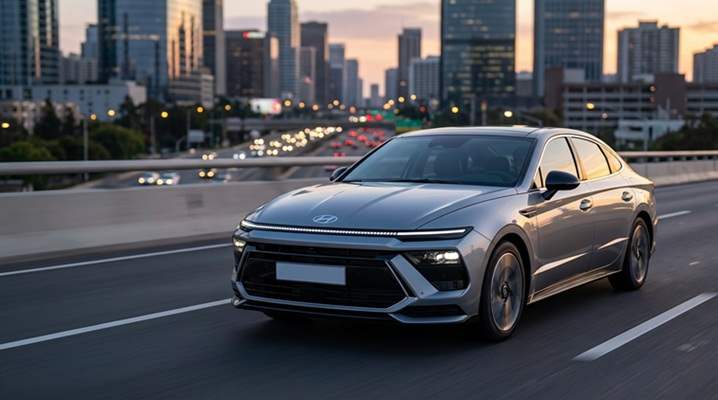
Expected to debut in South Korea in the second half of 2026 before reaching global markets (including the US as a 2027 model year), this Sonata builds on the current generation’s strengths while introducing transformative updates. Industry reports and development confirmations point to a significant evolution rather than a minor refresh.
From the new “Art of Steel” design language to the debut of Pleos OS with Gleo AI, enhanced hybrid efficiency, continued H-TRAC AWD availability, and a more premium cabin experience, the 2027 Hyundai Sonata positions itself as a serious alternative to the Toyota Camry, Honda Accord, and Kia K5.
Here’s everything you need to know about the upcoming 2027 Hyundai Sonata — including details and forward-looking analysis that go beyond typical previews.
Exterior Design: Sharp, Structured Confidence
The current Sonata’s fluidic, coupe-like silhouette has been a style leader, but the 2027 model adopts Hyundai’s emerging “Art of Steel” design philosophy. First showcased on the new Nexo fuel-cell vehicle, this language emphasizes structural honesty, sharp surfacing, bold proportions, clean lines, and confident forms that highlight the inherent strength and precision of steel.
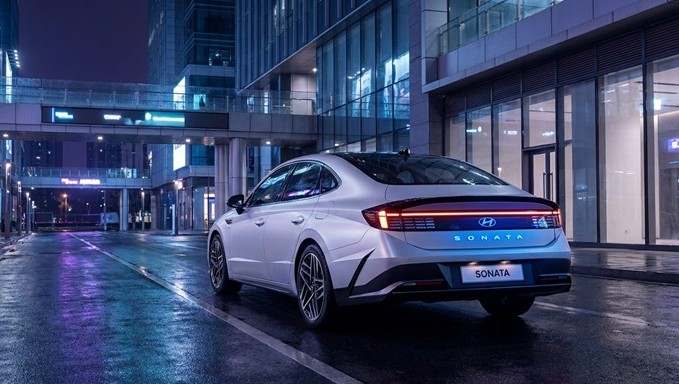
Expect all-new front and rear fascias. The front will likely feature a wider, more assertive grille or lighting signature — possibly incorporating pixelated light patterns seen on recent Hyundais like the Santa Fe — along with a “Seamless Horizon Lamp” wide LED light bar. Rear lighting is expected to prominently display “SONATA” lettering for instant recognition.
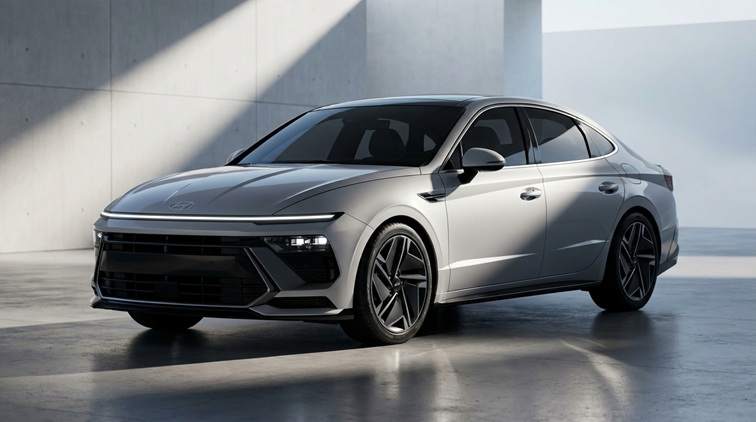
Reports vary on overall proportions: some suggest a shift toward a more boxy, upright stance inspired by the 1985 first-generation Sonata for a retro-modern appeal, while others indicate the core swoopy four-door sports-coupe silhouette will be retained but with more angular, structured detailing. In reality, the production car will likely blend both — a distinctive, head-turning presence that feels more substantial and premium than the current model’s sleek but softer lines.
This isn’t just aesthetic evolution. The new surfacing and lighting should improve perceived quality and road presence while maintaining strong aerodynamics. Camouflaged prototypes spotted in California confirm a midsize footprint with a distinct C-pillar window line that separates it clearly from the smaller Elantra.
While many rivals stick to evolutionary styling, Hyundai’s Art of Steel gives the 2027 Hyundai Sonata a bold, almost architectural character. It could appeal to buyers tired of anonymous sedans and wanting something that stands out in a parking lot full of crossovers — without resorting to the aggressive aggression of performance concepts.
Powertrain & Hybrid: Refined Efficiency, Performance Options
The 2027 Hyundai Sonata is expected to carry over and refine the current proven powertrains rather than introduce an all-new engine family, with meaningful efficiency and refinement gains.
Core gasoline engine: The 2.5-liter inline-four (approximately 191 hp) paired with an 8-speed automatic. Front-wheel drive is standard; H-TRAC all-wheel drive remains available on select trims — a feature Hyundai introduced on the Sonata in recent years and one that few direct rivals offer in this class.
N Line performance variant: The turbocharged 2.5-liter four-cylinder (around 290 hp) with sportier tuning, larger wheels, and enhanced chassis components. Reports suggest it could receive modest power or torque increases alongside sharper responses.
Hybrid powertrain (the flagship): The current 2.0-liter hybrid system (gas + electric motors for roughly 192 hp combined) delivers class-competitive efficiency (up to 47 city / 56 highway / 51 combined mpg on certain trims). For 2027, expect refinements delivering efficiency improvements exceeding 11% in some scenarios, smoother power delivery, and possibly expanded electric-only capability. A plug-in hybrid (PHEV) variant is also anticipated in some markets for those wanting more electric range.
No battery-electric version is expected — Hyundai already covers that space with the Ioniq 6.
AWD features and real-world capability: The H-TRAC system on gas models provides confident all-weather traction with minimal efficiency penalty. It intelligently distributes torque and can operate in FWD mode for better fuel economy when conditions allow. On the 2027 model, expect calibration tweaks for even more seamless transitions and possibly availability on more trims or improved integration with the hybrid system in later phases. This makes the Sonata genuinely usable year-round in snow-belt regions — a practical advantage over FWD-only rivals.
Unique insight few previews cover: By keeping multiple powertrains (including a potent N Line and AWD) while making hybrid the hero, Hyundai offers more buyer choice than the Camry (now heavily hybrid-focused) or Accord. The Sonata can be a comfortable daily efficient hauler, a sporty driver’s car, or a confident all-weather sedan — all under one nameplate.
Interior & Pleos OS + Gleo AI Technology
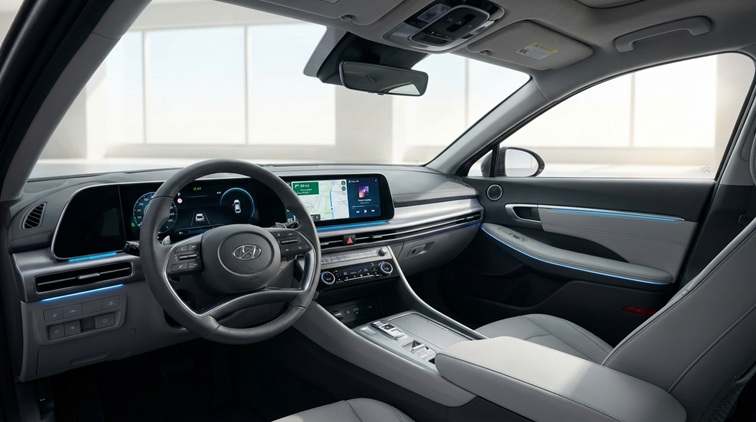
Step inside and the biggest story unfolds. The 2027 Hyundai Sonata is widely expected to be among the first (or the first) vehicles to receive Hyundai’s new Pleos Connect infotainment platform.
- A large 12.3-inch curved display (or new 16:9 aspect ratio immersive screen) with smartphone-like UI, split-view, and multi-window functionality.
- Pleos Playground — an app store that lets owners download third-party applications directly to the vehicle, with over-the-air (OTA) updates keeping the system fresh for years.
- Gleo AI — Hyundai’s advanced in-car voice assistant powered by a large language model (LLM). Unlike basic voice commands, Gleo supports natural, multi-step, context-aware conversations (“Find a quiet scenic route to the airport, adjust the climate to 72°F, and tell me the weather there”). It handles navigation, climate, vehicle settings, web searches, and owner’s manual queries like a knowledgeable companion. It starts vehicle-focused but expands via OTA.
- Customizable digital instrument cluster and possibly more physical controls alongside the touchscreen for a hybrid tactile-digital experience.
- Enhanced Level 2.5 (and progressing toward L2+) autonomous driving features with improved camera/radar fusion and AI decision-making. Hyundai aims for broader L2+ deployment by the end of 2027.
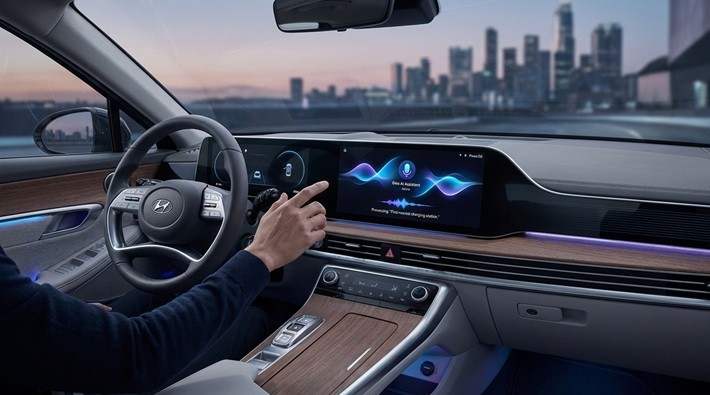
The cabin itself should feel more premium with higher-quality materials, better sound insulation, ambient lighting, supportive seating, and thoughtful ergonomics. Expect carryover or upgraded comfort features such as dual-zone climate, heated/ventilated seats, wireless charging, and available Bose audio.
Pleos + Gleo transforms the Sonata from a static appliance into a software-defined vehicle that improves over time. The app ecosystem and conversational AI reduce driver distraction while making ownership feel modern and personalized — something traditional automakers and even some rivals have been slower to deliver at this price point.
2027 Hyundai Sonata Specs
Powertrain & Performance Comparison
| Specification | Gas (Standard) | Hybrid | N Line (Performance) |
|---|---|---|---|
| Engine | 2.5L Inline-4 | 2.0L Inline-4 + Electric Motor | 2.5L Turbo Inline-4 |
| Horsepower | ~191 hp | ~192 hp combined | ~290 hp |
| Torque | ~181 lb-ft | ~181 lb-ft (gas) + electric assist | ~311 lb-ft |
| Transmission | 8-speed Automatic | 6-speed Automatic | 8-speed Dual-Clutch (DCT) |
| Drivetrain | FWD / Available H-TRAC AWD | FWD | FWD |
| Fuel Economy (Est.) | 28/38/32 mpg (FWD) 24/33/27 mpg (AWD) | Up to 47/56/51 mpg | 23/32/27 mpg |
| 0-60 mph (Est.) | ~7.5–8.0 seconds | ~7.5–8.0 seconds | ~5.5–6.0 seconds |
| Top Speed | Electronically limited | Electronically limited | Electronically limited |
| Category | New / Updated Features |
|---|---|
| AI Assistant | Gleo AI – Advanced LLM-powered voice assistant with natural conversation & context awareness |
| App Ecosystem | Pleos Playground – Download third-party apps directly to the car + OTA updates |
| AWD | H-TRAC All-Wheel Drive available on gas models |
Market Position, Rivals
In a market where many brands have de-emphasized or discontinued sedans, Hyundai’s commitment to the Sonata is refreshing. The 2027 model slots between the compact Elantra and the larger Grandeur/Azera, offering a sweet spot of space, efficiency, technology, and driving enjoyment at a more accessible price than luxury badged alternatives.
Main rivals:
- Toyota Camry — Excellent reliability and now hybrid-heavy; more conservative styling and fewer powertrain choices.
- Honda Accord — Strong dynamics and refinement but less flashy tech and no standard AWD option in most trims.
- Kia K5 — Sportier sibling with similar platform DNA; the Sonata often feels more comfort-oriented with bolder tech ambitions.
- Nissan Altima and others for value comparison.
The Sonata’s advantages: distinctive new design language, class-leading infotainment/AI, hybrid efficiency leadership potential, AWD availability, and a performance-oriented N Line. It directly challenges the notion that sedans must be boring or outdated.
Pricing expectation: Starting around $29,000 (similar to current entry point with inflation), with well-equipped hybrids and N Lines climbing into the mid-$30,000s to low-$40,000s. Strong value positioning remains a Hyundai hallmark.
Expected Upgrades & Buying Advice
Compared to the 2026 model (itself a refreshed version with curved displays and H-TRAC introduction), the 2027 Hyundai Sonata delivers:
- Complete exterior redesign with new design language and lighting signatures.
- Major technology leap via Pleos OS and Gleo AI.
- Refined powertrains with hybrid efficiency gains and possible PHEV addition.
- Enhanced safety/autonomy features and overall polish.
Trims will likely include SE, SEL, Limited, N Line, and dedicated Hybrid variants (Blue/SEL/Limited).
Who should wait for the 2027 Sonata? Buyers who want the latest tech, distinctive styling, strong efficiency without going full EV, or all-weather capability in a sedan package. Those who love the current Sonata’s value and comfort will find meaningful upgrades; shoppers prioritizing maximum electric range might still consider the Ioniq 6 or wait for future electrified options.
The 2027 Hyundai Sonata isn’t just another redesign — it’s Hyundai doubling down on the sedan segment with genuine innovation. The Art of Steel design brings visual gravitas, the hybrid powertrain (and AWD) delivers real-world versatility, and Pleos + Gleo AI positions it as a technology leader in its class.
While official full specifications, exact pricing, and final MPG figures will arrive closer to launch, the direction is clear: this is a more confident, tech-forward, and distinctive Sonata than ever before.
If you’re in the market for a midsize sedan in 2026–2027, the new Sonata deserves a spot at the top of your consideration list. It proves that with bold design, smart powertrain choices, and revolutionary software, the traditional sedan still has a vibrant future.
Stay tuned for official reveals, spy shot analysis updates, and first-drive impressions as more information emerges. The 2027 Hyundai Sonata looks poised to turn heads — and win hearts — in a segment that sorely needs it.
Related Post