
The full-size SUV segment in America has long been dominated by vehicles that force buyers to choose raw capability or modern efficiency, luxury or genuine off-road DNA, premium pricing or real-world versatility. The 2027 Jeep Wagoneer (and its more luxurious Grand Wagoneer sibling) is one of the smartest powertrain moves in the segment — a range-extended electric vehicle (REEV) hybrid that pairs massive power and serious towing with the freedom to drive like an EV most of the time without the anxiety that plagues pure battery vehicles on long American road trips.
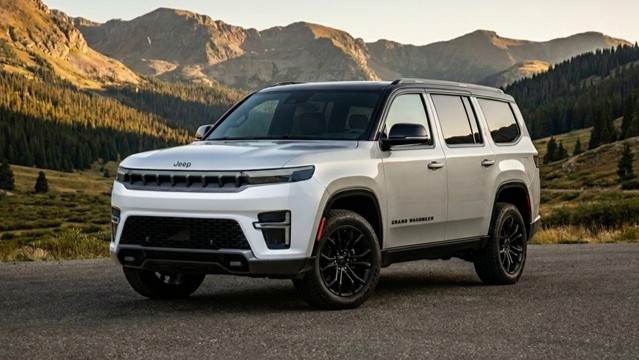
While spy shots and engineering mules have circulated, and Jeep has confirmed key details through partners and media, this isn’t just another refresh. It’s a meaningful evolution that respects what U.S. buyers actually do with these trucks: haul kids and gear across state lines, tow boats or campers to lakes and mountains, navigate snowy Midwest winters or dusty Western trails, and still want something that feels special in the driveway.
No-fluff breakdown of what’s new, what it means for real-world ownership, and why the 2027 Jeep Wagoneer Hybrid deserves a serious look if you’re cross-shopping Tahoe, Expedition, Sequoia, or Navigator territory.
Exterior Design- Sharper and More Angular
The current Wagoneer already has strong road presence with its upright stance, broad shoulders, and iconic seven-slot cues blended into a modern luxury package. For 2027 Jeep Wagoneer, expect a meaningful but evolutionary update rather than a full reinvention.
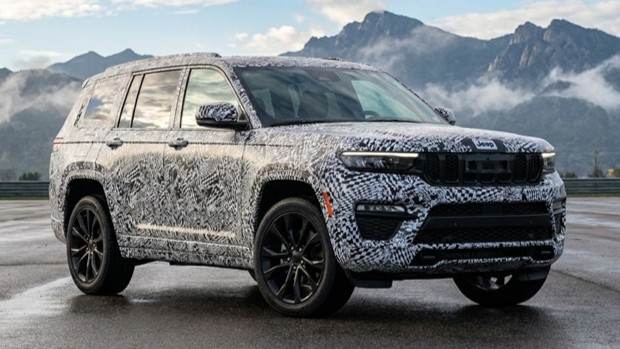
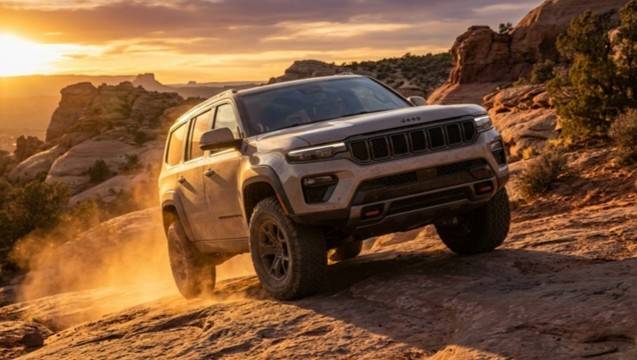
Spy shots of camouflaged 2027 Jeep Wagoneer 4xe REEV engineering mules near Chelsea Proving Grounds show updated front and rear fascias with styling clearly inspired by the Wagoneer S (the smaller all-electric model). New headlamp designs, sharper lower fascia accents, and a return to a prominent “Jeep” badge (instead of block-letter Wagoneer branding on some prototypes) signal a deliberate reconnection to core Jeep identity.
Expect a slightly more angular front end — tighter lines around the grille and lighting signatures that look more aggressive and contemporary while keeping the tall, commanding proportion that makes these vehicles feel at home on Interstates and ranch roads alike. The body-on-frame architecture (updated STLA Frame with an 8-inch wider section to package the central battery) remains, preserving the durability and towing foundation Americans expect.
Wheel and tire options will likely expand, with larger alloys and all-terrain or highway-terrain rubber depending on trim. Color palette should carry over popular metallics and add fresh options that pop against the more chiseled bodywork. The overall effect is a vehicle that looks more premium and cohesive next to a loaded Expedition or Denali, yet still distinctly Jeep. It will still turn heads in suburban driveways and trailheads without looking like it’s trying too hard.
2027 Jeep Wagoneer Hybrid REEV Powertrain
This is where the 2027 model separates itself. Jeep is introducing a range-extended electric vehicle (REEV) — often called a series hybrid — as the halo powertrain, particularly for higher Grand Wagoneer trims.
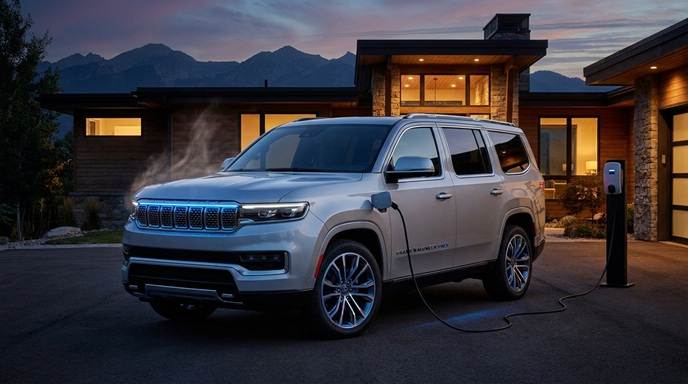
Here’s how it actually works (and why it’s smarter for U.S. buyers than many realize):
- Dual electric drive modules (one front, one rear) provide all-wheel drive and propulsion. The wheels are always driven by electric motors.
- A 3.6-liter Pentastar V6 (or closely related variant per some reports) acts only as a generator. It never directly drives the wheels. It runs at efficient RPMs when needed to charge the ~92 kWh battery pack or provide supplemental power under heavy load.
- Plug-in capability with DC fast charging support means you can charge at home, work, or public stations for daily electric driving.
- Total system output: Approximately 647 horsepower and 610–620 lb-ft of combined torque.
- Performance target: 0-60 mph in about 5.0 seconds — shockingly quick for a full-size, three-row, body-on-frame SUV.
- Expected range: Significant all-electric range (early estimates and similar platforms suggest 100–150+ miles depending on conditions and driving style) plus a total range approaching 500 miles when the generator kicks in.
Why this matters more in America than a conventional hybrid or pure EV:
Most full-size SUV buyers do a mix of suburban commuting, school runs, weekend adventures, and occasional long highway hauls. A pure EV still carries range anxiety on cross-country trips or when towing in remote areas (think stretches of I-80 in Wyoming or rural South). A traditional hybrid like the Sequoia’s i-FORCE MAX improves efficiency but still relies on the gas engine for propulsion a lot of the time.
The REEV approach gives you:
- Silent, instant-torque electric driving for daily use and light off-roading (creeping through campgrounds or wildlife areas without disturbing the peace).
- The ability to fill up at any gas station when you need to extend range dramatically.
- Generator that can run efficiently while the motors handle variable loads — excellent for sustained towing or mountain grades.
- Strong low-end torque for confident merging, passing, and launching heavy trailers.
Real-world scenarios where this shines: Towing a 7,000–9,000 lb boat or camper from the Midwest to a lake in the Rockies. The electric motors deliver smooth, strong pull from a stop, while the generator maintains battery charge without the engine lugging or working hard. Or daily driving in a snowy Northern state where instant AWD torque and the option to precondition the battery/cabin while plugged in make winter mornings far less stressful.
Dealer and early reports also mention 50+ MPGe ratings in certain modes — a meaningful improvement over the current ~17–20 mpg combined of the gas Hurricane I6.
The standard gas 3.0L twin-turbo Hurricane I6 (420 hp / 468–469 lb-ft) will almost certainly continue in lower trims with the familiar 8-speed automatic, giving buyers a choice between maximum capability/range-extender efficiency or proven simplicity.
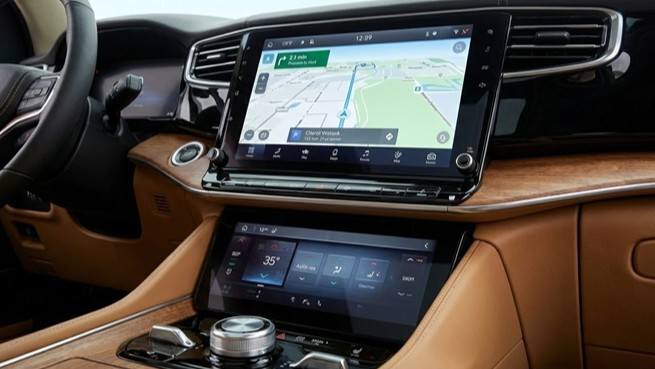
Interior, Comfort & Technology
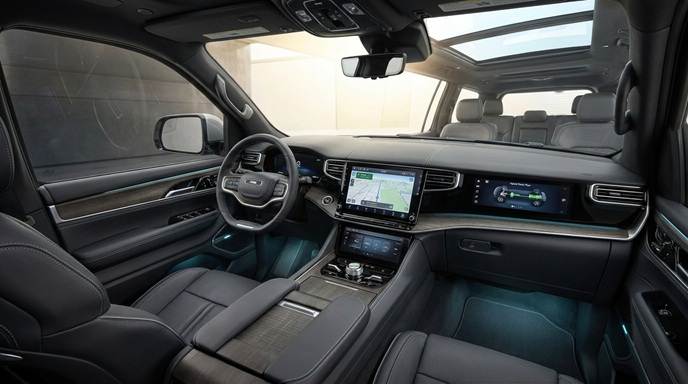
Inside, the 2027 models build on the already strong foundation with larger, higher-resolution Uconnect screens (likely a bigger driver display paired with a wide central touchscreen), cleaner graphics, and improved smartphone integration. Expect wireless Apple CarPlay/Android Auto, over-the-air software updates, and more intuitive menus.
The cabin remains one of the more inviting in the class — quiet, well-padded, and available with premium leather, open-pore wood or aluminum trim, ambient lighting, and massaging/heated/ventilated front seats on upper trims. Third-row space is genuinely usable for adults on shorter trips (a weak point in some rivals), and cargo capacity behind the third row is competitive for the segment.
Hybrid-specific touches will likely include:
- Energy flow visualizations and driving mode selectors that prioritize electric-only, hybrid, or generator-assist.
- Stronger emphasis on cabin pre-conditioning via the app or while plugged in.
- Possibly enhanced noise insulation to highlight the quiet electric operation.
Safety tech should expand with more standard or available advanced driver aids: adaptive cruise with stop-and-go, lane centering, automatic emergency braking with pedestrian/cyclist detection, 360° camera with trailer-specific views, blind-spot monitoring with rear cross-traffic alert, and possibly hands-free highway driving assist on higher trims.
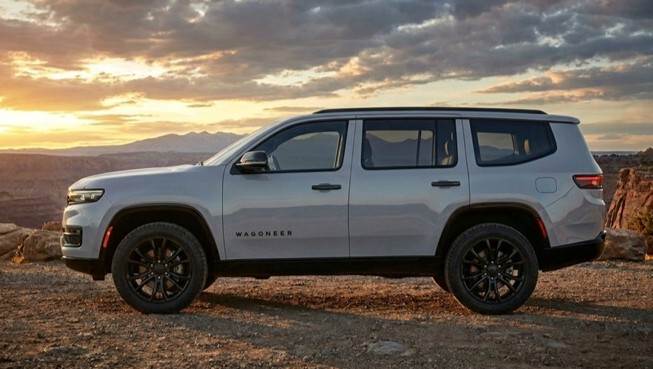
AWD Capability, Off-Road Ability & Towing
Jeep hasn’t abandoned its roots. The Wagoneer family retains Quadra-Lift air suspension (adjustable ride height for loading, highway efficiency, or serious clearance), Quadra-Drive advanced 4×4 systems with electronic limited-slip or locking differentials on higher trims, and multiple Selec-Terrain drive modes (including Rock, Mud/Sand, Snow, and more).
The REEV setup actually enhances certain aspects:
- Instant torque from the electric motors improves low-speed control and traction on slippery or uneven surfaces.
- Precise torque vectoring between front and rear (and potentially side-to-side) can aid stability while towing or off-road.
- The independent rear suspension updates (tied to the wider frame for battery packaging) should improve on-road ride quality without sacrificing capability.
Towing capacity is expected to remain strong — current models are rated up to 10,000 lbs when properly equipped. The hybrid’s electric torque should make launching and maintaining speed with heavy loads feel effortless, while the generator provides sustained power. Real-world towing range and efficiency will be key metrics once independent tests emerge, but early indications suggest this could be one of the more capable hybrid full-size SUVs for serious haulers.
2027 Jeep Wagoneer Specs
| Specification | Wagoneer (Gas) | Grand Wagoneer Hybrid (REEV) |
|---|---|---|
| Powertrain | 3.0L Twin-Turbo Inline-6 | Dual Electric Motors + 3.6L V6 Generator (Range Extender) |
| Horsepower | 420 hp | 647 hp combined |
| Torque | 468 lb-ft | ~610–620 lb-ft combined |
| Drivetrain | Rear-Wheel Drive (RWD) / 4WD | Dual-Motor All-Wheel Drive (standard) |
| Transmission | 8-Speed Automatic | Single-speed electric drive units |
| 0–60 mph (estimated) | 6.0 – 6.5 seconds | ~5.0 seconds |
| Electric Driving Range | N/A | Significant (est. 100–150+ miles) |
| Total Driving Range | ~400–450 miles | Up to ~500 miles |
| Fuel Economy (est.) | 17–20 mpg combined | 50+ MPGe (mixed use) |
| Battery | N/A | ~92 kWh |
| Charging | N/A | DC Fast Charging + Level 2 |
| Expected Starting Price (est.) | $65,000 – $80,000+ | $80,000 – $95,000+ |
Market Position, Rivals & Pricing
The Wagoneer/Grand Wagoneer sits in a sweet spot: more premium and off-road-capable than a base Tahoe or Expedition, more adventurous and “American” than a Navigator or Escalade, and more luxurious than a Sequoia while offering a smarter electrification path than most rivals.
Key rivals and differentiators:
- Chevrolet Tahoe/Suburban / GMC Yukon: Often win on value, space, and mainstream appeal. The Wagoneer fights back with superior off-road hardware and now a more advanced hybrid strategy.
- Ford Expedition: Strong tech and towing; Tremor package adds capability. Jeep counters with air suspension standard on many trims and the unique REEV efficiency story.
- Toyota Sequoia: The current hybrid benchmark for efficiency and reliability. The Wagoneer Hybrid should offer more electric-only range potential and far stronger off-road credentials.
- Lincoln Navigator / Cadillac Escalade: More opulent in some areas. The Jeep delivers authentic capability and a distinct brand identity at a (likely) more accessible price.
Gas models likely starting in the mid-to-high $60,000s to low $80,000s depending on trim and configuration. The flagship Grand Wagoneer Hybrid is expected in the $80,000–$95,000 range. Trims are simplifying (Limited, Summit, and hybrid-focused variants), which should make shopping easier.
Availability: Late 2026 as 2027 model-year vehicles.
Who Should Buy the 2027 Jeep Wagoneer (Especially the Hybrid)?
If you want a full-size SUV that can genuinely do it all — comfortable daily driver, confident highway cruiser, serious tower, and weekend trail explorer — without forcing you into pure-EV compromises, the 2027 Jeep Wagoneer Hybrid is worth waiting for. It’s particularly compelling for:
- Families who road-trip or tow regularly.
- Buyers in regions with cold winters or variable charging infrastructure.
- Anyone who values the Jeep badge and off-road heritage alongside modern efficiency and luxury.
The 2027 Jeep Wagoneer isn’t trying to be the most efficient or the most luxurious or the cheapest. It’s trying to be the most complete full-size American SUV — and the new REEV powertrain, combined with thoughtful design and capability updates, makes a very strong case that it’s finally getting there.
Ready to see how it stacks up against your current shortlist? Drop your must-have features or use case in the comments — towing weight, typical trip length, off-road needs, or budget — and I’ll help narrow it down further. The full-size game just got a lot more interesting.
Related Post