
The compact sedan segment in the United States has long been dominated by the Honda Civic and Toyota Corolla, but the 2027 Hyundai Elantra (eighth-generation, codenamed CN8) is arriving with a generational leap that could shift the balance. With its official global debut just days away on June 26, 2026, at the Busan International Mobility Show in South Korea, early spy shots, prototype testing, and platform details reveal a dramatically different vehicle.
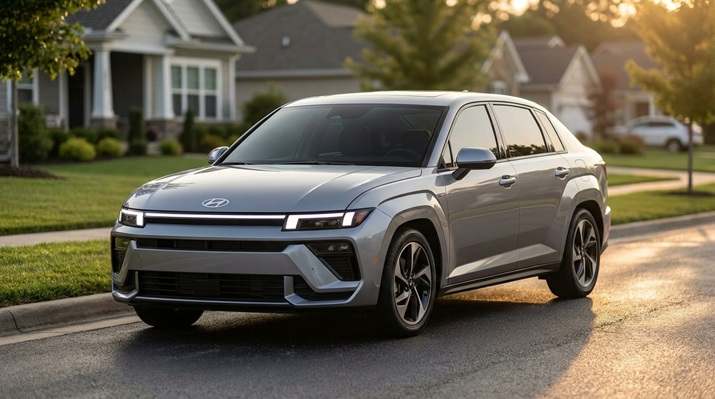
This isn’t a mild refresh. Hyundai is delivering a muscular, tech-forward redesign that abandons the current generation’s fluidic lines for a sharper, more premium, and upright stance. Expect a next-generation hybrid powertrain, a revolutionary interior with massive screens and advanced AI, and meaningful size increases for better comfort on American highways and family hauls.
Here’s the most comprehensive, up-to-date for U.S. buyers — covering design, powertrains (including the new hybrid), interior/tech, practicality, market positioning, rivals, and what truly sets the 2027 Hyundai Elantra apart.
Release Timeline, Pricing & Market Positioning
The 2027 Hyundai Elantra will launch in South Korea in mid-to-late summer 2026, with U.S. dealership arrivals expected in the first half of 2027 (most likely spring or early summer). Production-ready models should reach North America as a 2027 model-year vehicle.
Pricing hasn’t been confirmed, but expect a meaningful increase over the current 2026 Elantra (which starts around $22,625 for the SE). Industry estimates point to a starting price in the $24,000–$26,000 range for base gas models, with well-equipped hybrids landing between $26,000 and $30,000. Higher trims, N Line, and loaded hybrids could push toward the mid-$30,000s.
Why this matters for U.S. buyers: Hyundai continues to bet big on sedans despite the crossover craze. The Elantra has been one of the brand’s strongest volume sellers, and this redesign aims to attract buyers who want more style, technology, and efficiency than a basic Corolla but without jumping to a pricier compact crossover. Hyundai’s industry-leading 10-year/100,000-mile powertrain warranty remains a massive advantage in the used-car-conscious American market.
Exterior Design- Muscular & Premium
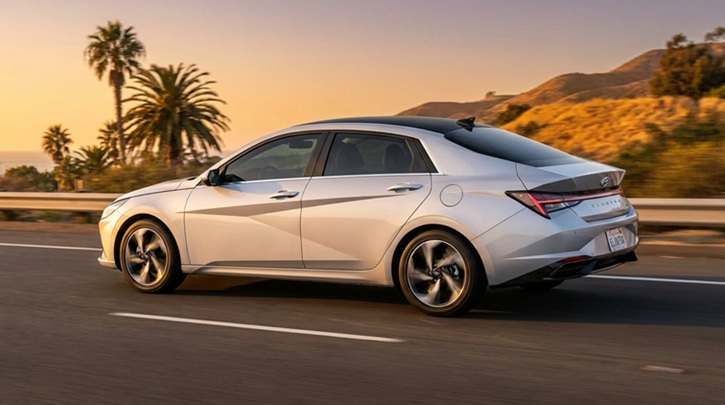
Spy photos from testing in the U.S. and Europe show the 2027 Hyundai Elantra ditching the current generation’s wedge-shaped fastback profile and parametric slashes. In its place is a more mature, powerful, and deliberately upright design language that feels closer to a mini executive sedan than a youthful compact.
- Front end: Blunted and squared-off nose with strong Sonata influence. A prominent wide H-shaped light bar dominates the daytime running lights, while main headlight units sit lower in the bumper. The result is a broader, more planted face.
- Side profile: Upright C-pillar (retro-modern influence from the Grandeur), muscular rear haunches, flatter roofline, and straighter beltline. Windows appear more rectangular. Overall stance looks lower and wider despite the more formal silhouette.
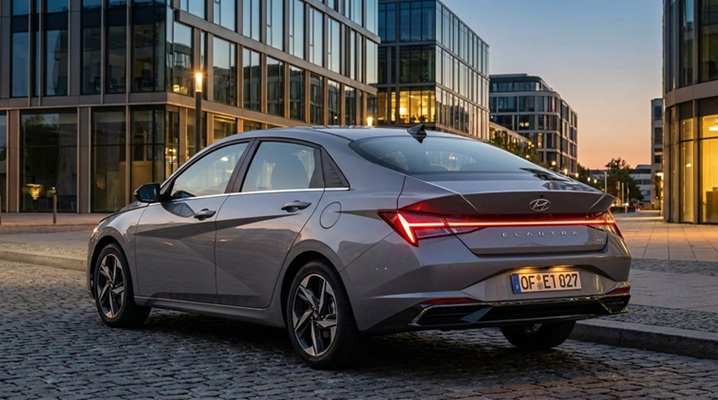
- Rear: Slim, full-width LED taillights forming an H-shape or widening visual effect. Angular tailgate treatment adds modernity.
- Dimensions: Length grows to approximately 4,765 mm (187.6 inches) — about 55 mm longer — with width around 1,855 mm (73 inches) and wheelbase extended by 30 mm. The extra size translates to better presence on the road and more interior room.
One particularly interesting detail from recent European spy shots: prototypes were caught towing a small trailer. While the current Elantra (and its i30 sedan counterpart in other markets) has limited or no official U.S. towing rating, this testing suggests Hyundai may introduce light towing capability — potentially useful for small utility trailers, jet skis, or camping gear common among American buyers.
The overall effect is a sedan that looks more expensive and substantial than its price point suggests. It moves the Elantra upmarket visually while staying true to Hyundai’s “Sensuous Sportiness” roots with sharper execution.
Interior & Technology
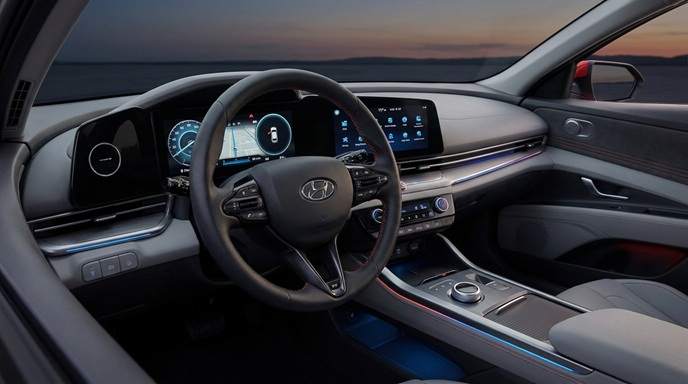
The cabin represents one of the biggest upgrades. Hyundai is moving to a new Software-Defined Vehicle (SDV) architecture with the Pleos Connect infotainment system (Android Automotive-based).
- Screens: A slim 9.9-inch digital instrument cluster positioned high on the dashboard (close to the base of the windshield for better visibility) paired with a massive central touchscreen — reports vary between 14.6-inch and 17-inch depending on trim. Lower trims may get a 12.9-inch unit.
- Steering wheel: Distinctive squircle (square-rounded) design with a stylized “H” logo.
- Controls: Smart hybrid approach — physical buttons and knobs retained for climate and key audio functions, while many other controls live on the touchscreen or steering wheel. This avoids the frustrating full-touch minimalism seen in some rivals.
- AI & Connectivity: Gleo AI voice assistant handles complex, multi-step natural language commands. Expect robust native app support, over-the-air updates, seamless wireless Apple CarPlay/Android Auto, and advanced connectivity features.
- Dashboard layout: Cleaner, slimmer, and sharper — heavily inspired by the IONIQ 3 electric crossover. Higher-quality materials and tighter fit/finish expected throughout.
For American drivers, this interior setup shines on long highway trips. The high-mounted cluster reduces eye movement, the large screen handles navigation and media effortlessly, and Gleo AI could make voice control genuinely useful for hands-free operation during commutes or road trips.
Representative interior view showing the high-mounted slim digital cluster, large central touchscreen, and modern control layout expected in the 2027 Hyundai Elantra.
Powertrain- Next-Gen Hybrid
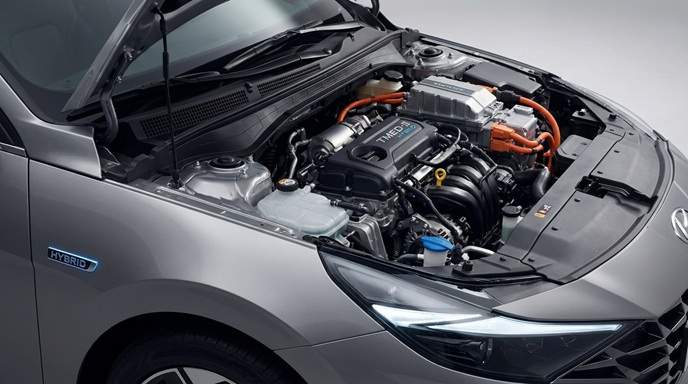
The 2027 Hyundai Elantra will offer both traditional gasoline and hybrid powertrains. No all-electric version is expected at launch (an EV could arrive later in the generation).
- Base 2.0-liter naturally aspirated four-cylinder (carryover or lightly updated) with Intelligent Variable Transmission (IVT). Expect similar output to today’s ~147 hp with strong real-world efficiency.
- N Line / sportier variants: Likely a turbocharged 1.6-liter four-cylinder (around 200+ hp) with a dual-clutch transmission for sharper responses.
- Hybrid: The star of the show — Hyundai’s next-generation TMED-II hybrid system (already appearing in models like the 2026 Palisade Hybrid). It uses a 1.6-liter gasoline engine paired with two electric motors (approximately 17 hp starter/systems motor + 72 hp propulsion/regenerative motor).
What’s new and better:
- Smoother, more responsive power delivery with stronger low-end torque feel.
- Improved thermal efficiency and overall fuel economy (current Elantra Hybrid achieves up to ~54 mpg combined; the new system aims to match or exceed this while feeling more powerful).
- Stay Mode: Run infotainment and climate systems on battery power for up to an hour with the engine off — perfect for waiting in school pickup lines or hot summer traffic.
- V2L (Vehicle-to-Load): Bi-directional power capability to run external devices, camping gear, or even small appliances from the hybrid battery.
No AWD option is expected — the Elantra remains front-wheel-drive focused for maximum efficiency. However, spy reports and platform details suggest an upgraded suspension (possibly with a more sophisticated rear setup) for better ride quality and handling balance.
Real-world U.S. testing will be key, but early indications point to a hybrid that feels more engaging on highways and more refined around town than the current generation.
Ride, Handling & Practical Upgrades
The increased wheelbase and overall length should deliver noticeable gains in rear legroom and highway stability — important for taller American drivers and families. Expect a more composed ride thanks to suspension refinements, with the N Line offering sportier tuning.
The trailer-testing prototypes hint at possible light towing capacity (outgoing related models can tow over 2,000 lbs in some markets). If offered even at 1,000–1,500 lbs, it would be a rare and useful feature in this class for weekend warriors.
Safety equipment will almost certainly include a full suite of advanced driver aids, with expectations for strong IIHS Top Safety Pick+ and 5-star NHTSA ratings, plus possible Level 2+ semi-autonomous driving features enabled by the new SDV platform.
2027 Hyundai Elantra Specs
Powertrain Options
| Powertrain | Engine | Horsepower (est.) | Torque (est.) | Drivetrain |
|---|---|---|---|---|
| Base (SE / SEL) | 2.0L Inline-4 | 147 hp | 132 lb-ft | FWD |
| N Line | 1.6L Turbo Inline-4 | 201+ hp | ~195 lb-ft | FWD |
| Hybrid | 1.6L Inline-4 + TMED-II Hybrid | ~145–160 hp combined (improved) | Stronger low-end | FWD |
Estimated Fuel Economy (EPA)
| Powertrain | City | Highway | Combined |
|---|---|---|---|
| 2.0L Gas | 30 mpg | 40 mpg | 34–35 mpg |
| Hybrid | 49–51+ mpg | 52–58+ mpg | 50–54+ mpg |
Rivals & Why the 2027 Elantra Stands Out
Direct competitors:
- Honda Civic (including hybrid): Excellent refinement and driving dynamics. The Elantra counters with bolder styling, more standard tech in many trims, and superior warranty.
- Toyota Corolla (hybrid): Legendary reliability and resale. Hyundai fights back with dramatically more stylish design, stronger tech/AI features, and often better standard equipment.
- Mazda3: Premium driving feel and upscale interior. The Elantra undercuts it significantly on price while offering more rear space and advanced hybrid efficiency.
- Volkswagen Jetta: Value-focused but feels dated compared to the tech-heavy new Elantra.
- Kia K4: Corporate sibling with different (more radical) styling; the Elantra offers a more conventional yet still edgy alternative.
| Trim Level | Expected Starting Price |
|---|---|
| SE / Base | $24,000 – $25,500 |
| SEL / Mid | $26,000 – $28,000 |
| N Line | $28,500 – $30,500 |
| Hybrid | $26,500 – $30,000+ |
Unique advantages for U.S. buyers:
- Design bravery — Stands out in a sea of conservative compacts.
- Tech leadership — Pleos + Gleo AI and large screens feel next-gen.
- Hybrid refinement — TMED-II + V2L + Stay Mode deliver practical innovation.
- Value + warranty — More features and peace of mind per dollar.
- Practicality edge — Extra size, potential light towing, and strong efficiency.
The 2027 Hyundai Elantra represents Hyundai’s most ambitious attempt yet to elevate the compact sedan. By combining a muscular new design language, a significantly upgraded hybrid powertrain, and a genuinely modern digital interior, it positions itself as a stylish, efficient, and feature-packed alternative that punches above its price class.
For American drivers seeking a daily commuter with weekend versatility, a family hauler that doesn’t feel boring, or simply the best value in the segment, the new Elantra deserves a close look once official specs and pricing drop after the June 26 reveal.
It won’t replace crossovers for everyone, but for those who still appreciate the efficiency, lower center of gravity, and easier parking of a well-executed sedan, the 2027 Elantra could easily become the segment leader. Stay tuned — full specifications, official images, and driving impressions are coming very soon. The compact sedan just got a lot more interesting.
Related Post