
The 2027 Hyundai Santa Fe is shaping up to be one of the most significant mid-cycle refreshes in the three-row SUV segment. Building on the bold, boxy fifth-generation design that debuted in 2023 and quickly became a family favorite, Hyundai is addressing owner feedback with targeted updates that go far beyond cosmetic tweaks. Spy shots from Arctic Circle cold-weather testing in Finland and sunny California roads, combined with Hyundai’s 2025 CEO Investor Day insights, reveal a vehicle that refines its polarizing styling, fixes long-standing drivability complaints, and introduces groundbreaking technology like the PLEOS Connect infotainment system and North America’s first Santa Fe EREV (extended-range electric vehicle).
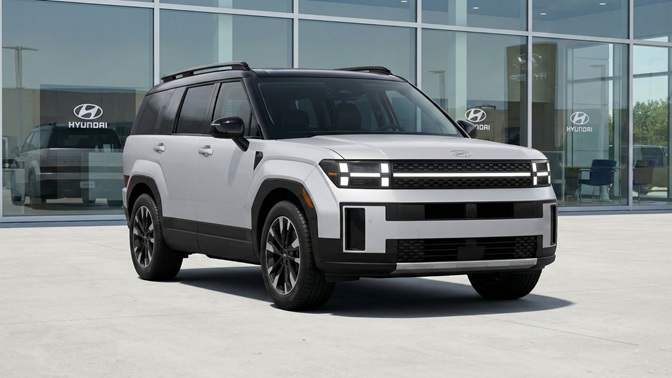
This isn’t a full redesign—it retains the core MX5 platform, three-row seating, and rugged proportions that made the current Santa Fe a bestseller. But the changes feel substantial: sharper looks, a driver-focused cabin, smoother powertrains, and an innovative electrified option that bridges gas and full EV worlds. Expected to debut late 2026 as a 2027 Hyundai Santa Fe model (with U.S. sales starting around then), pricing should range from approximately $35,000 to $55,000 depending on trim and powertrain.
Exterior Design: Sharper, Less Polarizing
The current Santa Fe’s bold, upright “boxy” aesthetic won hearts for its Land Rover Defender-meets-modern-SUV vibe, but critics and some owners called out the low-mounted “dog-bone” taillights and busy front end as overly polarizing. Hyundai listened.
Spy shots show heavy camouflage focused only on the front and rear fascias, confirming the signature squared-off body sides, roofline, and overall silhouette stay intact. The big upgrades create a cleaner, more premium stance without losing the rugged appeal.
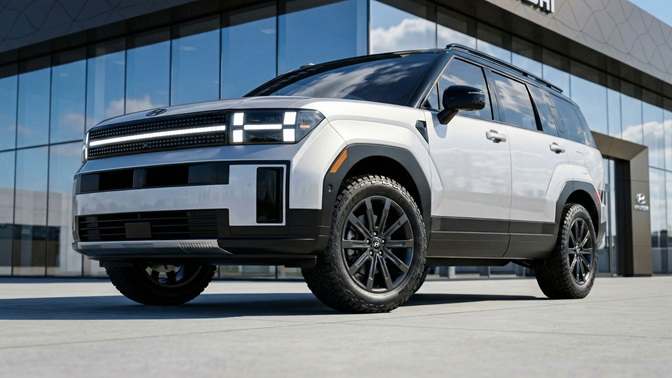
Front End Changes New slimmed-down main headlights sit lower in the bumper for a more traditional SUV look. Vertical LED daytime running light (DRL) strips run along the outer edges, connected by a full-width horizontal LED bar that forms a prominent H-shaped light signature—echoing Hyundai’s evolving design language seen on the refreshed Tucson. The grille is refined: a split horizontal upper section with layered H-shaped inserts and a simpler, uniform mesh lower section. The bumper is more cohesive and squared-off, with less clutter.
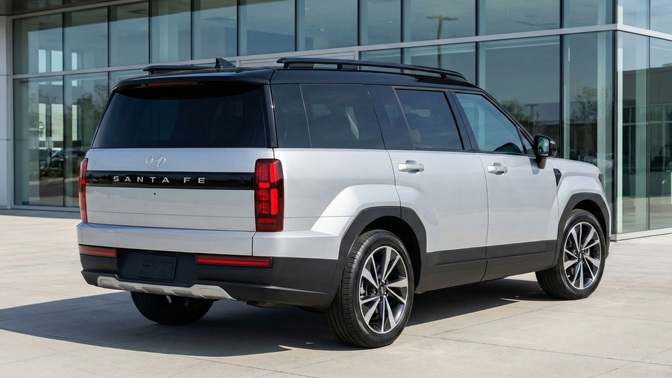
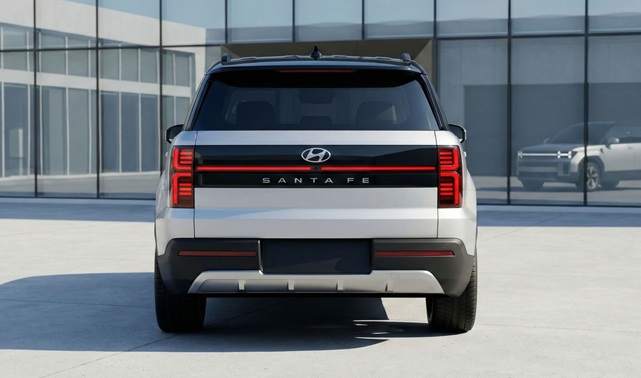
Rear End Overhaul This is where the biggest visual fix happens. The controversial low horizontal taillights are replaced by tall, thin vertical taillamp strips along the outer edges, plus a mid-tailgate horizontal light bar. The result? A taller, more balanced rear that reduces visual mass and improves recognizability. Some prototypes hint at a slightly smaller full-width hatch opening for better proportions.
Other Hidden Details Expect fresh wheel designs, including possible 21-inch options. EREV prototypes stand out with dual filler doors (gas on one side, charging port on the other—sometimes opposite sides), a relocated muffler to accommodate the battery pack, and a visible large exhaust pipe confirming the gas engine’s role as generator. Arctic testing validates real-world durability in extreme conditions.
Old vs. New Quick Comparison
- Current Model: Ultra-thin H-shaped DRLs/taillights, busy front, low-mounted rear lights.
- 2027 Facelift: Vertical DRLs + full-width bar upfront; vertical rear strips + bar; cleaner, more conventional yet still bold fasciae.
These tweaks make the 2027 Santa Fe look sharper and more approachable while preserving its standout boxiness—perfect for buyers who loved the current model but wanted refinement.
Interior and Technology: Smarter Cabin Leap Forward
Step inside the 2027 Hyundai Santa Fe and you’ll notice an immediate shift toward a more driver-centric, less overwhelming layout. Spy photos (some heavily taped) reveal a dashboard overhaul that ditches the current panoramic dual-screen setup for separate, purposeful displays.
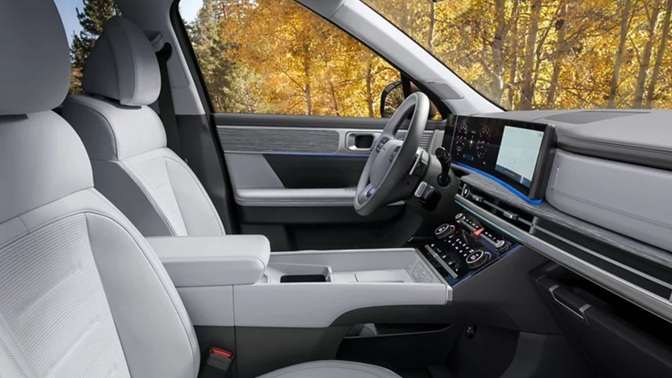
A massive 17-inch centered PLEOS touchscreen dominates the center stack—it’s standalone and portrait-oriented for intuitive smartphone-like use. Above it sits a narrow 9.9-inch digital instrument cluster, mounted higher and more traditionally for better sightlines. Slimmer central AC vents, a squared-off steering wheel (with hints of Tesla-style yoke controls under camo), and retained physical knobs for climate and volume ensure usability remains high.
This is powered by Hyundai’s new PLEOS Connect system—built on Android Automotive OS with cloud infrastructure, high-performance chips, and full over-the-air (OTA) updates. It’s part of a fleet-wide SDV (software-defined vehicle) push targeting 20+ million Hyundai, Kia, and Genesis vehicles by 2030.
2027 Hyundai Santa Fe Interior
| Feature | 2024–2026 Model |
|---|---|
| Central Touchscreen | Dual 12.3-inch integrated |
| Digital Instrument Cluster | 12.3-inch |
| Infotainment OS | Standard Hyundai |
| Voice Assistant | Basic |
| OTA Updates | Limited |
| Physical Controls | Mostly digital |
| Steering Wheel | Round |
Standout Tech Features
- Gleo AI: An LLM-based voice assistant that feels like a conversational companion. It handles natural multi-command requests, speaker recognition via “Pleos ID” (e.g., “Heat the passenger seat” without naming who), navigation, web searches, and vehicle controls.
- Smartphone-like interface with split-view/multi-window support, full Android app ecosystem (including streaming and video), and personalized profiles.
- Retained physical buttons for key functions—Hyundai heard feedback that all-touch interfaces can be distracting.
Old vs. New
- Current: Integrated 12.3-inch dual screens in one wide panel; more traditional Hyundai infotainment.
- 2027: Separate 17-inch central + 9.9-inch cluster; PLEOS with Gleo AI, OTA evolution, and app-store flexibility.
The cabin feels premium, spacious (three rows remain generous for adults), and future-proof—ideal for families who want tech that evolves without a new car purchase.
Powertrain Options: Smoother, More Reliable EREV
Hyundai is keeping the powertrain lineup familiar but fixing pain points and adding innovation—especially for North America.
Gasoline The 2.5L turbo four-cylinder carries over but drops the criticized 8-speed dual-clutch transmission (DCT) entirely. It switches to a smoother 8-speed torque-converter automatic. This directly tackles years of owner complaints about jerky low-speed shifts and clunkiness in traffic. Expect similar output (around 277 hp) with better everyday refinement.
Hybrid The 1.6L turbo hybrid (total ~230-240 hp combined) continues with its proven 6-speed automatic and only minor efficiency tweaks.
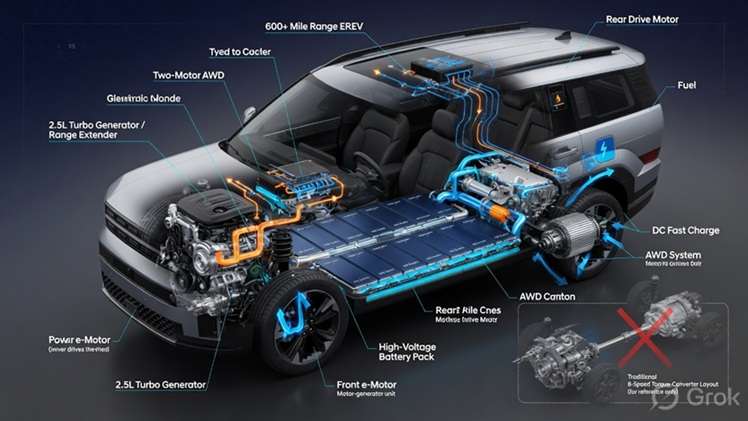
New EREV (Extended-Range EV) – Hyundai’s first North American EREV (codenamed MX5a on prototypes) is the real headline. A 2.5L turbo gasoline engine acts purely as a generator—it never drives the wheels directly (serial hybrid like the old Chevrolet Volt). Instead, it charges a high-performance lithium-ion battery that powers electric motors for silent, instant-torque EV driving. Plug in for daily commutes; refuel with gas for long trips. No range anxiety.
Hyundai claims over 600 miles total range using less than half the battery capacity of a typical EV (cheaper, lighter, faster charging). Prototypes run completely silent and feature the dual-filler setup. Production is slated for the Alabama plant.
2027 Hyundai Santa Fe Specs
| Powertrain Option | Engine / System | Transmission | Horsepower | Torque | Total Range (EREV only) |
|---|---|---|---|---|---|
| Gasoline | 2.5L turbo inline-4 | New 8-speed torque-converter automatic | 277 hp | 311 lb-ft | N/A |
| Hybrid | 1.6L turbo + electric motor | 6-speed automatic | 231 hp (combined) | 271 lb-ft (combined) | N/A |
| EREV (New) | 2.5L turbo as generator only + dual electric motors | Electric drive (no traditional transmission) | ~300+ hp equivalent (electric) | Instant EV torque | 600+ miles |
Old vs. New Powertrain Specs
- Current Gas: 2.5T + 8-speed DCT (jerky complaints).
- 2027 Gas: Same engine + new 8-speed torque-converter (smoother).
- Current Hybrid: 1.6T hybrid + 6AT.
- 2027 Hybrid: Minor updates.
- New for 2027: EREV with 2.5T generator + electric drive, 600+ mi range.
Fuel economy should improve across the board, with the EREV delivering full-EV performance for most daily driving.
AWD Features: Intelligent and Advanced (EREV)
Standard AWD on gas and hybrid trims uses Hyundai’s proven intelligent torque-vectoring system—multi-clutch plates with electro-hydraulic control that send power to any wheel and can brake individual wheels for stability in corners or slippery conditions.
The EREV AWD is next-level: A true two-motor setup. The front motor-generator drives the front wheels and charges the battery. A dedicated rear drive motor powers the rear axle independently. This provides seamless, on-demand AWD without a traditional mechanical driveshaft in many scenarios—better efficiency, quicker response, and superior EV-mode traction in snow or rain. Arctic Circle testing focused heavily on this system’s cold-weather battery and AWD performance.
Who Is This For?
The 2027 Hyundai Santa Fe targets growing families who want three-row versatility without sacrificing style, tech, or efficiency. It’s ideal for:
- Parents needing space for kids, gear, and occasional adventures (generous cargo, easy third-row access).
- Tech enthusiasts who crave OTA updates and AI assistants.
- Buyers wary of full EVs but wanting EV-like driving (EREV sweet spot).
- Value seekers who want premium features without luxury-brand prices.
If you loved the current Santa Fe’s boxy charm but wished for better drivability and modern tech, this facelift is built for you.
Competition & Market Position
In a crowded field of three-row SUVs, the 2027 Hyundai Santa Fe positions itself as the stylish, tech-forward value leader. It undercuts pricier rivals like the Toyota Highlander Hybrid or Kia Telluride while offering more distinctive design and the unique EREV option.
- Vs. Toyota Highlander/Kia Telluride: Similar space and reliability, but Santa Fe adds bolder styling, advanced PLEOS tech, and the EREV’s 600+ mile range edge.
- Vs. Ford Explorer or Chevy Traverse: More refined ride and superior interior tech.
- Vs. Emerging Electrified Rivals: The EREV bridges the gap for buyers not ready for full EVs like the upcoming Ioniq models.
Hyundai’s Alabama-built EREV gives it a domestic edge for incentives and availability. Overall, it strengthens Hyundai’s family-SUV dominance with forward-thinking features that rivals are still catching up to.
FAQ/Frequently Asked Questions
Q.1. When will the 2027 Hyundai Santa Fe be available?
Late 2026 as a 2027 model year, with U.S. deliveries likely starting early 2027.
Q.2. What are the expected specs and fuel economy?
Gas: ~277 hp, improved with torque-converter auto. Hybrid: ~230-240 hp combined. EREV: 600+ miles total range, EV-like performance. Exact MPG figures pending final EPA testing.
Q.3. Will there be a 2027 Hyundai Santa Fe hybrid option?
The EREV effectively replaces a traditional PHEV for North America with plug-in capability and extended range.
Q.4. How does the new interior compare to the current Santa Fe?
Cleaner, more focused layout with larger separate screens, AI voice tech, and retained physical controls— a noticeable upgrade in usability and modernity.
Q.5. Is the boxy design changing much?
No—the core silhouette stays; only front/rear fascias are refreshed for better balance.
Q.6. What about safety and driver assists?
Expect carryover or enhanced Hyundai SmartSense suite, likely including updated ADAS with the new PLEOS integration.
Q.7. Will AWD be standard?
No—available across trims, with advanced two-motor setup on EREV.
Q.8. How much will it cost?
Estimated $35,000–$55,000; exact pricing closer to launch.
Q.9. Is the transmission fix really that big a deal?
Yes—owner forums are full of DCT complaints; the torque-converter swap should dramatically improve daily driving.
The 2027 Hyundai Santa Fe isn’t just a refresh—it’s a thoughtful evolution that fixes real-world issues, adds cutting-edge tech, and introduces an EREV powertrain that could redefine family electrification. With its refined boxy design, smarter interior, and versatile drivetrains, it’s poised to remain a top contender for families who want capability, comfort, and innovation in one package.
If you’re considering a three-row SUV in 2027, the Santa Fe deserves a top spot on your test-drive list. Have questions or want comparisons to specific rivals? Drop them in the comments!
Related Post