
BMW is no longer adapting its past to the electric future — it is building the future from the ground up. The 2026 iX3, the first production model on the all-new Neue Klasse platform, represents the most significant technical leap in the brand’s history. While many automakers chase range numbers or copy Tesla’s playbook, BMW has focused on something more fundamental: reclaiming the “Ultimate Driving Machine” identity in an era defined by software, efficiency, and electrons.
This is not an incremental update. It is a clean-sheet redesign of battery architecture, powertrain control, electronics, and vehicle dynamics. The iX3 arrives as both a compelling electric SUV and a statement of intent for dozens of future BMW models.
A New Generation of Battery Technology
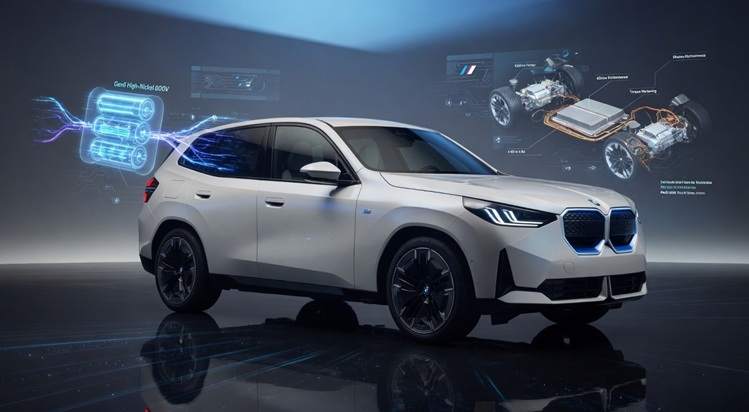
At the core of the BMW Neue Klasse iX3 sits BMW’s sixth-generation eDrive system, built around cylindrical lithium-ion cells instead of the prismatic cells used previously. These cells deliver approximately 20% higher volumetric energy density compared to the fifth-generation prismatic packs. The iX3 uses a large-format cylindrical cell (roughly 46 mm diameter × 95 mm height), enabling denser packaging and improved thermal behavior.
Usable capacity sits at roughly 108.7 kWh (with some market variations reaching higher figures), paired with an 800-volt architecture. This combination targets strong real-world range — with EPA estimates exceeding 400 miles on higher-spec variants — while supporting DC fast charging up to 400 kW. BMW claims a 10–80% charge in about 21 minutes under optimal conditions.
The shift to cylindrical cells is not just about density. It improves manufacturing scalability and thermal management, critical for sustained high-performance driving and longevity. Production of the battery cells and packs also carries a significantly lower carbon footprint than previous generations, aligning with BMW’s broader sustainability goals. The pack supports bidirectional charging (V2G), opening future possibilities for vehicle-to-home or grid services.
Where Driving Emotion Meets Software
The most distinctive element of the Neue Klasse is the “Heart of Joy” — a centralized high-performance computer that fuses drivetrain control, braking, energy recuperation, and chassis dynamics into one unit. Previous BMW EVs relied on separate control modules; the Heart of Joy processes information up to ten times faster.
This integration delivers tangible benefits. Recuperation becomes more seamless and powerful, with BMW claiming up to 98% of braking events can be handled through regeneration in many scenarios. The system intelligently blends regenerative and friction braking while optimizing torque distribution across axles for stability and efficiency. The result is sharper turn-in, more natural deceleration feel, and better energy recovery — all without the abruptness common in some EVs.
BMW calls this the “Heart of Joy” for a reason. It is engineered to preserve and enhance the brand’s signature driving dynamics in an electric vehicle. One of four central “superbrain” computers in the vehicle, it works alongside others handling infotainment, automated driving, and body functions. This software-defined architecture allows over-the-air updates to refine dynamics long after purchase.
800-Volt Architecture and Real-World Efficiency
The 800-volt system is more than a spec-sheet number. It enables thinner, lighter cabling, reduces energy losses, and supports the high charging speeds mentioned earlier. Combined with the new motors and battery, BMW targets meaningful efficiency gains — critical as real-world range and charging convenience remain top buyer concerns.
Early reports suggest strong highway efficiency and the ability to add substantial range in short charging stops, making the iX3 practical for longer journeys in a way many current EVs still struggle with.
Visually, the iX3 introduces BMW’s new design language for the electric era — cleaner surfacing, a reinterpretation of the kidney grille, and distinctive lighting signatures. Inside, expect a more minimalist yet driver-focused cockpit, with innovative display solutions that prioritize information without overwhelming the driver.
Production begins at BMW’s new plant in Debrecen, Hungary — the first facility built specifically for Neue Klasse vehicles. This plant emphasizes sustainable manufacturing, including the use of renewable energy where possible.
The Neue Klasse platform is designed for broad scalability across multiple body styles and segments. The iX3 is merely the first chapter. By investing heavily in in-house control systems, new cell formats, and a unified electronics architecture, BMW is positioning itself for long-term competitiveness in a market where software, efficiency, and driving character will increasingly separate winners from followers.
For enthusiasts, the iX3 signals that BMW refuses to treat electric vehicles as appliances. The Heart of Joy and the focus on dynamics show a determination to make EVs feel engaging rather than just efficient. For the broader industry, it demonstrates how legacy manufacturers can leverage their engineering heritage while embracing software-defined mobility.
As reservations open and deliveries begin later in 2026, the iX3 will serve as the first real-world test of whether BMW’s ambitious technical bets deliver on the road. Early signs suggest they have built something more thoughtful than another range-focused EV — they have built a platform with a genuine heart.
Related Post