
The Honda S2000 defined an era. From 1999 to 2009, it delivered razor-sharp handling, a screaming high-revving VTEC engine, and pure rear-wheel-drive joy in a lightweight, affordable package. Now, as we approach 2027 Honda S2000, the automotive world is buzzing with credible rumors, strategic signals from Honda engineers, and mounting enthusiast demand for its return.
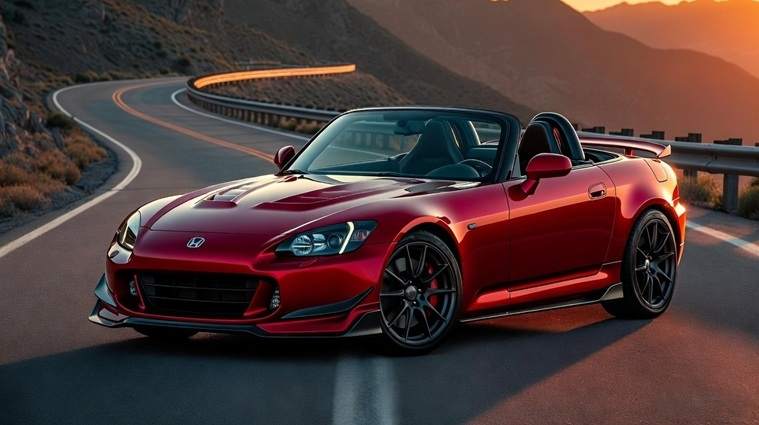
While Honda has not made an official announcement, the pieces are aligning: the successful revival of the Prelude as a modern hybrid sports coupe, strong sales of the Civic Type R, and public comments from key Honda leaders all point to a genuine opportunity. This is not another rehash of old rumors. This is a deep, forward-looking look at what the 2027 Honda S2000 could — and should — be.
Strategic Timing for Honda’s Icon
Honda’s chief engineer behind the new Prelude, Tomoyuki Yamagami, openly stated he would “like to build another S2000 someday” and called it “a car that every Honda employee loves.” He was clear, however: any revival must be developed entirely in-house to protect Honda’s unique driving DNA. No joint ventures like the Supra/Z4 partnership.
The timing is perfect. The 2026 Prelude has proven that demand exists for engaging, premium-feeling Hondas even at higher price points. Meanwhile, the broader sports car segment is evolving. Buyers want character, not just numbers. A new 2027 Honda S2000 positioned as the emotional halo car above the Prelude makes perfect business and brand sense.
It would serve as the bridge between Honda’s high-volume hybrids and its performance heritage — proof that the company still builds cars for drivers who value feedback, balance, and that unmistakable VTEC wail.
Exterior Design: Evolution, Not Retro
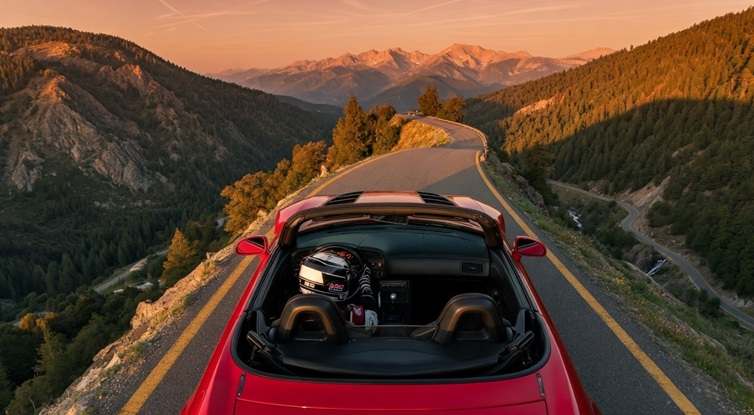
The new S2000 should not be a slavish recreation. Instead, expect a modern reinterpretation that honors the original’s perfect proportions — long hood, cab-rearward stance, short deck — while meeting today’s aerodynamic, safety, and efficiency demands.
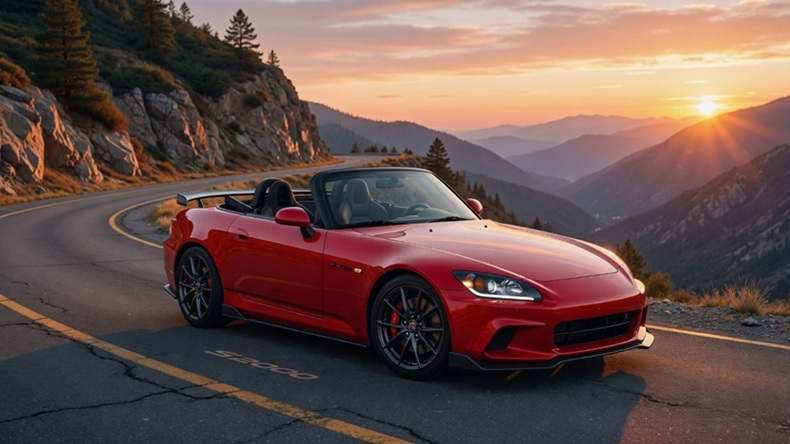
- Slim, full-width LED headlights with a distinctive vertical + horizontal DRL signature (echoing recent Honda concepts but more aggressive).
- A low, wide front fascia with a functional lower grille and subtle carbon-fiber splitter.
- Sculpted fenders that flare dramatically over wider tracks for a planted, muscular stance.
- A dramatically sportier rear with a prominent diffuser, quad exhaust outlets, and slim LED taillights that wrap around the hips.
- Soft top as standard (with optional lightweight hardtop or power-retractable hardtop on higher trims).
- Extensive use of aluminum and carbon-fiber reinforced plastic (CFRP) for hood, roof structure, and aerodynamic elements to keep weight in check.
The car will look wider, lower, and more purposeful than the original while remaining instantly recognizable as an S2000. Expect color options including Championship White, vibrant red, Phoenix Yellow homage, and sophisticated new metallic shades.
Powertrain: Turbo VTEC + Intelligent Hybrid
This is where the 2027 Honda S2000 could truly break new ground and deliver something no current rival offers.
Base powertrain (most likely): A turbocharged 2.0-liter inline-four with Honda’s latest high-output VTEC architecture, drawing heavily from Civic Type R development but retuned for roadster balance and emissions compliance. Expect approximately 320–340 horsepower from the gasoline engine alone, with a redline still pushed toward 7,500+ rpm.
The hybrid twist: Honda will almost certainly add a sophisticated 48V mild-hybrid or stronger e-boost system. This isn’t just for efficiency. An electric compressor or integrated e-boost eliminates turbo lag, fills torque holes, and enables stronger low-end response while preserving the high-revving character enthusiasts crave. Total system output could reach 360–380 hp in a hybrid-assisted version.
Rumors and logical engineering point to an optional Performance Hybrid AWD system. A compact electric motor on the front axle would provide on-demand torque vectoring and all-weather capability. In Sport or Track modes, the system stays predominantly rear-wheel drive for pure dynamics, only engaging the front motor for launch traction or corner-exit vectoring. A “Pure RWD” button would lock it into traditional rear-drive behavior for purists.
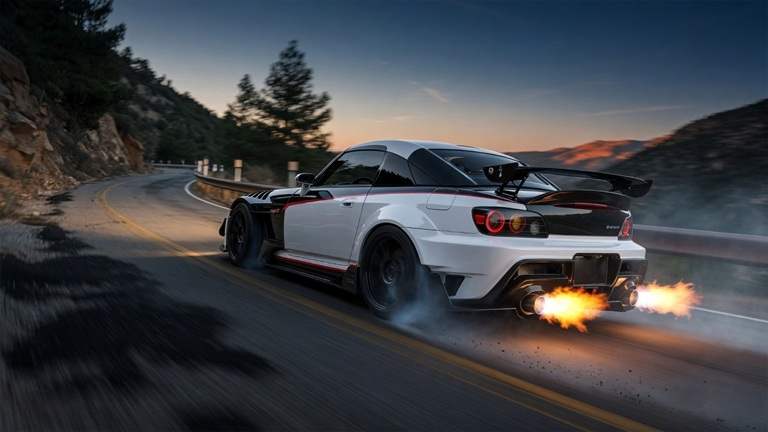
This setup would deliver:
- 0–60 mph in the low-to-mid 4-second range
- Strong mid-range punch without sacrificing top-end excitement
- Estimated 24–28 mpg combined (significantly better than pure ICE rivals)
A 6-speed manual would be standard on the core models, with a quick-shifting dual-clutch or advanced hybrid-specific automatic available. This powertrain philosophy perfectly balances modern requirements with the soul of the original S2000.
Chassis, Handling & AWD Features
The new 2027 Honda S2000 is expected to sit on a dedicated or heavily modified rear-wheel-drive platform (lessons from the Prelude’s advanced suspension components and Type R development will be adapted). Target curb weight is around 2,800–2,950 lbs — still impressively light for a modern car with safety equipment and hybrid hardware.
Suspension highlights:
- Double-wishbone front and multi-link rear (or advanced evolution)
- Adaptive dampers with multiple modes, including a true Track setting with minimal electronic intervention
- Electronic limited-slip differential (or torque-vectoring via hybrid AWD)
- Stiffer chassis with improved rigidity over the original, yet better NVH control for daily usability
The result should be a car that feels alive and connected like the original but with modern poise, grip, and composure at high speeds.
Interior & Technology
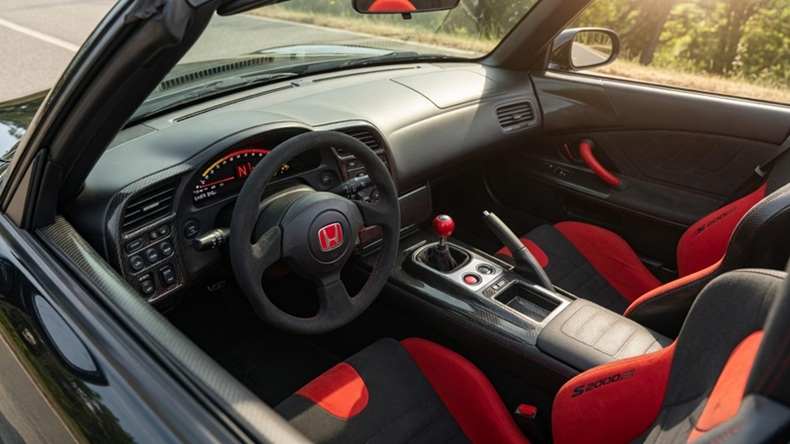
The cabin will be driver-centric with premium, tactile materials — Alcantara, leather, and carbon-fiber trim. Expect:
- Excellent bucket seats with strong lateral support
- A small-diameter, thick-rimmed steering wheel
- Prominent analog-style tachometer (or hybrid digital cluster with physical shift lights)
- Minimalist center stack with physical buttons and knobs for climate and drive modes
- 9–10 inch touchscreen with wireless Apple CarPlay/Android Auto, but secondary to the driving experience
- Full Honda Sensing suite that can be heavily de-contented or switched into “Track” mode
Maximum engagement with modern convenience, not distraction.
Hybrid AWD Technology: Efficiency and Performance
Honda has taken a distinctive, pragmatic approach to hybrid all-wheel drive. Rather than one single solution, the company uses different architectures depending on the vehicle’s mission — from efficient mainstream crossovers like the CR-V Hybrid to high-performance machines like the Acura NSX.
This exploration covers how Honda’s hybrid AWD systems actually work in 2025–2026 models, their technical strengths, real-world behavior, and what they mean for future performance cars.
Honda e:HEV Two-Motor Hybrid System
Most current Honda hybrids (CR-V Hybrid, Accord Hybrid, 2026 Prelude, etc.) use the e:HEV (sometimes called the original Honda hybrid system or two-motor hybrid).
Key components:
- 2.0L Atkinson-cycle gasoline engine (highly efficient, not high-output)
- Electric generator motor (connected to the engine)
- Electric propulsion/traction motor (drives the wheels)
- Lithium-ion battery pack
- Specialized transaxle with clutches for mode switching
Three primary operating modes (seamlessly blended by the system):
- EV Drive Mode: The propulsion motor alone drives the wheels using battery power. The engine is off and fully decoupled. Ideal for low-speed driving, light acceleration, and quiet operation.
- Hybrid Drive Mode (most common in daily driving): The engine runs to spin the generator motor, which produces electricity. This electricity flows directly to the propulsion motor (with minimal battery buffering) to drive the front wheels. The engine does not mechanically drive the wheels in this mode.
- Engine Drive Mode: At higher steady speeds (especially highway cruising), a lock-up clutch mechanically connects the engine directly to the front wheels for maximum efficiency. The electric motor can still assist or the system can blend modes.
Mainstream Hybrid AWD
How it works:
- The hybrid powertrain primarily drives the front wheels.
- A propshaft runs from the front transaxle to a rear differential containing a multi-plate clutch pack.
- An electric motor (or electric pump) rapidly engages the clutch to send torque to the rear wheels when needed.
- The system is on-demand and mostly FWD in dry conditions for best efficiency.
Intelligent Control makes it proactive:
- Sensors monitor steering angle, wheel speeds, yaw rate, throttle position, and more.
- It predicts and sends torque to the rear before significant wheel slip occurs (e.g., during acceleration, hill climbs, or corner entry).
- In corners, it can adjust front/rear torque split for better stability.
- 2026 update: Enhanced low-speed traction management (below ~9 mph) uses more aggressive brake-based torque vectoring to push power to the wheel with grip.
Performance Hybrid AWD: Sport Hybrid SH-AWD
For true enthusiast vehicles, Honda/Acura developed Sport Hybrid SH-AWD, best known in the Acura NSX (including the 600 hp Type S).
This is a fundamentally different, more advanced system:
- Three electric motors + gasoline engine.
- Rear axle: Twin-turbo 3.5L V6 + one direct-drive electric motor (integrated between engine and 9-speed DCT).
- Front axle: Twin Motor Unit (TMU) — two independent electric motors, one for each front wheel, with planetary gearsets. This allows precise, independent torque control (positive drive torque or negative “braking” torque) to each front wheel.
| Aspect | Real Time AWD (CR-V Hybrid) | Sport Hybrid SH-AWD (NSX) |
|---|---|---|
| Primary Architecture | Mechanical propshaft + clutch on rear | Three electric motors + engine |
| Drive Bias | Front-biased, on-demand | Highly flexible, strong torque vectoring |
| Torque Vectoring | Limited (via brakes in low speed) | Advanced independent front motors |
| Efficiency Focus | Very high (small MPG penalty) | Good for performance car |
| Performance Focus | Traction & stability | Handling, launch, yaw control |
| Complexity/Weight | Moderate | High (supercar level) |
| Current Use | Mainstream SUVs/crossovers | High-performance (NSX) |
Strengths and Limitations
Strengths of Honda’s approach:
- Excellent efficiency in mainstream applications.
- Proactive, seamless AWD engagement.
- Proven reliability.
- The mechanical Real Time AWD adds genuine capability (including low-speed torque vectoring via brakes) without the full weight/complexity of dual electric axles.
Limitations:
- The mainstream system is not as dynamically advanced as pure electric AWD or SH-AWD for spirited driving.
- Adding mechanical AWD to hybrids carries a small efficiency and complexity cost.
- True independent motor-per-wheel vectoring remains mostly reserved for flagship performance models.
Market Position, Pricing & Rivals
Expect a starting price in the $48,000–$52,000 range, with well-equipped versions reaching the mid-$55,000s. This positions it above the Prelude and squarely against:
- Toyota GR Supra — More powerful in top form but heavier and less “pure”
- BMW Z4 — More luxurious but less engaging and more expensive to maintain
- Nissan Z — Strong value but different character
- Mazda MX-5 Miata — Lighter and cheaper but significantly less powerful
The 2027 Honda S2000 would win on Honda reliability, high-revving character, strong aftermarket support, and that intangible “driver’s car” feel that enthusiasts still rave about 17+ years after production ended.
Future Outlook and Relevance to Performance Cars
Honda has indicated interest in more advanced electric-motor-based AWD solutions for future hybrids (potentially rear-mounted motors for true electric AWD without a propshaft). This would enable lighter weight, better packaging, and more sophisticated torque vectoring.
For an enthusiast vehicle like a potential new 2027 Honda S2000, the most exciting path would be a RWD-biased hybrid system inspired by SH-AWD principles:
- Strong rear-drive character (engine + rear motor)
- Front electric motor(s) for on-demand AWD and precise torque vectoring
- Ability to switch to pure RWD mode for purists
- Blend of high-revving character with electric torque fill and efficiency
This would deliver modern traction and handling benefits while preserving the lightweight, engaging feel that made the original S2000 special.
2027 Honda S2000 Specs
| Specification | Projected Details |
|---|---|
| Powertrain | 2.0L turbocharged inline-4 + 48V/e-boost hybrid assist |
| Total System Output | 335–375 hp / 310–340 lb-ft |
| Drivetrain | RWD (standard) Optional RWD-biased Performance Hybrid AWD with torque vectoring |
| Transmission | 6-speed manual (standard) Optional quick-shifting hybrid DCT |
| Curb Weight (target) | 2,850–2,950 lbs |
| 0–60 mph | 4.2–4.6 seconds |
| Top Speed | ~155 mph (electronically limited) |
| Fuel Economy (est.) | 23–26 city / 31–34 hwy / 26–28 mpg combined |
| Starting Price (est.) | $48,000 – $52,000 |
Key Features
- 6-speed manual standard
- Adaptive suspension + electronic LSD
- Carbon/aluminum lightweight construction
- Advanced driver aids with true Track mode
Why the 2027 S2000 Matters
A properly executed new 2027 Honda S2000 would do more than fill a product gap. It would reaffirm Honda’s commitment to drivers who value engagement over outright speed or luxury. In an era dominated by crossovers and silent EVs, the S2000 would stand as a vibrant, top-down celebration of internal combustion and mechanical joy — with just enough electrification to remain relevant and efficient. It would also create halo effect for the entire Honda lineup, much like the Civic Type R does today.
The 2027 Honda S2000 represents one of the most exciting potential returns in modern automotive history. If Honda delivers on the promise of pure DNA, a characterful turbo-VTEC hybrid powertrain, intelligent AWD optionality, and that signature lightweight balance, it could become an instant classic — and one of the last truly special ICE sports cars before full electrification takes over.
Honda employees apparently still dream about it. Now it’s time for the company to build it. What specs or features would you most want to see in a new S2000? Drop your thoughts in the comments — the more vocal enthusiasts are, the better chance we have of making this dream a reality.
Related Post