
The Honda CR-V has been one of America’s best-selling crossovers for years thanks to its reliability, spacious cabin, strong residual values, and practical hybrid efficiency. Now Honda is taking the next bold step with the 2027 Honda CR-V e:FCEV — a plug-in fuel-cell electric vehicle that combines hydrogen power with a usable battery for the ultimate flexible zero-emission experience. Designed specifically with U.S. drivers in mind, especially those in California and other hydrogen-friendly states, the 2027 model brings sharper styling, refined dual-powertrain performance, elevated interior technology, capable AWD, and owner-focused upgrades.
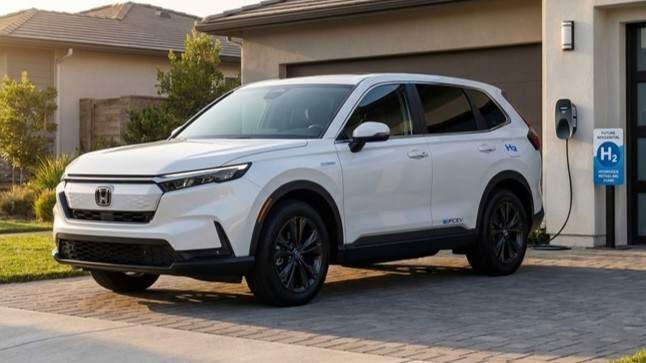
This comprehensive USA-focused guide covers the latest projected details on the new design language, unique powertrain (hydrogen fuel cell + plug-in battery), exterior execution, interior and tech suite, AWD features, market positioning, key rivals, and packages — insights drawn from Honda’s fuel-cell roadmap, CR-V platform evolution, California hydrogen infrastructure growth, and American buyer needs that have not been widely compiled elsewhere.
CR-V Practicality with Future-Forward Presence
The 2027 Honda CR-V e:FCEV retains the core proportions and friendly personality of the standard CR-V while adopting a cleaner, more aerodynamic, and technologically advanced design language that signals its zero-emission status. Designers have refined the front end with a full-width LED light bar and a sculpted, mostly closed fascia featuring subtle parametric textures and an illuminated Honda badge. Slim, sharp headlights incorporate customizable daytime running light signatures that owners can personalize via the HondaLink app.
The overall silhouette stays compact-crossover practical with excellent outward visibility and easy maneuverability, yet sits slightly lower and wider for improved highway stability and a more premium stance. Clean character lines, short overhangs, and a subtle rear spoiler enhance both aesthetics and efficiency. In the U.S. market the e:FCEV will wear exclusive badging, unique wheel designs, and available two-tone roof options that distinguish it from gas and hybrid CR-Vs. The design goal is a vehicle that looks like a natural evolution of the beloved CR-V while clearly communicating its advanced hydrogen and electric technology to American buyers.
Exterior Details
Built on Honda’s latest global compact architecture with extensive high-strength steel and weight-saving materials, the 2027 Honda CR-V e:FCEV improves rigidity, crash performance, and noise isolation. Aerodynamic enhancements — active grille shutters, a fully flat underbody, optimized mirrors, and carefully managed airflow around the hydrogen tanks — maximize both battery-electric and fuel-cell efficiency while reducing wind noise on long interstate trips.
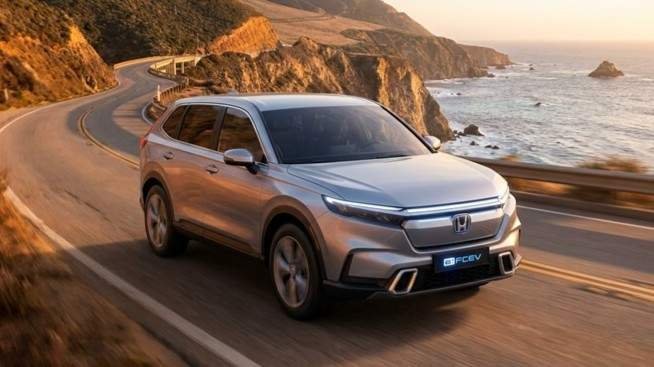
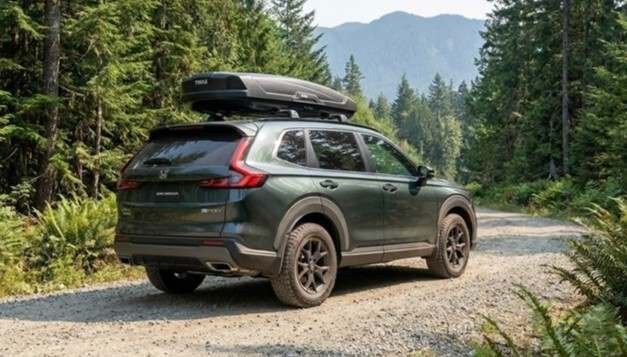
Full LED lighting with available adaptive functionality becomes standard, providing excellent illumination on dark rural and mountain roads. Wheel designs range from 18-inch aero-efficient alloys focused on range to 19-inch darker machined designs on higher trims, wrapped in low-rolling-resistance all-season tires developed for mixed U.S. conditions. Available features include a hands-free power liftgate, panoramic one-touch moonroof, roof-rail provisions, and improved lighting around the charge port and hydrogen filler door.
A projected “Touring” or blacked-out exterior package adds unique badging, darker trim, and subtle cladding while preserving the CR-V’s approachable look. Practical U.S.-focused touches such as 360-degree cameras, available trailer-hitch preparation (light-duty), and exterior power outlets (V2L capability) round out the design. These updates make the 2027 Honda CR-V e:FCEV look modern and premium in suburban driveways and at hydrogen stations without losing the easy-to-live-with character that made the CR-V a family favorite.
Powertrains-Hydrogen Fuel Cell + Plug-In Battery
The heart of the 2027 Honda CR-V e:FCEV is its innovative dual power system — a true plug-in fuel-cell electric vehicle (e:FCEV). It combines a compact hydrogen fuel-cell stack with a larger plug-in battery pack, giving drivers two ways to travel emission-free.
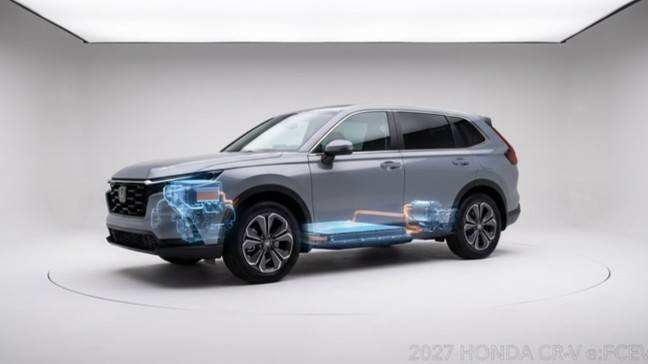
The fuel-cell system generates electricity from hydrogen to power the electric motor(s), delivering smooth, linear acceleration and a total driving range projected at 350–400+ miles when the hydrogen tanks are full. The plug-in battery (estimated 17–25 kWh usable) allows 40–60 miles of pure electric driving on a single charge — perfect for daily commuting — before the fuel cell seamlessly takes over. Combined system output is expected in the 200–240 horsepower range with strong instant torque, providing responsive performance that feels quicker than traditional hybrids.
Hydrogen refueling takes approximately 3–5 minutes at public stations (primarily in California, with expanding networks in other states), while the battery can be charged at home overnight via Level 2 or at public DC fast chargers. Honda has improved thermal management for consistent performance in hot and cold climates and refined the power-split logic so the transition between battery and fuel-cell operation is completely transparent. Regenerative braking is highly adjustable, and an advanced one-pedal driving mode is available. This dual approach eliminates range anxiety for American drivers while offering the fast “refuel” convenience of hydrogen and the home-charging ease of a plug-in hybrid.
AWD Features
Available Real Time AWD remains a key advantage. The 2027 system is fully electric and more sophisticated, with faster engagement and smarter torque distribution between the front and rear motors. Under normal conditions it operates efficiently in front-wheel drive; when slip is detected or when the driver selects a specific mode, power is instantly sent rearward.
Enhanced drive modes (Normal, Eco, Sport, Snow, and a new Trail or Wet calibration) adjust throttle response, regenerative braking, and AWD behavior. Hill-descent control, hill-start assist, and improved traction management boost confidence on wet roads, light snow, gravel, and steep driveways common across the U.S. Ground clearance stays practical for a compact crossover (around 7.5–8 inches). For American owners this means year-round security in snow-belt states and mountain regions without the complexity of a traditional mechanical 4WD system.
Interior and Technology
Inside, the 2027 Honda CR-V e:FCEV feels instantly familiar yet more premium and serene. Higher-grade soft-touch materials, improved sound insulation (the fuel-cell system is exceptionally quiet), available leather or premium cloth, and sophisticated ambient lighting create a calm, high-quality cabin. Seating is supportive for long drives, with available heating, ventilation, and power adjustments. Rear-seat space and cargo volume remain excellent for the class, with a flat load floor and underfloor storage that cleverly packages the hydrogen tanks and battery.
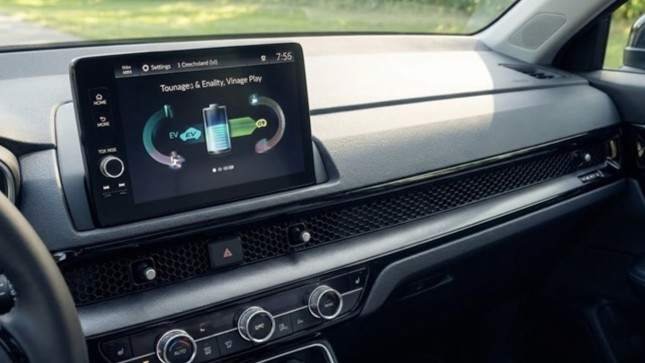
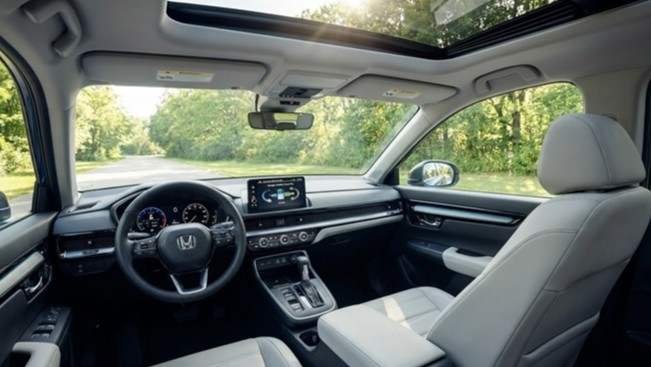
The technology suite centers on a dual-screen layout: a fully digital instrument cluster and a larger center touchscreen (projected 9 to 12.3 inches) running Honda’s latest system with wireless Apple CarPlay, Android Auto, over-the-air updates, and faster performance. A premium audio system, multiple USB-C ports, a Wi-Fi hotspot, and an available head-up display address modern needs.
Unique projected U.S.-focused features include enhanced HondaLink remote services with cabin and battery/fuel-cell preconditioning, Digital Key smartphone access, a high-resolution 360-degree camera system, and the latest Honda Sensing suite with improved Traffic Jam Assist and intersection safety. Physical controls for climate and volume remain for usability. The cabin is one of the quietest in the segment — a major benefit of the fuel-cell powertrain.
Upgrades and Package Strategy
Honda is expected to offer EX-L, Sport, and Touring trims for the e:FCEV, with clear packages. Popular options include a Cold Weather package (heated seats and steering wheel, advanced thermal management), a Technology package (larger screen, premium audio, advanced driver aids), a Panoramic Roof package, and an appearance package with unique wheels and dark trim.
Available features such as a hands-free liftgate, rain-sensing wipers, and enhanced safety assists round out the lineup. Factory accessories — charge cables, cargo organizers, roof racks, and all-weather protection — let owners personalize while preserving Honda’s excellent warranty coverage (including strong fuel-cell stack coverage). These upgrades allow buyers to tailor the CR-V e:FCEV for maximum efficiency, family comfort, or light adventure.
2027 Honda CR-V Specs
| Category | Specification |
|---|---|
| Vehicle Type | Compact Crossover SUV (Plug-in Fuel-Cell) |
| Platform | Honda global compact architecture |
| Layout | Front-motor / Dual-motor, FWD or Real Time AWD |
| Powertrain | e:FCEV (Hydrogen Fuel-Cell + Plug-in Battery) |
| Fuel-Cell System | Compact hydrogen fuel-cell stack |
| Battery | 17 – 25 kWh usable lithium-ion (estimated) |
| System Output | 200 – 240 hp combined (estimated) |
| Electric-Only Range | 40 – 60 miles (estimated) |
| Total Driving Range | 350 – 400+ miles (hydrogen + battery) |
| Hydrogen Refueling | Approx. 3 – 5 minutes |
| Transmission | Single-speed direct drive |
| Drivetrain | FWD or Real Time AWD (dual-motor) |
| Drive Modes | Normal, Eco, Sport, Snow, Trail/Wet, Custom |
| 0-60 mph | Mid-to-high 7-second range (estimated) |
| Top Speed | Approx. 110 – 120 mph (estimated) |
| Fuel Economy / Efficiency | Excellent MPGe (battery + hydrogen) |
| Charging | Level 2 AC + DC fast charging capable |
| Bidirectional Charging | V2L available |
| Regenerative Braking | Multi-level + advanced one-pedal mode |
| Suspension | Independent MacPherson strut front / multi-link rear |
| Ground Clearance | Approx. 7.5 – 8.0 inches |
| Wheels & Tires | 18-inch aero to 19-inch alloys |
| Interior | Quiet, premium Honda-centric cabin |
| Displays | Digital instrument cluster + 9–12.3-inch touchscreen |
| Infotainment | Latest Honda system |
| Pricing (U.S. MSRP projected) | $50,000 – $65,000 |
| Key Trims / Packages | EX-L, Sport, Touring |
| Target On-Sale | 2027 model year |
Market Position
Projected pricing for the 2027 Honda CR-V e:FCEV is expected to start in the low-to-mid $50,000 range and climb toward $60,000–$65,000 for loaded Touring models (before federal tax credits, California incentives, and hydrogen fueling perks). It targets environmentally conscious families, Honda loyalists ready for next-generation powertrains, California residents with access to hydrogen stations, and buyers who want plug-in convenience plus long-range hydrogen flexibility.
Honda’s legendary reliability reputation, strong residual values, extensive dealer network, and high owner satisfaction give the e:FCEV a practical edge. It sits as a more versatile and familiar alternative to pure battery EVs while offering faster “refueling” than most long-range EVs.
Key Rivals
Primary rivals include the Toyota bZ4X or future hydrogen models, Hyundai Nexo (dedicated fuel-cell SUV), Tesla Model Y (vast Supercharger network), Ford Escape PHEV or Mustang Mach-E, Chevrolet Equinox EV, and the standard CR-V Hybrid.
The CR-V e:FCEV’s expected advantages are dual zero-emission flexibility (plug-in battery + fast hydrogen refueling), familiar CR-V packaging and reliability, real AWD capability, quieter operation, and Honda’s ownership experience. Its challenges include limited hydrogen infrastructure outside California and higher upfront cost versus conventional hybrids. For buyers who want the best of both plug-in and hydrogen worlds in a practical package, the 2027 Honda CR-V e:FCEV is uniquely positioned.
The 2027 Honda CR-V e:FCEV is more than another electrified crossover — it is Honda’s clearest statement yet on practical, flexible zero-emission transportation for American families. Cleaner design, innovative dual hydrogen-plus-battery powertrain, capable AWD, a quieter and more tech-rich interior, and thoughtful upgrades position it as one of the most versatile and forward-looking compact crossovers on the market.
Exact horsepower, battery size, hydrogen range, pricing, and feature availability will be confirmed closer to Honda’s official updates. What is already clear is the intent: deliver a CR-V that maintains everything Americans love about the nameplate while adding groundbreaking dual zero-emission capability. For U.S. drivers ready to embrace the future without sacrificing practicality, range confidence, or Honda reliability, the 2027 Honda CR-V e:FCEV looks ready to lead the next chapter of clean mobility.
Related Post