
For many muscle-car fans, a supercharged HEMI V8 that can overwhelm the rear tires on command. The current Dodge Charger, built on Stellantis’ STLA Large platform, has moved in a different direction, with a twin-turbocharged inline-six gasoline engine and an all-electric Daytona line. So it’s natural that enthusiasts are paying attention to October 2026 reports suggesting a supercharged V8 could return. Will the Hellcat V8 come back? Will Dodge keep offering both gasoline and electric Chargers? Could a hybrid performance Charger become part of the lineup?
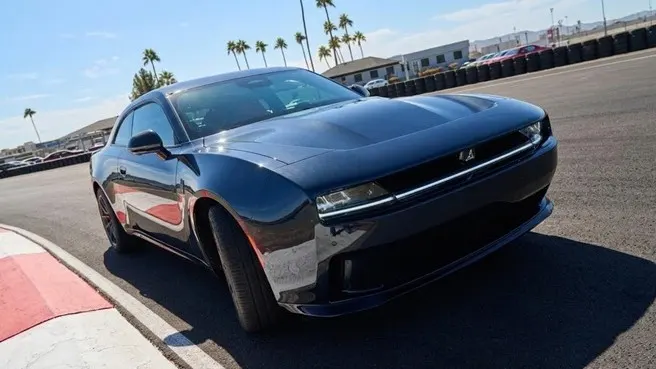
Credible automotive reports point toward a possible 2028 model-year supercharged V8 Charger. Dodge has not officially confirmed a production 2028 Dodge Charger Hellcat, its final specifications, or a launch date. Everything below is labeled by certainty: officially confirmed, reported by automotive publications, expected, or speculative.
Is the 2028 Dodge Charger Hellcat Really Coming Back?
The reports from October 2026 describe internal Stellantis powertrain planning documents. As reported, they point to a supercharged 6.2-liter HEMI V8 paired with an eight-speed automatic and rear-wheel drive, possibly offered in two-door and four-door versions. These details are reported, not confirmed by Dodge.
The Hellcat name carries weight because it was attached to the brand’s most powerful production cars. The Challenger and Charger SRT Hellcat arrived for the 2015 model year with 707 horsepower and 650 lb-ft of torque, according to Dodge’s historical specifications. Those figures belong to past models, not the 2028 car.
Rear-wheel drive also matters. For many muscle-car buyers, a rear-drive layout is central to the experience of weight transfer, tire smoke and steering feel. A reported RWD configuration suggests Dodge may be aiming at traditional driving character rather than all-weather traction alone.
Dodge has a current Charger lineup with gasoline and electric models. It has not officially announced a 2028 Charger Hellcat. Enthusiasts should stay interested but cautious. Internal planning documents can change, and a reported model may never reach production in the form described.
A data-driven look at the Charger lineup as it stands and where a Hellcat-class V8 could fit. Labels: Confirmed Approx. Historical Estimate Speculation.
1.Hybrid or Electric? Three Paths for the Charger
The Charger is now sold in more than one powertrain form. Here is what is confirmed, what is approximate, and what is still open.
Electric (Daytona)
Charger Daytona EV on the STLA Large platform, with R/T, Scat Pack, and performance variants. Confirmed
Gas Sixpack (I6)
Twin-turbo Hurricane inline-six gas models returning as the Sixpack lineup. Confirmed Approx. output
Hellcat-class V8
A supercharged V8 return is discussed but not officially scheduled. Speculation
Which Path Fits Which Buyer?
| Option | Status | Strength | Trade-off | Label |
|---|---|---|---|---|
| Electric Daytona | On sale | Instant torque, low running cost, strong acceleration | Charging needed; depreciation risk | Confirmed |
| Gas Sixpack | Returning | Lower purchase price, fast refuelling, familiar driving | Lower performance than V8 versions | Approx. |
| Hellcat-class V8 | Unannounced | Traditional muscle character, big power | Fuel use, emissions rules, uncertain timing | Speculation |
| Hybrid Charger | Not announced | Could bridge gas and EV | No confirmed plan for a Charger hybrid | Speculation |
2.Specs at a Glance
| Category | Gas Sixpack (current) | Daytona EV (current) | Hellcat-class V8 (2028) | Label |
|---|---|---|---|---|
| Engine or motor | 3.0L twin-turbo inline-six | Dual motor, 400V-class battery | Supercharged V8 | Approx. / Speculation |
| Power | ~420–550 hp | ~340–670 hp (trim dependent) | ~700–800 hp | Approx. / Speculation |
| Torque | ~450–550 lb-ft | Instant peak torque; ~500–670 lb-ft | ~650–700 lb-ft | Approx. / Speculation |
| Efficiency | ~20–24 mpg combined | ~2.8–3.3 mi/kWh | ~13–16 mpg combined | Estimate |
| Range | ~400 mi per tank (estimate) | ~260–320 mi EPA (Approx.) | ~350–400 mi per tank | Estimate |
| Transmission | 8-speed automatic | Single-speed reduction gear | 8-speed automatic | Approx. / Speculation |
| Drivetrain | RWD, AWD on select trims | RWD, dual-motor AWD on select trims | RWD (AWD unconfirmed) | Approx. / Speculation |
| Body | Four-door sedan (Charger) | Four-door fastback, hatch-style rear | Four-door fastback | Confirmed / Speculation |
| Curb weight | ~4,300–4,600 lb | ~4,700–5,000 lb | ~4,500–4,800 lb | Approx. / Estimate |
3.Power Comparison (Bar Chart)
Peak horsepower by version. Scale maximum is 800 hp.
Approx. Figures are rounded and vary by model year, trim, and rating method. The 2028 V8 bar is Speculation and is shown striped for that reason.
4.Price and Trims
Starting prices are before destination charges (approx. $1,695–$1,995). The 2028 column is an estimate, and the V8 row is speculation.
| Trim | Powertrain | Approx. starting MSRP | 2028 Estimate |
|---|---|---|---|
| Sixpack (base) | Gas I6, RWD | ~$40,000 | ~$42,500 Estimate |
| Sixpack (high output) | Gas I6, AWD option | ~$46,000 | ~$48,500 Estimate |
| Daytona R/T | EV, RWD or AWD | ~$60,000 | ~$62,000 Estimate |
| Daytona Scat Pack | EV, AWD | ~$65,000 | ~$67,500 Estimate |
| Hellcat-class V8 | Supercharged V8, RWD | Not announced | ~$75,000 Speculation |
2028 Estimated Starting Price ($K)
Scale maximum is $80K. Striped bars are estimates. The Hellcat-class V8 price is Speculation.
5.Range and Charging
EV Range Comparison (miles)
Approx.
Approx.
Estimate
Estimate
Performance driving, high speeds, and cold weather reduce EV range noticeably. The highway and cold figures are estimates, not test results.
Where Owners Typically Charge (Assumed Mix)
Charging Time Guide
| Method | Typical time (10–80%) | Label |
|---|---|---|
| DC fast charger (high-power) | ~30–40 min | Approx. |
| DC fast charger (standard) | ~45–60 min | Approx. |
| Level 2 (240V), full charge | ~8–12 hours | Approx. |
6.Running Cost: Hellcat-Class V8 vs. EV Calculator
The calculator compares a Hellcat-class V8 (speculative) with the Daytona EV. Adjust the sliders to test your own driving.
Five-Year Fuel Cost at Default Inputs
Speculation
Estimate
7.Power-to-Weight Explorer
Pounds per horsepower. Lower is quicker. The scale runs from 4 lb/hp (full bar) to 12 lb/hp (empty bar).
Reference: 2023 Charger SRT Hellcat ~717 hp and ~4,500 lb gives about 6.3 lb/hp (Historical, approx.). Weight figures are Approx., and the 2028 V8 numbers are Speculation.
8.AWD Features and Hardware
| Feature | Gas AWD (Sixpack) | EV AWD (Daytona) | Hellcat-class V8 | Label |
|---|---|---|---|---|
| Drive system | On-demand AWD sending torque to rear when slip is detected | Front and rear motors with continuous torque control | RWD-focused; AWD not announced | Approx. / Speculation |
| Added price | ~$2,000–$2,500 | ~$2,000–$3,000 (trim dependent) | Not announced | Approx. / Speculation |
| Efficiency impact | ~1–2 mpg lower than RWD | ~5–10% less range than RWD | Not applicable | Estimate |
| Traction and launch | Improves wet or snowy launches | Very fast torque response for launch control | Traction depends on tires and drive mode | Estimate |
| Towing | Modest rating | Check the spec sheet by trim | Unknown | Approx. |
| Service | Transfer case and differential fluid at intervals | Drive unit service less frequent than gas AWD | Unknown | Estimate |
Estimated Price Added by AWD ($)
Scale maximum is $7,000. AWD suits snow, heavy rain, and high-torque launches. RWD gives the most sporting character and the best efficiency.
9.Rival Comparison (Peak hp)
Approx. Rival figures are rounded from published specifications and vary by model year. The Daytona Scat Pack is listed at its peak rating. Scale maximum is 800 hp.
10.Timeline and Outlook
Last Hemi V8 Charger SRT Hellcat models sold, ending the supercharged V8 Charger in its prior form.
Charger Daytona EV on sale as the first electric Charger, built on the STLA Large platform.
Dodge confirms the return of gas Charger models with the Hurricane twin-turbo inline-six (Sixpack).
Sixpack gas models expected in dealers, with output shown in Section 2.
A V8 reveal or formal announcement is possible but not scheduled.
Hellcat-class V8 and possible AWD or price changes. Pricing in Section 4 is an estimate, not an announcement.
11.Frequently Asked Questions
Is a 2028 Charger Hellcat confirmed?
Speculation No official 2028 Hellcat-class Charger has been announced. The gas Sixpack and the Daytona EV are the confirmed lineup.
Is there a hybrid Charger?
Speculation No hybrid Charger has been confirmed. Buyers should treat hybrid versions as unannounced.
How far does the Daytona EV go?
Approx. Roughly 260 to 320 miles EPA, depending on battery and trim. Performance driving and cold weather lower the real-world figure.
Is the EV cheaper to run than a V8?
Estimate At default inputs, the EV saves roughly $2,500 per year in energy cost against a speculative 14 mpg V8. Results depend on fuel and electricity prices and on how much you drive.
Do I need AWD?
Estimate AWD helps in snow and on wet roads and launches harder. RWD gives sharper handling and better efficiency. AWD availability depends on trim.
2028 Dodge Charger Hellcat Release Date
The reports suggest production could begin in late 2027 for a 2028 model-year designation. That timing is reported and unconfirmed. Dodge has not announced an official launch date.
- Production start: when the first units roll off the assembly line.
- Dealer arrival: when cars reach showrooms, often months after production.
- Model year: a marketing and registration label. Model years often begin before the calendar year, so a “2028” car could be built and sold in 2027.
Until Dodge publishes an announcement, any specific arrival month is speculation.
2028 Dodge Charger Hellcat Price
Dodge has not announced a 2028 Charger Hellcat MSRP, and this article does not offer one. A number would require pricing details that haven’t been published. Instead, the table below shows how a Hellcat would likely fit within the lineup. Check dodge.com’s build-and-price tools for current figures.
| Model | Powertrain | Expected Market Position | Current Pricing |
|---|---|---|---|
| Charger R/T (current) | Twin-turbo 3.0L SIXPACK | Entry to mid-level gasoline | Verify on dodge.com |
| Charger Scat Pack (current) | Twin-turbo 3.0L SIXPACK | Performance-focused gasoline | Verify on dodge.com |
| Charger Daytona Scat Pack (current) | All-electric, up to 670 hp | Top performance electric | Verify on dodge.com |
| Charger SRT Hellcat (2015–2023 history) | Supercharged 6.2L HEMI V8 | Former top gasoline performance trim | Check historical MSRPs |
| 2028 Charger Hellcat (reported) | Supercharged V8 (unconfirmed) | Likely premium performance tier | Not announced |
Several factors would likely push a supercharged V8 model toward the top of the range: a V8 engine that costs more to build, expected premium equipment, and the Hellcat name’s history. Coupe and sedan versions could also price differently, as could optional performance packages. Destination charges would be added separately, and they’re not part of the MSRP.
Editorial note: Any future price estimate should come from official pricing, not from this article. Without official trim structure or equipment lists, any specific range would be guesswork.
2028 Dodge Charger Hellcat Engine
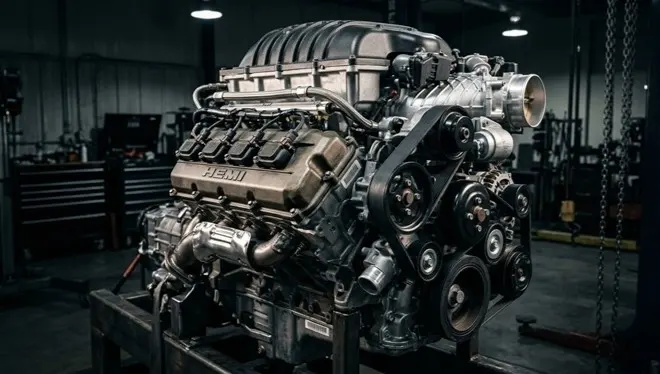
The HEMI V8 is the heart of the Hellcat story, so it’s worth understanding the hardware.A naturally aspirated engine draws in air at atmospheric pressure. A turbocharged engine uses exhaust gases to spin a turbine that compresses intake air. A supercharged engine uses a compressor driven by a belt connected to the crankshaft. Because the supercharger is mechanically driven, boost arrives with the engine’s rotation rather than waiting for exhaust energy to build. The tradeoff is that the compressor draws some power from the engine to operate.
The HEMI name comes from its hemispherical combustion chamber design. The 6.2-liter displacement became famous in the Hellcat models, where a positive-displacement supercharger forced more air and fuel into the cylinders. The result was far more output than the same displacement could produce without forced induction.
Compare that with the current gasoline Charger. The SIXPACK is a twin-turbocharged 3.0-liter inline-six. Its output varies by configuration, so check Dodge’s official specifications for each trim rather than relying on any single figure.
| Engine | Configuration | Output | Status |
|---|---|---|---|
| Hellcat HEMI (Charger SRT Hellcat) | Supercharged 6.2L V8 | 707 hp, 650 lb-ft (historical) | Previous generation, confirmed history |
| Hellcat Redeye variants | Supercharged 6.2L V8 | 797 hp (historical) | Previous generation |
| Current Charger SIXPACK | Twin-turbo 3.0L inline-six | Verify by trim | Current production |
| 2028 HEMI V8 (reported) | Supercharged 6.2L V8 | Not announced | Reported only |
The V8’s return matters because it would signal that Dodge still sees a place for a large-displacement, forced-induction engine in its performance lineup, not just electrified and turbocharged alternatives.
2028 Dodge Charger Hellcat Horsepower and Performance Expectations
Historical Hellcat figures are a useful benchmark, but they are not predictions. Dodge has not assigned a horsepower or torque rating to a 2028 Hellcat, and no acceleration, quarter-mile or top-speed figures should be assumed.
Several factors shape how a car feels beyond the headline number:
- Weight: A heavier car needs more power to match the acceleration of a lighter one.
- Gearing: Final-drive ratio and transmission settings affect how power reaches the pavement.
- Traction: Tires, launch control and drivetrain layout determine how much of the engine’s output becomes forward motion.
- Torque curve: How quickly torque arrives can matter as much as peak horsepower in daily driving.
- Cooling: Supercharged engines generate significant heat, and sustained performance depends on thermal management.
- Transmission: An eight-speed automatic must handle the torque output reliably under repeated hard use.
Sound is part of the appeal too. Exhaust tuning, factory mufflers and engine calibration all shape the note, and noise regulations limit how loud any production car can be. Quarter-mile and acceleration results from earlier Hellcat models were published by independent magazines, and those original test reports, not this article, should be consulted for any specific numbers.
Gasoline vs. Electric
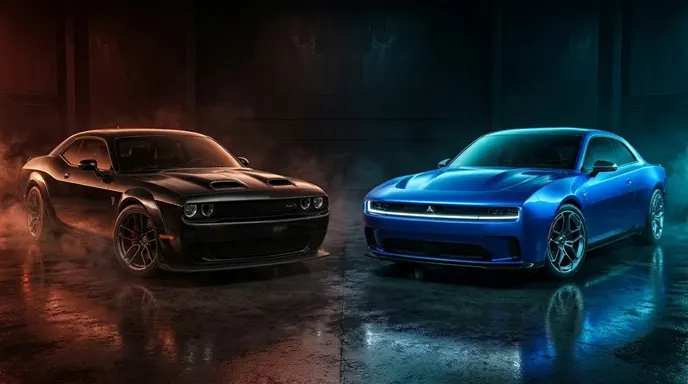
The most interesting comparison is between two very different ways to build a fast Charger.
Dodge has confirmed that the 2026 Charger Daytona Scat Pack is all-electric, with up to 670 horsepower. Dodge has also marketed its Fratzonic sound system on its electric models to create an artificial exhaust note. Verify current details on dodge.com, because features can change by model year.
| Factor | Gasoline Hellcat (reported concept) | Electric Daytona Scat Pack (confirmed) |
|---|---|---|
| Power source | Supercharged 6.2L V8 | Electric motors and battery |
| Confirmed output | Not announced for 2028 | Up to 670 hp |
| Sound | Mechanical V8 character | Electronic sound system, not a combustion note |
| Torque delivery | Builds with engine speed, supercharger boost | Instant, available from a standstill |
| Refueling/charging | Gas station, minutes | Charging network or home charger, longer |
| Regenerative braking | Not applicable | Recovers energy during deceleration |
| Maintenance | Oil changes, fluids, spark plugs | Fewer routine services; check Dodge’s maintenance schedule |
Electric motors deliver torque immediately, which is why EVs often feel explosive from a stop. A V8 has a different appeal: its sound, mechanical feedback, and the sense that the engine is working hard. For some enthusiasts, the drama of an internal-combustion engine is the entire point. For others, instant response, quiet operation and lower routine maintenance matter more.
The choice is less about which car is “faster” and more about which driving experience fits the buyer.
Could the 2028 Dodge Charger Hellcat Get a Hybrid Powertrain?
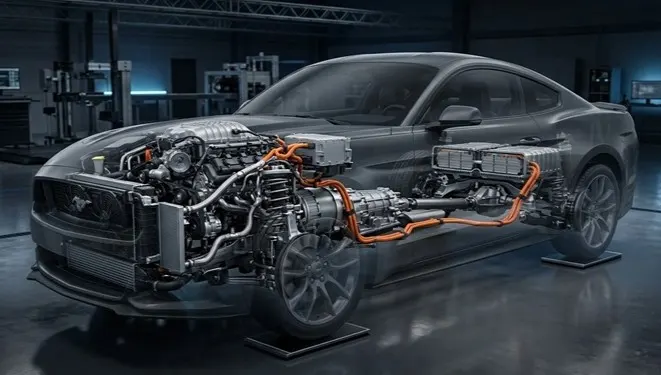
There is no confirmed 2028 Charger Hellcat hybrid. Some reporting refers to an internal “HEV” designation. That label does not confirm a hybrid-electric vehicle, and this article doesn’t assume it means one. The following is analysis of possible technologies.
- Mild hybrid: A small electric motor-generator assists the engine, smoothing starts and filling gaps in torque. The car typically cannot drive on electricity alone.
- Full hybrid: A larger electric motor can drive the car for short distances at low speed and assist the engine during acceleration.
- Plug-in hybrid: A larger battery allows meaningful electric-only driving and can be recharged from an outlet or charger.
For a supercharged V8, electric assistance could potentially fill low-speed torque gaps, improve efficiency during light driving and add a boost during hard acceleration. The engineering appeal is clear.
The challenges are equally real. Batteries and motors add weight, which can work against handling and performance. They require packaging space and cooling capacity, and they increase cost and complexity. A performance hybrid also has to manage heat from both the V8 and the battery during sustained driving.
Whether a hybrid Hellcat makes sense depends on Dodge’s goals: efficiency targets, performance benchmarks, pricing, and how the brand wants to position its V8. Until Dodge says something official, a hybrid Hellcat remains speculation.
2028 Dodge Charger Hellcat AWD vs. RWD
The reported Hellcat configuration is rear-wheel drive. That is the traditional muscle-car layout, and it shapes the driving experience in several ways.
- RWD character: Power goes to the rear wheels, which allows for a more playful, adjustable balance and the classic burnout. The downside is that hard launches can be harder to control, especially in wet or snowy conditions.
- AWD traction: Power is split between the front and rear wheels, which typically improves launch grip and all-weather confidence. It can also add weight and change the car’s handling feel.
The current Charger lineup includes AWD on certain configurations, and the Daytona Scat Pack uses an all-electric AWD system. Confirm availability on the official build tool.
Buyers in snowy regions may prefer AWD for daily practicality. Enthusiasts who prioritize feel and balance may want RWD. Because the Hellcat’s drivetrain is reported rather than confirmed, neither outcome should be assumed.
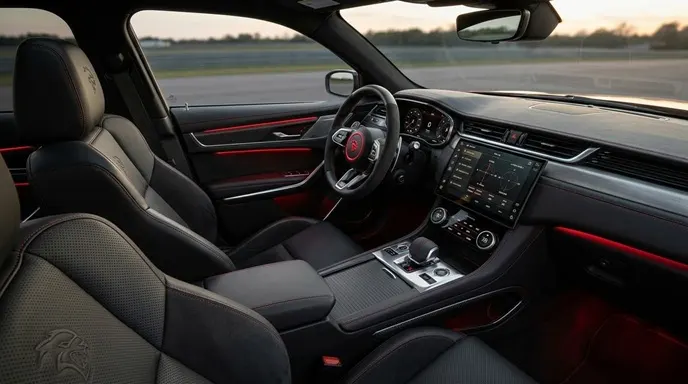
2028 Dodge Charger Hellcat Interior and Technology
The 2028 Hellcat’s interior is unconfirmed, but it would likely build on the current Charger platform. Verify each feature on dodge.com for the specific trim and model year.
Current Charger features include:
- A digital driver display.
- Uconnect infotainment with a large central touchscreen.
- Performance-focused gauges and drive modes on some trims.
- Sport seats and optional premium audio.
- Connected services and driver-assistance technology.
Hellcat-specific upgrades are speculative. Buyers might reasonably expect unique badging, performance-oriented interior trim, and upgraded seating. Whether any of that appears on a production car is unknown.
2028 Dodge Charger Hellcat 2-Door vs. 4-Door
The reported two-door and four-door possibilities are interesting because they reflect two traditions in Dodge’s performance history. The previous Charger SRT Hellcat was a four-door sedan, while the Challenger Hellcat was a two-door coupe. A four-door Hellcat would offer rear-seat access, cargo practicality and everyday usability. A two-door would emphasize styling, a sportier profile and the classic muscle-car silhouette.
Offering both could broaden the appeal of the Hellcat name, giving buyers the choice between daily practicality and a more traditional coupe. Whether Dodge actually builds both is unconfirmed.
2028 Dodge Charger Hellcat vs. Challenger Hellcat
This comparison is between a possible future model and an established previous-generation performance car. The Challenger Hellcat was produced through the 2023 model year, so it cannot be bought new as a Hellcat today.
| Factor | Challenger Hellcat (previous generation) | 2028 Charger Hellcat (reported) |
|---|---|---|
| Body style | Two-door coupe | Two-door and/or four-door (reported) |
| Engine heritage | Supercharged 6.2L HEMI V8 | Supercharged 6.2L HEMI V8 (reported) |
| Drivetrain | RWD | RWD (reported) |
| Platform | Earlier Challenger platform | Current Charger platform (STLA Large) |
| Technology | Earlier-generation infotainment and systems | Current-generation Charger technology |
| Electrification | None | Not confirmed |
The Challenger’s classic coupe proportions have strong nostalgic appeal. A newer Charger platform could bring more modern electronics and packaging, but it also introduces unknowns that will only become clear after official reveals.
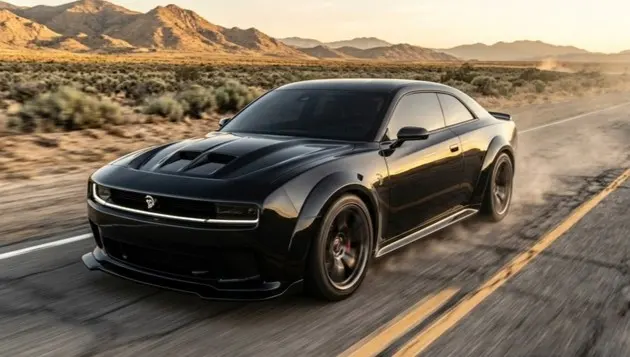
2028 Dodge Charger Hellcat MPG: Can a Supercharged V8 Be Efficient?
No official 2028 Charger Hellcat MPG rating exists, and this article doesn’t provide one. EPA ratings come from testing and are published on fueleconomy.gov once a vehicle is certified.
Some general points still apply. Large, forced-induction V8s typically consume more fuel than smaller engines, especially under hard acceleration. The current SIXPACK gasoline Charger should be compared with its official EPA ratings by trim. The Daytona’s efficiency should be read in kilowatt-hours per 100 miles or MPGe on fueleconomy.gov, not in gasoline MPG.
A hybrid system could improve efficiency in stop-and-go traffic and at low speeds, but it would also add weight. Real-world results depend heavily on driving style, tire choice, terrain, temperature and load.
Is the 2028 Dodge Charger Hellcat Worth Waiting For?
It depends on what you want from a performance car.
- Traditional muscle-car fans: If a supercharged V8 is the priority, waiting makes sense only if you can tolerate uncertainty. Watch for official Dodge announcements before making plans.
- Drivers who prefer modern electric performance: The Daytona Scat Pack, with up to 670 hp, is available now and offers instant torque and advanced performance features.
- Buyers who want a balance of power and efficiency: The current SIXPACK Charger may be the practical choice, and a future hybrid could also fit this group if Dodge eventually confirms one.
If you’re shopping now, compare current Charger models on dodge.com and review official EPA ratings. If you’re considering a used Charger SRT Hellcat from 2015–2023, check its VIN on NHTSA’s recall lookup at nhtsa.gov/recalls and review the vehicle history report before buying.
Dodge’s current Charger already takes a multi-powertrain approach, offering gasoline and electric models with different performance characters. That alone shows the brand is willing to serve more than one kind of enthusiast.
A reported supercharged HEMI V8 return could make the 2028 lineup far more appealing to traditional muscle-car fans. The Hellcat name is powerful, and a rear-drive V8 coupe or sedan would speak directly to that audience.
A hybrid Hellcat remains speculative. Electrification could improve efficiency and performance, but it could also add weight and complexity. Official confirmation from Dodge will determine how the performance lineup develops. Which would you choose: a supercharged V8 Charger, an all-electric Daytona, or a future hybrid? Share your pick in the comments.
Related Post