
Compact SUVs have become the default family vehicle in America, and the Hyundai Tucson sits near the center of that market. It’s practical, it’s widely available, and it competes head-to-head with the Toyota RAV4 and Honda CR-V on nearly every shopping list. So when a new generation arrives, shoppers want to know quickly what changed, what it costs and whether the hybrid is worth the wait.
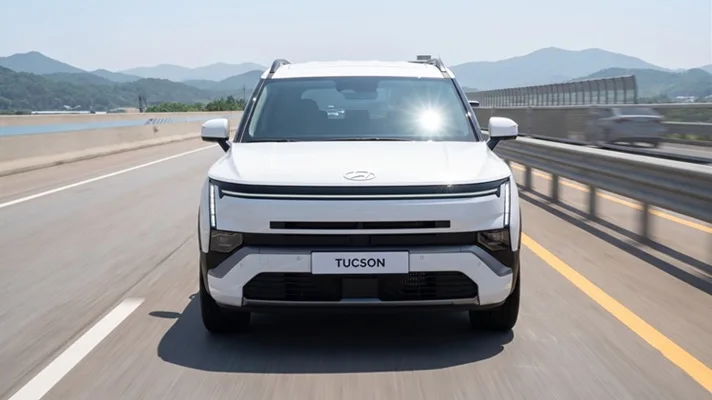
Here’s the short answer to the question most readers are asking: Hyundai has introduced a fifth-generation Tucson, which is scheduled to reach U.S. dealers in early 2027 as a 2027 Model. Official information about a separate 2028 Hyundai Tucson, including its price, trims, engines and any model-year changes, has not been confirmed in the materials this article is based on. The sections below separate what’s confirmed about the new generation from what remains unknown.
What’s New?
The most important point is one of naming. The redesigned Tucson is the fifth generation, and the brief identifies it as the 2027 model that arrives in early 2027. The 2028 model year follows. Any changes it brings beyond the fifth-generation design are not yet confirmed.
Here’s how the information breaks down:
- Reported as new in the fifth generation (verify on Hyundai’s site): A redesigned exterior under Hyundai’s Art of Steel design direction, a redesigned interior, Pleos Connect infotainment, Gleo AI-powered digital assistance, an updated hybrid powertrain and the XRT PRO, an adventure-focused version.
- Announced target (manufacturer claim, not an EPA rating): A hybrid fuel-economy target of up to 42 MPG.
- Unknown for 2028: Trim changes, equipment shifts, powertrain adjustments, pricing and any mid-cycle updates.
A fifth-generation launch is a significant event. A mid-cycle update to a 2028 model could be minor or significant, and no official source has described one. Treat any article that lists specific 2028 changes as speculation until Hyundai’s U.S. newsroom publishes them.
Confirmed-style figures are rounded, and forecasts are clearly labeled.
Overview
The Hyundai Tucson is a compact crossover that sits below the Santa Fe in Hyundai’s lineup. The current fourth generation, built on the N3 platform, was introduced for the 2022 model year. It offers a naturally aspirated 2.5-liter four-cylinder, a 1.6-liter turbo, a conventional hybrid, and a plug-in hybrid (PHEV), with front-wheel drive or all-wheel drive depending on the powertrain.
For 2028, the main questions are whether Hyundai delivers a mid-cycle refresh or a new generation, how pricing shifts across the trim ladder, and whether hybrid and plug-in versions become more widely available.
Price Outlook
Bars show approximate starting MSRP before destination, on a $0–$50,000 scale. Solid bars are current pricing and striped bars are 2028 projections.
Powertrains Compared
Peak output and combined fuel economy for the current Tucson options, on the same scale for easy comparison.
Approx. Hybrid and PHEV figures are system outputs. Verify exact ratings for your trim.
Approx. Figures vary by trim, wheel size, and drivetrain. Check fueleconomy.gov for exact ratings.
Powertrain Mix (Planning Scenario)
Hybrid share is expected to keep rising as buyers shift toward efficiency. This chart is a planning scenario, not a Hyundai forecast.
Hybrid MPG and Running Costs
How the hybrid compares with the gas engine in real-world cost terms. The calculator below uses approximate EPA combined figures.
Estimate PHEV figure assumes gasoline use only. Plug-in charging costs are excluded.
Bars are scaled to $2,000. Assumes 27 mpg for gas and 38 mpg for hybrid.
What Could Change by 2028
Possible updates to the Tucson lineup. The current model year is known; the 2028 items are speculation unless Hyundai confirms them.
Styling
Refined lighting, grille detail, and wheel designs are the most likely changes in a mid-cycle refresh. A full redesign would reshape the body.
Speculation
Interior and Technology
Expect larger or better-integrated screens, updated software, and expanded over-the-air features.
Estimate
Powertrain
The hybrid and PHEV are likely to stay. Hyundai could tune the hybrid for slightly better efficiency or expand its availability.
Speculation
Speculation These levels are illustrative and not based on a Hyundai product plan.
Release Date Outlook
The fourth-generation Tucson was revealed and went on sale, launching for the 2022 model year.
Model-year updates and trim adjustments are typical in this part of a generation’s life. Timing is not confirmed for the 2028 model.
A reveal window that fits Hyundai’s usual cadence for a new generation. No official date has been announced.
Either a refreshed fourth generation or a new generation on sale. Neither is confirmed.
Hardware for an AWD Tucson
The Tucson’s all-wheel-drive setup differs by powertrain. The table and charts below summarize the current systems and what they cost in efficiency and price.
| Component | Gas AWD (2.5L / 1.6T) | Hybrid AWD | Notes |
|---|---|---|---|
| AWD type | On-demand, clutch-based (HTRAC-style) | Electric rear-axle motor (approx.) | Approx. |
| Front-to-rear logic | Mostly front-drive, adds rear torque when needed | Rear motor drives when needed, plus engine power | Estimate |
| Ground clearance | About 7.5–8.0 in | About 7.5–8.0 in | Approx. |
| Mpg penalty vs. FWD | About 1–2 mpg combined | About 1 mpg combined | Approx. |
| Price premium | About $1,800–$2,000 | About $1,800–$2,000 | Estimate |
| Drive modes | Normal, Sport, and Snow-type settings | Eco, Normal, Sport and Snow-type settings | Estimate |
Approx. Verify each trim on fueleconomy.gov.
Estimate Scores are illustrative, not test results.
Who Should Consider AWD
- Drivers in snowy or hilly regions who want extra traction on wet or loose surfaces
- Buyers who want a bit more ground clearance for gravel roads and light trails
- Shoppers who would rather pay about $2,000 extra than deal with winter tires alone
AWD does not improve braking or cornering grip on dry pavement, and it does not replace winter tires.
How the Tucson Hybrid Compares
Approximate combined mpg for compact hybrid crossovers. Rounded figures; verify each model’s current EPA rating before comparing.
Toyota RAV4
Often the benchmark for hybrid efficiency and resale value in this class. Its hybrid is typically a little more efficient than the Tucson’s.
Kia Sportage
Shares Hyundai’s platform family and similar hybrid hardware, with a bolder design and a comparable feature set.
Features by Trim (Estimated)
| Feature | SE | SEL | Limited | Plug-In Limited |
|---|---|---|---|---|
| Smart Cruise Control | Std. | Std. | Std. | Std. |
| Heated front seats | — | Std. | Std. | Std. |
| Panoramic sunroof | — | — | Opt. | Std. |
| Highway Driving Assist | — | Opt. | Std. | Std. |
| Available AWD | Opt. | Opt. | Opt. | Std. |
Estimate Availability follows the current pattern and may change for 2028. Confirm exact equipment with your dealer.
Specifications Snapshot
Current specs with 2028 expectations. Confirm final numbers with Hyundai’s official specification sheet.
| Specification | Current Tucson | 2028 Outlook |
|---|---|---|
| Body style | Compact crossover, 5 seats | Estimate Same segment and seating |
| Base engine | 2.5L 4-cylinder, ~187 hp | Estimate Retained |
| Turbo engine | 1.6L turbo, ~180 hp | Estimate Retained or updated |
| Hybrid | 1.6T hybrid, ~226 hp system | Speculation Refined or expanded |
| Plug-in hybrid | ~261 hp system, ~33 mi EV range (approx.) | Speculation Range may increase |
| Drivetrain | FWD or AWD by powertrain | Estimate Similar |
| Warranty | 5 yr/60K mi basic; 10 yr/100K mi powertrain | Estimate Expected to continue |
Frequently Asked Questions
Is a 2028 Tucson officially confirmed?
The model year is not confirmed by Hyundai as of this writing. Any 2028 details on this page are estimates or speculation.
Is the Tucson hybrid a plug-in?
No. The standard Tucson Hybrid is self-charging. The plug-in hybrid (PHEV) is a separate version that charges from an outlet.
Does AWD cost much extra?
AWD typically adds about $1,800–$2,000 over the matching front-drive trim, and it costs about 1–2 mpg combined.
When will the next-generation Tucson arrive?
No official date has been announced. A late-2026 to 2027 reveal would fit Hyundai’s usual cadence, but this is speculation.
Why doesn’t the trimatlas link apply here?
That link compares the 2026 Toyota Camry LE and XLE. It contains no information about the Hyundai Tucson, so it could not be used as a source.
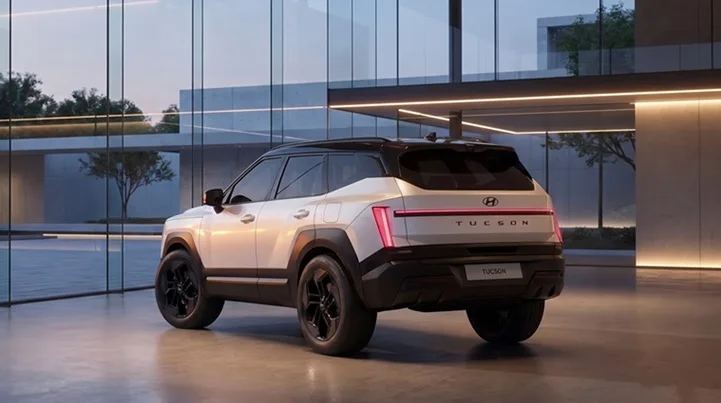
2028 Hyundai Tucson Release Date
For the redesigned Tucson, the announced timing is early 2027 at U.S. dealerships, as reported in the brief. That date applies to the fifth-generation vehicle, which Hyundai has positioned as a 2027 model. The 2028 model year is a separate question. Automakers typically update a model-year lineup on their own schedule, and a 2028 model could carry the same specifications as the 2027 version or include changes. Hyundai has not announced a 2028-specific launch date in the materials reviewed for this article.
- Model-year labels don’t always match the calendar year in which a vehicle appears in showrooms.
- A 2027 model in early 2027 and a 2028 model later in the same cycle are different products.
- Official dealer inventory, not online listings, is the most reliable guide to what’s actually available.
To track official timing, watch the Hyundai USA newsroom at hyundainews.com and the Tucson page at hyundaiusa.com. Press releases there will identify the model year, trims and availability for each vehicle.
2028 Hyundai Tucson Price and Expected Trim Levels
No official 2028 Tucson pricing has been announced in the sources this article relies on. Any figure you see online should be treated as unverified until Hyundai publishes it. The best current reference is the official pricing for the fifth-generation Tucson, once Hyundai publishes it, and the current model’s pricing on hyundaiusa.com. Always compare the destination charge, taxes and fees, since the out-the-door price is what you’ll actually pay.
Historically, the Tucson’s U.S. lineup has spanned a value-focused entry trim through a premium Limited, with hybrid and sport-oriented versions in between. Whether the fifth generation keeps that structure, and how the XRT PRO fits into it, must be confirmed. Here’s how buyers typically think about each tier:
- Entry gasoline model: The lowest-priced way into the lineup, usually with the fewest standard features.
- Midrange trims: Where many buyers find the best balance of equipment and cost.
- Premium Limited trim: Adds comfort and technology features, typically at a higher price.
- Hybrid variants: Usually priced above comparable gasoline trims, with the premium offset by fuel savings over time.
- XRT and XRT PRO: Adventure-styled versions whose content and price should be checked against Hyundai’s official equipment lists.
Pricing will also depend on dealer demand and incentives. A new model often sells at or near its sticker price, while a previous-generation model may see discounts as dealers clear inventory. That’s a reason to compare real offers, not just MSRPs.
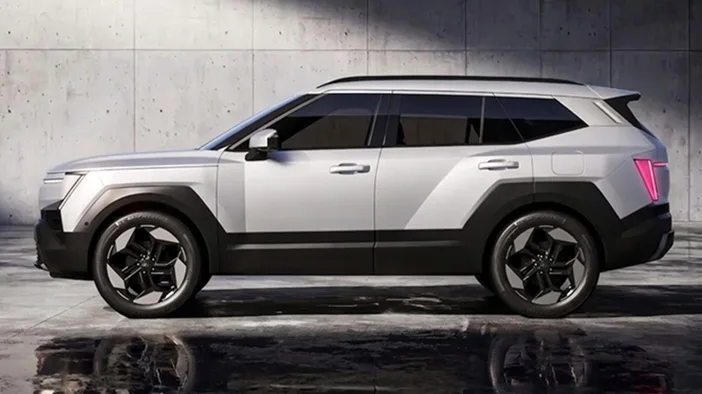
2028 Hyundai Tucson Exterior Design
Hyundai’s Art of Steel design direction has been applied across several of its vehicles, and the fifth-generation Tucson is reported to follow that approach. The brief describes it as more angular and muscular than the outgoing model. Verify those characteristics in Hyundai’s official images and specifications before relying on them.
Here are the styling elements that appear to be part of the fifth-generation design, pending confirmation:
- Front-end styling: Angular shapes and a stronger visual presence than the outgoing model.
- Lighting: LED designs that are part of the vehicle’s visual identity.
- Fenders and stance: Muscular fender shapes and a wider look, which can make an SUV appear more planted.
- Rear styling: Changes to the rear design, which should be checked in official photos.
- Wheels and aerodynamics: Wheel designs vary by trim, and any aerodynamic improvements should be confirmed in Hyundai’s technical information.
A sportier look isn’t the same as better performance, and the design can affect practical things like visibility and parking. Buyers who regularly park in tight garages or urban lots should check the official dimensions and sightlines rather than judging from photos alone.
No separate 2028 exterior update has been confirmed in the materials reviewed. Changes to the design after the fifth-generation launch would need Hyundai’s confirmation.
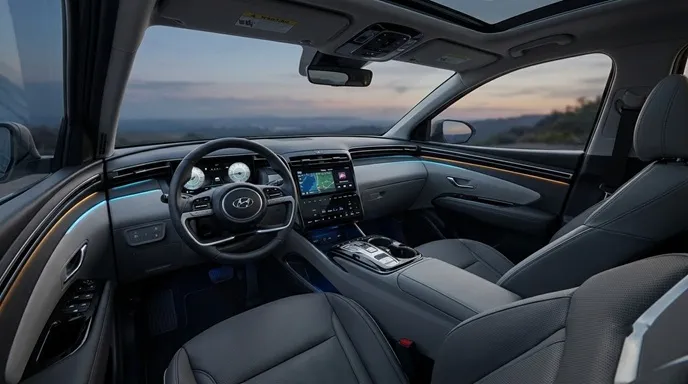
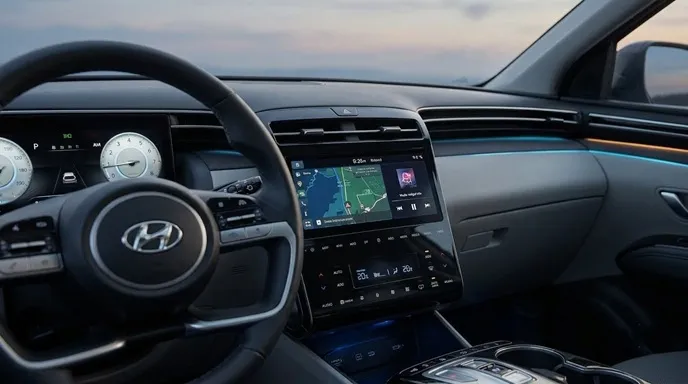
2028 Hyundai Tucson Interior: Technology and Comfort Upgrades
For most buyers, the interior is where a new generation feels most different in daily life. The brief reports a redesigned cabin with several technology changes, which Hyundai should confirm for each trim.
Reported for the fifth generation:
- Pleos Connect: Hyundai’s infotainment system, which the brief identifies as part of the new generation. Check its screen size, layout and smartphone integration on official pages.
- Gleo AI: A digital assistant that the brief describes as AI-powered. Ask what it actually does, how it’s activated and whether it works without an internet connection.
- Digital displays: Instrument and information displays vary by trim, so verify what’s standard and what’s optional.
Several everyday features matter more than headline technology:
- Smartphone connectivity: Confirm whether wireless Apple CarPlay and Android Auto are standard or optional on each trim.
- Seat comfort: Front-seat support and adjustability matter on long drives, and they’re best judged in person.
- Rear passenger space: Check legroom, headroom and rear vents, especially if you regularly carry older children or adults.
- Cabin materials: Touch points, panel fit and quietness vary by trim and can’t be judged from specification sheets.
- Storage and practicality: Cupholders, door pockets, USB ports and a usable cargo floor affect daily convenience.
Technology can make a car easier to live with, but only if it’s intuitive. Test the infotainment system during a visit to the dealership, using your own phone, and check how quickly you can complete common tasks like changing the climate settings or entering a destination.
2028 Hyundai Tucson Engine and Performance
The brief describes an updated hybrid powertrain for the fifth generation, and the gasoline engine lineup should be verified on Hyundai’s specification pages. Avoid relying on any displacement, horsepower or torque figure that doesn’t appear there.
Turbocharged gasoline engines are common in this class, and they typically deliver stronger low-speed torque than naturally aspirated engines. How that power feels depends on the transmission and calibration, which Hyundai’s technical materials should describe.
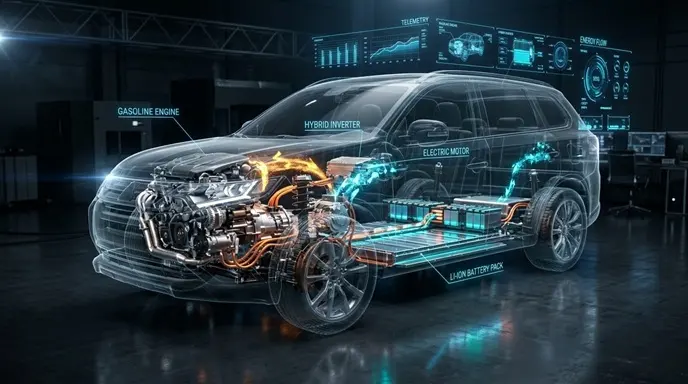
The hybrid adds an electric motor that can provide assistance during acceleration and handle some low-speed driving on its own. In practice, that means smoother starts in traffic and the ability to shut off the engine at low speeds. Hybrid systems also recover energy during braking, which is discussed below.
Two cautions apply. First, don’t assume the 2028 powertrain lineup will match the 2027 lineup without confirmation. Second, acceleration figures from manufacturers and independent testers are the only reliable performance data. Avoid comparing 0-to-60 times from forum posts or unofficial tests.
2028 Hyundai Tucson Hybrid
For many shoppers, the hybrid is the main reason to pay attention to the new Tucson. The brief describes an updated hybrid system and a fuel-economy target of up to 42 MPG. Those are manufacturer statements. They aren’t EPA ratings. A conventional hybrid combines a gasoline engine with an electric motor and a small battery. The battery charges through the engine and regenerative braking, which captures energy normally lost when slowing down. The car runs on electric power at low speeds and some light-load conditions, then the engine takes over when more power is needed. Hybrids don’t need to be plugged in.
Hybrids tend to show their biggest efficiency gains in stop-and-go traffic, where the electric motor can do more of the work and regenerative braking recovers energy. Highway efficiency depends more on aerodynamics, speed and tires, so the advantage over a gasoline model can be smaller at steady highway speeds.
The Toyota RAV4 Hybrid is the main competitor here, and Toyota has a long track record with its hybrid system. Compare the current official EPA ratings for each model on fueleconomy.gov, along with warranty terms, hybrid battery coverage and the specific trims being compared.
Here’s how to think about ownership savings. The following example is hypothetical and uses assumed numbers, not Hyundai or EPA figures:
- Assume 12,000 miles per year and $3.50 per gallon.
- A vehicle averaging 30 MPG uses 400 gallons, or about $1,400 a year.
- A vehicle averaging 40 MPG uses 300 gallons, or about $1,050 a year.
- The difference is about $350 a year.
Replace those assumptions with the actual EPA figures and your own driving habits. The hybrid premium should be weighed against those savings, your annual mileage and how long you plan to keep the vehicle.
2028 Hyundai Tucson MPG
Fuel economy depends on the powertrain, trim, drivetrain and driving conditions. EPA ratings are split into city, highway and combined figures, and those numbers are the most useful basis for comparison.
- City MPG: Usually the strongest category for hybrids because of low-speed electric driving and regenerative braking.
- Highway MPG: Shaped more by aerodynamics, tires and speed. Hybrid advantages may be smaller here.
- Combined MPG: A weighted average of city and highway figures, useful for general comparison.
- Driving conditions: Cold weather, heavy loads, roof racks and aggressive acceleration can all reduce real-world efficiency.
The 42 MPG figure in the brief is a Hyundai target for the hybrid. Until the EPA publishes an official rating for the specific model, treat the number as a manufacturer goal. Once a rating appears, check fueleconomy.gov for the exact model year, trim and drivetrain, since AWD versions typically rate differently from front-wheel-drive versions.
For gasoline models, the current Tucson’s EPA ratings on fueleconomy.gov are a useful baseline until the new generation’s ratings are published.
2028 Hyundai Tucson AWD
Hyundai has offered all-wheel drive on the Tucson in several configurations, and buyers should verify which trims and engines include it for the new generation. All-wheel drive helps with traction on wet pavement, gravel, snow and slippery mountain roads by distributing power to all four wheels as needed. It’s valuable for people who drive in winter weather or on rough roads, but it doesn’t improve braking or prevent skidding on its own. Tires matter more than drivetrain in most bad-weather situations.
The trade-offs are real. AWD typically adds weight, may reduce fuel economy compared with front-wheel drive, and adds components that need maintenance. Front-wheel drive is simpler and often more efficient, which suits buyers who mainly drive on dry pavement.
The XRT PRO is positioned as an adventure-focused version. Adventure styling and equipment can make sense for trailhead parking, dirt roads and camping trips, but that’s different from serious off-road capability. Check the official ground clearance, tire size, approach angles and any terrain-related features on Hyundai’s specification pages. Don’t assume a vehicle is suitable for rock crawling or deep mud without those confirmations.
2028 Hyundai Tucson Dimensions and Cargo Space
Dimensions shape how a vehicle fits into daily life. Overall length affects parking and garage clearance, wheelbase influences rear legroom and ride comfort, and cargo capacity determines how much a family can carry. The brief describes larger dimensions for the fifth generation, but compare the exact figures with the outgoing model on Hyundai’s official specifications page.
The measurements worth checking include:
- Overall length, width and height: Measure your garage, carport and parking spaces before you shop.
- Wheelbase: A longer wheelbase usually helps rear passenger room and stability.
- Rear passenger room: Legroom and headroom affect long-distance comfort.
- Cargo capacity behind the rear seats: Use this number for everyday loads.
- Maximum cargo capacity with rear seats folded: Useful for larger items.
- Folding mechanism: Check whether the seatbacks fold flat and how much effort is required.
Bring your own gear to the dealership. Put in a stroller, car seats, a suitcase or sports equipment. Published numbers help, but a real test with your belongings tells you more about daily usability.
2028 Hyundai Tucson Safety and Driver Assistance Features
Hyundai’s driver-assistance technologies are typically marketed under the Hyundai SmartSense name. Verify each feature’s availability on the official trim pages, since some are standard and others are optional or trim-dependent.
The systems buyers usually compare include:
- Forward collision avoidance: Warns of a potential frontal collision and can apply the brakes.
- Lane keeping and lane following assistance: Help keep the vehicle centered or within its lane.
- Blind-spot monitoring: Warns of vehicles in adjacent lanes.
- Rear cross-traffic collision avoidance: Alerts you to traffic approaching from the sides while backing out.
- Adaptive cruise control: Maintains a set distance from the vehicle ahead.
- Parking assistance and surround-view camera: Help with tight spaces and low-speed maneuvering.
Do not assume a feature is included on every trim. Driver-assistance packages often depend on the trim level and can be bundled with other options.
Safety ratings matter too, but ratings for an unreleased or newly launched vehicle may not be available yet. Check NHTSA’s safety ratings at nhtsa.gov and IIHS results at iihs.org once they’re published for the specific model year.
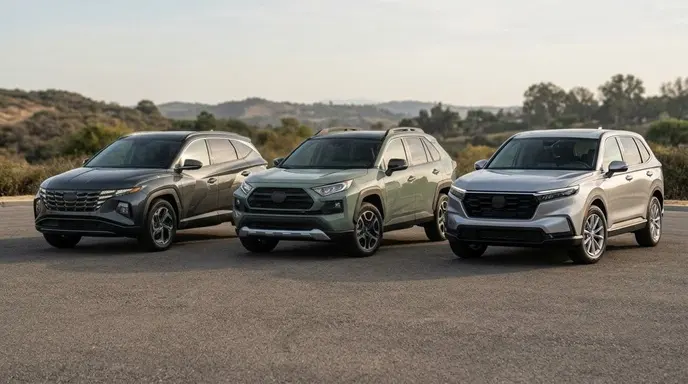
2028 Hyundai Tucson vs. Toyota RAV4 vs. Honda CR-V
The Tucson competes in the same segment as the RAV4 and CR-V, and each has its own strengths. The table below lists the categories that matter most to buyers and where to verify current information. Specific figures change by model year, so pull them from official sources before making a decision.
| Factor | Hyundai Tucson | Toyota RAV4 | Honda CR-V | Where to Verify |
|---|---|---|---|---|
| Starting price | Verify on hyundaiusa.com | Verify on toyota.com | Verify on automobiles.honda.com | Official MSRP pages |
| Hybrid availability | Verify for the 2027 model and any 2028 changes | Verify current trims | Verify current trims | Official trim pages |
| Fuel economy | EPA ratings after certification | EPA ratings | EPA ratings | fueleconomy.gov |
| Interior technology | Pleos Connect and Gleo AI (reported) | Verify | Verify | Official specifications |
| Passenger comfort | Test rear seats in person | Test rear seats in person | Test rear seats in person | Dealership test drive |
| Cargo practicality | Verify official cargo figures | Verify official cargo figures | Verify official cargo figures | Official specifications |
| AWD availability | Verify by trim and engine | Verify by trim | Verify by trim | Official trim pages |
| Warranty coverage | Verify current terms | Verify current terms | Verify current terms | Official warranty pages |
For hybrid buyers, the RAV4 Hybrid and Tucson Hybrid will be the most direct comparison. Compare real-world ownership costs, including the hybrid battery warranty, expected fuel savings and resale value.
Hyundai would need to deliver several things to stay competitive: strong fuel economy, a comfortable and intuitive interior, competitive pricing with clear equipment levels, and a warranty that buyers view as a meaningful advantage. The fifth generation is positioned to address those priorities, but the final comparison depends on official figures.
Is the 2028 Hyundai Tucson Worth Waiting For?
The answer depends on your timeline and priorities.
Consider the redesigned 2027 Tucson if you need a vehicle soon, want the fifth-generation design and technology, or find a hybrid or AWD configuration that suits your needs. Early-model vehicles may carry higher demand or less room for negotiation, so compare dealer offers carefully.
Consider waiting for the 2028 model if you can wait and want to see whether Hyundai makes model-year changes, pricing adjustments or added equipment. Be aware that waiting carries uncertainty, since no official 2028-specific information has been published.
Consider the hybrid if you drive heavily in city traffic, want lower fuel costs and plan to keep the vehicle long enough to recover the premium. The 42 MPG figure is a target, so compare the EPA rating once it’s published.
Consider the new interior if you spend a lot of time in the car, use your phone for navigation and music, or carry passengers regularly. Test the technology before deciding that it makes a difference.
Before you commit, compare real dealership pricing, including destination charges, taxes, fees and incentives. Confirmed specifications matter more than online rumors, and every decision should rest on official Hyundai information and independent test results. The fifth-generation Tucson looks like a serious contender, but the details that matter most will come from Hyundai’s official specifications and the EPA.
Frequently Asked Questions
Q.1. Is the 2028 Hyundai Tucson getting a redesign?
The fifth-generation Tucson is the redesigned model, which the brief describes as the 2027 model arriving in early 2027. Any additional 2028 changes have not been officially confirmed in the materials reviewed. Check hyundainews.com for updates.
Q.2. When will the 2028 Hyundai Tucson be released?
No official 2028-specific release date has been announced in the materials reviewed. The early-2027 arrival applies to the fifth-generation Tucson, which Hyundai positions as a 2027 model. Confirm timing with Hyundai’s newsroom and local dealers.
Q.3. How much will the 2028 Hyundai Tucson cost?
No official 2028 pricing has been published in the sources reviewed. Check hyundaiusa.com for current pricing and compare out-the-door totals at dealerships, since destination charges and fees add to the sticker price.
Q.4. Will the 2028 Hyundai Tucson have a hybrid engine?
The fifth generation is reported to include an updated hybrid powertrain. Whether a 2028 model keeps the hybrid, and in which trims, has not been confirmed. Verify availability on Hyundai’s official trim pages.
Q.5. How many MPG will the 2028 Hyundai Tucson get?
Hyundai has announced a hybrid target of up to 42 MPG. That’s a manufacturer target, not an EPA rating. Official ratings should be checked on fueleconomy.gov once published for the specific model year and trim.
Q.6. Will the 2028 Hyundai Tucson offer AWD?
AWD has been available on the Tucson in some configurations. Its availability for the fifth generation and any 2028 model year should be verified by trim and engine on Hyundai’s website.
Q.7. What is new about the Hyundai Tucson interior?
The brief reports a redesigned cabin, Pleos Connect infotainment and Gleo AI digital assistance for the fifth generation. Check each trim’s official equipment list to see which features are standard and which are optional.
Q.8. Is the 2028 Hyundai Tucson worth waiting for?
It depends on your timing. If you need a vehicle soon, the redesigned model may suit you. If you can wait, watch for official 2028 information, and compare fuel economy, pricing and equipment before deciding.
Related Post