
Few American nameplates carry the weight of the Chevelle SS. For a generation of enthusiasts, the letters stood for a mid-size muscle car with big-block power, a menacing stance and a place in the culture of drag strips and high school parking lots. So when renderings of a modern Chevelle SS start circulating online, they spread quickly.
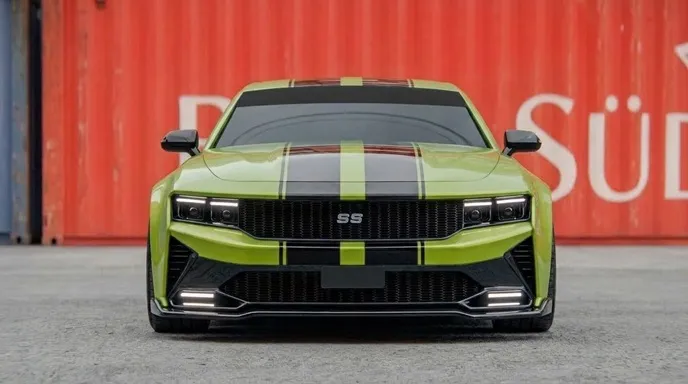
Could Chevrolet bring back one of its most recognizable muscle-car names for a new generation? It’s a fair question, and it’s worth asking carefully. Social feeds are full of modern Chevelle concepts, V8 predictions and comeback stories, but very little of that comes from Chevrolet. This article separates what’s official from what’s reported, what’s historical and what’s imagined. as of the latest information available for this article, Chevrolet has not officially confirmed a production 2028 Chevelle SS.
Is the 2028 Chevy Chevelle SS Really Coming Back?
No official announcement from Chevrolet or General Motors confirms a new production Chevelle for 2028. Check Chevrolet’s newsroom at media.chevrolet.com and GM’s global newsroom at media.gm.com for the latest updates, since those are the places where a real production reveal would appear.
Rumors persist for a few reasons. The Chevelle is one of the most recognizable names in American muscle history. Chevrolet has also revived other heritage nameplates, which makes some enthusiasts assume the Chevelle is next. Automotive social media moves fast, and a single well-made image can look like a reveal.
AI-generated and digitally rendered images have made the problem worse. A convincing render can show a production-ready grille, wheels and badges, yet it may have no connection to any GM plan. Independent designers have also produced modern Chevelle-inspired concepts, and those are often shared as if they were factory artwork. Those designs can be interesting, but they are not announcements.
The difference is simple. A rendering is an artist’s interpretation. A production announcement comes from the manufacturer, and it includes details such as the model name, engine, pricing, timing and where the car will be built. Until Chevrolet publishes those details, a Chevelle SS image is a concept, regardless of how realistic it looks.
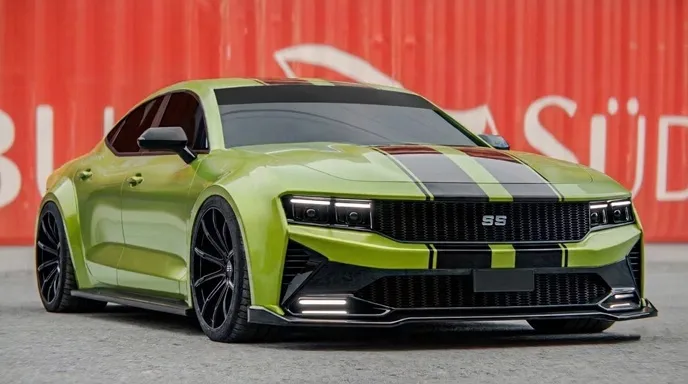
A look at the Chevelle’s real history, the modern Chevrolet V8s a revived SS could use, and what a four-door, all-wheel-drive version might look like.
Overview
The Chevelle was one of General Motors’ best-known mid-size muscle cars, produced from 1964 to 1977. Its SS (Super Sport) trim became the icon of the era, and the 1970 SS 454 with the LS6 big-block is still one of the most sought-after American classics. GM has not built a Chevelle since 1977, and it has not announced a 2028 model.
A revived SS would have to answer three questions: whether it uses a modern Chevrolet V8 (such as the LT1 or LT4 from the Camaro and Corvette), whether a four-door body and all-wheel drive fit the nameplate, and where it would sit on price. Those are the questions the rest of this page explores.
Iconic Landmark: The Chevelle’s Place in Muscle Car History
Key moments in the Chevelle’s history that shape how a revival would be received.
The Chevelle debuts as a mid-size Chevrolet offered as a two-door coupe, four-door sedan, and wagon, which gives a four-door version some historical precedent.
The Super Sport (SS) package establishes the Chevelle as a performance car, with big-block V8s available in the muscle-car era.
The SS 454 with the LS6 big-block is rated at 450 hp and 500 lb-ft. It becomes the defining Chevelle and a benchmark for collectors.
Final Chevelle production ends. The nameplate goes dormant as GM shifts its mid-size lineup.
A revival is possible in principle, but nothing has been announced. Any revival would be judged against the 1970 SS.
Historical Approx. Figures are advertised ratings. Older ratings used different measurement methods than modern SAE net ratings, so direct comparisons are approximate.
Design Return: What a Modern Chevelle Could Look Like
Design cues that could carry the classic Chevelle look into a modern body. All styling details are speculation.
Proportions
A long hood, short rear deck, and a fastback or coupe silhouette would echo the 1970 car. Modern pedestrian-safety and aerodynamic rules would shape the final shape.
Speculation
Lighting and Grille
Vertical or split-grille treatments and a modern take on the classic taillight bar are the most common design ideas for retro-inspired Chevrolets.
Speculation
Badging and Trim
A revived SS badge and classic stripe packages would be the most direct link to the original. Chevrolet’s Camaro SS used similar nods to its heritage.
Estimate
Speculation These levels are illustrative only and are not based on a Chevrolet design brief.
Four-Door Chevelle: A Practical Concept
The Chevelle did offer four-door sedans in the 1960s and 1970s, so a four-door body has historical support. A modern four-door Chevelle would be a new product, not a restoration.
Approx. Speculation Concept weights are rough figures. AWD hardware and four doors add mass.
Body Style Trade-Offs
- Two-door coupe: Most faithful to the 1970 car. Less rear-seat practicality.
- Four-door sedan: Practical, with historical precedent. Adds weight and changes the silhouette.
- Four-door with fastback roofline: A compromise that could balance style and rear access.
Speculation No body style has been announced.
The “Four-Door Hellcat” Question
| Item | Dodge Charger SRT Hellcat (real reference) | Four-Door Chevelle SS Concept |
|---|---|---|
| Engine | 6.2L supercharged V8 (Hemi) | Speculation Modern Chevrolet V8 (LT4-class) |
| Horsepower | Approx. ~707 hp | Speculation ~650–700 hp |
| Torque | Approx. ~650 lb-ft | Speculation ~650–660 lb-ft |
| Body | Four-door sedan | Speculation Four-door sedan or fastback |
| Drivetrain | Rear-wheel drive | Speculation RWD or AWD option |
| Status | Production model (verify current availability) | Speculation Not announced |
Modern V8 Engine Options
Current Chevrolet V8 engines that a modern SS could plausibly use. Ratings are approximate and drawn from recent Camaro and Corvette models.
Approx. Concept estimate assumes a supercharged or tuned version of a current-generation V8 at a lower output than the LT4.
| Engine | Application | Aspiration | Fit for a Revived SS |
|---|---|---|---|
| LT1 6.2L V8 | Camaro SS (2024) | Naturally aspirated | Estimate Good value and tuning base |
| LT2 6.2L V8 | Corvette (C8) | Naturally aspirated | Estimate Stronger, but may be costly for a sedan |
| LT4 6.2L V8 | Camaro ZL1 | Supercharged | Speculation Best match for a Hellcat-class goal |
| LT6 5.5L V8 | Corvette Z06 | Naturally aspirated, flat-plane | Speculation Unlikely for a four-door sedan |
Hardware for an AWD Chevelle
Chevrolet already uses all-wheel drive on the Blazer, Equinox, and Traverse. Adapting the same ideas to a performance sedan would require new tuning and more robust hardware.
Likely Hardware Pieces
- Transfer case or rear-axle clutch-based AWD system
- Torque-vectoring differential to manage high power
- Upgraded half-shafts and driveline for 600+ hp output
- Launch control and traction calibration
- Performance brakes and tires sized for AWD weight
Speculation No AWD hardware has been announced for a Chevelle.
Speculation Scores are illustrative, not test results.
Price Outlook (Concept)
Starting price ranges for concept variants, with midpoints shown on a $0–$100,000 scale. All figures are speculative and exclude destination charges.
Specifications Snapshot
Historical specs are verified. Modern and concept specs are estimates for planning purposes only.
| Specification | 1970 SS 454 | Camaro SS (2024) | Concept SS (2028 est.) |
|---|---|---|---|
| Body style | 2-door coupe | 2-door coupe | Speculation Coupe or four-door |
| Engine | 7.4L (454) big-block V8 | 6.2L LT1 V8 | Speculation Modern V8, ~6.2L class |
| Horsepower | Historical 450 hp | Approx. 455 hp | Speculation ~600–700 hp |
| Torque | Historical 500 lb-ft | Approx. 455 lb-ft | Speculation ~600–660 lb-ft |
| Transmission | 4-speed manual (common) | 6-speed manual or 10-speed auto | Speculation Auto with manual option |
| Drivetrain | Rear-wheel drive | Rear-wheel drive | Speculation RWD or AWD |
| Curb weight | Approx. ~3,900 lb | Approx. ~3,800 lb | Speculation ~4,400–4,600 lb |
Power-to-Weight Calculator
Power-to-weight is a common rough indicator of acceleration. Move the sliders to test a concept’s horsepower and weight. The result is an estimate, not a measured figure.
Speculation Bar scale: 4 lb/hp (full) to 12 lb/hp (empty). Reference points: 1970 SS 454 ≈ 8.7 lb/hp; Camaro SS ≈ 8.4 lb/hp.
Revival Timeline (Speculation)
The Camaro, GM’s last rear-wheel-drive V8 coupe, ends production. Its V8 engines remain in Chevrolet’s lineup through the Corvette.
Any revival would need a platform decision, a V8 choice, and a body style. No such decision has been announced.
A Chevelle SS revival is possible in theory, but nothing is confirmed for this model year.
Frequently Asked Questions
Is a 2028 Chevelle SS officially confirmed?
No. GM has not announced a 2028 Chevelle, a four-door Chevelle, or an AWD version.
Is there a Chevy Hellcat?
No. Hellcat is a Dodge performance badge. The closest real four-door performance car is the Dodge Charger SRT Hellcat.
Did the Chevelle ever come as a four-door?
Yes. The original Chevelle (1964–1977) was offered as a four-door sedan and as a wagon, as well as the two-door coupe.
Which modern Chevy V8 would a revived SS use?
That is speculation. The LT1 (Camaro SS) and LT4 (Camaro ZL1) are the most likely candidates based on current production engines.
Why doesn’t the trimatlas link apply here?
That link compares the 2026 Toyota Camry LE and XLE. It contains no information about the Chevelle, Chevrolet V8 engines, or AWD hardware, so it could not be used as a source.
2028 Chevy Chevelle SS Release Date
There is no official release date for a 2028 Chevelle SS. Any date you see online, whether from a forum or a video title, should be treated as unverified.
A genuine production announcement would normally include several pieces of information: an official reveal event or press release, a production location and timing, factory specifications and dealership availability. None of those details has been published for a new Chevelle.
Model years and calendar years don't always line up. A model named for 2028 might appear before that year begins, or later than expected, depending on the manufacturer's schedule. That general industry practice doesn't mean a 2028 Chevelle is in the pipeline.
2028 Chevy Chevelle SS Price
No MSRP has been announced for a modern Chevelle SS, and this article won't invent one.
In theory, a modern Chevelle SS would sit in the premium performance market, but where it would land depends on several factors. Engine and performance hardware would be significant, as would the platform and development costs. Interior quality, advanced technology and any limited-edition or heritage packaging would also play a role. Competition from existing performance cars, including the Ford Mustang and Dodge Charger, would shape pricing as well.
Buyers should be cautious about comparing a hypothetical car with current prices. Before using any comparison, verify current MSRPs on Chevrolet's and competitors' official websites, and include destination charges, taxes and fees in the total cost.
2028 Chevelle SS Engine: Could a Modern V8 Return?
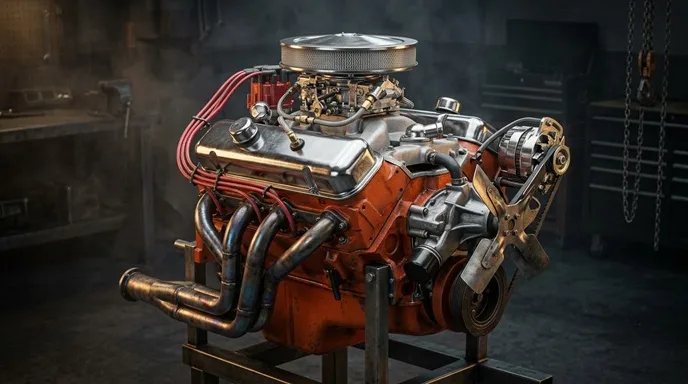
The Chevelle SS is inseparable from the V8. Classic Chevelle SS models offered big-block options, and the 396 and 454 cubic-inch engines became central to the car's reputation.
A modern version would most likely be expected to use a V8, given the nameplate's history. Chevrolet's current performance lineup includes small-block V8 engines, such as the 6.2-liter V8 in the Corvette. That family could be one reference point for any future muscle car, but a real Chevelle would need its own engineering decisions, which have not been announced.
Several engine questions would matter to buyers:
- Naturally aspirated or forced induction: A naturally aspirated V8 offers a traditional feel, while a supercharged or turbocharged setup can deliver more output at lower rpm.
- Transmission: Manual gearboxes appeal to purists, while modern automatics offer faster shifts and easier daily driving.
- Drivetrain: Rear-wheel drive is the classic muscle-car layout, though AWD has become more common in modern performance cars.
These are hypothetical examples of what an engine could look like, not confirmed Chevrolet specifications.
2028 Chevy Chevelle SS Horsepower and Performance Expectations
Modern muscle-car buyers expect more than a big number on a spec sheet. They look for smooth power delivery, predictable handling, strong braking and a car that behaves well at the track and on the street.
A future Chevelle would need to satisfy those expectations. Key performance areas would include torque delivery at low and mid rpm, rear-wheel traction, launch control, a performance suspension, serious brakes and optional track-oriented equipment. Those are performance priorities for the segment, not confirmed Chevelle features.
The original Chevelle SS was built around straight-line power and a durable chassis for its era. A modern version could be engineered to emphasize balance and control as much as acceleration, which would reflect how today's performance cars are judged. Any claim that a future Chevelle would beat its rivals would be speculation. No verified figures exist to support that.
2028 Chevelle SS Exterior Design
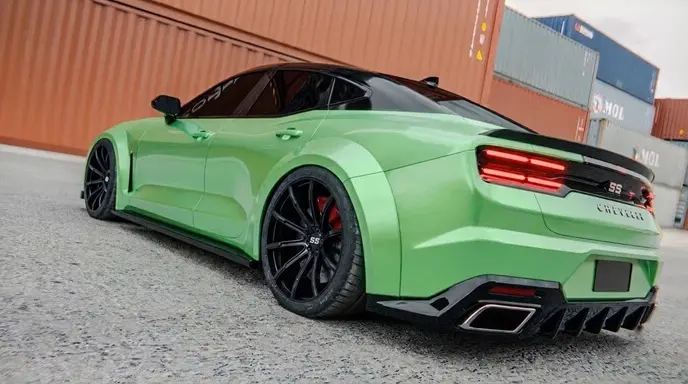
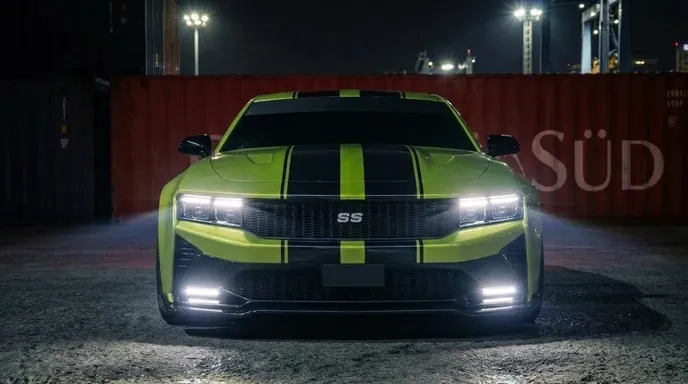
Several independent designers have produced Chevelle-inspired concepts. These images are unofficial artwork and do not represent a Chevrolet design direction.
Most of these concepts share familiar features: a wide, bold grille, a long hood, a short rear deck and a fastback-style roofline. Designers have also suggested modern LED lighting, muscular wheel arches, wider rear tires and retro-inspired SS badging.
Preserving the Chevelle's identity while modernizing it is a real design challenge. Overly literal retro styling can look dated quickly, while a shape that's too generic can lose the nameplate's character. A successful design would likely keep the proportions, stance and profile that make a 1960s or 1970s Chevelle recognizable, while using modern lighting, aerodynamics and materials.
2028 Chevy Chevelle SS Interior and Technology
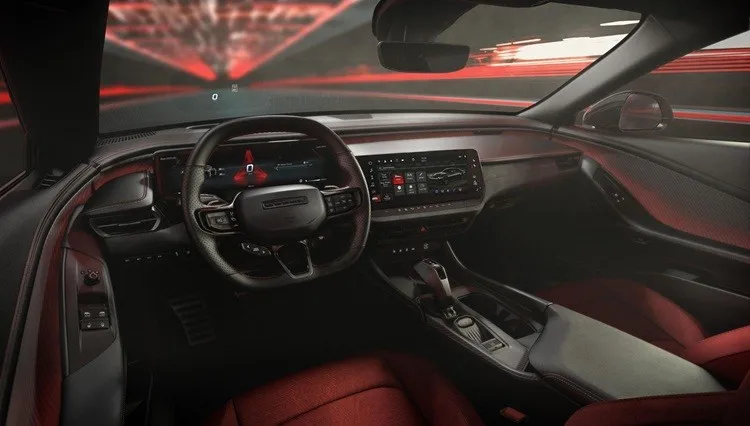
Any modern Chevelle SS would need interior technology that competes in today's performance market. Those features are reasonable expectations for a car in this segment, not confirmed specifications.
Buyers would likely look for a digital instrument cluster, a large infotainment display, wireless Apple CarPlay and Android Auto, and performance information such as lap timers or engine data. Sport seats with good support, premium materials and easy-to-use climate controls would also matter. Driver-assistance features and selectable performance drive modes are common on modern performance cars.
Interior design also has to honor the car's heritage without feeling like a theme park. A modern cabin could reference classic instrument layouts or badging, while keeping ergonomics, visibility and practical usability at the center of the design.
Will the 2028 Chevelle SS Have a 454 V8 Engine?
Not confirmed. Chevrolet has not announced a new 454 engine for any Chevelle. The 454 holds a special place in muscle-car history. Chevrolet's big-block 454 cubic-inch engine was offered in the Chevelle SS in 1970, in two versions, LS5 and LS6. The LS6 was rated at 450 horsepower under Chevrolet's gross rating system of that era, a figure that predates the net ratings used today. The car's reputation grew from those engines, and the 454 badge still carries that meaning.
A modern engine can't simply reuse that badge, though. Classic 454 engines were cast-iron big-blocks built for a different emissions environment and different materials and manufacturing methods. Modern GM V8 engine families use different architecture, electronic controls and emissions systems. A new vehicle wearing a 454 badge would need genuine engineering justification, such as displacement, output or a performance purpose that matched the name. Otherwise, the badge would be a marketing choice without substance.
2028 Chevy Chevelle SS MPG: Performance vs. Fuel Economy
Large-displacement V8 performance cars have never been known for fuel efficiency. Several factors drive that tradeoff: engine displacement, vehicle weight, aerodynamics, transmission gearing and, most of all, how the car is driven.
Modern engine technologies, such as cylinder deactivation, direct injection and advanced transmissions, can reduce fuel use. Those features exist on many current V8 vehicles, but whether a future Chevelle would use them is unknown.
No hypothetical MPG figure should be treated as an actual rating. An official EPA rating requires a production vehicle that has been tested under EPA procedures. You can check any future rating at fueleconomy.gov once it's published.
2028 Chevelle SS 0–60 and Top Speed
Acceleration and top speed depend on more than engine output. Tires, traction, weight, gearing and aerodynamics all play a role. Rear-wheel-drive cars can struggle to transfer power to the pavement in a launch, which is why electronic launch systems and performance tires matter so much.
Power-to-weight ratio is one of the most useful ways to compare performance cars. A heavier car needs more power to match a lighter one, all else being equal. Transmission response also influences how quickly a car reaches its peak speed.
No official 0–60 or top-speed figures exist for a 2028 Chevelle SS. Historical test results for classic Chevelles vary by source, test conditions and tire technology, so those numbers aren't directly comparable with modern figures. Any future claim should come from manufacturer data or independent testing of a production car.
2028 Chevelle SS vs. Dodge Charger and Ford Mustang
A comparison between a future Chevelle SS and current muscle cars is hypothetical, because no factory 2028 Chevelle has been announced. Still, the question is useful because it shows how the segment competes today.
- Performance philosophy: The Mustang and Charger have established V8 and performance lineups, while a Chevelle would have to define its own identity.
- Engine choices: Check the current Mustang and Charger engine options on each brand's official site, since availability changes.
- Exterior styling: The Mustang's pony-car design and the Charger's four-door muscle-car look are both established. A Chevelle would need to offer a clear visual alternative.
- Interior technology: Compare standard and optional features on current models, including infotainment, driver-assistance and performance displays.
- Transmission options: Check which manual or automatic transmissions each model offers.
- Practicality: The Charger's four doors give it an advantage for passengers, while the Mustang and a two-door Chevelle would share a more focused layout.
- Brand heritage: All three have strong histories. Chevrolet's Chevelle heritage is a major part of its appeal.
- Price positioning: Compare current MSRPs, not rumored figures.
Original Chevelle SS vs. a Modern Chevelle Revival
The original Chevelle is a cornerstone of American muscle-car history. Its mid-size body, V8 options and SS performance identity made it one of the most popular performance cars of its era. The 396 and 454 engines helped define the Chevelle SS's reputation, and the car's proportions remain widely admired.
Classic models are also valued by restorers and collectors. Authentic cars with original drivetrains, documented options and correct trim details often command strong interest in the collector market. Buyers researching any classic Chevelle should check titles, VIN and build records, and get an independent inspection from a specialist familiar with the model.
A modern revival would need to honor that legacy in a few specific ways: a recognizable silhouette, a meaningful V8 identity, rear-wheel-drive character and a name that carries real performance purpose. Traditional enthusiasts are likely to judge a modern car by whether it feels like a Chevelle, not just whether it looks like one.
Is the Trans Am Worldwide 70/SS a Real New Chevelle?
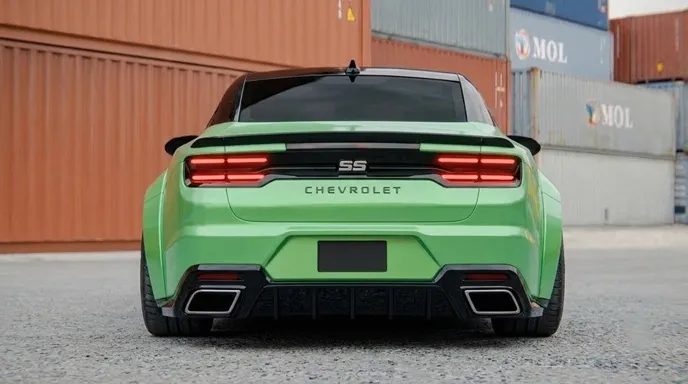
The Trans Am Worldwide 70/SS is a specialty-built vehicle inspired by the Chevelle's styling. It is not a factory-produced Chevrolet, and it should not be marketed as a 2028 Chevrolet Chevelle SS.
Specialty builders like Trans Am Worldwide produce custom vehicles that may use a variety of components, configurations and construction methods. Their products are offered and built independently of General Motors. Buyers should review the builder's own documentation for details about the vehicle's construction, components, performance configurations, warranty terms and pricing. Verify those details directly at the builder's website, since specialty-build specifications can change.
The distinction matters. A factory Chevrolet is designed, engineered, built and warrantied by GM. A specialty build is a separate product. Both can be interesting to enthusiasts, but they are not the same thing, and buyers should understand what they're purchasing.
What We Know vs. What Is Still Speculation
| Topic | Current Status |
|---|---|
| 2028 Chevelle SS production | Not officially confirmed |
| Release date | Not announced |
| MSRP | Not announced |
| Engine | Not confirmed |
| 454 V8 | Not confirmed |
| Horsepower | Not confirmed |
| Interior design | No official production details |
| Exterior design | Unofficial concepts exist |
| AWD or RWD | Not confirmed |
| Production numbers | Not announced |
Update this table if authoritative new information becomes available.
Should Muscle-Car Fans Wait for a New Chevelle SS?
It depends on what you want. Classic Chevelle enthusiasts may prefer an original, restored model, because a documented car offers a tangible connection to the past. A modern revival, if it arrives, would be a different product with different priorities.
Buyers looking for a new performance car today should research the models Chevrolet and other manufacturers currently sell. Compare the engines, transmissions, pricing, warranties and driver-assistance features on official websites. Waiting for a car that hasn't been announced carries risk, especially when the decision depends on a rumor.
Avoid making a purchase decision based on AI renderings, social-media posts or unverified spec claims. Several official signs would indicate a genuine Chevelle revival: a press release from Chevrolet or GM, a production reveal event, official pricing and specifications, a stated production location and dealer availability. Until those appear, treat the Chevelle SS as a compelling idea rather than a confirmed product.
Chevelle fans have good reason to hope. The name has earned its place in American automotive history. Hope, however, isn't a production schedule. For now, the most accurate answer is that a modern Chevelle SS remains unconfirmed, and readers should follow official Chevrolet and GM announcements for the next update.
Frequently Asked Questions
Q.1. Is the 2028 Chevy Chevelle SS confirmed?
No. As of the latest information available for this article, Chevrolet has not officially announced a production 2028 Chevelle SS.
Q.2. When will the 2028 Chevy Chevelle SS be released?
No release date has been announced. Check Chevrolet's newsroom for official updates.
Q.3. How much will the 2028 Chevelle SS cost?
No MSRP has been published. Any price you see online is unofficial.
Q.4. Will the new Chevelle SS have a V8?
Not confirmed. A V8 would fit the nameplate's history, but Chevrolet hasn't announced an engine for a new Chevelle.
Q.5. Will Chevrolet bring back the 454 engine?
Not confirmed. Chevrolet has not announced a new 454 engine for any Chevelle.
Q.6. Is the Trans Am Worldwide 70/SS a factory Chevrolet?
No. It is a specialty-built vehicle from Trans Am Worldwide, not a General Motors production car.
Q.7. Why was the original Chevelle SS so popular?
The Chevelle SS combined a practical mid-size body with strong V8 options, including the 396 and 454 engines. Its performance image and styling made it a defining American muscle car.
Q.8. Where can I find official Chevrolet news?
Check media.chevrolet.com and media.gm.com for official announcements.
Related Post