
Used-car prices have been unpredictable for several years, and a $10,000 budget often buys less car than shoppers expect. Still, a used Hyundai under $10000 can be a sensible choice for buyers who focus on the right model year, realistic mileage and a thorough inspection. Hyundai’s recent lineup includes compact sedans, hatchbacks, midsize sedans and small SUVs that regularly appear in this price range. The badge alone doesn’t guarantee a good purchase, though. A well-documented car with steady maintenance is usually a better buy than one with gaps in its history. This guide covers seven models, what to look for in each, and how to match a car to your situation.
Can You Buy a Good Used Hyundai for Under $10,000 in 2026?
Yes, but “good” usually means three things: a model year that suits your needs, mileage that fits the car’s age, and service records showing the previous owner kept up with maintenance. A $10,000 budget typically points toward cars from the early-to-mid 2010s through the late 2010s, though older or newer vehicles with higher mileage can also appear. Availability changes by region and month, so treat any year range as a starting point.
Asking prices vary with region, mileage, trim, title status and condition. Compare several similar listings before deciding what’s reasonable, and check how the listed price compares with the car’s actual condition.
Private sellers often ask less, but most private sales are as-is, and the paperwork is limited to the title and a bill of sale. Dealers may charge more and may offer reconditioned inventory or limited warranties, although certified programs differ. Most used-car dealers in the U.S. must display a Buyers Guide on each vehicle that states whether the car comes with a warranty or is sold as-is. The Federal Trade Commission explains this requirement at consumer.ftc.gov.
Budget for more than the purchase price. Sales tax, title and registration fees, documentation fees where allowed, and an inspection all add to the total. Many buyers also face immediate repairs such as tires, brakes, fluids or a battery. A car bought at the very top of your budget leaves little room for these costs.
7 Best Used Hyundai Models You Can Find Under $10,000
The seven models below appear most often in this price range. Each suits a different kind of buyer, and each has its own tradeoffs. Confirm the exact model year, trim and equipment with the VIN before you rely on any detail here.
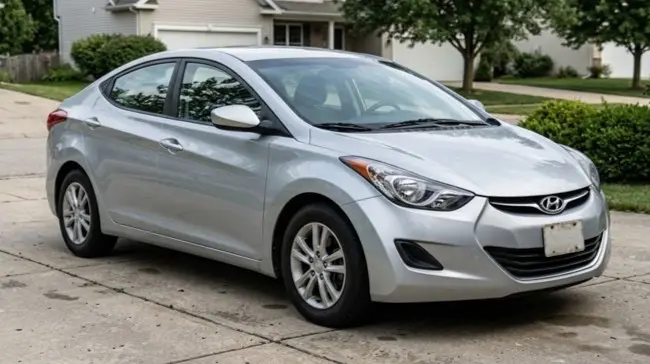
1. Used Hyundai Elantra Under $10,000
The Elantra is one of the most common used Hyundai sedans in this range. Depending on mileage and condition, buyers may find examples from the 2011–2016 generation and some from 2017–2018, with older or newer years possible.
Engines and fuel economy: Most Elantras in this range use a four-cylinder engine, with displacement and output varying by year and trim. Check the specifications for the exact car, and compare fuel economy for that model year at fueleconomy.gov rather than relying on a general figure.
Comfort and space: As a compact sedan, the Elantra offers adequate rear-seat room for adults on shorter trips, but it’s tighter than a midsize car. The trunk handles groceries and luggage well. Higher trims may add Bluetooth, a backup camera or upgraded audio, so confirm the equipment on the actual car.
What to inspect: No single problem defines this generation. Focus on service records, open recall status at nhtsa.gov/recalls, a smooth cold start and steady idle. During the test drive, listen for noises over bumps and check that the brakes, steering and transmission feel consistent.
Best for: Commuters who want a practical sedan, and first-time buyers who want a basic car with predictable daily manners.
2. Used Hyundai Accent Under $10,000
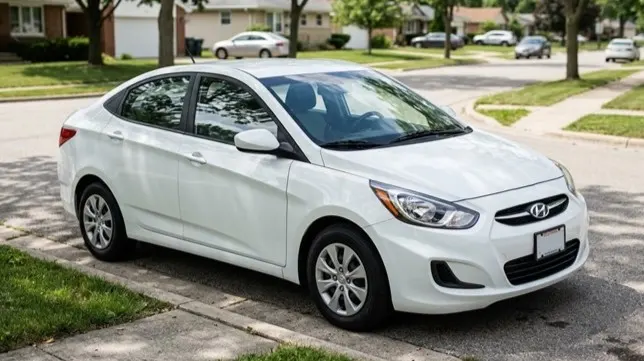
The Accent is the budget-minded option. The 2012–2017 generation was offered as a sedan and a five-door hatchback, while the 2018–2022 generation was sedan-only. Hyundai discontinued the Accent in the U.S. after the 2022 model year, so buyers will find only used examples. Confirm these details with Hyundai’s official model history.
Why someone chooses it: The Accent is small, easy to park and generally simple to own. Fuel economy suits city driving, and the hatchback’s folding rear seats make it useful for students moving apartments or hauling gear.
Limitations: The Accent is smaller and less refined than many buyers expect at highway speeds. Expect more road and wind noise, and plan merges carefully. Lower trims may lack the technology features shoppers see on newer cars.
What to inspect: Basic wear items matter more here than exotic repairs. Check the tires, brakes, battery, suspension bushings and fluid condition. Ask whether the car was driven mostly in city traffic or on highways, since that affects wear.
Best for: College students, city drivers and second-car shoppers who need efficient, low-cost transportation.
3. Used Hyundai Sonata Under $10,000
The Sonata is a midsize sedan with more passenger room and a more composed highway ride than compact options. In this price range, the 2011–2014 generation and the 2015–2017 generation are the years most often seen, though the right one depends on the individual car.
Engines: Sonatas from this period were offered with different four-cylinder and turbocharged engines depending on year and trim. Hyundai’s Theta II gasoline direct-injection engines were the subject of recalls and a class-action settlement that covered certain Sonata model years. Check the VIN with Hyundai and NHTSA, and ask the seller for documentation of any repairs or software updates. Not every Sonata is affected, so don’t assume the worst or dismiss the issue.
Highway driving: The Sonata’s longer wheelbase and sedan layout suit daily highway commutes. Ask about the specific features on the car, such as heated seats, a sunroof or advanced audio, rather than assuming trim-level equipment.
What to inspect: On the test drive, check the engine at a cold start and listen for ticking, knocking or rough idle. Ask for a scan for stored diagnostic codes. Check the oil level and condition, since some engines consume oil as they age and the amount matters.
Best for: Highway commuters and small families who want more space than a compact sedan without the cost of a larger SUV.
4. Used Hyundai Tucson Under $10,000
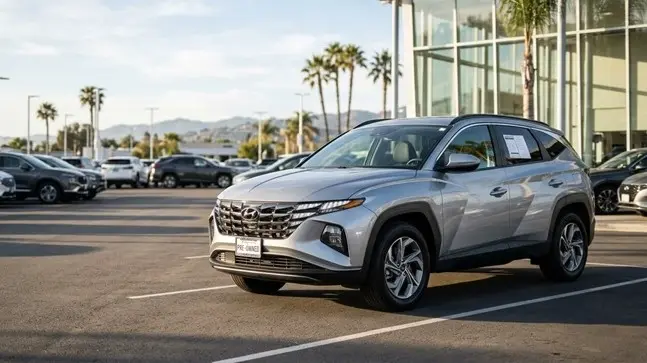
The Tucson is a compact SUV, and at this budget you’ll typically find first-generation examples from the late 2010s, with some earlier or later years possible. Newer generations generally sit above this price, but high-mileage examples can vary.
Practicality: The Tucson offers a cargo area that’s useful for strollers, sports gear and luggage, and rear seats that fold to expand space. Its upright shape makes loading easier than in some sedans.
FWD versus AWD: Front-wheel drive is simpler and usually more fuel-efficient. All-wheel drive adds traction in rain and snow, but it also adds components to maintain. Check the owner’s manual for service intervals on the AWD system and confirm that the service has been performed when records are available.
Fuel economy: Compare the exact model year and drivetrain on fueleconomy.gov, as ratings differ between FWD and AWD versions.
What to inspect: Verify recall status with the VIN, test the AWD system engagement if equipped, look for any warning lights, and check the rear hatch, seats and cargo area for wear or water intrusion.
Best for: Small families, people who haul gear regularly, and drivers in snowy regions who want AWD on a budget.
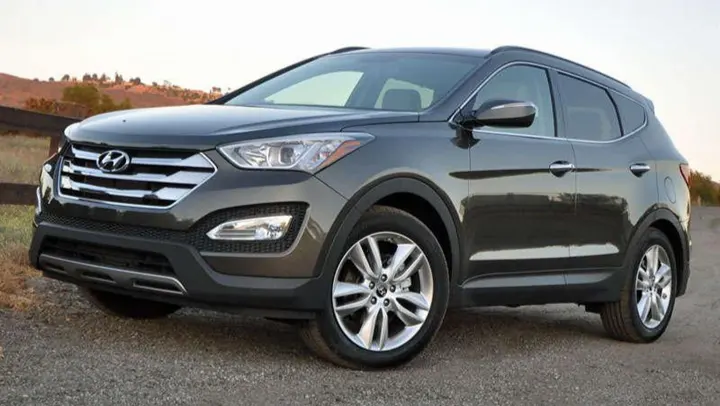
5. Used Hyundai Santa Fe Under $10,000
The Santa Fe is a midsize SUV that gives families more room than the Tucson. The 2013–2018 generation, which included a five-seat Santa Fe Sport and a seven-seat Santa Fe, is the range most often seen at this price, typically with higher mileage on the older examples.
Passenger space: Second-row seats offer comfortable room for adults. Seven-seat versions have a third row that works best for children or short trips.
Engines: Depending on year and trim, Santa Fes were offered with a 2.4-liter four-cylinder, a turbocharged 2.0-liter four-cylinder and a V6. The Theta II engine recalls and settlement mentioned above affected certain Santa Fe Sport model years, so verify the VIN and ask for documentation.
Ownership costs: Larger SUVs often carry larger tires and brakes, which can cost more to replace than those on compact cars. Ask the seller or an independent shop about the tires and brake condition before purchase.
What to inspect: Test the third row if equipped, operate the power seats and rear hatch, and check the AWD system if the car has it.
Best for: Families who need more space and can plan for slightly higher running costs.
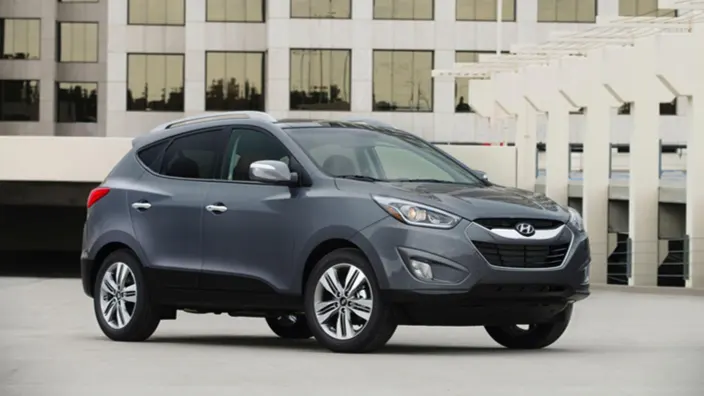
6. Used Hyundai Veloster Under $10,000
The Veloster stands out for its styling. The 2012–2017 generation has a three-door layout with one door on the driver’s side and two on the passenger side. Turbocharged versions added more power, and manual transmissions were available, along with a dual-clutch automatic on some models.
Driving experience: Buyers who like a manual often find the Veloster fun to drive, but the clutch and shifter condition matter. Check the clutch engagement point and look for slipping under acceleration. For the dual-clutch automatic, watch for jerky low-speed behavior or hesitation during shifts.
Turbo versions: Turbocharged cars may have been driven harder. Ask for service records, oil change frequency and any turbo-related repairs. Check for oil leaks, unusual smoke and boost-related warning lights.
Practicality: The rear seat is small, and cargo space is limited compared with a hatchback. Access to the rear seat is different from a typical four-door, so check how well it works for your passengers.
What to inspect: Verify recall status for the exact year and transmission, and test the car in both normal and spirited driving.
Best for: Single drivers or couples who want a sporty look without paying for newer styling, and who don’t need much back-seat space.
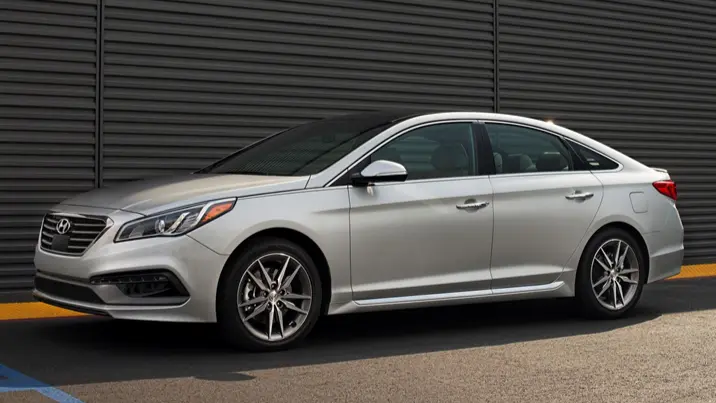
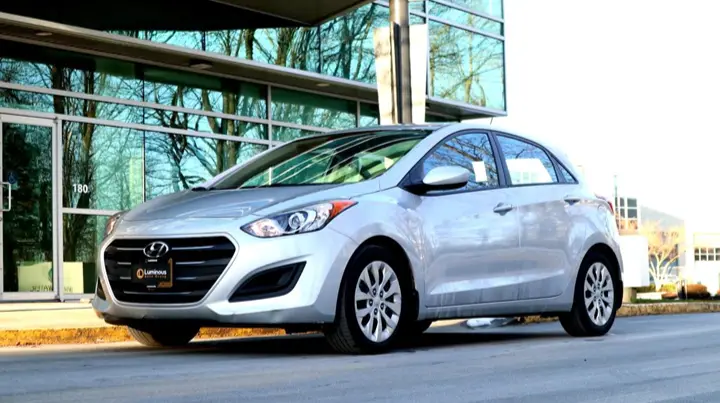
7. Used Hyundai Elantra GT Under $10,000
The Elantra GT is the hatchback version of the Elantra. Examples from 2013–2016 and 2017–2020 are the most common in this range, though availability depends on mileage and condition. Mechanically, it shares much with the Elantra sedan, but the body style creates different ownership considerations.
Hatchback practicality: Folding rear seats expand the cargo area, making the Elantra GT useful for bikes, furniture and sports equipment. It’s a good choice for buyers who want sedan-like handling with more cargo flexibility.
Model differences: The 2013–2016 and 2017–2020 versions differ in styling, equipment and some engineering details. Compare the specifications for each year before buying.
What to inspect: Open and close the hatch several times and check that it latches and lifts smoothly. Look for water in the cargo area or around the seals, and check the rear struts. Confirm the car’s recall history with the VIN.
Best for: Students, city dwellers who regularly carry gear, and cyclists who need a flexible, compact car.
Best Used Hyundai Under $10,000 by Buyer Type
The table below compares the seven models at a glance. Years and features vary, so use it as a starting point rather than a shopping list.
| Model | Body Style | Best Fit | Main Tradeoff |
|---|---|---|---|
| Elantra | Compact sedan | Commuters, first-time buyers | Tighter rear seat than midsize cars |
| Accent | Compact sedan (earlier hatchback) | Students, city drivers | Less refined at highway speeds |
| Sonata | Midsize sedan | Highway commuters, small families | Verify engine recall and settlement status |
| Tucson | Compact SUV | Small families, cargo needs | AWD adds components to maintain |
| Santa Fe | Midsize SUV | Larger families | Bigger tires and brakes can cost more |
| Veloster | Three-door hatchback | Sporty-look shoppers | Limited rear access and cargo room |
| Elantra GT | Compact hatchback | Students, gear haulers | Inspect hatch seals and struts |
First-time buyers usually do best with the Elantra or Elantra GT. Both are straightforward to own, and the hatchback adds flexibility for little extra complexity.
Students often look at the Accent for its low running costs and easy parking. The Elantra GT is a good alternative if you need to haul more.
Daily commuters with long highway drives should consider the Sonata or Elantra. Both feel more settled at speed than smaller cars.
Families will likely prefer the Santa Fe for its space, or the Tucson if a smaller SUV is enough. Test the rear seats and cargo area with your own car seats or gear.
SUV shoppers have two main options, the Tucson and Santa Fe. The Tucson fits a tighter budget and smaller garage, while the Santa Fe offers more room.
Buyers who want a sporty look may enjoy the Veloster, particularly with a manual transmission. Be realistic about the rear seat and cargo space.

Which Hyundai Model Years Should You Look for Under $10,000?
Model years matter because Hyundai updated engines, transmissions, safety equipment and styling within each generation. Generation changes can be significant, which is why one year of a model may behave very differently from another.
Hyundai uses internal generation codes, such as LF and YF for the Sonata, and MD and AD for the Elantra sedan. These codes are useful for research but often don’t appear in listings. Ask the seller or check the VIN to confirm the exact year and engine.
Maintenance records are just as important as the model year. A 2015 car with documented oil changes, transmission service and recall repairs can be a better buy than a newer car with no records. Ask for receipts, dealer service histories and any independent shop invoices.
How Many Miles Are Too Many for a Used Hyundai Under $10K?
Mileage is a useful signal, but it doesn’t tell the whole story. A car that has been maintained carefully may be a better buy than a lower-mileage car that was neglected. Use the ranges below as general guidance.
80,000–100,000 miles: Many cars in this range still have plenty of life, especially with documented maintenance. Expect some wear items, such as tires, brakes, a battery and suspension components, and budget for them.
100,000–130,000 miles: Wear becomes more likely, and you should ask about major services outlined in the owner’s manual. Plan for repairs in the first year of ownership, and get a thorough pre-purchase inspection.
130,000–160,000 miles: Risk increases considerably. Buy only if the records are strong and the inspection is clean. Set aside a larger repair reserve.
More than 160,000 miles: These cars can still run well, but they require strong documentation and a conservative budget. The price should reflect the car’s condition, and any missing records should be a serious concern.
Hyundai Engine Problems and Reliability Concerns to Check Before Buying
Every engine and transmission can develop problems, and the right approach is to check the specific car rather than assume the worst about the brand. Keep these areas in mind during your research.
Engine knocking or ticking: Listen for unusual noises at cold start, idle and under acceleration. A noise doesn’t automatically mean a major failure, but it should be diagnosed by an independent mechanic before you buy.
Oil consumption: Check the dipstick and ask the seller how often they add oil. Look for oil leaks around the engine, valve cover and oil pan. Some engines consume oil more than others as they age, so ask whether the owner has noticed the car using oil between changes.
Transmission behavior: Watch for harsh shifts, slipping, delayed engagement or hesitation. Check the transmission fluid condition if the owner’s manual allows it, and ask whether the transmission has been serviced.
Model-specific recalls and settlements: As noted above, Hyundai’s Theta II engine recalls and class-action settlement affected certain Sonata and Santa Fe Sport model years. Check the VIN at nhtsa.gov/recalls and contact a Hyundai dealer for details on any extended coverage, repairs or software updates. Recall status can change, so check it close to the time of purchase.
Theft risk: Hyundai and Kia vehicles from roughly 2011 through 2021 that lack an engine immobilizer have been subject to theft-related recalls and anti-theft software updates. Check the VIN for recall information, and confirm that any required software updates or anti-theft measures have been completed.
Insurance: Insurance costs can vary significantly by model, age, location and driving history. Get insurance quotes for the exact vehicle before you buy, especially if you’re considering a car that may carry a higher theft risk.
What to Check Before Buying a Used Hyundai Under $10,000
Use this checklist during your shopping:
- VIN: Confirm that the VIN on the car matches the title, registration and insurance documents. Check it against the window sticker if available.
- Title history: Review a vehicle history report from CARFAX or AutoCheck. Look for salvage, rebuilt, flood, odometer or title-branding problems.
- Maintenance records: Ask for oil change, transmission, brake and major service receipts. Missing records aren’t always fatal, but they increase your risk.
- Recalls: Check open recalls at nhtsa.gov/recalls. Ask the seller whether any recall repairs were completed.
- Engine: Check for smooth cold starts, unusual noises, warning lights, leaks and oil consumption.
- Transmission: Test smooth acceleration, shifts, reverse engagement and any hesitation.
- Brakes: Look at pad and rotor condition, and feel for pulsation or pulling during the test drive.
- Tires: Check tread depth, uneven wear and age markings. Uneven wear can point to alignment or suspension issues.
- Suspension and steering: Listen for clunks over bumps and check for uneven steering or pulling.
- Electronics: Test the lights, windows, locks, infotainment, backup camera and instrument panel.
- Air conditioning and heat: Run both at full settings to confirm they work and produce the expected temperature.
- Accident damage: Look for uneven panel gaps, paint overspray, mismatched paint and signs of structural repair.
Get an independent pre-purchase inspection. Choose a mechanic who isn’t connected to the seller, and ask for a written report. A pre-purchase inspection usually costs far less than an unexpected repair bill, and it can give you leverage in negotiations or help you walk away from a bad car.
How Much Does It Really Cost to Own a Used Hyundai Under $10,000?
Ownership costs depend on the car, your location, your driving habits and how well the vehicle has been maintained. Expect these categories:
- Insurance: Premiums vary widely by model, location, driving record and coverage.
- Fuel: Depends on the car’s fuel economy and how much you drive.
- Maintenance: Oil changes, tires, brakes, batteries and fluids.
- Repairs: Unexpected repairs become more likely as mileage rises.
- Registration and taxes: Vary by state and locality.
- Unexpected expenses: Parking, tolls, towing and roadside assistance.
Illustrative example (hypothetical figures, not national averages): Suppose you buy a car for $8,500, drive 12,000 miles per year, get 28 MPG and pay $3.50 per gallon. Fuel would be roughly $1,500 per year. If insurance is assumed at $1,400 per year, routine maintenance and repairs are assumed at $900 per year, and registration and fees are assumed at $200 per year, annual ownership would be about $4,000 before taxes and financing. Replace these assumptions with real quotes, local fuel prices and your own driving habits.
Where Can You Find Used Hyundai Cars Under $10,000 in the USA?
Authorized Hyundai dealerships often sell certified pre-owned vehicles and may offer more documentation. Certified programs vary, so ask for the inspection checklist and warranty terms in writing.
Independent dealers may offer lower prices, but quality varies. Review online reviews carefully, and check each car’s history independently.
Private sellers often ask less, but the risk is higher. Meet at a location you choose, verify the title and bring a mechanic when possible.
Online marketplaces make it easy to compare listings. Verify the VIN, photos and seller details before you travel to see a car.
Whatever the source, compare the out-the-door price rather than the advertised price. Ask for an itemized breakdown that includes taxes, title, registration, documentation fees and any add-ons. Some listings look attractive until these charges appear.
Is a Used Hyundai Under $10,000 Worth Buying in 2026?
A used Hyundai under $10,000 can be a practical choice when you have a clear budget, realistic expectations and a disciplined buying process. The advantages include a wide range of body styles, practical interiors and models that suit commuters, families and students. Many buyers also appreciate the availability of parts and the variety of used options.
The compromises are real, though. Older cars may need more maintenance, higher-mileage examples may need repairs soon after purchase, and some features will be missing or dated. Recall and settlement history can also vary by model year, so each VIN needs individual checking.
Walk away if:
- The seller won’t allow an independent inspection.
- The title is branded as salvage or rebuilt, and you aren’t prepared for that history.
- The car has unresolved recalls or a documented history of serious engine or transmission repairs you can’t verify.
- The car has warning lights, leaks or unusual noises that the seller can’t explain.
- The seller pressures you to decide quickly.
- The out-the-door price is far above what similar listings suggest.
A used Hyundai under $10,000 is worth buying when the vehicle’s history, condition and price all make sense together.
Frequently Asked Questions
Q.1. What is the best used Hyundai to buy under $10,000?
It depends on your needs. The Elantra and Elantra GT suit most commuters and first-time buyers, the Sonata fits highway drivers, the Tucson and Santa Fe serve SUV shoppers, and the Accent works well for city driving on a tight budget.
Q.2. Is a used Hyundai Elantra reliable?
Reliability depends on the specific model year, engine, maintenance history and condition. Check the car’s service records, recall status and independent inspection results rather than relying on general claims.
Q.3. What is the cheapest used Hyundai car?
The lowest-priced used Hyundai in any market is usually an older compact model with higher mileage, such as an Accent. Prices vary by region and condition, so compare listings near you.
Q.4. Can I buy a used Hyundai SUV for under $10,000?
Yes, though it’s more likely to be an older or higher-mileage example. The Tucson and Santa Fe are the most common Hyundai SUVs in this range, depending on the year and condition.
Q.5. How many miles is too many for a used Hyundai?
There’s no universal limit. A well-maintained car with 100,000 miles can be a good purchase, while a neglected car with fewer miles may not be. Maintenance records and a pre-purchase inspection matter more than mileage alone.
Q.6. Which Hyundai engines should used-car buyers research carefully?
Research the engine in the exact car you’re considering. Hyundai’s Theta II gasoline direct-injection engines have been subject to recalls and a class-action settlement that affected certain model years, so verify the VIN and ask for repair documentation.
Q.7. Are older Hyundai cars expensive to maintain?
Maintenance costs depend on the model, age, mileage and whether earlier maintenance was completed. Routine service is typically manageable, but older cars may need more repairs. Ask a local independent shop for estimates on the specific vehicle.
Q.8. Is a Hyundai Sonata a good used car?
It can be, especially for highway commuters and small families who want a midsize sedan. As with any used car, check the engine, recall status and service history for the specific year.
Q.9. Should I buy a used Hyundai with over 100,000 miles?
It’s possible, but only with strong documentation and a clean independent inspection. Budget for repairs and buy only if the price reflects the car’s condition.
Q.10. How can I check whether a used Hyundai has an open recall?
Enter the VIN at nhtsa.gov/recalls, and check with a Hyundai dealer for manufacturer-specific recall and service information. Ask the seller for proof of completed repairs, and check again close to the purchase date.
For most first-time buyers, the Elantra is a practical starting point, and the Elantra GT adds cargo flexibility. Students and city drivers may prefer the Accent, while highway commuters should look at the Sonata. Families who need space can consider the Santa Fe or the smaller Tucson, and buyers who want a sporty look may find the Veloster appealing if they don’t need much rear room.
No model replaces careful buying. The best used Hyundai under $10,000 is the one with a clean title, documented maintenance, verified recall status and a satisfactory independent inspection. Compare out-the-door prices, take your time, and don’t let a deadline push you into a car you haven’t checked thoroughly.
Related Post