
A $24,995 listing is not a $24,995 car. Taxes, fees, insurance, tires, fuel, and the first repair you did not budget for will prove that. Shopping for Best Used Cars Under $25K is not a race to the lowest asking price. It is a search for the vehicle whose purchase price, history, condition, and cost to keep all fit the same budget. That budget still buys a lot in 2026. Compact and midsize SUVs, sedans, hybrids, hatchbacks, small trucks, some EVs, CPO cars, and former leases all show up under the cap — along with older luxury cars that look like steals until the maintenance invoice arrives.
This guide is for U.S. shoppers who want a used car they can own, not just a listing they can screenshot. It covers how to set a real budget, what $25,000 actually buys, how to read mileage and history, why inspections matter more than model year, and how to keep dealer math from turning a $23,000 car into a $28,000 problem.
What Can You Get for $25,000 in the Used-Car Market?
Treat $25,000 as a purchase-price ceiling, not the whole cost of getting the car home. Condition, miles, options, region, and whether the seller is a dealer or a private party will move what you actually see.
At this price, the market is broad rather than exotic. You may find:
- Compact SUVs
- Midsize SUVs with more miles or fewer options
- Small and midsize sedans
- Hybrids
- Hatchbacks
- Small pickups
- Older luxury vehicles
- Some used EVs
- Certified pre-owned cars that still fit the cap
- Off-lease vehicles
- Newer cars with higher miles
- Older cars with lower miles
Consumer Reports has long made the basic case for used: you skip the steepest depreciation. CPO can sit between ordinary used and new if the inspection and warranty are real. Neither fact means every $24,000 SUV is a bargain.
The wrong question is “What’s the cheapest car I can buy?” The right one is: which vehicle gives the best mix of price, reliability, safety, running cost, and usefulness for the next few years? That shift is how people stop overpaying for a truck they never tow with, or a luxury badge they cannot afford to keep in tires.
1. Set Your Real Budget Before Searching for Used Cars Under $25,000
The common mistake is searching at $24,999 because that is the number in your head. Start with out-the-door money.
The final bill can include:
- Vehicle price
- Sales tax
- Registration and title
- Dealer documentation fees
- Accessories and add-ons
- Finance charges
- Insurance
- Immediate service (brakes, tires, fluids)
- Fuel or charging
The Federal Trade Commission tells used-car buyers to budget for registration, insurance, gas, and maintenance, not just the sticker. If $25,000 is everything you can spend this month, do not shop as if $24,999 leaves room. Search lower. Leave a cushion for tax, fees, and the inspection findings.
Then think in ownership cost. A $22,000 SUV on expensive tires, premium fuel, and a high insurance bracket can beat a $24,000 sedan only in the driveway photo. Over three years the sedan may be the cheaper car. The asking price is the start of the comparison, not the end.
2. Decide What Type of Vehicle You Actually Need
Do this before you fall for a listing photo.
Compact SUV. Higher seat, easier loading, available AWD, family-friendly cargo. Often costs more than a similar sedan and can be thirstier, with pricier tires.
Sedan. Usually the value play: fuel economy, highway comfort, easier parking, lower running costs. Unfashionable in some ZIP codes. Frequently the smarter $25,000 car.
Hybrid. Worth a look if you pile on miles and want less pump time. Age, battery health, remaining hybrid warranty, and service history decide whether the fuel savings survive. A neglected hybrid is not “green.” It is a specialized repair bill.
Pickup. Buy one for a bed, payload, or towing you will actually use. Do not buy one because it looks capable. Fuel, insurance, tires, and brakes on a truck can erase the “deal.”
EV. Used EVs can put newer tech in reach. Check battery warranty, real-world range, charging port and network, DC fast-charge behavior, home charging, and insurance. The cheapest used EV is a poor fit if you cannot plug in and you drive 300-mile days.
Need comes first. Inventory comes second. If you start with “what’s available under $25k,” you will invent a lifestyle for whatever is shiny.
3. Don’t Obsess Over Mileage Alone
Miles matter. They are not the car. A 70,000-mile example with oil-change records can beat a 45,000-mile car that sat, skipped service, or took a hit. Judge miles + age + maintenance + owners + accidents + the car in front of you.
Highway miles can look ugly and still be easier on some parts than years of short, cold, stop-and-go trips. Low miles can mean gentle use. They can also mean a battery that sulfated in a driveway.
Ask:
- How many owners?
- Regular service, with paper or digital records?
- Personal use, or rental/fleet/commercial?
- Accidents?
- Does the mileage line in the history report make sense?
Mileage is one exhibit. If you let it be the whole trial, you will overpay for an odometer.
4. Check the Vehicle History Before You Fall in Love With the Car
Run the VIN before you schedule a Saturday to “just look.” The FTC recommends a vehicle history report and a recall check before you buy used. Look for accidents, salvage or rebuilt brands, flood notes, odometer gaps, title hopping, major damage, rental or fleet use, and missing service clues.
A clean report is a filter, not a blessing. It does not prove the transmission is healthy. It can prove you should not waste an inspection fee on a rebuilt flood car with a romantic photo shoot. No VIN from the seller is not a negotiation tactic. It is a reason to leave.
5. Understand the Difference Between Clean Title and Clean Condition
Clean title means the paperwork is not branded salvage, rebuilt, or flood — unless someone is lying. It does not mean the engine, gearbox, electrics, or previous bodywork are fine.
You still need:
- History for documented events
- Your eyes for obvious problems
- A mechanic for the rest
Title answers “was this car legally wrecked in a way that got recorded?” Inspection answers “what is this car today?” Buyers who stop at title buy other people’s unfinished repairs.
6. Always Get an Independent Pre-Purchase Inspection
This is the step people skip because the car is “only $23,000” or “the dealer already inspected it.” That is backwards. The cheaper the car, the less room you have for a $4,000 surprise.
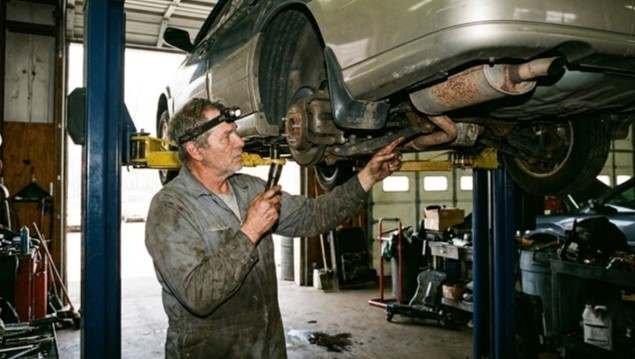
The FTC recommends an independent mechanic before you buy. A dealer inspection is not the same as a shop that works for you. A PPI can catch engine condition, transmission behavior, leaks, brakes, suspension, steering, tires, exhaust, cooling, battery, electrical faults, underbody rust or damage, and signs of prior repair.
The fee is information. Information is cheaper than a rebuilt head gasket you discovered on the second commute. If the seller will not allow a reasonable independent inspection, you are not looking at a deal. You are looking at a transfer of risk.
7. Inspect the Car Yourself Before Paying for a Professional Inspection
You do not need to be a tech to kill the obvious losers.
Outside: paint mismatches, panel gaps, dents, rust, cracked lights, stone-pitted or repaired glass, uneven tire wear, mismatched tires, wet carpets around door seals.
Inside: seat collapse, warning lights that “always do that,” weak A/C, dead heaters, windows, locks, infotainment, cameras, sensors, steering-wheel buttons.
Smell: musty plus water stains is a flood or leak investigation, not a Febreze problem.
If the car already fails this walkaround, save the PPI money for the next listing.
8. Take a Proper Test Drive
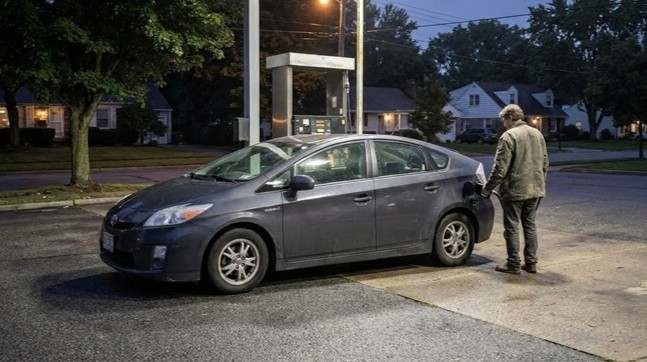
A loop around the building proves the car starts. It does not prove you should own it. Drive it cold if you can. Listen at startup. Feel acceleration, shifts, delayed engagement, slip, brake vibration or pull, steering wander, clunks, and highway behavior. A car that is charming at 25 mph can shake, wander, or hunt gears at 65.
Test the things you will actually use: A/C on a hot day, defrost, backup camera, car seats if you have them, the route you commute. “It felt fine” is not a report. “Nothing felt off” is closer — and only after you tried to find something off.
9. Compare Total Cost of Ownership, Not Just Purchase Price
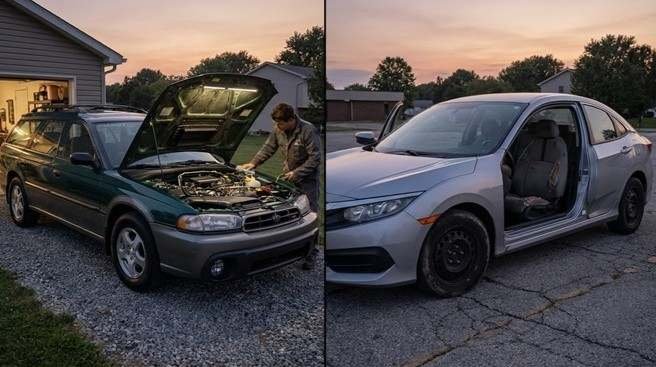
Two $23,000 cars can diverge fast.
Add:
Price + fuel + insurance + maintenance + repairs + tires + registration + interest = real cost
Vehicle A: modest tires, regular gas, cheap insurance.
Vehicle B: 20-inch rubber, premium fuel, a performance-brand insurance hit, dealer-only parts.
B can win the listing. A can win the household. Negotiating another $300 off B while ignoring insurance is not shrewd. It is focused on the wrong number. Run quotes on the exact VIN or trim before you commit. Insurers do not price “used compact SUV.” They price this one.
10. Don’t Automatically Choose the Newest Car
Newer is a date. It is not a condition. A late-model compact with high miles and a thin file can lose to an older midsize with records, original-owner care, and the safety gear you actually need. Model year matters for airbags, crash tests, and remaining warranty. It is a terrible shortcut for “this one is better.”
Compare the whole file: year, miles, service, accidents, options, and how the car drives. The 2023 with 90,000 rental miles is not automatically the adult choice over the 2019 with 48,000 and receipts.
11. Consider Certified Pre-Owned Cars
CPO is a program, not a halo. Manufacturer CPO usually means age/mile limits, a checklist inspection, and some warranty. Consumer Reports treats it as a middle ground between new and ordinary used. You often pay more. You may get coverage and a tighter screening process.
Read the warranty. Deductibles, wrap vs. remaining factory coverage, and what is excluded matter. “Certified” does not mean the infotainment glitch is included, or that you can skip a history report.
If a CPO car still fits under $25,000 out the door and the extra money buys a warranty you will use, it can be the least stressful path in this budget. If CPO is just a sticker on a car you could inspect yourself for less, price the non-CPO twin.
12. Be Careful With Older Luxury Cars Under $25,000
This is the trap that feels like winning. A car that stickered at $55,000 or $70,000 now sitting at $23,000 looks like found money. Depreciation cut the price. It did not cut:
- Tires
- Brakes and rotors
- Control arms and air suspension
- Dealer software
- Sensors
- Premium fuel
- Insurance
You are not maintaining a $25,000 car. You are maintaining a luxury machine that happens to have a used price. If the budget is tight, a well-kept mainstream sedan or compact SUV with cheap parts is often the car that still feels like a deal in year three. Buy the old luxury car only if you have a specialist shop, a parts budget, and no illusion that the previous owner’s pain is over.
13. Look for the Right Safety Features
Safety is equipment on this car, not a vibe from the model name. Depending on year and trim, look for automatic emergency braking, forward-collision warning, blind-spot monitoring, rear cross-traffic alert, adaptive cruise, lane-departure warning, lane keeping, and a backup camera. Confirm on the window sticker, a build sheet, or by testing the buttons. A base trim from a “safe” nameplate can be missing the hardware you assumed.
Crash-test ratings are year- and configuration-specific. Check IIHS and NHTSA for the generation you are buying, not a commercial for the redesigned new one.
14. Don’t Ignore Recalls
An open recall is not an automatic walk-away. Many are repaired at no charge by the dealer network. Not knowing is the problem.
The FTC tells used-car shoppers to check safety recalls. Use the VIN on NHTSA.gov so you are checking this car, not the model in general. A 40,000-mile car can have an open airbag campaign. A 110,000-mile car can be clean. Miles do not decide it.
If there is an open recall, decide whether you will get it done before purchase or immediately after, and do not let a seller wave it off as “they all have that.”
15. Get the Out-the-Door Price in Writing
Do not ask only what the car is. Ask what it costs to leave. The FTC recommends written out-the-door prices so fees, discounts, and extras are visible before you sit in the finance office. Demand a breakdown:
- Vehicle price
- Dealer fees
- Tax
- Registration
- Documentation
- Add-ons
- Optional products
- Total due
Then compare dealers on that number. A $23,200 car with $1,800 in junk fees is not cheaper than a $24,000 car with a clean OTD sheet.

16. Be Careful With Dealer Add-Ons
Paint sealant, fabric guard, theft etch, wheel contracts, nitrogen, and service plans appear on worksheets as if they were part of the car. Some are useful to some buyers. None should be assumed mandatory.
Ask two questions: Is this required to buy the vehicle? Can I remove it? If the deal only works with $2,400 of extras, the deal is the extras. A used car under $25,000 can stop being one in the business office. Watch that room more carefully than the lot.
17. Understand the “As Is” Warning
The FTC Buyer’s Guide on a dealer car says whether you are buying as is or with a warranty. As is, subject to state law, puts most post-sale problems on you. Read the sticker. It is not wallpaper.
If a salesperson says they will “take care of you,” get the repair, return, or warranty in the contract. The FTC’s warning is the one people quote after the fact: spoken promises are hard to enforce.
Private-party sales are typically as is. Price and inspect accordingly.
18. Don’t Assume You Have a Three-Day Return Period
Federal law does not give you a standard three-day cooling-off period to unwind a car purchase. State rules and dealer policies vary. Do not buy as if tomorrow is a free return.
If a dealer advertises a return window, read the mileage limit, time limit, restocking fee, and condition rules. Get it in writing before you sign. “We’ll make it right” is not a policy.
19. Private Seller vs. Dealership
Both sell used cars under $25,000.
Dealer: more stock, financing, a required Buyer’s Guide, possible warranty or CPO, trade-in convenience. Also fees, add-ons, and a process designed to exhaust you.
Private party: sometimes a better price and a real owner who can tell you about the timing belt. Also harder financing, little or no warranty, more scam surface, and all inspection duty on you.
Neither channel excuses a skipped PPI or a missing VIN. Meet private sellers in safe, well-lit places. Never wire a deposit for a car you have not seen. Title in the seller’s name, matching ID, is not optional.
20. Use Your $25,000 Budget Strategically
Keep three buckets so you do not marry the first SUV you sit in.
Ideal: hits almost every need.
Flexible: loses one want (AWD, a sunroof, a specific color) and wins on condition or cost.
Backup: boring, reliable, available.
Flexibility is leverage. You can walk. The shopper who will only buy one red midsize SUV at one store will pay for that romance.
21. Watch Out for These Used-Car Red Flags
Slow down or leave if you see:
- A price far below comps with no story
- No VIN
- Mileage that fights the history report
- Salvage/rebuilt title you do not fully understand
- Pressure to buy now
- No independent inspection allowed
- As-is plus “no time to inspect”
- A luxury orphan with no records and “needs nothing”
One missing oil sticker is noise. A pattern is the message.
22. How to Negotiate a Used Car Under $25,000
Negotiate from comps, not from a feeling that cars are expensive. Match year, miles, trim, condition, options, history, warranty, and local market. Then fight the vehicle price, not a monthly payment. Stretching a loan to 75 months can make a $29,000 car look like a $25,000 lifestyle. It is not.
Come in with the PPI findings, the missing service, the tires it needs, and printed comps. “Your car is too expensive” is weak. “This one needs $1,100 in tires and brakes, and three comps are $1,400 lower” is a conversation.
23. Don’t Let Monthly Payments Hide the Real Price
“It’s only $450 a month” is not a price.
You need amount financed, APR, term, down payment, trade equity or payoff, tax, fees, and total of payments. A lower month often means more months and more interest. If the car only “fits” at 72 or 84 months, it does not fit a $25,000 plan. It fits a longer sentence.
24. Create a Used-Car Inspection Checklist
Save this. Use it on the lot.
Exterior: paint, gaps, rust, glass, lights, tires
Interior: seats, HVAC, infotainment, cameras, warning lights, power accessories
Mechanical: engine, transmission, brakes, suspension, steering, fluids, battery, exhaust
Paper: VIN, title, history report, records, recall check, Buyer’s Guide, warranty
Money: price, tax, fees, add-ons, rate, amount financed, out-the-door total
If a box is blank because the seller rushed you, that is data.
25. The Best Used Car Under $25,000 Isn’t the Same for Everyone
There is no national winner, and a list of “10 best” without your commute, kids, driveway, and insurance quote is entertainment.
A commuter may want a hybrid sedan. A parent may want rear doors, crash gear, and a cargo floor. A highway driver may want seats and quiet. A weekend skier may want AWD and ground clearance. A tradesperson may need a bed. An EV shopper may need a garage outlet. A first-time buyer may need predictable parts.
So do not ask what the best used car under $25,000 is. Ask what is the best used car under $25,000 for the way you drive, park, and pay bills. That is the only version of the question that spends the money once.
Finding used cars under $25,000 in 2026 is easy. Listings are everywhere. Finding one you can own without a second job in the shop is the work. Set the full budget. Choose a body style that matches the week you actually live. Price fuel, insurance, and tires before you praise the leather. Run the VIN. Read the history. Check recalls. Walk the car. Drive it like you mean it. Pay a mechanic who does not sell it. Read the Buyer’s Guide. Get OTD in writing. Ignore the three-day myth and the monthly-payment spell.
The FTC’s used-car basics are still the adult process: research, history report, recalls, independent inspection, warranty terms, then signatures. The goal is not a car that photographs under $25,000. It is a vehicle where price, condition, reliability, safety, usefulness, and the next three years of bills all fit. The cheapest car to buy this afternoon is often the expensive one next winter. That gap is the whole difference between a listing and a purchase.
Related Post