
Cadillac is a GM brand, not a separate car company with its own factories. The vehicles are designed, engineered, assembled, and warranted inside General Motors. The useful follow-up questions are the ones shoppers actually mean: who owns Cadillac, who manufactures Cadillac, where are Cadillacs made, and whether the Escalade in Texas is built the same way as a LYRIQ in Tennessee or a CELESTIQ in Warren, Michigan.
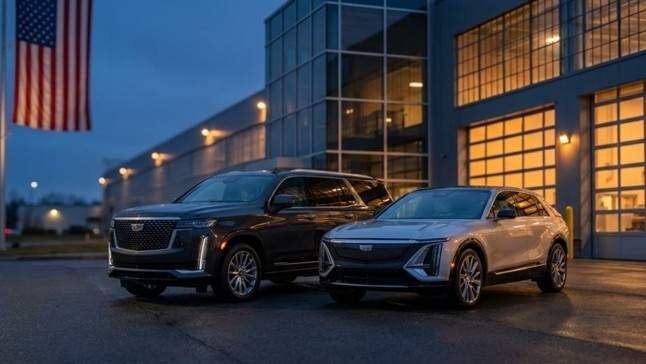
Those answers are not identical. Final assembly is not the same thing as building every engine, battery cell, chip, and seat. A Cadillac assembled in the United States can still contain parts from Mexico, Canada, Asia, and Europe. A Cadillac sold in America is not automatically built in America.
This guide separates the brand from the parent company, maps current U.S. assembly plants, and walks through the models people look up most: Escalade, LYRIQ, VISTIQ, Escalade IQ, CT5, and CELESTIQ. Production assignments can change. The window sticker on a specific vehicle is the final authority.
Who Builds Cadillac Vehicles?
General Motors builds Cadillac vehicles. Cadillac does not operate as an independent manufacturer. It does not contract a third-party assembler the way some low-volume brands do. When a Cadillac rolls off a line in Arlington, Spring Hill, Lansing, Detroit-Hamtramck, or Warren, GM employees, GM processes, and GM quality systems are doing the work.
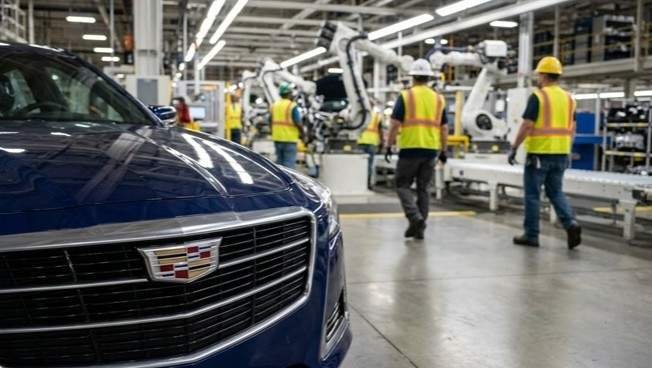
That is the clean answer to who builds Cadillac. The legal manufacturer on U.S. paperwork is General Motors LLC, not “Cadillac Motors” as a standalone company. The crest on the grille is the brand. The company that stamps the body, installs the battery or engine, and stands behind the warranty is GM.
“Builds” still covers more than one activity:
- Vehicle assembly is the plant that puts the finished Cadillac together.
- Propulsion is the engine, transmission, electric drive unit, or battery pack.
- Engineering is the Cadillac and GM teams that design the vehicle, mostly around GM’s technical centers in Michigan.
- Suppliers provide steel, electronics, glass, interiors, semiconductors, and thousands of other parts.
So who makes Cadillac in the everyday sense? GM. Who manufactures Cadillac at the factory gate? GM assembly plants. Who makes every part inside one? Nobody in a single country, including GM.
The CELESTIQ is the exception that proves the rule. It is still a GM-built Cadillac, but it is not a high-volume assembly-line product. It is hand-built in very small numbers at GM’s Global Technical Center. The workers, tools, and quality sign-off are still GM. The method is closer to a coachbuilder’s shop than to Arlington’s truck line.
If you are comparing nameplates, that distinction matters. An Escalade and a CELESTIQ can share a parent company and still be built in completely different ways.
Who Owns Cadillac?
Cadillac is owned by General Motors. It is a GM division — historically the Cadillac Motor Car Division — not a publicly traded luxury company and not a subsidiary of a foreign automaker.
That answers is Cadillac owned by GM and what company makes Cadillac in one stroke. GM owns the brand, the factories that assemble current Cadillacs, the Ultium EV architecture underneath the electric models, and the remaining gasoline powertrains in vehicles such as the Escalade and CT5.
The ownership history is American and older than most of the SUVs in Cadillac showrooms. Cadillac was founded in Detroit in 1902. GM acquired it in 1909. For more than a century, Cadillac has been GM’s luxury brand: sometimes the division that defined American prestige, sometimes the one GM had to reinvent after the market moved to German sedans and then to large SUVs.
Ownership has practical consequences for shoppers:
- Service and parts run through GM’s dealer and supply network.
- Recalls, warranties, and NHTSA manufacturer identification point to General Motors LLC.
- Platforms, batteries, and engines are shared, in various ways, with other GM brands.
- A Cadillac plant is a GM plant. Arlington builds Chevrolet and GMC full-size SUVs alongside the Escalade. Spring Hill’s EV work sits inside GM’s broader Ultium manufacturing plan. Factory ZERO is a GM EV plant, not a Cadillac-only boutique.
Cadillac is an American brand owned by an American company. That is different from saying every Cadillac is an all-American object from ore to wheel. Ownership is corporate. Manufacturing is a network.
Where Are Cadillac Vehicles Made?
Cadillac manufacturing is concentrated in the United States for the models U.S. shoppers ask about most, with important exceptions and a global parts stream behind every vehicle.
Current Cadillac production locations, in plain terms:
- Arlington, Texas — gasoline Cadillac Escalade and Escalade ESV
- Spring Hill, Tennessee — Cadillac LYRIQ and Cadillac VISTIQ
- Detroit-Hamtramck, Michigan (Factory ZERO) — Cadillac Escalade IQ and related electric Escalade body styles
- Lansing, Michigan (Lansing Grand River) — Cadillac CT5, including V-Series and Blackwing versions
- Warren, Michigan (GM Global Technical Center) — Cadillac CELESTIQ, hand-built in low volume
- Mexico — some Cadillac models sold in the U.S. have been assembled at GM’s Ramos Arizpe plant; confirm on the window sticker
- China — Cadillac also builds vehicles in China for the Chinese market through GM’s local operations; that is not where a typical U.S. Escalade or CT5 is made
This is why “where is Cadillac made” is a bad one-word question. There is no single Cadillac factory. Cadillac assembly plants follow the product:
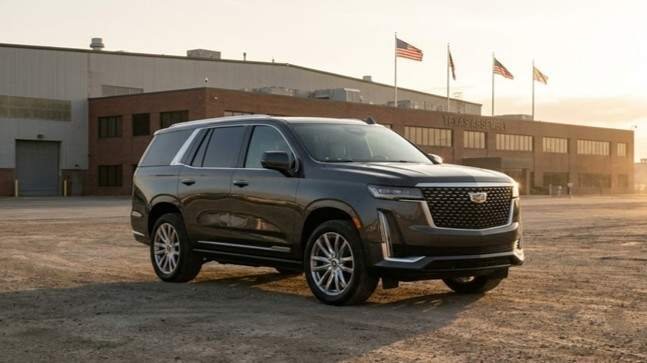
Full-size body-on-frame SUVs stay in Arlington, where GM already builds Tahoe, Suburban, Yukon, and Yukon XL. Electric crossovers clustered at Spring Hill, which GM converted into an Ultium production hub. The electric Escalade went to Factory ZERO, GM’s Detroit EV plant. The last conventional Cadillac sedan line remains in Lansing. The halo EV was never going to share a high-speed truck line; CELESTIQ stayed at the technical center.
Engineering is even more Michigan-centric than assembly. Cadillac vehicles are developed inside GM’s product-development system, with major design and engineering work at the Warren Technical Center and related GM facilities. A Tennessee-built LYRIQ is still a Michigan-engineered Cadillac in that sense.
Two labels on the car keep this honest. The final assembly point is the plant that completed the vehicle. The American Automobile Labeling Act information on the window sticker shows U.S./Canada parts content, plus where the engine and transmission originated. Those percentages are not a patriotism score. They are a reminder that a car assembled in Texas can still be a global kit of parts.
Where Is the Cadillac Escalade Made?
The gasoline Cadillac Escalade is built at GM’s Arlington Assembly plant in Arlington, Texas. That includes the standard-wheelbase Escalade and the extended Escalade ESV.
If you are asking where is Cadillac Escalade made in the sense most shoppers mean — the big V8-powered SUV in dealer lots — the answer is Texas. Arlington is one of GM’s most important plants, and the Escalade shares its architecture and factory with Chevrolet and GMC full-size SUVs. That shared line is not a knock on Cadillac. It is why GM can build a luxury SUV at truck-plant scale.
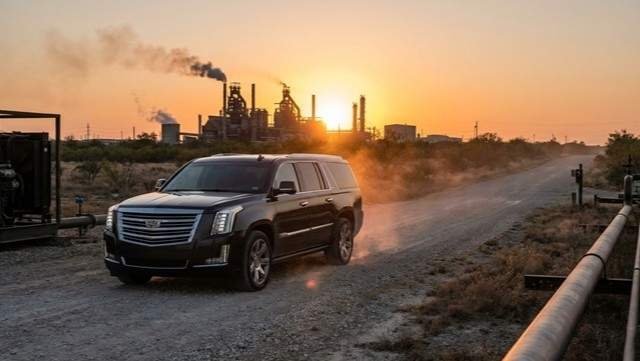
Arlington’s role is the through-line of modern Cadillac. The Escalade, not a sedan, is the brand’s volume flagship. Building it in Texas next to Tahoe and Yukon is how Cadillac stays in the large-SUV business at American production volume.
What Arlington does not mean:
- It does not mean every Escalade-related Cadillac is made there.
- It does not mean the electric Escalade IQ is a Texas truck.
- It does not mean the engine, transmission, electronics, and leather are all Texan.
The gas Escalade is a U.S.-assembled vehicle with a global bill of materials. If you need the precise mix on one truck, read that truck’s window sticker.
For shoppers, the practical split is simple. Want the familiar gasoline Escalade? You are looking at Arlington. Want the electric Escalade IQ? Different plant, different vehicle, different supply chain.
Where Is the Cadillac LYRIQ Made?
The Cadillac LYRIQ is assembled at Spring Hill Manufacturing in Spring Hill, Tennessee. That is the core U.S. answer to where is Cadillac LYRIQ made. Spring Hill is not a historic Cadillac plant in the Detroit sense. It is a GM complex that has been remade around electric vehicles, including Ultium-based crossovers. The LYRIQ was the first Cadillac EV to prove that the brand’s future would be built at scale somewhere other than Arlington or Lansing.
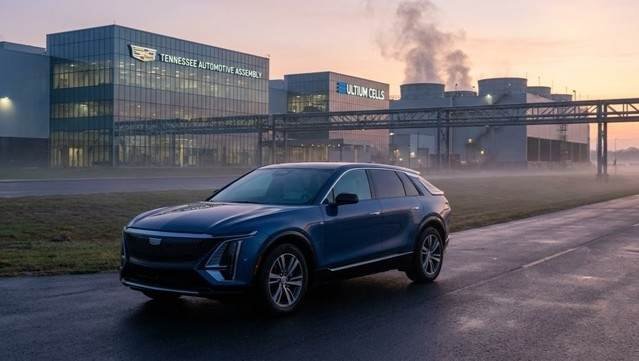
Spring Hill is also more than a final-assembly address. GM’s Tennessee operations include vehicle assembly and major EV investment, including battery-cell production through Ultium Cells, the GM joint venture with LG Energy Solution. A LYRIQ completed in Tennessee can still use cells, modules, and components from multiple sites. “Built in Spring Hill” means the vehicle was assembled there. It does not mean the battery chemistry was invented on the same property, or that every motor winding and semiconductor came from the mid-South.
The LYRIQ-V, when offered, is a Spring Hill product in the same family, not a separate European or Chinese car wearing a Cadillac badge for U.S. customers. China does build LYRIQ-related vehicles for its own market. That is parallel production for another region, not the explanation for the LYRIQ at a Tennessee dealer.
If you are shopping a used or leftover LYRIQ, still check the label. Assembly assignments are stable for this model in GM’s current U.S. plan, but the sticker is the document that counts.
Where Is the Cadillac VISTIQ Made?
The Cadillac VISTIQ is assembled at Spring Hill Manufacturing in Spring Hill, Tennessee. VISTIQ is Cadillac’s three-row electric SUV, positioned above the two-row LYRIQ rather than as a Texas-built Escalade substitute. Putting it in Spring Hill is not a coincidence. GM grouped its Cadillac electric crossovers at the same Tennessee complex so LYRIQ and VISTIQ could share Ultium manufacturing know-how, supplier logistics, and plant capability.
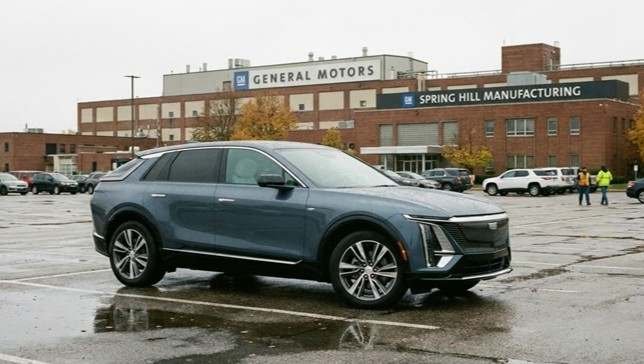
That answers where is Cadillac VISTIQ made for U.S. buyers. It also explains why VISTIQ should not be mentally filed with the Escalade. One is a unibody electric crossover from Spring Hill. The other gasoline Escalade is a body-on-frame SUV from Arlington. The electric Escalade IQ is a different plant again.
Because VISTIQ is a newer nameplate, shoppers should be extra literal. Confirm the model year, the plant on the window sticker, and that you are not looking at a China-market photo or an old product-plan slide. GM’s U.S. production plan puts VISTIQ in Tennessee. The car in front of you still gets the last word.
Where Is the Cadillac Escalade IQ Made?
The Cadillac Escalade IQ is built at Factory ZERO, GM’s Detroit-Hamtramck assembly plant in Detroit, Michigan. This is the distinction that trips people up. “Escalade” sounds like Arlington. The electric one is not. Factory ZERO is GM’s converted Detroit EV plant, the same complex associated with GMC HUMMER EV and Chevrolet Silverado EV production. Cadillac’s electric full-size SUV belongs to that family of large Ultium trucks and SUVs, not to the gasoline SUV line in Texas.
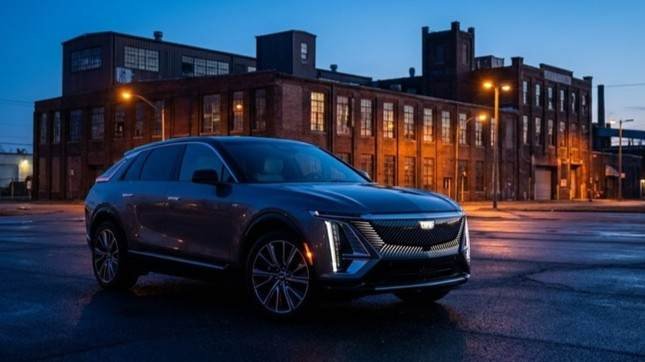
Where is Cadillac Escalade IQ made, then? Michigan. Detroit-Hamtramck. Factory ZERO. The extended electric version, often discussed as Escalade IQL, is part of the same Factory ZERO story rather than a Spring Hill crossover or an Arlington gas truck. Exact body-style availability changes, so match the specific vehicle to its label.
Factory ZERO matters symbolically as well as geographically. Cadillac began in Detroit. The brand’s electric flagship SUV is being assembled in Detroit again, but in a plant rebuilt for batteries and drive units instead of the old Hamtramck playbook. That is a real manufacturing change. It is not a reason to call the Escalade IQ “hand-built” or “all-American.” It is a high-volume-capable GM EV plant, not the CELESTIQ studio.
If a dealer talks about “the Escalade plant” as if there were only one, ask which Escalade they mean.
Where Is the Cadillac CT5 Made?
The Cadillac CT5 is assembled at Lansing Grand River Assembly in Lansing, Michigan. That includes the regular CT5 and the high-performance CT5-V and CT5-V Blackwing versions unless GM publishes a different assignment for a specific run. Lansing Grand River is Cadillac’s remaining U.S. home for conventional luxury sedans.
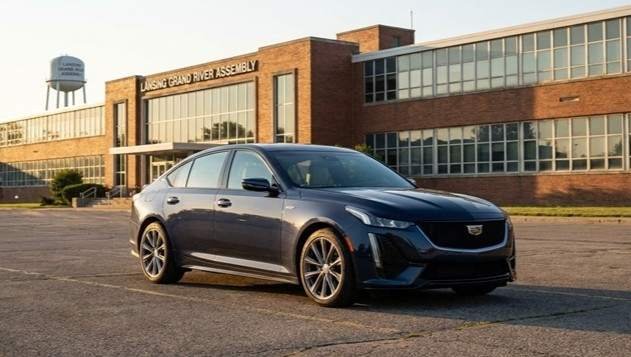
Where is Cadillac CT5 made is therefore one of the simpler questions in this article: Michigan, at LGR. The plant has also built the CT4 and CT4-V Blackwing. Cadillac’s sedan lineup has been shrinking for years as buyers moved into crossovers and SUVs, so shoppers should not assume every Lansing sedan nameplate is still in current production. The CT5 has remained the brand’s core gas sedan.
Lansing’s Cadillac work is a different kind of manufacturing from Arlington or Factory ZERO. These are lower-volume, rear-wheel-drive sedans, including some of the most driver-focused cars GM still builds. The Blackwing versions are not exotic coachbuilt cars, but they are not anonymous crossover units either. Engines and performance components still come from GM propulsion operations and suppliers, not from a wizard behind the Cadillac crest.
If you are buying a CT5, the American-assembly story is strong. The all-American-parts story is not automatic. Same rule as the SUVs: assembly plant on the sticker, parts content on the same label.
Where Is the Cadillac CELESTIQ Made?
The Cadillac CELESTIQ is hand-built at GM’s Global Technical Center in Warren, Michigan. That sentence should be read slowly. CELESTIQ is not a Spring Hill EV with a higher price. It is not Arlington with extra stitching. GM set up low-volume production at the technical center so the car could be assembled with far more manual craftsmanship and personalization than a normal Cadillac line allows. Production volume is tiny compared with LYRIQ or Escalade.
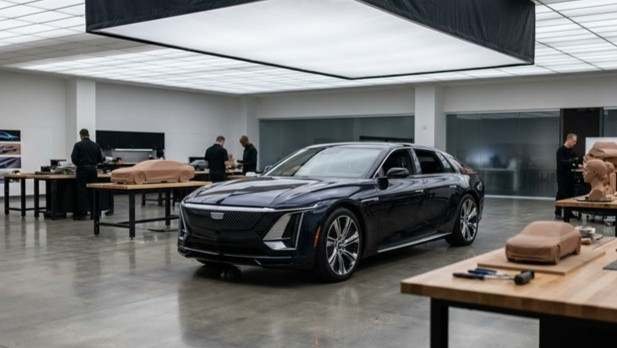
Where is Cadillac CELESTIQ made, in shopper language: Warren, Michigan, inside GM’s technical campus, by GM, one highly customized car at a time.
This is also why CELESTIQ should not dominate a normal buying guide. Most people asking who builds Cadillac will never see one in a showroom next to a CT5. It exists to show what Cadillac and GM can do when cost-per-hour is not the point. 3D-printed parts, extensive hand finishing, and customer-specific interiors are part of that pitch. They do not change ownership. GM still builds it.
Availability has been limited by design and by the reality of launching an ultra-luxury EV. Treat CELESTIQ as a current Cadillac manufacturing location, not as a mass-market 2026 alternative to LYRIQ. If GM’s customer-delivery timing shifts, that is a production-status issue, not a change in who owns the brand.
Are All Cadillacs Made in the United States?
No. Many Cadillacs sold in the United States are assembled in the United States. That is not the same as “all Cadillacs are made in America,” and it is not the same as “this Cadillac is 100% American-made.”
Are Cadillacs made in America? Often, yes, at final assembly. Escalade, LYRIQ, VISTIQ, Escalade IQ, CT5, and CELESTIQ all have U.S. assembly homes in GM’s current plan. Cadillac made in USA is a fair description of those plants.
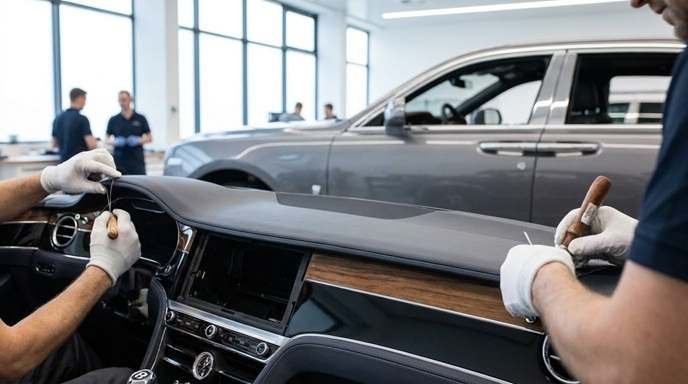
Then come the exceptions and the fine print. Some Cadillac models offered to U.S. customers have been assembled in Mexico. GM’s Ramos Arizpe complex has been part of the company’s Ultium crossover network, and recent Cadillac models such as OPTIQ have been associated with Mexican assembly. Do not memorize that as eternal law. Read the Monroney label. If the sticker says Mexico, that car was not made in Tennessee.
Cadillac also manufactures vehicles in China for Chinese customers through GM’s local joint-venture operations. That fact gets abused in internet arguments. A Shanghai-built Cadillac for China does not mean an Arlington Escalade is a Chinese product. It does mean Cadillac is a global GM brand, not a cottage industry confined to Detroit.
Even a U.S.-assembled Cadillac is not a closed American loop. Steel, electronics, lighting, infotainment chips, battery materials, and interior pieces routinely cross borders. U.S./Canada parts content can be substantial and still far from 100 percent. Mexico-made components can show up in a Michigan-assembled car. Korean or European suppliers can show up in a Texas-assembled SUV.
So when someone asks are Cadillacs made in America, the accurate reply is:
- Brand: American.
- Owner: American (GM).
- Final assembly of several core models: United States.
- Every part and every nameplate: no.
If the question is really “Will my Cadillac be assembled in the U.S.?” look at the specific model and the window sticker. That is more useful than a brand-level myth.
Does GM Build Cadillac Engines, Batteries and Other Components?
GM builds a large share of Cadillac’s propulsion hardware. It does not build every component in a GM factory in the United States.
Gasoline engines. Cadillac’s remaining combustion vehicles use GM engines. The Escalade’s truck powertrains and the CT5’s sedan engines come from GM’s propulsion network, which includes U.S. engine plants and, depending on the specific engine, other GM or supplier locations. High-performance Blackwing engines are GM products, assembled in specialized GM engine operations rather than by a separate Cadillac engine company.
Transmissions. Conventional Cadillac automatics are GM transmissions or GM-specified units, again from the company’s propulsion footprint and partners. The origin country of the transmission is listed on the window sticker.
Electric drive units. LYRIQ, VISTIQ, Escalade IQ, and CELESTIQ use GM electric propulsion hardware in the Ultium family. Drive units may be assembled at GM propulsion facilities and installed at the vehicle plant. The car plant is still the assembly address. The motor may have been built elsewhere in the GM system.
Batteries. This is the piece shoppers often flatten into “GM makes the battery.” Cell production for GM’s Ultium EVs is centered on Ultium Cells LLC, a GM joint venture with LG Energy Solution, including major U.S. cell plants associated with Ohio and Tennessee. Pack assembly can happen at or near vehicle plants. Materials — lithium, nickel, graphite, electronics, thermal hardware — are global. A Tennessee-assembled LYRIQ can carry U.S.-made cells and still not be a battery that GM dug out of American soil and refined by itself.
Everything else. Interiors, glass, braking systems, airbags, semiconductors, audio equipment, and wiring harnesses come from a supplier web. Some suppliers are American. Many are not. GM’s manufacturing job is to design the vehicle, qualify those parts, and assemble them to a standard. That is normal for every major automaker, luxury or otherwise.
The useful mental model is a pyramid:
- Cadillac brand and GM engineering at the top.
- GM assembly plants in the middle.
- GM propulsion and Ultium Cells underneath.
- A worldwide supplier base under that.
Does GM manufacture Cadillac? Yes. Does GM manufacture every Cadillac part in America? No.
How Cadillac Manufacturing Has Changed
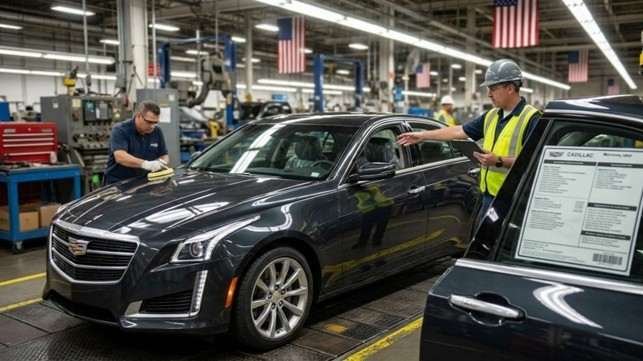
Cadillac manufacturing used to mean Detroit in a way that modern shoppers barely recognize. The company was founded there. For decades, Cadillac assembly was part of Detroit’s industrial identity. Those original plants are gone as current Cadillac sources. Clark Street is history. The old Detroit-Hamtramck “Poletown” plant was closed and then reborn as Factory ZERO, which is a different factory even if the geography rhymes.
The first big modern shift was product mix. Cadillac’s center of gravity moved from sedans to crossovers and, above all, to the Escalade. Arlington, Texas, became more important to the brand’s survival than any remaining sedan plant. Lansing Grand River kept the CT4/CT5 idea alive, but volume and profit followed full-size SUVs.
The second shift was geographic spread inside GM. Spring Hill, Tennessee — a complex the public still associates with Saturn — became Cadillac’s electric-crossover home. That would have sounded like a punchline in 1995. In GM’s current map, it is logical: floor space, supplier park, battery investment, and a plant that could be retooled for Ultium.
The third shift is the split between combustion SUVs and electric ones. GM did not convert Arlington into an EV-only Cadillac plant and hope Escalade buyers would wait. It kept the gas Escalade in Texas and put Escalade IQ in Detroit. That dual track is the real 2020s Cadillac manufacturing story: do not kill the profitable truck line while you learn how to build luxury EVs.
The fourth shift is low-volume craftsmanship returning in a new form. CELESTIQ at the Warren Technical Center is not a revival of 1960s Fleetwood bodywork. It is GM admitting that a flagship EV at that price cannot be built like a LYRIQ. The brand that once defined American mass luxury now also maintains a boutique line inside its tech center.
Outside the U.S., China became a Cadillac production center for local demand, and Mexico remains part of GM’s small-crossover math. The brand is more geographically scattered than the crest suggests. The ownership is not.
Cadillac Manufacturing and GM’s EV Strategy
Cadillac is GM’s luxury EV spearhead, not GM’s only EV brand. That strategy shows up in plants. Spring Hill exists to build Cadillac electric crossovers at a volume CELESTIQ will never touch. Factory ZERO exists to build large electric trucks and SUVs, with Escalade IQ as Cadillac’s entry in that building. Ultium is the shared battery architecture underneath. Super Cruise and GM’s software stack are part of the same bet: Cadillac should lead GM’s luxury-electric story, while Chevrolet and GMC take other slices of the market.
The strategy is also more cautious than early EV-keynote rhetoric. GM, like every legacy automaker, has had to match EV production to real orders. That can mean slower ramps, shuffled assignments, and continued investment in vehicles that still sell without a plug. Arlington’s gasoline Escalade is not a museum piece in this plan. It is the cash-flow product that makes the rest of Cadillac possible.
For shoppers, GM’s EV manufacturing strategy means:
- Electric Cadillacs are real U.S.-assembled products, not vaporware badges.
- They are built in different plants from the gas Escalade and CT5.
- Battery supply depends on Ultium Cells and a minerals/parts chain that is still global.
- Future Cadillac EVs should be judged when they have a plant and an order guide, not when they have a sketch.
Cadillac manufacturing will keep looking split for as long as GM sells both a Texas gas SUV and a Detroit electric one. That is not indecision. It is the company refusing to pretend the entire luxury market moved on the same day.
Cadillac Manufacturing Locations at a Glance
Use this as a current U.S.-shopper map, then verify the vehicle’s window sticker. Assignments below reflect GM’s current Cadillac assembly homes for the models covered in this article.
| Cadillac model | Assembly facility | Location |
|---|---|---|
| Escalade / Escalade ESV (gasoline) | Arlington Assembly | Arlington, Texas |
| LYRIQ | Spring Hill Manufacturing | Spring Hill, Tennessee |
| VISTIQ | Spring Hill Manufacturing | Spring Hill, Tennessee |
| Escalade IQ (and related electric Escalade versions) | Factory ZERO (Detroit-Hamtramck) | Detroit, Michigan |
| CT5 / CT5-V / CT5-V Blackwing | Lansing Grand River Assembly | Lansing, Michigan |
| CELESTIQ | GM Global Technical Center (hand-built, low volume) | Warren, Michigan |
Other Cadillac models can differ. Some U.S.-market Cadillacs have been assembled in Mexico. China production serves China. If a model is not in this table, do not guess.
Frequently Asked Questions
Is Cadillac owned by General Motors?
Yes. Cadillac is a General Motors brand. GM owns Cadillac and manufactures Cadillac vehicles.
Is Cadillac an American car brand?
Yes. Cadillac was founded in Detroit in 1902 and has been part of GM since 1909. It is an American luxury brand. Individual cars still use global parts, and not every Cadillac for every market is assembled in the United States.
Where is the Cadillac Escalade built?
The gasoline Escalade and Escalade ESV are built at Arlington Assembly in Arlington, Texas.
Where is the Cadillac LYRIQ built?
The LYRIQ is assembled at Spring Hill Manufacturing in Spring Hill, Tennessee.
Where is the Cadillac VISTIQ built?
The VISTIQ is assembled at Spring Hill Manufacturing in Spring Hill, Tennessee.
Where is the Cadillac Escalade IQ built?
The Escalade IQ is built at Factory ZERO in Detroit-Hamtramck, Michigan. It is not the Arlington gas Escalade.
Where is the Cadillac CT5 built?
The CT5 is assembled at Lansing Grand River Assembly in Lansing, Michigan.
Where is the Cadillac CELESTIQ built?
The CELESTIQ is hand-built in low volume at GM’s Global Technical Center in Warren, Michigan.
Are Cadillacs made in America?
Many current U.S.-market Cadillacs are assembled in America, including Escalade, LYRIQ, VISTIQ, Escalade IQ, CT5, and CELESTIQ. Some Cadillac models have been assembled in Mexico. No current Cadillac is a 100% U.S.-content vehicle in the sense of every part originating here.
Does GM manufacture Cadillac?
Yes. General Motors manufactures Cadillac. Cadillac is not built by an outside automaker.
Are Cadillac parts made in the USA?
Some are. Many are not. Engines, drive units, and battery cells may come from GM or Ultium Cells operations in the U.S., while electronics, materials, and countless supplier parts are sourced globally. The window sticker’s U.S./Canada content figure is the standardized disclosure.
Are all Cadillac models built in the same factory?
No. Cadillac production locations are split by vehicle type: Texas for the gas Escalade, Tennessee for LYRIQ and VISTIQ, Detroit for Escalade IQ, Lansing for CT5, and Warren for CELESTIQ.
General Motors builds Cadillac. GM owns the brand, engineers the cars, and assembles them in GM plants. Cadillac is the nameplate. GM is the manufacturer.
If you want the map rather than the slogan: Arlington, Texas, builds the gasoline Escalade. Spring Hill, Tennessee, builds the LYRIQ and VISTIQ. Factory ZERO in Detroit builds the Escalade IQ. Lansing Grand River builds the CT5. Warren, Michigan, hand-builds the CELESTIQ. Some other Cadillacs sold in the U.S. can be assembled in Mexico. Parts come from everywhere.
Related Post