
Buying a Best used deluxe cars 2026 is one of the few remaining ways to get a quieter cabin, better seats, stronger safety tech, and a more composed ride without paying new-car luxury prices. Depreciation does a lot of the work for you. A vehicle that cost $50,000 to $80,000 new can often be found for a fraction of that once it is a few years old. That discount is real. The catch is just as real.
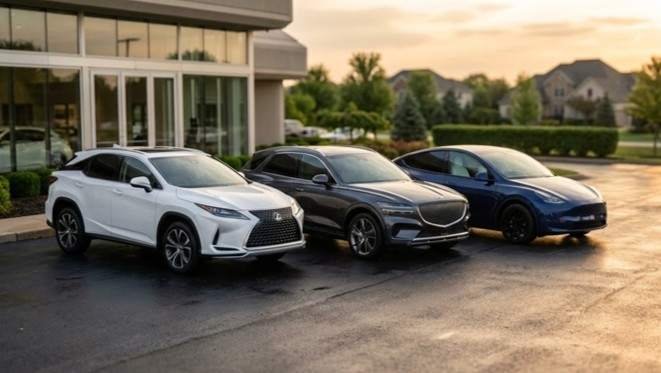
The purchase price may fall quickly, but tires, brakes, electronics, insurance, and repairs can still reflect the car’s original luxury status. A cheap badge is not a cheap car to own. The goal of this best used deluxe cars 2026 guide is to separate the used luxury vehicles that still make financial sense from the ones that look like bargains until the first big repair arrives.
The strongest used deluxe cars combine a lower purchase price with reliability, comfort, technology, performance, depreciation, maintenance costs, safety, practicality, and long-term ownership value. Those are not the same thing as the most expensive nameplate on the lot.
What Makes a Used Car a “Deluxe Car”?
“Deluxe car” is not a strict industry classification. Shoppers use it interchangeably with premium or luxury vehicle. In the used market, it usually means more than leather seats and a chrome grille.
Typical deluxe-car traits include high-quality interior materials, premium seating, better cabin insulation, advanced infotainment, driver-assistance technology, stronger engines or electric powertrains, sophisticated suspension, premium audio, and an upscale exterior design. The cabin should feel quieter and more composed than a mainstream sedan or crossover at the same used price.
An expensive used car is not automatically a good used deluxe car. A high original sticker price can mean expensive parts, complex air suspension, and electronics that cost more to diagnose than a Honda Civic’s entire brake job. Badge prestige without service records is a liability, not a luxury.
How We Chose the Best Used Deluxe Cars for 2026
This is an editorial buying guide, not a track test and not a scored ranking based on unpublished data. Vehicles were evaluated on used-market value, reliability reputation, depreciation, maintenance and repair considerations, interior quality, safety technology, driving experience, fuel economy or EV efficiency, parts and service availability, and long-term ownership potential.
No vehicle below was “personally tested for this article.” Recommendations reflect how these models tend to behave as second- and third-owner cars in the U.S. market: what they cost to buy, what they cost to keep, and which shoppers they actually fit.
A model can be delightful when new and a poor used buy if repairs are frequent, parts are scarce, or the remaining factory warranty is gone. The reverse is also true. Some luxury cars become more rational after they have already taken their biggest depreciation hit.
Best Used Deluxe Cars 2026
Prices below are approximate U.S. used-market ranges. Actual asking prices vary widely by mileage, condition, location, trim, options, accident history, and whether the car is certified pre-owned.
| Used Deluxe Car | Best Model Years to Consider | Approx. Used Price Range | Powertrain | Best For |
|---|---|---|---|---|
| Lexus ES | 2019–2024 | $22,000–$40,000 | Gas / Hybrid | Comfort and low drama |
| Lexus RX | 2018–2024 | $28,000–$48,000 | Gas / Hybrid | Family luxury SUV |
| Lexus NX | 2022–2025 | $28,000–$45,000 | Gas / Hybrid | Compact premium SUV |
| Acura RDX | 2019–2024 | $22,000–$40,000 | Gas | Sporty daily SUV |
| Acura TLX | 2021–2024 | $24,000–$40,000 | Gas | Driver’s luxury sedan |
| Genesis G80 | 2021–2024 | $25,000–$42,000 | Gas | Feature-rich sedan value |
| Genesis GV70 | 2022–2025 | $28,000–$46,000 | Gas / EV | Stylish luxury crossover |
| Volvo XC60 | 2019–2024 | $24,000–$42,000 | Gas / Hybrid | Safety-minded families |
| BMW 3 Series | 2020–2024 | $24,000–$42,000 | Gas / Hybrid | Driving experience |
| BMW X3 | 2019–2024 | $24,000–$44,000 | Gas / Hybrid | Compact luxury utility |
| Tesla Model 3 | 2021–2024 | $18,000–$35,000 | EV | Affordable luxury EV |
| Tesla Model Y | 2021–2024 | $22,000–$40,000 | EV | Family luxury EV |
12 Best Used Deluxe Cars to Buy in 2026
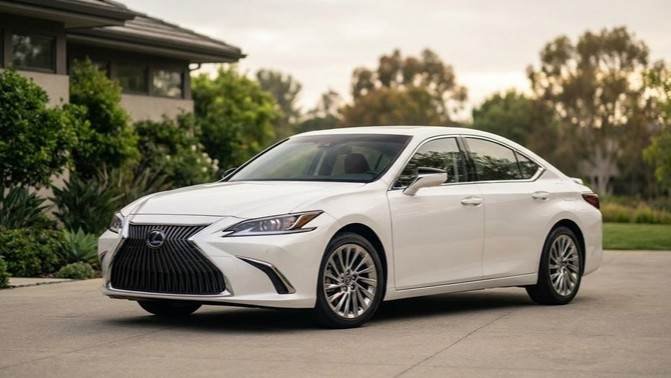
Lexus ES
The ES is the textbook used deluxe sedan: quiet, roomy, and rarely exciting in the expensive way. What makes it a good used buy is Toyota-derived mechanical simplicity plus a cabin that still feels special after 80,000 miles.
Best years: 2019–2024, covering the current generation’s mature years. Hybrid examples (ES 300h) are especially appealing if you want luxury without luxury fuel bills.
Typical used price: Often in the low-to-mid $20,000s for older, higher-mileage cars and approaching $40,000 for newer, lower-mileage examples.
Owners get a supple ride, excellent front seats, a hushed highway manner, and infotainment that is more straightforward than cutting-edge. The hybrid’s real advantage is efficiency in suburban commuting, not racetrack pace.
Drawbacks: Steering is numb. Rear visibility is only adequate. Some shoppers find the infotainment dated next to newer German or Korean rivals. It will not impress anyone who wants a sport sedan.
Who should buy it: Anyone who wants a reliable used luxury car for commuting and road trips and does not need SUV space.

Lexus RX
If there is a default answer to “best used luxury SUV,” the RX is usually in the conversation. It is comfortable, practical, and widely serviced. Used-market supply is deep, which helps buyers negotiate.
Best years: 2018–2022 for proven fourth-generation value; 2023–2024 if you want the newer design and are willing to pay more.
Typical used price: Roughly high $20,000s to high $40,000s, depending on year, hybrid vs. gas, and mileage.
What owners get is an easy daily driver with a commanding seating position, available hybrid power, and a reputation for aging more gracefully than many European crossovers. Cargo space is competitive for the class, and AWD is common.
Drawbacks: It is not particularly quick or engaging. Some older infotainment systems feel clunky. Hybrid battery replacement, while uncommon at moderate mileage, is a high-cost item if it ever arrives outside warranty.
Who should buy it: Families who want a premium SUV without betting the budget on future repairs.
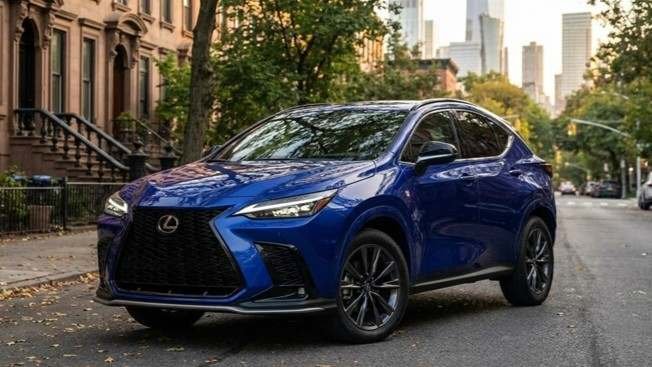
Lexus NX
The NX is the compact alternative when an RX feels oversized. The 2022 redesign is the one to target in 2026: better interior, stronger tech, and a more modern hybrid system than earlier NXs.
Best years: 2022–2025.
Typical used price: Often high $20,000s to mid $40,000s.
Owners get a smaller luxury SUV that is easier to park, with available hybrid efficiency and a cabin that finally matches the price. It is a strong choice for urban and suburban drivers who still want all-weather capability.
Drawbacks: Rear-seat and cargo space trail midsize rivals. Some trims ride firmly on larger wheels. Demand stays high, so the deepest discounts are less common than on German compact SUVs.
Who should buy it: Empty-nesters, couples, and small families who want a newer-feeling Lexus without RX money.
Acura RDX
The RDX is one of the better answers to affordable used luxury cars because it delivers Honda-related ownership economics with more style and available Super Handling All-Wheel Drive.
Best years: 2019–2024, the current-generation shape. Later years add cleaner tech and fewer early infotainment complaints.
Typical used price: Low $20,000s to around $40,000.
What owners get is a sportier ride than a Lexus RX, strong acceleration from the turbo four, a useful cargo hold, and seating that works for daily family duty. Type S examples add performance, but they also add tire and brake costs.
Drawbacks: The ride can be busy on rough pavement, especially on larger wheels. Fuel economy is only average. Some interiors show wear if previous owners treated it like a cheap crossover.
Who should buy it: Drivers who want a used luxury SUV that is more engaging than a Lexus and less expensive to maintain than a BMW X3.
Acura TLX
The 2021-and-newer TLX is a different car from the forgettable model it replaced. As a used deluxe sedan, it offers presence, available SH-AWD, and a more driver-focused chassis than the ES.
Best years: 2021–2024.
Typical used price: Mid $20,000s to around $40,000.
Owners get a handsome interior, a planted highway ride, and Type S performance if they want it. For the money, the cabin materials punch above many mainstream sedans that cost the same new.
Drawbacks: The back seat is tighter than the ES. The base powertrain is adequate rather than inspiring. Type S ownership costs rise quickly with summer tires and brakes. Sedan demand is softer, which helps the buy price but can hurt resale later.
Who should buy it: Shoppers who still prefer a sedan and want a used luxury car that is interesting to drive.
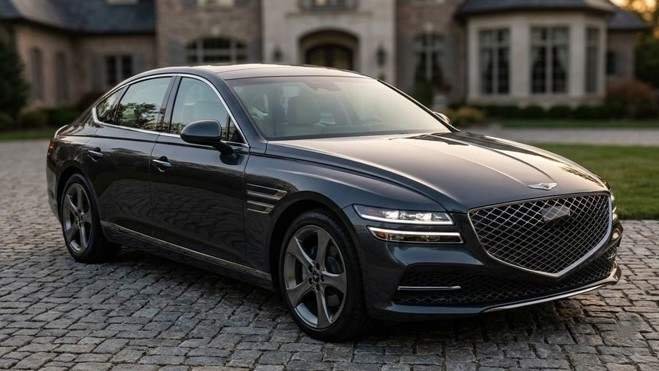
Genesis G80
The G80 is how you buy near-flagship sedan features without flagship money. Used examples often undercut German rivals while including richer standard equipment.
Best years: 2021–2024.
Typical used price: Mid $20,000s to low $40,000s.
What owners get is a plush ride, a quiet cabin, available AWD, and technology that looked expensive when the car was new. It is one of the best used luxury cars for the money if you value comfort over brand snobbery.
Drawbacks: Resale and brand recognition lag Lexus. Dealer networks are thinner in some regions. Complex electronics and optional features can be costly if they fail out of warranty. Insurance may not be as cheap as the purchase price suggests.
Who should buy it: Value hunters who want a deluxe sedan and will keep service records meticulously.
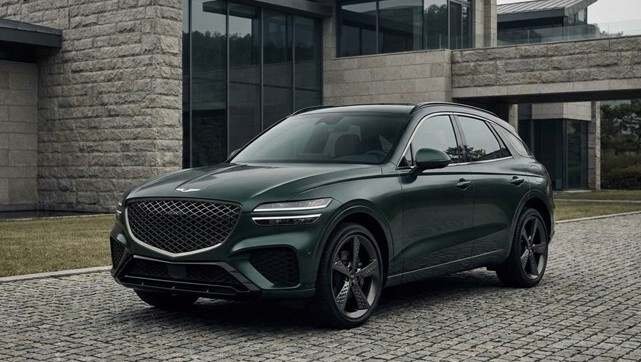
Genesis GV70
The GV70 is the G80’s more practical sibling and one of the most compelling used luxury SUVs of this decade. It looks expensive, drives with more life than a typical crossover, and depreciates enough to become interesting.
Best years: 2022–2025. Electrified GV70 examples exist for EV shoppers, but they should be judged on remaining battery warranty and charging needs, not just the badge.
Typical used price: High $20,000s to mid $40,000s for gas models; EV pricing varies more by region and incentives history.
Owners get a stylish interior, strong available power, and a more special design than many compact luxury SUVs. It is a genuine alternative to the X3, Q5, and GLC.
Drawbacks: Long-term repair data is thinner than Lexus. Some optional packages add fragile convenience features. Tires on sportier wheels are not cheap.
Who should buy it: Shoppers who want a distinctive luxury SUV and are comfortable with a newer luxury brand.
Volvo XC60
The XC60 earns its place among the best used deluxe cars because of safety technology, a calm cabin, and family-friendly packaging. Plug-in hybrid Recharge models can cut fuel use for drivers who charge at home.
Best years: 2019–2024, with a preference for examples that already have software updates and a complete service history.
Typical used price: Mid $20,000s to around $42,000.
What owners get is a comfortable ride, excellent crash-safety pedigree, and a more distinctive interior than many rivals. It is a strong family luxury SUV if the previous owner maintained it.
Drawbacks: Some electronics and driver-assistance systems can be finicky. Air suspension, where equipped, is a future expense. Volvo parts and dealer labor are not bargain-priced. PHEV complexity is a plus only if you actually plug it in.
Who should buy it: Families who prioritize safety and comfort over sporty handling.
BMW 3 Series
The 3 Series remains the used luxury car people buy with their heart. The G20 generation (2019 and newer) is the one to consider in 2026: more livable daily, still sharp to drive.
Best years: 2020–2024, ideally with documented maintenance. A remaining factory or CPO warranty is a meaningful plus.
Typical used price: Mid $20,000s to low $40,000s.
Owners get the best driving experience in this group, a well-positioned driver’s seat, and highway composure that still feels expensive. Later cars have more mature infotainment.
Drawbacks: Maintenance, brakes, run-flat tires, and unexpected electronics repairs can erase the purchase-price win. Modified examples and neglected oil-change histories are red flags. Insurance can be higher than a Lexus ES at the same price.
Who should buy it: Enthusiasts who will budget for BMW upkeep and prefer a sedan.
BMW X3
The X3 is the 3 Series formula in the body style more Americans actually want. As a used deluxe SUV, it offers AWD availability, decent cargo space, and a more engaging drive than a typical crossover.
Best years: 2019–2024.
Typical used price: Mid $20,000s to low-to-mid $40,000s.
What owners get is a compact luxury SUV that is easy to live with and more athletic than a Lexus NX. M40i versions are fast; they are also harder on tires, brakes, and insurance.
Drawbacks: Ownership costs sit above Acura and Lexus. Ride quality suffers on large wheels. A car with deferred maintenance is a much worse buy than the same mileage Lexus.
Who should buy it: Drivers who want a premium SUV and will not skip dealer or independent specialist service.
Tesla Model 3
No used luxury EV discussion in 2026 is honest without the Model 3. Depreciation, over-the-air software, and access to a mature charging network made it one of the most important affordable deluxe cars on the secondhand market.
Best years: 2021–2024, with extra attention to heat-pump-equipped cars for cold climates and to remaining battery/drive-unit warranty. The later “Highland” refresh improved interior refinement; it also costs more.
Typical used price: High teens to mid $30,000s is a common window, but regional EV prices swing hard.
Owners get brisk acceleration, low fueling costs if they charge at home, a minimalist cabin, and a highway car that still feels expensive in a straight line.
Drawbacks: Insurance can be painful. Body and interior quality vary. Tire wear is real because the car is heavy and quick. Independent repair options are better than they were, but not as straightforward as a Lexus. Battery health matters more than the odometer.
Who should buy it: Drivers with home charging who want a used luxury EV and will inspect battery warranty status before falling in love with the price.
Tesla Model Y
The Model Y is the used luxury SUV version of the same argument. It seats people, swallows cargo, and has become one of the easiest premium EVs to live with in the U.S. because of charging access and parts availability relative to low-volume rivals.
Best years: 2021–2024 original-shape vehicles are the volume used buy in 2026. Newer refreshed vans command more money; pay for them only if the improvements matter to you.
Typical used price: Low $20,000s to around $40,000, highly dependent on range version, condition, and local EV supply.
What owners get is family-practical EV range for many commutes, a hatch that is more useful than a Model 3 trunk, and performance that still surprises passengers.
Drawbacks: Ride quality can be firm. Cabin materials are not traditional luxury. Repair and insurance costs remain a planning item, not an afterthought. A Model Y with unknown battery history is not a deal.
Who should buy it: Families who can charge at home and want a used luxury SUV without gasoline.
Best Used Deluxe Car Under $30,000
Around or below $30,000, the smartest used deluxe cars in 2026 are usually a Lexus ES, an older RDX, a higher-mileage G80, a 3 Series with complete records, or a Tesla Model 3 with remaining battery coverage.
This is also where people get hurt. A $22,000 luxury car with unknown service history can cost more over three years than a $28,000 Toyota or Honda that still has warranty left. Value is not the badge. Value is the total bill.
If your ceiling is $30,000, prioritize Japanese luxury, documented maintenance, and simpler powertrains. Skip neglected German air suspension, modified performance cars, and any EV whose battery warranty is a mystery. Used luxury cars under $30,000 only work when the previous owner already paid for the expensive years.
Best Used Deluxe Cars Under $40,000
The $30,000–$40,000 band is the sweet spot for many U.S. buyers. You can often reach a later-year RX, NX, GV70, XC60, X3, TLX, or Model Y without buying a compromised example.
Compare age against mileage, not just the month. A 2022 luxury SUV at 55,000 mostly highway miles can be a better car than a 2024 with 18,000 harsh city miles and no records. In this range, CPO starts to make more sense because the price gap versus a regular used car is easier to justify when the vehicle is still relatively fresh.
Resale potential favors Lexus and, to a lesser extent, Tesla and Acura. Genesis and Volvo can be cheaper to buy and slightly harder to sell later. That is not a reason to avoid them. It is a reason to buy the clean example and keep every invoice.
Best Used Deluxe SUVs in 2026
For most households, the best used luxury SUV 2026 shortlist is Lexus RX, Acura RDX, Lexus NX, Genesis GV70, Volvo XC60, BMW X3, and Tesla Model Y.
Family practicality still points to the RX and Model Y. Rear-seat comfort is a Lexus and Volvo strength. Ride quality generally favors RX, XC60, and G80-related Genesis tuning over sport-package Germans on 21-inch wheels. AWD is widely available across the group and should be treated as a climate decision, not a luxury checkbox.
Fuel economy is where hybrids and EVs pull away, but only if the use case matches. A hybrid RX that never leaves the suburbs can be cheaper to run than a gasoline X3. A Model Y that cannot charge at home can lose that advantage to public-charging prices.
Maintenance is the splitter. Lexus and Acura usually lose less sleep. BMW and Volvo can be excellent if serviced; they are expensive if ignored. That is the entire used SUV game.
Best Used Luxury Hybrid Cars in 2026
Hybrids are particularly attractive on the used market because the fuel savings continue after the depreciation hit. Lexus ES 300h, RX hybrid, and NX hybrid are the lowest-stress names. Volvo XC60 Recharge can work for drivers who plug in daily.
Battery longevity is usually good on well-maintained Toyota-based Lexus hybrids, but “usually” is not a warranty. Check remaining coverage, hybrid-system service history, and whether the car sat unused for long stretches. Urban drivers benefit most. Highway-only drivers still benefit, just less.
Resale value on Lexus hybrids tends to stay firmer than on obscure European electrified trims. That matters if you might sell in three years rather than keep the car for a decade.
Best Used Luxury EVs in 2026
Used EV prices and technology move faster than gas-car prices. In 2026, Tesla Model 3 and Model Y remain the default used luxury EV choices for many Americans because of charging-network practicality, software support, and the sheer number of examples to inspect.
Other names — BMW i4, Cadillac Lyriq, Genesis Electrified GV70, Audi Q4 e-tron, Mercedes EQE — can be excellent, but only as individual cars. Low-volume luxury EVs can be cheaper to buy and more expensive to repair. Panel availability, insurance, and specialist labor vary by market.
Do not shop a used EV like a used Camry. Ask about battery health, remaining battery warranty, DC fast-charging behavior, charging-network access, real-world range in your climate, software update support, insurance quotes, and repair costs. Mileage is secondary to battery condition. A 40,000-mile EV with a documented healthy pack and warranty left can be a better buy than a 22,000-mile example with collision repairs and a murky charging history.
Not every used luxury EV is a good buy. Fast depreciation is an opportunity and a warning: the market is telling you that technology and residual risk are still being priced in.
Is It Better to Buy a Used Deluxe Car or a New Mainstream Car?
A used deluxe car can offer better materials, more features, a better ride, stronger performance, a premium badge, and more advanced equipment than a similarly priced new mainstream vehicle.
A new mainstream car offers a new-car warranty, lower repair risk, newer safety technology in some cases, more predictable ownership costs, and often simpler financing.
If you want comfort and features and you will inspect, budget, and maintain the car, a used luxury vehicle can be the more satisfying $30,000–$40,000 purchase. If you need five uneventful years with a payment you can ignore, a new Honda, Toyota, Mazda, or Hyundai is often the adult decision. Neither answer is universal. The wrong used BMW is worse than a new CR-V. The right used Lexus ES can make a loaded new mainstream sedan feel tinny.
CPO vs Regular Used Luxury Car: Which Is Better?
Certified pre-owned luxury cars typically add a manufacturer-backed inspection, extra warranty, sometimes better financing, and extras such as roadside assistance. They also come with age and mileage caps and a higher purchase price.
Paying extra for CPO makes sense when the car is European, complex, or just outside factory warranty; when you want a cleaner paper trail; or when the CPO premium is modest compared with the repair you are afraid of. It makes less sense on a well-documented Lexus with remaining coverage, or when the CPO markup could instead buy a newer non-CPO example of a more reliable model. CPO is insurance against the unknown. It is not a substitute for your own inspection.
How Many Miles Is Too Many for a Used Deluxe Car?
Mileage alone should not decide the deal. A 90,000-mile highway Lexus with records can be a better car than a 45,000-mile luxury sedan with three owners, no invoices, and a reconstructed title. Look at maintenance history, ownership history, highway versus city use, previous owners, accidents, service records, major component replacement, and warranty status.
As general guidance, not a rule: under 40,000 miles is easy; 40,000–80,000 is normal if serviced; 80,000–120,000 is acceptable on proven Japanese luxury with evidence of care; beyond that you are buying a maintenance plan, not just a car. EVs need battery and thermal-system scrutiny at any mileage.
How Much Should You Budget for Maintenance?
Luxury-car maintenance stays expensive after depreciation. Budget for oil changes, brakes, tires (often larger and costlier), 12-volt batteries, suspension, cooling systems, electronics, air conditioning, AWD service, and luxury-specific hardware such as air springs, adaptive dampers, and panoramic roofs.
Japanese luxury, especially Lexus, generally produces fewer nasty surprises. European luxury can be perfectly fine, but the bill for the same job is often higher. Hybrids add inverter/battery risk later in life. EVs reduce oil-change costs and can increase tire, alignment, and body-repair costs.
A practical approach for 2026 shoppers: set aside a dedicated annual maintenance reserve, get a pre-purchase inspection, and price insurance before you sign. If the reserve would make the payment uncomfortable, you are not buying a used deluxe car. You are buying stress.
Used Deluxe Cars You Should Be Careful About
This is not a “worst cars” list. It is a list of situations. Be careful with poor maintenance records, multiple accidents, salvage or rebuilt titles, unusually low prices, modified performance vehicles, expired warranties on complex cars, high-mileage examples with deferred service, air suspension with no history, unresolved electronic faults, and EVs with uncertain battery history.
A particular model is not automatically a bad used buy because some examples have problems. The neglected example of a good model is the problem. Mercedes-Benz E-Class, older air-sprung SUVs, and high-output German performance trims can be wonderful when maintained and miserable when they were someone’s weekend toy.
10 Things to Check Before Buying a Used Deluxe Car
- Vehicle history report
- VIN match on title, dash, and door sticker
- Maintenance records
- Accident history and repair quality
- Title status
- Tire age and even wear
- Brake condition
- Warning lights, including intermittent ones
- Electronics, cameras, sensors, and infotainment
- Independent pre-purchase inspection
Have a qualified independent mechanic inspect the vehicle before purchase. Dealer inspections are not a substitute when the dealer is selling the car. Natural next reads for shoppers: how to inspect a used luxury car, luxury car maintenance costs, and CPO vs used luxury cars.
Should You Buy a Used Deluxe Car From a Dealer or Private Seller?
Dealer: financing, CPO availability, trade-in convenience, possible warranty, and a higher purchase price.
Private seller: potentially lower price, more negotiation flexibility, less overhead, and a greater need for inspection, payment safety, and title diligence.
Use a dealer when you want CPO or a simpler transaction. Use a private seller when the car is documented, the price is meaningfully better, and you will not skip the independent inspection. In both cases, walk if the seller rushes you.
How to Avoid Buying a Cheap Luxury Car That Becomes Expensive
Cheap to buy is not cheap to own. Total cost of ownership is purchase price plus insurance, fuel or electricity, maintenance, repairs, tires, registration, and depreciation. A $25,000 used luxury car can lose to a $25,000 mainstream vehicle if it needs a suspension job, two sets of performance tires, and an insurance premium that never comes down.
The fix is boring and effective: buy the simpler powertrain, the cleaner history, the remaining warranty, and the brand whose parts your local shops already understand. If you want the sport package, budget as if you will use it.
Which Used Deluxe Car Is Best in 2026?
There is no single winner among the best used deluxe cars 2026. There are better matches.
- Best overall value: Lexus ES or Acura RDX
- Best used luxury SUV: Lexus RX
- Best reliability-focused choice: Lexus ES / RX
- Best affordable choice: Tesla Model 3 or older Lexus ES
- Best family choice: Lexus RX or Tesla Model Y
- Best hybrid: Lexus ES 300h or RX hybrid
- Best EV: Tesla Model Y for families; Model 3 for commuters
- Best driving experience: BMW 3 Series
- Best long-distance cruiser: Lexus ES or Genesis G80
The best used deluxe car depends on budget, mileage, maintenance history, driving needs, and risk tolerance. Buy the car that still looks like a good idea after you price tires and insurance.
Frequently Asked Questions
What is the best used luxury car to buy in 2026?
There is no universal best. For low-stress ownership, a Lexus ES or RX is the safest mainstream answer. For a used luxury SUV with more driving life, consider an Acura RDX or Genesis GV70. For an EV, a Tesla Model 3 or Model Y with remaining battery warranty is the practical starting point. Match the car to service history and your real budget, not the badge.
What is the most reliable used deluxe car?
No used car is guaranteed. Lexus models such as the ES and RX have a long-standing reputation for durability and fewer surprise repairs than many European luxury cars. Acura RDX is also a strong reliability-focused choice. Reliability still depends on oil changes, cooling-system care, and whether previous owners deferred work. Records beat reputation.
What is the best used luxury SUV?
The Lexus RX is the most complete all-around used luxury SUV for families. The Acura RDX is sportier. The Genesis GV70 is more distinctive. The Tesla Model Y is the family EV pick if home charging is available. Choose based on cargo needs, ride preference, and whether you want gasoline, hybrid, or electric power.
What is the best used luxury car under $30,000?
Common answers in 2026 include a Lexus ES, an older Acura RDX, a Genesis G80 with records, or a Tesla Model 3 with battery coverage left. Under $30,000, condition matters more than the nameplate. An ignored German luxury sedan at this price can become the most expensive “deal” on the lot.
Are used luxury cars worth buying?
They can be, if you buy depreciation and not deferred maintenance. You get better materials, a quieter ride, and more features than a similarly priced mainstream car. They are not worth it if insurance, tires, and repairs were not in the budget. A used deluxe car is worth buying when total cost of ownership still beats the comfort you would get new.
Is CPO worth the extra money?
Often yes on complex European luxury cars and on vehicles just outside factory warranty. Sometimes no on a well-serviced Lexus with coverage remaining. Compare the CPO premium with the cost of a major repair you want to avoid. CPO should include a real inspection and transferable warranty benefits, not just a window sticker.
What mileage is too high for a used luxury car?
There is no single cutoff. Many Lexus and Acura vehicles remain reasonable past 100,000 miles with records. A 50,000-mile luxury car with accidents and no service history can be worse. For EVs, battery health and remaining warranty matter more than miles. Use mileage as a screening tool, then let inspection results decide.
Which luxury cars are cheapest to maintain?
Lexus generally sits at the more affordable end of luxury maintenance, followed by Acura. Genesis can be reasonable but has a shorter U.S. track record. BMW, Audi, Mercedes-Benz, and some Volvo systems cost more for routine and unscheduled work. Tires, brakes, and electronics are the budget-busters across every brand.
Are used luxury EVs worth buying in 2026?
Yes, if you can charge at home, confirm battery warranty and health, and get an insurance quote first. Tesla Model 3 and Model Y are the volume choices. Other luxury EVs can be bargains or headaches depending on repair networks. Fast depreciation helps the buyer only when the remaining pack life is solid.
What should I inspect before buying a used luxury car?
Start with history, VIN, title, and service records. Then check tires, brakes, warning lights, infotainment, cameras, and every power feature. For EVs, add charging behavior and battery coverage. Finish with an independent pre-purchase inspection. If a seller refuses a third-party inspection, you already have your answer.
Related Post