
The Chevrolet Express has been the backbone of American commercial fleets, shuttle services, churches, delivery companies, and large families for decades. Its body-on-frame toughness, massive cargo capacity, and no-nonsense reliability have made it a staple where Ford Transit and Ram ProMaster compete on modern features. For the 2027 Chevrolet Express model year, Chevrolet is finally delivering the most significant overhaul the Express has seen in years—a ground-up evolution that modernizes the design, introduces efficient hybrid and possible electric options, transforms the interior and technology, expands drivetrain choices, and repositions the van as a smarter, more competitive full-size solution for U.S. businesses and operators.
This in-depth, USA-focused guide covers the latest projected details on the new design language, powertrains and hybrid options, exterior execution, interior and tech suite, AWD features, market positioning, key rivals, and owner/fleet upgrades—insights drawn from GM’s commercial vehicle roadmap, Ultium and hybrid developments, Super Cruise expansion, and real-world American fleet feedback that have not been widely detailed elsewhere.
Boxy Workhorse to Modern Professional
The 2027 Chevrolet Express moves decisively away from its long-running, utilitarian box-on-frame look and adopts a cleaner, more aerodynamic, and professional design language while retaining the tough character fleets demand. Designers have created a taller, more vertical front end with a wider grille incorporating horizontal elements and a prominent gold bowtie, flanked by slim full-LED headlights with distinctive daytime running light signatures that can be customized or fleet-branded via the myChevrolet app.
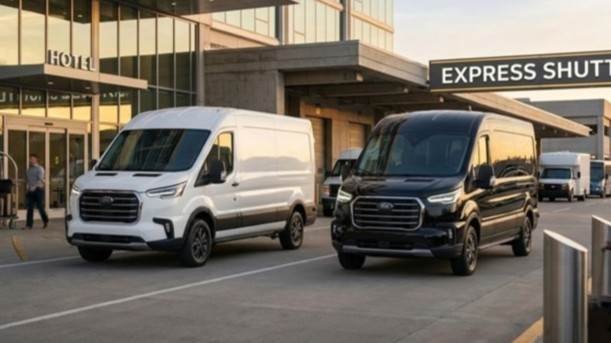
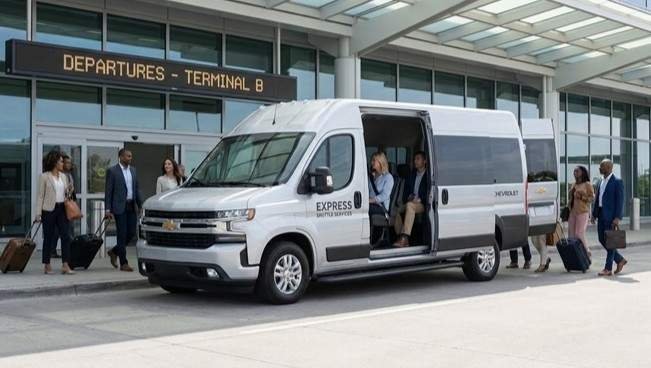
The overall silhouette remains a classic full-size van with available cargo and passenger configurations, but proportions are refined with better airflow management, a slightly more sloped hood, and cleaner side surfaces that reduce drag. Short overhangs and a high roofline preserve maximum interior volume. In the U.S. market the Express will continue to offer cargo and passenger versions in multiple wheelbases and roof heights, plus new two-tone options and darker “Work Pro” appearance packages. The design goal is a van that looks more upscale and modern when parked at a corporate campus or hotel shuttle lane while still projecting the durable, ready-for-work image American operators expect.
Exterior Details
Built on an evolved heavy-duty body-on-frame architecture with increased high-strength steel and strategic aluminum components, the 2027 Chevrolet Express improves rigidity, crash performance, and durability under constant commercial use. Aerodynamic enhancements—including active grille shutters, a flatter underbody, optimized mirrors, and a more efficient rear design—deliver better highway fuel economy during long interstate runs and stop-and-go city delivery routes.
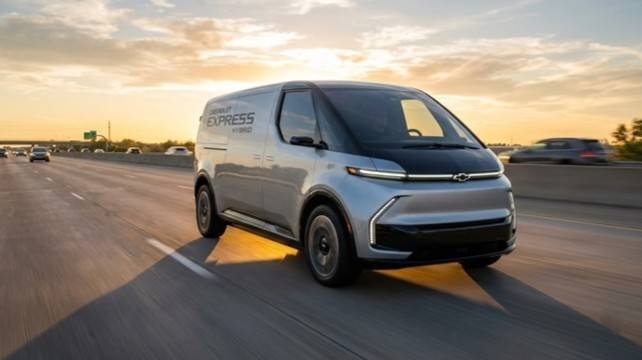
Full LED lighting with available adaptive functionality becomes standard or widely available, providing superior illumination for early-morning routes and dark rural deliveries. Wheel options range from 16-inch steel work wheels to 17- or 18-inch alloys on higher passenger and LT trims, wrapped in load-range commercial all-season or all-terrain tires. Available features include dual sliding side doors (or swing-out), a power rear cargo door or liftgate option, LED cargo-area lighting, and multiple exterior camera mounts.
A projected “Fleet Pro” exterior package adds reinforced bumpers, unique badging, side protective molding, and enhanced lighting, while a passenger-focused LTZ or Premier package brings chrome accents and privacy glass. Practical U.S.-focused touches such as integrated trailer-hitch provisions, 360-degree camera washers, and exterior power outlets round out the design. These updates make the 2027 Chevrolet Express look sharper and more professional without sacrificing the functional toughness fleets require.
Powertrains and Hybrid Options
The powertrain strategy for 2027 balances traditional durability with modern efficiency. The proven 6.6-liter gas V8 remains available for maximum simplicity and power, now refined for smoother delivery and better emissions. A Duramax turbo-diesel option continues for high-mileage operators seeking torque and fuel economy under load.
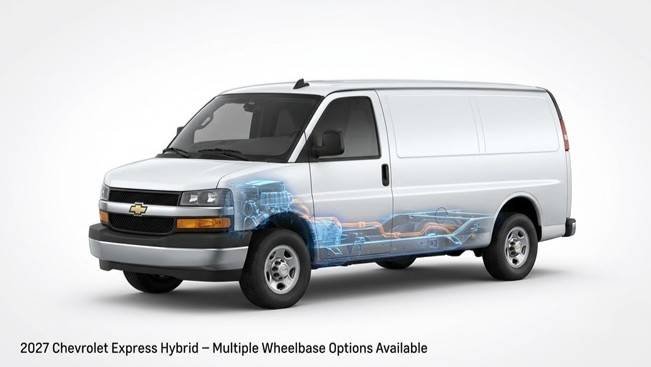
The biggest leap is the introduction of hybrid technology. Chevrolet is expected to offer a robust mild-hybrid or full-hybrid system pairing the gas or diesel engine with an electric motor and commercial-grade battery pack. Combined output is projected in the 350–420 horsepower range with strong low-end electric torque that improves launch feel when loaded and reduces fuel consumption in urban delivery cycles. A plug-in hybrid (PHEV) or range-extended variant is under consideration for fleets with return-to-base operations, potentially offering 20–40 miles of electric-only range for city routes before the engine seamlessly engages.
GM’s commercial hybrid experience (including BrightDrop learnings) informs thermal management calibrated for hot Southern summers, cold Northern winters, and constant stop-start duty. Regenerative braking is optimized for heavy loads and downhill grades. Towing capacity stays strong at 7,000–10,000+ lbs depending on configuration. Drive modes (Normal, Eco, Tow/Haul, and a new Fleet Efficiency mode) tailor power delivery and electric assist. This flexible lineup gives U.S. fleets the reliability they trust with the lower operating costs they increasingly demand.
AWD Features
While the Express has traditionally been rear-wheel drive, the 2027 Chevrolet Express model expands available four-wheel-drive options, particularly for passenger, shuttle, and northern-fleet applications. The projected Autotrac-style 4WD system operates primarily in rear-drive for efficiency and automatically engages the front axle when slip is detected or when the driver selects a specific mode.
Enhanced drive modes include Normal, Snow, Sand/Mud, and Tow settings that adjust throttle, transmission, and 4WD behavior. An available locking rear differential, hill-descent control, and improved traction management boost confidence on wet roads, light snow, gravel job sites, and steep driveways. Ground clearance remains practical for a full-size van. For American operators this means greater year-round versatility without the complexity or cost of full-time 4WD systems found in some rivals.
Interior and Technology
Inside, the 2027 Chevrolet Express finally feels like a modern commercial vehicle. Higher-grade soft-touch materials in the dashboard and door panels, improved sound insulation, available leatherette or durable cloth, and better climate control create a cabin that reduces driver fatigue on long shifts. Seating configurations remain highly flexible—from two-seat cargo vans to 12- or 15-passenger models—with more supportive front seats offering available heating and power adjustments.
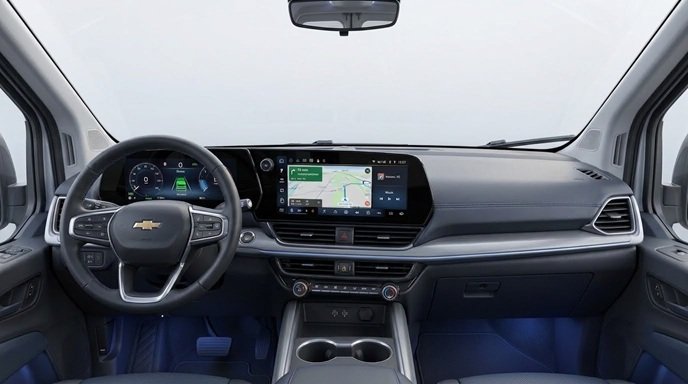
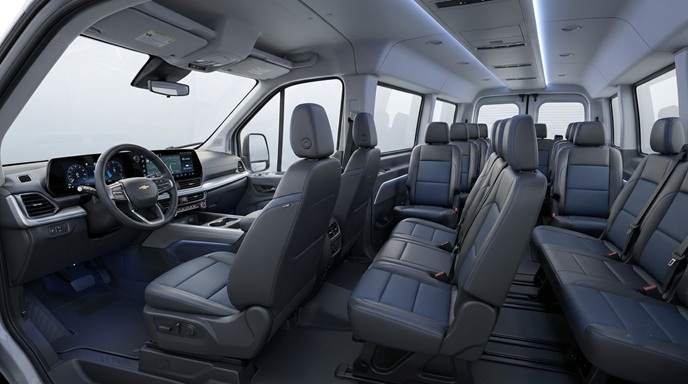
The technology suite is a major upgrade. A fully digital instrument cluster pairs with a large center touchscreen (projected 11.3 to 13.4 inches) running the latest Google-built-in system with wireless Apple CarPlay, Android Auto, over-the-air updates, and fleet-management integration. Super Cruise hands-free highway driving is expected to become available on higher trims— a potential game-changer for shuttle and long-haul operators. Multiple USB-C ports, a Wi-Fi hotspot, premium audio options, and an available head-up display address modern needs.
Unique projected U.S.-focused features include advanced fleet telematics, remote diagnostics and preconditioning via the myChevrolet app, a high-resolution 360-degree camera system with trailer and cargo views, Digital Key for shared fleet use, and enhanced voice controls. Physical knobs for climate, drive modes, and volume remain for gloved or quick operation. Cargo versions gain improved tie-down systems, modular partitioning, and brighter LED lighting. The result is a quieter, more productive, and more connected workspace for American drivers and crews.
2027 Chevrolet Express Specs
| Category | Specification |
|---|---|
| Vehicle Type | Full-Size Cargo & Passenger Van |
| Platform | Evolved GM Heavy-Duty Van Architecture |
| Layout | Front-engine, RWD / Available 4WD |
| Powertrains | 6.6L Gas V8 / Duramax Turbo-Diesel / Hybrid Assist |
| Gas V8 Output | Approx. 400–450 hp (estimated) |
| Duramax Diesel Output | 300–400+ hp & high torque (estimated) |
| Hybrid System | Mild-Hybrid or Full Hybrid Assist |
| Hybrid Output | 350 – 420 hp combined (estimated) |
| Transmission | 6-speed or 10-speed automatic |
| Drivetrain | RWD standard / Available Autotrac-style 4WD |
| Drive / Terrain Modes | Normal, Eco, Tow/Haul, Snow, Sand/Mud, Fleet Efficiency |
| 0-60 mph | Mid-to-high 8-second range (loaded est.) |
| Max Towing Capacity | 7,000 – 10,000+ lbs (configuration dependent) |
| Max Payload | 3,000 – 4,500+ lbs (est. by config) |
| Fuel Economy (est.) | Improved vs prior Express (hybrid gains) |
| Suspension | Heavy-duty independent front / multi-leaf rear |
| Ground Clearance | Practical full-size van height |
| Brakes | Four-wheel discs with regenerative assist |
| Wheels & Tires | 16-inch steel (work) to 17–18-inch alloys |
| Interior | Quieter, more modern commercial cabin |
| Seating | 2-seat cargo up to 12- or 15-passenger |
| Infotainment | Latest Google built-in |
| Cargo Volume | Massive (up to 300+ cu ft depending on config) |
| Curb Weight (est.) | Typical for full-size hybrid-assist van |
| Pricing (U.S. MSRP projected) | $40,000 – $70,000+ |
| Target On-Sale | 2027 model year |
Upgrades and Package Strategy
Chevrolet will offer Work Van, LT, LTZ, and Premier passenger trims plus dedicated cargo configurations, with clear fleet-focused packages. Popular options include a Max Trailering package, a Cold Weather package (heated mirrors, seats, and steering wheel), a Technology package (larger screens, Super Cruise, premium audio), a Safety package, and appearance packages.
Available adaptive suspension or heavy-duty damping improves ride quality when unloaded while maintaining control when fully loaded. Factory accessories—shelving, ladder racks, lighting, partitions, wheelchair lifts, and all-weather protection—let operators customize while preserving warranty coverage. These upgrades allow fleets and private buyers to configure the Express for pure cargo duty, executive shuttle service, or multi-passenger transport right from the dealer.
Market Position
Projected pricing for the 2027 Chevrolet Express is expected to start in the low-to-mid $40,000 range for basic cargo vans and climb toward $60,000–$70,000+ for loaded passenger or hybrid models. It targets commercial fleets, delivery companies, shuttle operators, churches, schools, large families, and recreational users who need maximum space and durability.
Chevrolet’s unmatched commercial dealer network, strong residual values, Super Cruise potential, and the growing demand for efficient full-size vans give it a practical edge. It aims to reclaim share by offering better technology and efficiency while retaining the body-on-frame toughness many operators still prefer over unibody rivals.
Key Rivals
Primary rivals include the Ford Transit (more modern car-like driving and features, unibody), Ram ProMaster (front-drive efficiency and cargo access), Mercedes-Benz Sprinter (premium feel and high-roof options), Nissan NV (value, discontinued but lingering), and electric newcomers such as the BrightDrop Zevo, Ford E-Transit, and Rivian commercial vans.
The Express’s expected advantages are body-on-frame durability, stronger traditional towing and payload, available hybrid efficiency, Super Cruise potential, and Chevrolet’s vast service network. Its challenges include matching the Transit’s driving dynamics and the ProMaster’s low load floor. For buyers who prioritize toughness, serviceability, and now modern efficiency, the 2027 Express remains a compelling choice.
The 2027 Chevrolet Express is more than a refresh—it is the long-awaited modernization of America’s classic full-size van. Bolder professional design, advanced hybrid and traditional powertrains, available 4WD confidence, a quieter and far more tech-rich interior, and thoughtfully chosen fleet upgrades position it as a stronger contender in a rapidly evolving commercial segment.
Exact horsepower, torque, range, towing figures, dimensions, features, and pricing will be confirmed closer to Chevrolet’s official reveal. What is already clear is the intent: keep the Express as the durable, practical, and increasingly intelligent full-size van that American businesses and operators can rely on for years. For U.S. fleets and buyers who need maximum space, capability, and lower operating costs in one proven package, the 2027 Chevrolet Express looks ready to get back to work—smarter and stronger than ever.
Related Post