
After more than a decade away, the Ram Dakota is coming back — and it’s not arriving quietly. Confirmed by Ram CEO Tim Kuniskis and reinforced during Stellantis’ May 2026 Investor Day, the all-new 2027 Ram Dakota represents Ram’s determined push into the booming midsize pickup segment. It slots below the Ram 1500 as a more accessible, maneuverable “real truck” while carrying the brand’s signature refinement, technology, and capability.
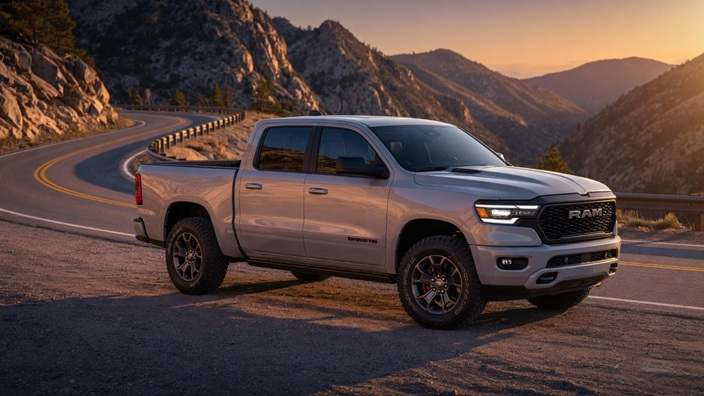
Unlike the South American Ram Dakota (a rebadged Peugeot Landtrek/Fiat Titano with a 2.2L turbodiesel already on sale), the North American version is an all-new body-on-frame truck engineered for U.S. buyers. Dealers who saw it during the February 2026 NADA Show in Las Vegas described the styling as “aggressive,” “the right size,” and a potential “game-changer” against the Toyota Tacoma.
This is the most significant new Ram truck launch in years. Here’s the deepest, most forward-looking look at the 2027 Ram Dakota — covering design, powertrain (including hybrid possibilities), exterior/interior/tech, 4×4 capability, market position, rivals, and upgrades — with analysis you won’t find rehashed elsewhere.
The Strategic Revival
Ram hasn’t offered a midsize truck since the original Dakota ended production in 2011. In that time, the segment exploded. Toyota Tacoma regularly tops 200,000 annual sales, Ford’s Ranger + Maverick combo is strong, and GM’s Colorado/Canyon adds meaningful volume.
Ram CEO Kuniskis has been blunt: a truck brand without a midsize offering feels incomplete. The new Dakota fixes that gap while targeting buyers priced out of (or intimidated by) full-size trucks that now start well above $42,000. Early pricing targets put the Dakota in the mid-to-high $30,000s starting range (up to around $48,000 for loaded trims), with an SRT halo model expected near $65,000.
Production is slated to begin in 2027 (pilot production possibly March 2027), with U.S. sales as a 2028 model year. The truck will be built in the U.S. (reports point to the Toledo, Ohio plant alongside Jeep Gladiator capacity). This “American-built” story will matter in marketing.
2027 Ram Dakota Exterior Design: Aggressive Ram DNA
Dealers praised the aggressive styling after the private NADA preview. Expect a bold Ram family face — likely a prominent grille (possibly with illuminated RAM lettering or new texture) flanked by modern LED or matrix headlights. The overall proportion should feel planted and capable rather than car-like, with sculpted fenders, pronounced wheel arches, and available off-road-oriented trims (Rebel or Warlock equivalents) featuring blackout treatment, all-terrain tires, skid plates, and unique badging.
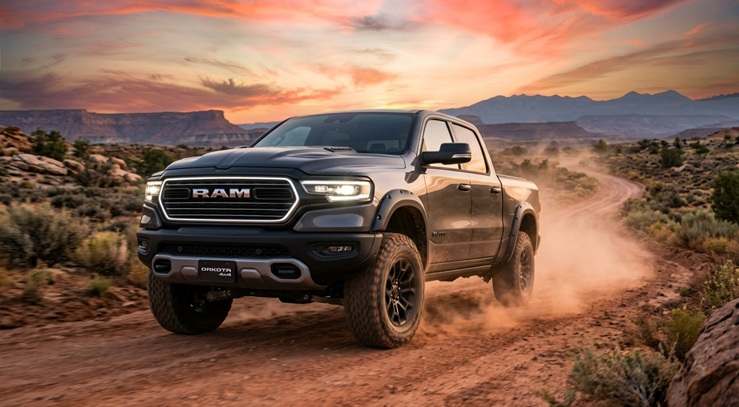
Unique angle many outlets miss: Ram has an opportunity to blend the toughness of the old Dakota with the premium, almost luxurious presence of the current Ram 1500. Think less “boy-racer aggressive” than the new Tacoma and more “confident, modern workhorse with attitude.” Higher trims could offer power-retractable running boards, multi-function tailgates (power release, dampened operation), and bed lighting/integration packages that feel upscale.
Cab and bed configurations will likely include Crew Cab with 5-foot or 6-foot+ bed options, plus possibly an extended-cab work variant. Aerodynamics will be carefully tuned for efficiency (especially important with hybrid powertrains), yet the truck must still look and feel like a body-on-frame truck.
Interior & Technology: Midsize Practicality
This is where the 2027 Ram Dakota can truly differentiate. Ram has mastered the “luxury truck” formula in the full-size segment. Expect that DNA to trickle down intelligently.
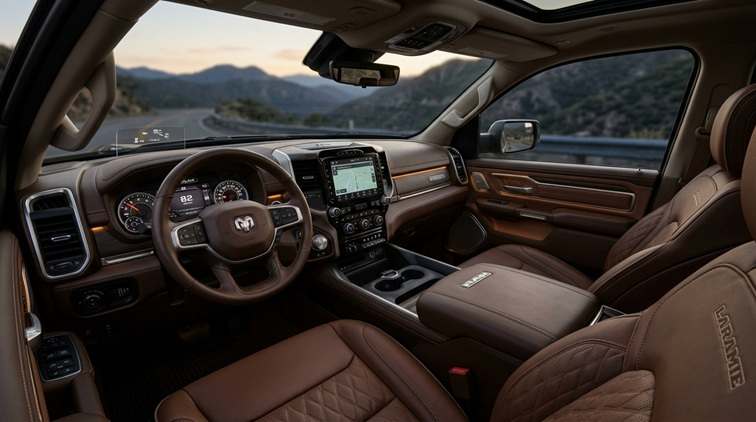
Higher trims (Laramie, Limited, Night Edition) should feature premium materials — soft-touch surfaces, available leather, metal or wood-tone accents, and excellent fit-and-finish. The dashboard architecture will likely echo the Ram 1500’s driver-focused layout with a large floating touchscreen (12–14 inches expected), a fully digital instrument cluster with customizable off-road and towing pages, and physical controls for key functions (Ram has resisted going fully digital).
Tech highlights expected:
- Latest Uconnect system with wireless Apple CarPlay/Android Auto, over-the-air updates, and strong voice recognition.
- Advanced driver assistance: 360° camera system, adaptive cruise with stop-and-go, lane centering, blind-spot monitoring with trailer coverage, and automatic emergency braking.
- Unique Ram touches: Integrated trailer brake controller, smart towing apps/scales (if carried over), and off-road telemetry showing pitch/roll, tire pressures, and transfer case status.
- Comfort features: Available ventilated seats, heated steering wheel, dual-zone climate, and a quiet cabin thanks to superior sealing and acoustic glass.
The interior should feel more premium and spacious in the rear than some rivals, with thoughtful storage and easy-to-clean surfaces for work use. This positions the Dakota as a lifestyle truck that can also work hard — not just a stripped work truck or an overly car-like unibody.
Powertrain: Efficiency, and Hybrid Possibilities
Ram has confirmed a multi-powertrain strategy (gas ICE + PHEV). Full EV appears unlikely given recent Stellantis project cancellations.
Most likely powertrains
- Base engine: A tuned version of Stellantis’ 2.0L Hurricane turbocharged inline-4 (already producing strong numbers in other applications; expect 300+ hp and excellent low-end torque in the 300–350+ lb-ft range). This offers strong towing response without the size/weight penalty of a V6 or V8.
- Higher-output options: Possible 2.7L turbo V6 or even a Hurricane inline-6 in performance trims. An SRT variant is confirmed in Stellantis plans and could feature a high-output Hurricane or even a tuned HEMI V8 for halo power.
- Hybrid strategy: 48V mild-hybrid assist on gas engines for smoother stop-start, better efficiency, and torque fill. More excitingly, a plug-in hybrid (PHEV) variant is highly plausible given the STLA Frame platform’s compatibility with Ramcharger-style electrified architecture. A PHEV could deliver strong combined system output (potentially 400+ hp equivalent), 20–30+ miles of electric-only range, and the ability to run quietly on trails or job sites.
In the midsize segment, most competitors emphasize either pure efficiency (Tacoma hybrid) or traditional torque (Ranger/Colorado). Ram can deliver both strong towing capability and modern efficiency/quiet operation. The “most powerful midsize truck” claim from Ram leadership feels achievable with the right Hurricane tuning and hybrid boost.
All engines will likely pair with an 8-speed automatic. Rear-wheel drive will be standard on base models; 4×4 available (or standard) across most trims.
AWD/4×4 Capability & Real-World Performance
CEO Kuniskis stressed the Dakota must be “a real truck” with genuine capability — not a car with a bed. Expect a traditional part-time 4WD system with 2Hi, Auto/4Hi, and 4Lo modes plus a low-range transfer case. Higher trims should include an electronic locking rear differential (and possibly front locker on off-road packages).
Capability targets
- Towing: 7,000–8,000 lbs when properly equipped (competitive or class-leading with hybrid torque).
- Payload: 1,500–2,200+ lbs depending on configuration.
- Off-road angles and ground clearance competitive with or better than Ranger/Colorado in Rebel-style trims.
Ram’s chassis tuning expertise (from the excellent-riding 1500) should give the Dakota superior on-road manners and composed off-road behavior. Adaptive damping or available air suspension on top trims would be a segment-first differentiator. Expect multiple drive modes (including Rock, Mud/Sand, and Tow) and hill-descent control.
2027 Ram Dakota Specs
Powertrain Options
| Powertrain Type | Engine | Horsepower (est.) | Torque (est.) | Hybrid System | Expected Use Case |
|---|---|---|---|---|---|
| Base | 2.0L or 2.7L Turbo I4/V6 | 300+ hp | 350–420 lb-ft | 48V Mild Hybrid | Daily driving + towing |
| PHEV | Turbocharged + Electric Motor | 400+ hp combined | Very high instant torque | Plug-in Hybrid | Efficiency + performance |
| SRT (Halo) | High-output Hurricane I6 or HEMI V8 | 450+ hp | 500+ lb-ft | None (or mild) | Performance & enthusiast |
| Category | Highlights |
|---|---|
| Infotainment | Large floating touchscreen (12–14″), latest Uconnect, wireless Apple CarPlay/Android Auto, OTA updates |
| Driver Assistance | 360° camera, adaptive cruise, blind-spot monitoring with trailer coverage, automatic emergency braking |
| Unique Ram Touches | Integrated trailer brake controller, off-road telemetry pages, available ventilated seats & premium materials |
| Off-Road Tech | Multiple drive modes, locking differentials, hill descent, skid plates (higher trims) |
| Bed Features | Available power tailgate, multi-function tailgate, bed lighting & tie-downs |
Capability Specs
| Specification | Estimated Range |
|---|---|
| Max Towing Capacity | 7,000 – 8,000 lbs |
| Payload Capacity | 1,500 – 2,200+ lbs |
| 4×4 System | Part-time with 2Hi / 4Hi / 4Lo |
| Ground Clearance | Competitive with class |
| Approach/Departure Angles | Strong in off-road trims |
| Drive Modes | Multiple (including Rock, Mud/Sand, Tow) |
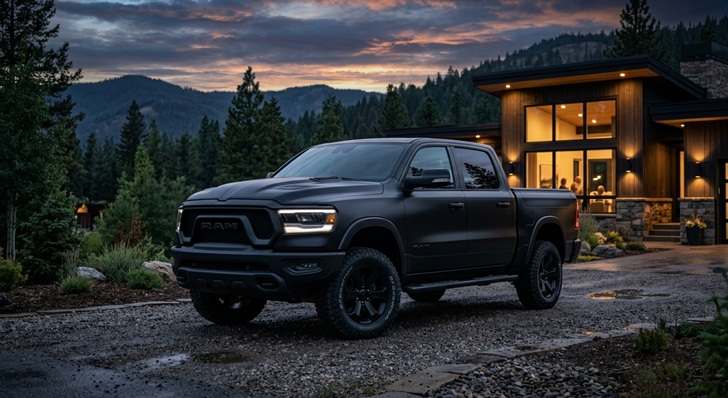
Market Position & Competitive Upgrades
Toyota Tacoma (reliability + new hybrid), Ford Ranger (global capability + Raptor), Chevy Colorado (tech + ZR2 off-road), Honda Ridgeline (unibody comfort/lifestyle), and Jeep Gladiator (extreme off-road).
Ram’s advantages:
- Brand prestige and “luxury truck” halo.
- Superior ride quality and interior refinement.
- Potential hybrid power + efficiency combination.
- U.S. production story.
- Aggressive yet premium styling that splits the difference between work and lifestyle.
Late entry means the Tacoma has a huge installed base and reputation. Ram must price aggressively and deliver on capability promises from day one.
The 2027 Ram Dakota upgrades the old Dakota nameplate dramatically — modern safety, efficiency, tech, refinement, and platform capability. Versus current rivals, it brings Ram’s signature strengths into a smaller, more livable package at a time when full-size truck prices have pushed many buyers downward.
Pricing & Availability
| Trim / Variant | Estimated Starting Price | Positioning |
|---|---|---|
| Tradesman / Work | $35,000 – $38,000 | Fleet / value buyer |
| Big Horn / Laramie | $40,000 – $45,000 | Most popular lifestyle trims |
| Rebel / Warlock | $45,000 – $48,000 | Off-road focused |
| Limited / Night Edition | $48,000+ | Premium luxury |
| SRT | ~$65,000 | Performance halo model |
| Overall Range | $35,000 – $65,000+ | Positioned below Ram 1500 |
Who Should Buy the 2027 Ram Dakota?
- Buyers who want Ram quality and style but don’t need (or want) full-size dimensions/prices.
- Those who tow moderate loads and value a composed ride and quiet cabin.
- Off-road enthusiasts who want capability without Gladiator extremes.
- Early adopters excited by potential hybrid performance and efficiency.
The 2027 Ram Dakota isn’t just another midsize truck — it’s Ram’s statement that it intends to compete in every relevant truck segment with vehicles that feel distinctly Ram. Dealers are already excited. The combination of aggressive styling, body-on-frame capability, strong (possibly hybridized) powertrains, and premium interior tech positions it as one of the most interesting launches of the next two years.
Full powertrain details, pricing, and official images are still pending (expected closer to reveal in late 2026 or early 2027). But based on everything we know — dealer reactions, platform strategy, and Ram’s engineering DNA — the Dakota has the ingredients to be a legitimate Tacoma fighter and a genuine expansion of the Ram truck family.
Related Post