
The compact SUV segment is the most hotly contested battlefield in the American auto market, and Nissan is finally bringing serious firepower. After a brief and somewhat confusing stopgap hybrid experiment, the all-new 2027 Nissan Rogue Hybrid e-POWER arrives late 2026 as a full redesign with genuinely innovative technology.
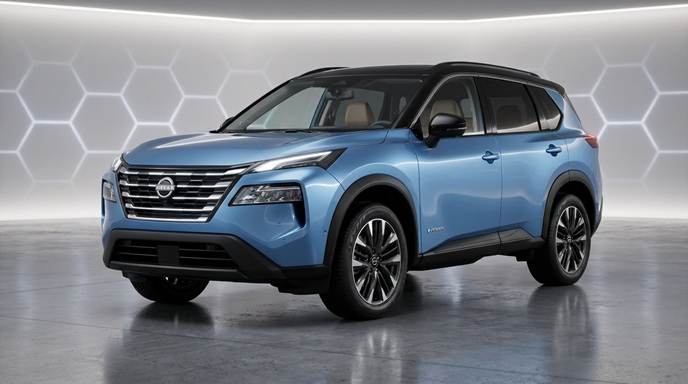
This is the North American version of the new-generation global Nissan X-Trail, and it represents one of the most significant shifts for Nissan’s best-selling nameplate in the U.S. (nearly 4 million Rogues sold domestically since 2000).
Instead of another conventional hybrid or a rebadged Mitsubishi, Nissan is introducing its third-generation e-POWER series-hybrid system — a setup that delivers EV-like instant torque and smoothness while using a gasoline engine purely as a generator. No plugging in. No range anxiety. Just refined, responsive driving with strong efficiency.
If you’ve been waiting for a hybrid Rogue that actually feels special rather than “good enough,” this might be it. Here’s the deepest, most up-to-date look at everything we know so far — including details and angles you won’t find in standard spec roundups.
A Fresh, More Assertive Design Language
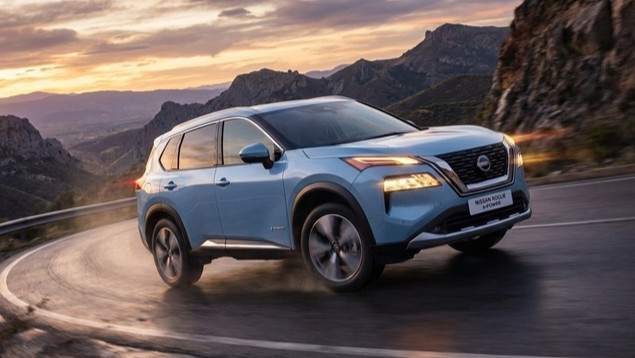
The 2027 Nissan Rogue sheds the current generation’s somewhat soft, rounded look for something sharper and more confident. Early previews and prototype imagery reveal a bolder stance with a hexagonal-patterned grille (clearly echoing the Ariya electric crossover), slim LED lighting signatures, and more sculpted body sides with pronounced character lines.
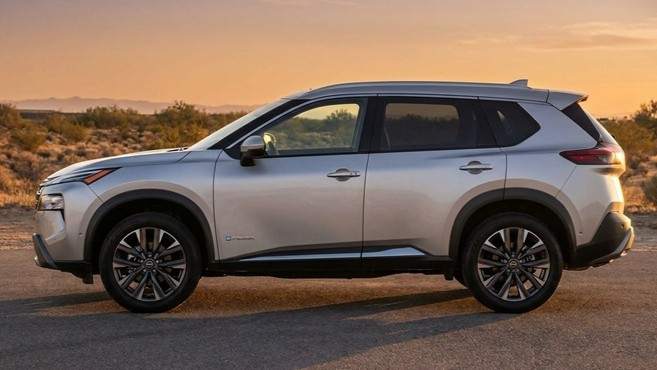
The overall profile appears slightly boxier and more upright than today’s Rogue, which should translate to better interior volume and a more planted road presence. Blacked-out pillars, contrast roof options, and larger wheels (likely 19- or 20-inch on higher trims) give it a modern, almost crossover-coupe-lite attitude without sacrificing practicality.
This isn’t just styling for styling’s sake. The new design language aligns the Rogue with Nissan’s electrification direction while improving aerodynamics — crucial for hybrid efficiency. Expect better wind noise suppression and a more premium first impression compared to the current model’s more utilitarian vibe. In a segment where the Toyota RAV4 and Honda CR-V dominate with conservative updates, the Rogue’s bolder visual direction could finally give Nissan some design differentiation.
Interior- Better Materials, and a Quieter Cabin
While full interior photos are still limited, prototype drives and early reports point to meaningful improvements. The new platform and slightly larger footprint should deliver more rear legroom and cargo space behind the rear seats — areas where the current Rogue is merely average.
Journalists who drove early prototypes noted supportive seats and a noticeably hushed cabin, with the vehicle feeling “one or two classes above” its compact SUV positioning. Expect higher-quality soft-touch materials on the dashboard and door panels, a more driver-focused cockpit, and a cleaner, more tech-forward layout.
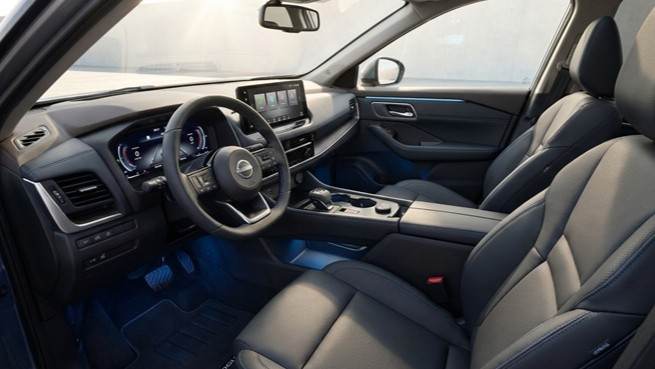
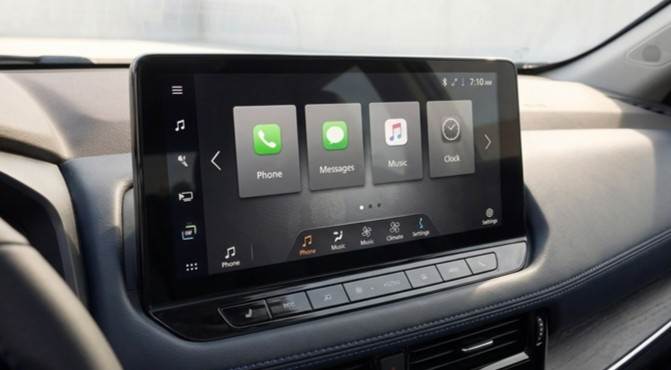
A large floating central touchscreen (likely 12.3 inches or bigger) paired with a digital instrument cluster will anchor the cabin. Wireless Apple CarPlay and Android Auto, improved voice recognition, and Nissan’s latest NissanConnect services should be standard or widely available. Higher trims will probably add ambient lighting, a premium audio system, and a head-up display.
Practicality remains a Rogue strength: versatile cargo configurations, easy-to-use rear seats, and strong outward visibility (another positive noted in prototype testing). For American families who value a quiet ride on long highway trips or easy child-seat installation, these refinements matter more than flashy gimmicks.
Technology & Safety
Beyond the powertrain, the 2027 Nissan Rogue should bring meaningful tech upgrades. The biggest story is how the e-POWER system integrates with driver assistance features. Expect an evolved ProPILOT Assist suite with improved highway hands-free capability, better adaptive cruise control, and new energy-flow visualizations that show exactly how the generator and motors are working.
One-pedal driving (already strong in the prototype) will be a highlight — Nissan claims it can reduce brake pedal use by up to 90% in certain conditions through aggressive regenerative braking. This makes stop-and-go traffic far less tiring.
Other likely features include a 360-degree camera with better resolution, enhanced blind-spot monitoring with rear cross-traffic alert, automatic emergency braking with pedestrian/cyclist detection, and possibly new driver monitoring systems. The hybrid-specific instrumentation — showing generator status, battery flow, and one-pedal strength — will be genuinely useful rather than gimmicky.
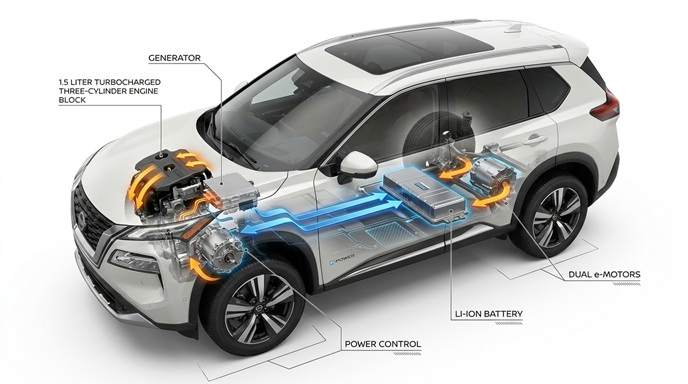
3rd-Gen e-POWER Hybrid System
This is where the 2027 Nissan Rogue Hybrid separates itself from almost everything else in the segment.
A turbocharged 1.5-liter three-cylinder gasoline engine acts exclusively as a generator. It never directly drives the wheels. Instead, it produces electricity that powers a small battery and two electric motors (one on each axle for AWD models). The wheels are always driven by electric motors — exactly like a full EV in normal operation.
- Instant torque and linear acceleration — Prototype drivers consistently describe the power delivery as immediate and EV-like, with none of the hesitation or rubber-band feel some CVT hybrids exhibit.
- No traditional transmission — The long-standing CVT complaints that have dogged Nissan (and some competitors) are completely sidestepped. There are no shift points because there’s no multi-speed transmission connecting the engine to the wheels.
- Engine runs at optimal efficiency — The 1.5L three-cylinder can operate at its most efficient RPM range or even shut off briefly while the battery and motors handle propulsion. This is different from parallel hybrids (Toyota, Honda) where the engine is mechanically linked to the wheels much of the time.
- Strong regenerative braking + one-pedal driving — Makes the car feel more responsive and efficient in daily driving, especially around town.
- AWD with torque vectoring — The dual-motor setup enables precise torque distribution to the rear wheels (Nissan’s e-4ORCE system), improving both traction and handling agility.
Total system output is expected around 200 horsepower. The vehicle is roughly 280 pounds heavier than the non-hybrid version, but the instant torque more than compensates in daily driving. Real-world efficiency estimates from early reporting suggest 28–36 mpg combined depending on drivetrain (FWD vs AWD), with total range likely exceeding 450 miles thanks to a conventional gas tank.
This architecture gives the 2027 Nissan Rogue Hybrid a distinct character: smoother and quieter than many parallel hybrids, with stronger low-speed response. Whether it proves more reliable long-term than belt-driven CVT hybrids remains to be seen, but the mechanical simplicity (no complex hybrid transaxle) is intriguing.
AWD Performance & Driving Dynamics
The dual-motor AWD system should be a standout for buyers in snow-prone states (Upper Midwest, Northeast, Mountain West) or those who tow light trailers occasionally. Torque vectoring helps the Rogue rotate more eagerly in corners than traditional AWD systems, while still providing confident all-weather grip.
Prototype testing on proving grounds showed a stable, refined ride with good body control. The extra weight of the hybrid components is well-managed, and the overall refinement level impressed journalists. Expect the on-road manners to feel a noticeable step up from the current Rogue, especially in terms of noise, vibration, and harshness (NVH) isolation.
Pricing, Trims & Availability
The 2027 Nissan Rogue Hybrid is expected to start in the low-to-mid $30,000s for base models, with well-equipped SV and SL trims landing in the low-to-mid $40,000s and top Platinum versions approaching $50,000–$54,000. These are estimates based on current positioning and prototype context — official pricing will come closer to launch.
It launches first as a hybrid-focused model in late 2026. A pure gasoline version may follow later. Trims will likely mirror today’s structure (S, SV, SL, Platinum) with hybrid-specific badging and features.
How It Stacks Up Against the Competition
The 2027 Nissan Rogue Hybrid’s primary targets are the Toyota RAV4 Hybrid and Honda CR-V Hybrid.
- vs. Toyota RAV4 Hybrid: The RAV4 offers proven reliability, strong resale, and a PHEV option. The Rogue counters with more EV-like driving character, potentially smoother operation (no engine clashing with wheels), and bolder styling. Efficiency should be competitive.
- vs. Honda CR-V Hybrid: Nissan executives have stated the new Rogue will be “quicker and quieter” than the CR-V Hybrid. Early prototype feedback supports the refinement claim. The CR-V still wins on interior space polish and dealer network strength in many areas.
- vs. Hyundai Tucson / Kia Sportage Hybrids: These often lead on features and warranty. The Rogue’s unique powertrain character and Nissan’s improving build quality could appeal to buyers wanting something different.
The Rogue’s ace card is the distinctive e-POWER experience combined with strong AWD capability — a combination few rivals match exactly.
| Model | System Horsepower | Starting Price (Hybrid) | Drivetrain |
|---|---|---|---|
| 2027 Nissan Rogue Hybrid | ~200 hp | ~$35k–$40k | FWD / AWD |
| Toyota RAV4 Hybrid | 219 hp | ~$32k | AWD standard |
| Honda CR-V Hybrid | 204 hp | ~$34k | FWD / AWD |
| Hyundai Tucson Hybrid | 226 hp | ~$32k | FWD / AWD |
2027 Nissan Rogue Specs
| Category | Specification | Details |
|---|---|---|
| Powertrain | Engine | 1.5L turbocharged inline-3 (gasoline engine acts only as generator) |
| Electric Motors | Dual electric motors (one front + one rear) | |
| Total System Output | ~200 hp | |
| Drivetrain | Available Configurations | Front-Wheel Drive (FWD) and All-Wheel Drive (AWD) |
| AWD System | e-4ORCE dual-motor all-wheel drive with torque vectoring | |
| Performance | 0-60 mph (est.) | Expected to be quicker than current Rogue |
| Efficiency | Combined MPG (Estimated) | 32 – 38 mpg |
| Total Driving Range (est.) | 450+ miles | |
| Chassis & Suspension | Platform | All-new generation |
Who Should Buy the 2027 Nissan Rogue Hybrid?
This vehicle is ideal if you want:
- Hybrid efficiency without changing your refueling habits or worrying about charging infrastructure.
- A smoother, more responsive daily driver than traditional CVT hybrids.
- Confident AWD for winter or light off-road use.
- A fresh design that stands out from the sea of conservative compact SUVs.
- Strong value in a segment where prices have climbed significantly.
It’s less ideal if you want maximum cargo space, a plug-in hybrid option right away, or the absolute strongest resale track record (Toyota still leads here).
The 2027 Nissan Rogue Hybrid e-POWER isn’t just another hybrid badge job. It’s a thoughtful reimagining of what a mainstream compact SUV hybrid can be — using proven global e-POWER technology in its third generation, wrapped in a bolder design, and tuned for American driving priorities.
By ditching the CVT entirely in favor of electric motor drive, Nissan has addressed one of its biggest historical pain points while delivering a driving experience that feels genuinely modern. The prototype feedback has been consistently positive on refinement and power delivery.
As more details, official specs, and real-world testing emerge in the coming months, this could become one of the most interesting vehicles in the segment for 2027. For families, commuters, and anyone tired of the same old hybrid formula, the new Rogue Hybrid deserves a serious look when it arrives in dealerships late next year.
Would you consider the e-POWER system over a traditional hybrid, or are you waiting for a plug-in version? Drop your questions below — I’ll update this guide as official specs and pricing are released.
Related Post