
The 2027 Hyundai Santa Cruz arrives as the swan song for Hyundai’s bold compact unibody pickup. After years of strong reviews for its car-like refinement, premium interior, and versatile “sport adventure” character, the model faces discontinuation. Production is winding down earlier than the originally planned mid-2027 timeline, with the 2027 model year serving as the final run.
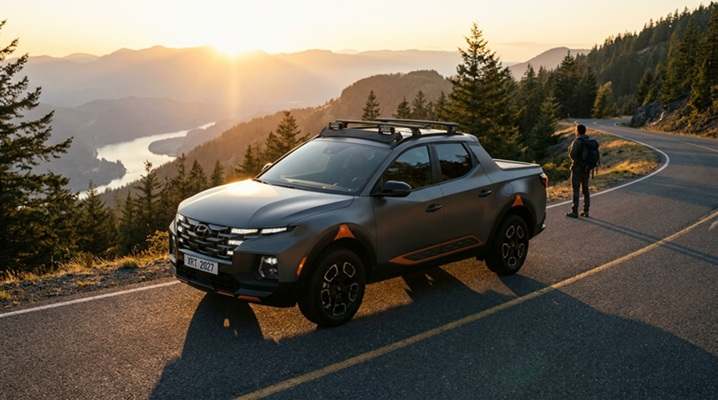
Unlike early rumors of a full redesign with boxier styling or a hybrid powertrain, the 2027 Hyundai Santa Cruz carries over the current generation with targeted refinements. Expect possible trim consolidation (focusing on high-volume or feature-rich variants like an enhanced XRT) and bundling of previously optional equipment to deliver stronger value as inventory clears. This isn’t the generational leap some previews imagined — it’s a polished farewell edition of a vehicle that proved the concept of a lifestyle-focused compact truck but couldn’t outsell the Ford Maverick’s hybrid-driven dominance.
Here’s the most complete, up-to-date look at what the 2027 Hyundai Santa Cruz actually offers, including technical details rarely explored in depth elsewhere.
Exterior Design- Modern, Approachable
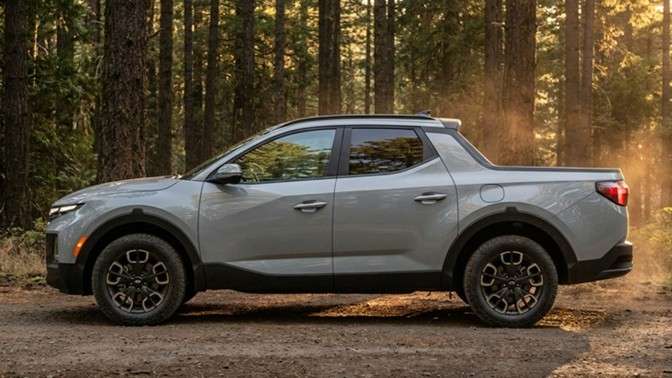
The Santa Cruz’s exterior blends crossover sleekness with genuine truck utility. It rides on a stretched Tucson platform, resulting in a wheelbase of 118.3 inches and overall length around 195.9 inches. The design features Hyundai’s signature parametric lighting (full LED headlights and taillights), a bold front grille, and sculpted fenders that give it a planted, athletic stance without the aggression of traditional work trucks.
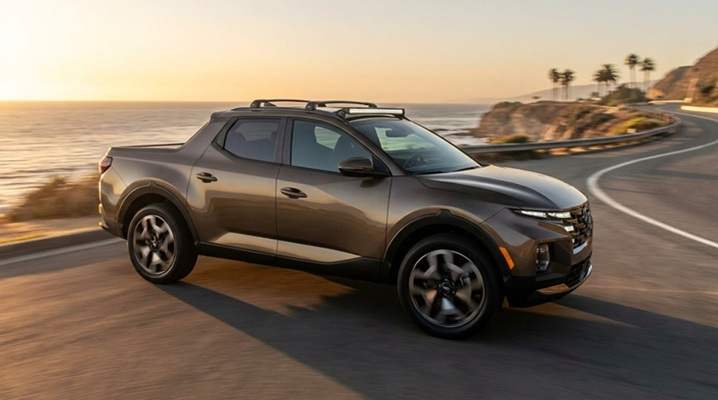
Higher trims, especially the XRT, add rugged character with dark grilles, wheel-arch cladding, exposed tow hooks, and 18-inch alloy wheels wrapped in all-terrain tires. The Limited brings 20-inch wheels for a more street-focused presence. The short bed (52.1 inches long, approximately 4.3 feet) sits behind the cab with a depth of 19.2 inches and innovative molded-in features for cross-plank support or custom shelving.
A standout (and underappreciated) element is the available power-retractable tonneau cover paired with an underfloor storage bin that drains. This turns the bed into a secure, weatherproof “trunk” — something most compact trucks don’t offer as elegantly. Roof rails on mid trims and available tie-down points enhance adventure readiness.
Early speculation pointed to a boxier, more upright profile for stronger “truck” visual credibility. The current flowing lines prioritize aerodynamics, easy parking, and a premium crossover vibe. While it looks modern and distinctive in 2026–2027, some buyers seeking traditional truck aesthetics gravitated elsewhere. The 2027 model keeps this signature look as its definitive form.
Ground clearance sits around 8.6 inches — sufficient for light trails, snow, or curbs but not extreme off-roading.
Interior & Technology
Step inside and the 2027 Hyundai Santa Cruz feels more upscale than its price suggests. The cabin is quiet thanks to unibody construction and good sound insulation. Five passengers fit comfortably, with supportive seats and a practical layout.
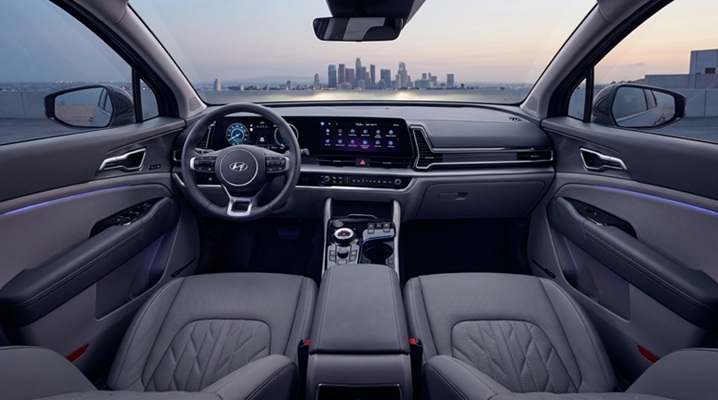
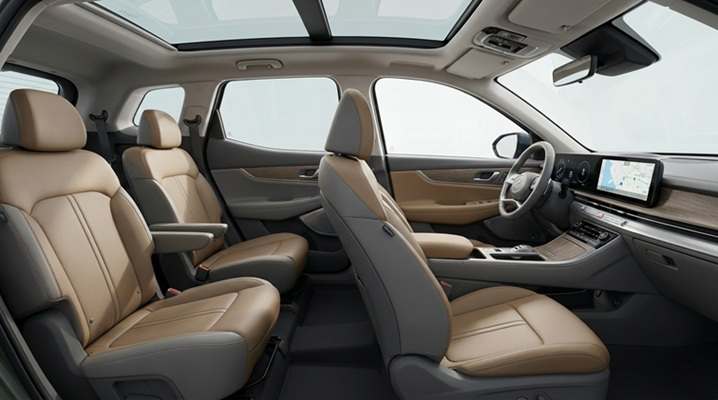
Higher trims feature H-Tex leatherette upholstery, heated front seats, and available power sunroof. The Limited adds Integrated Memory System (IMS) and Hyundai Digital Key 2 Touch (NFC via phone or smartwatch).
Tech is a highlight. Most trims get a large 12.3-inch touchscreen with wireless Apple CarPlay and Android Auto. Top models offer a panoramic curved display pairing the touchscreen with a matching 12.3-inch digital cluster. Bluelink+ connected services include remote start/lock/unlock, over-the-air (OTA) software updates, and even fun themes (like a FIFA World Cup 2026 display option through mid-2026). Wireless charging and multiple USB ports are standard.
Safety & Driver Assistance (Hyundai SmartSense): Comprehensive and mostly standard. Expect Forward Collision-Avoidance Assist with pedestrian/cyclist/junction detection, Lane Keeping Assist, Blind-Spot Collision Warning, Rear Cross-Traffic Collision-Avoidance, Driver Attention Warning, and more. Higher trims add Highway Driving Assist (HDA) with navigation-based smart cruise control, Blind-Spot View Monitor, and Surround View Monitor. It earned strong safety ratings (5-star NHTSA overall, IIHS Top Safety Pick in recent years).
The interior’s biggest strength is refinement — it drives and feels like a premium crossover with a bed attached, not a stripped-down truck.
Powertrain: Strong Turbo Performance, No Hybrid
Two gasoline powertrains carry over into 2027 with no hybrid option.
- Base 2.5L GDI-MPI inline-4: 191 hp and 181 lb-ft. Paired with an 8-speed automatic. Available in SE, SEL, and SEL Activity trims (FWD standard; HTRAC AWD optional). EPA estimates around 22 city / 30 highway / 25 combined mpg (FWD); slightly lower with AWD.
- 2.5L Turbo GDI-MPI inline-4 (XRT and Limited): 281 hp and 311 lb-ft. Also paired with an 8-speed automatic (a smoother conventional unit replaced the earlier dual-clutch in recent updates). Standard HTRAC AWD. EPA around 18 city / 25 highway / 20 combined. This engine delivers strong low-end torque ideal for merging, passing, and towing.
Towing & Payload: Up to 3,500 lbs with the base engine (properly equipped) and up to 5,000 lbs with the turbo. Payload hovers around 1,400–1,700 lbs depending on configuration — respectable for the class but not class-leading for heavy work.
The related Tucson Hybrid uses a 1.6L turbocharged four-cylinder + electric motor for a combined 231 hp and up to 38 mpg city/highway/combined (some HTRAC AWD versions even hit 38/38/38). Why didn’t Santa Cruz get something similar? The Santa Cruz prioritizes the torquey 2.5L family for towing feel and hauling character. Integrating the Tucson’s hybrid system would have required significant re-engineering around the bed structure, higher GVWR targets, and cooling/packaging demands. In a low-volume vehicle, the business case apparently didn’t close — especially as Hyundai shifted focus to a larger body-on-frame successor.
This absence is widely seen as a key reason the Maverick (with its efficient hybrid standard) outsold the Santa Cruz by a wide margin (reports of 6-to-1 or more in 2025). A hybrid 2027 Hyundai Santa Cruz could have closed the efficiency gap while retaining superior top-end towing. For 2027 buyers, you get proven, responsive gasoline powertrains instead.
HTRAC AWD
HTRAC is Hyundai’s on-demand all-wheel-drive system using an electronically controlled multi-plate clutch pack in the center coupling. Under normal dry-pavement driving it stays mostly front-wheel-drive biased for efficiency. When sensors detect wheel slip, yaw changes, or aggressive inputs, it can route up to 50% of torque to the rear axle in milliseconds.
It continuously monitors dozens of inputs (wheel speeds, steering angle, accelerator position, yaw rate) over 100 times per second. Many implementations also include brake-based torque vectoring for enhanced stability and cornering grip. On the XRT, Terrain Mode Select optimizes throttle response, traction control, and power delivery for Snow, Mud, or Sand — a genuine upgrade over standard crossover AWD for light off-road or slippery conditions.
It’s not a traditional part-time 4WD with low-range gearing or locking differentials (front and rear diffs are open), so it excels at on-road confidence, light trails, snow, rain, and towing stability rather than hardcore rock crawling. For most Santa Cruz owners — suburban adventurers, commuters who occasionally hit dirt roads or tow small trailers — it’s an excellent, seamless system that doesn’t punish fuel economy when not needed.
Combined with the turbo engine’s torque and available all-terrain tires on the XRT, the Santa Cruz punches above its weight for weekend getaways while remaining comfortable for daily driving.
Market Position, Pricing & Rivals
The Santa Cruz targets buyers who want one vehicle for weekday commuting and weekend gear hauling, camping, or light towing — think kayaks, bikes, small trailers, or home improvement runs. It sits between compact crossovers and traditional midsize trucks in capability and price.
2026–2027 pricing (estimated, subject to final adjustments): Starts around $29,750 for the SE and climbs to roughly $41k–$44k for loaded XRT and Limited models. Expect strong incentives on the final 2027 models as Hyundai clears inventory.
2027 Hyundai Santa Cruz Trim Comparison
| Trim | Engine | Drivetrain | Starting Price (Est.) |
|---|---|---|---|
| SE | 2.5L | FWD / AWD | $29,750 |
| SEL | 2.5L | FWD / AWD | $31,400 |
| SEL Activity | 2.5L | FWD / AWD | $34,450 |
| XRT | 2.5L Turbo | AWD Standard | $41,350 |
| Limited | 2.5L Turbo | AWD Standard | $43,700 |
Direct rival: Ford Maverick wins on starting price, hybrid efficiency (up to ~38–42 mpg combined), and sales volume. Its hybrid is the efficiency king; the Santa Cruz turbo wins on outright power and maximum towing (5,000 vs Maverick’s 4,000 lbs). The Santa Cruz feels more premium inside and rides more car-like. Bed utility differs: Maverick offers FLEXBED versatility and slightly more volume in some configs; Santa Cruz counters with a more secure, weatherproof tonneau experience and innovative underfloor storage. Many reviewers and owners prefer the Santa Cruz’s styling and refinement, but the hybrid + price advantage proved decisive for most buyers.
Other competitors: Midsize options like the Honda Ridgeline (more traditional bed utility, unibody refinement), Ford Ranger, Toyota Tacoma, or Chevy Colorado offer greater payload/towing in some cases and body-on-frame ruggedness, but they’re larger, thirstier, and less car-like to drive daily. The Santa Cruz’s unibody advantage is everyday comfort and efficiency (relative to BOF trucks).
The Santa Cruz proved there’s demand for a stylish, refined compact pickup — it just needed better efficiency or lower pricing to truly compete.
2027 Hyundai Santa Cruz Specs
| Specification | Details | Notes |
|---|---|---|
| Model Year | 2027 | Final production year |
| Seating Capacity | 5 | – |
| Powertrain Options | 2.5L Inline-4 2.5L Turbo Inline-4 | No hybrid available |
| Horsepower | 191 hp (base) / 281 hp (turbo) | – |
| Torque | 181 lb-ft (base) / 311 lb-ft (turbo) | – |
| Transmission | 8-speed Automatic | Conventional automatic (2026 update) |
| Drivetrain | FWD or HTRAC AWD | AWD standard on XRT & Limited |
| Fuel Economy (Combined) | 20 – 25 mpg | Varies by engine & drivetrain |
| Towing Capacity | Up to 5,000 lbs | Requires turbo engine |
| Payload Capacity | Approx. 1,400 – 1,700 lbs | – |
| Infotainment Screen | 12.3-inch Touchscreen | Dual 12.3-inch curved display on higher trims |
| Digital Instrument Cluster | Available | Standard on higher trims |
What’s Next for Hyundai Pickups?
Hyundai learned valuable lessons. The company is developing a larger, body-on-frame midsize pickup (expected around 2029–2030) built with American buyers in mind — more traditional truck capability, higher towing/payload, and the credibility the Santa Cruz sometimes lacked despite strong real-world performance. Expect U.S. production elements and powertrains that may include efficient or hybridized options. The Santa Cruz served as a market test; its successor aims to deliver what many felt was missing.
Is the 2027 Hyundai Santa Cruz Worth Buying?
Yes — if you want a refined, feature-packed, stylish compact pickup right now and can live without hybrid-level efficiency. The 2027 model benefits from years of refinements (tech, safety, transmission updates) plus potential final-year value pricing and loaded equipment. The long 10-year/100,000-mile powertrain warranty provides peace of mind even as production ends.
Buy the XRT for the best balance of capability, styling, and features (turbo power + standard AWD + Terrain Modes). The Limited adds luxury touches if you prioritize comfort and tech.
Test drive one soon. Inventory is finite, and the 2027 Hyundai Santa Cruz unique blend of crossover comfort and truck utility won’t be repeated in exactly this form. It may not have changed the segment’s sales hierarchy, but it left a legacy as a genuinely enjoyable “sport adventure vehicle” that many owners still love.
The 2027 Hyundai Santa Cruz closes one chapter — but the story of Hyundai trucks in America is just getting started with bigger, more capable machines on the horizon. If you’ve been on the fence, now is the time to experience what made the Santa Cruz special before it’s gone.
Related Post