
The Toyota RAV4 has long been the benchmark compact crossover — a perennial bestseller that millions trust for daily commutes, family hauls, weekend getaways, and everything in between. For 2027, it arrives as a refined carryover of the comprehensive sixth-generation redesign introduced for the 2026 model year. While major outlets note few headline-grabbing mechanical overhauls for 2027, the real story lies in the depth of the prior refresh: a full shift to an electrified-only lineup, sharper styling with distinct Core/Rugged/Sport themes, meaningfully upgraded hybrid and plug-in hybrid (PHEV) powertrains, a tech-forward cabin, and an electronically sophisticated all-wheel-drive system.
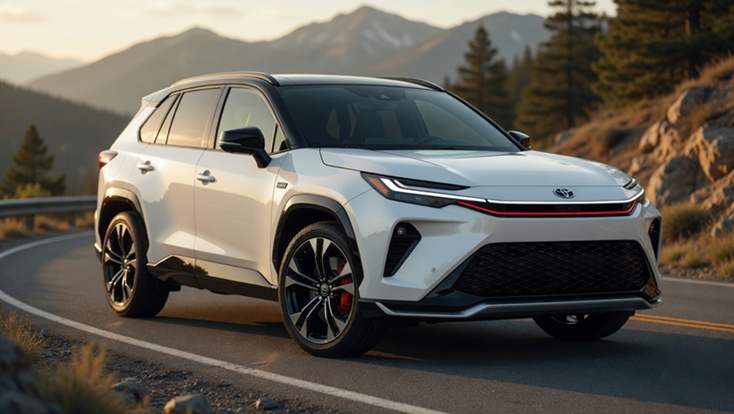
This isn’t just another incremental update. Toyota has doubled down on what made the RAV4 dominant — bulletproof reliability, strong resale, class-leading efficiency, and versatile packaging — while addressing modern buyer demands for lower running costs, advanced driver aids, and flexible electrification. In a segment crowded with flashier rivals and pure-EV hype, the 2027 Toyota RAV4 stands out as the thoughtful, no-compromise choice.
Below, we dive deep into what’s genuinely new or meaningfully evolved, with angles and details often glossed over in quick reviews: the philosophy behind the hybrid-only strategy, nuanced exterior execution, powertrain engineering insights, interior practicality innovations, AWD system advantages, competitive positioning, and exactly who should buy one.
What’s New for 2027: Refinement Over Revolution
Since the RAV4 received a ground-up redesign for 2026 (sixth generation on an updated TNGA-K platform), the 2027 model focuses on carryover excellence with possible minor refinements such as new color options, package tweaks, or software calibrations. The big transformation already happened: no more pure gasoline engine. Every 2027 RAV4 is either a hybrid electric vehicle (HEV) or plug-in hybrid (PHEV).
This hybrid-only mandate simplifies Toyota’s offering and ensures every buyer gets the efficiency, smoothness, and low ownership costs that hybrids deliver best. It also positions the RAV4 as a practical bridge in the electrification journey — delivering EV-like benefits in daily driving without range anxiety or charging infrastructure dependence for longer trips.
Speculation about a full battery-electric (BEV) RAV4 variant for 2027 or shortly after circulates in some dealer blogs and concept videos, but major automotive sources confirm the current focus remains on advanced HEV and PHEV powertrains. Toyota continues expanding its dedicated EV lineup (bZ series, etc.) separately. The 2027 Toyota RAV4 strength is its mature, proven electrified tech refined for broader appeal.
Exterior Redesign: Three Distinct Personalities
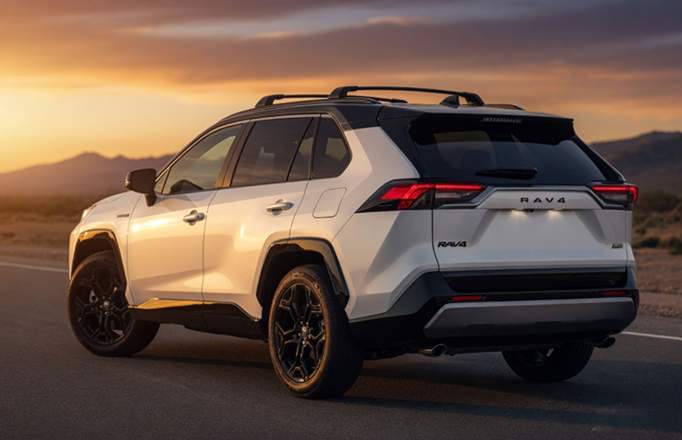
The sixth-generation exterior evolves the RAV4’s upright, practical silhouette with sharper, more modern lines while offering three thematic families: Core (mainstream sleekness), Rugged (Woodland adventure focus), and Sport (XSE/GR Sport edge).
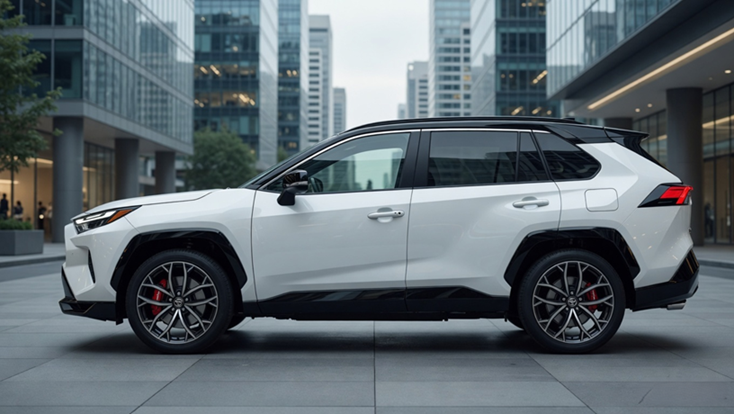
Key details include a signature “hammerhead” front end with a sleeker grille treatment (paint-matched on Core models for a cleaner look), geometric body sculpting, prominent overfenders, and updated LED lighting signatures — crisp dual-beam projector headlights up front and distinctive taillight graphics at the rear. Wheel sizes range from 17-inch on base models to 20-inch on sportier trims.
The Woodland trim stands out with its Rugged theme: higher ride height emphasis, all-terrain tires on distinctive 18-inch wheels, raised black roof rails with crossbars, Rigid Industries LED fog lights, and more aggressive cladding. It visually signals capability without going full TRD Pro (though virtual concepts sometimes explore that).
Sport-oriented XSE and GR Sport models feature bolder lower bodywork, unique wheels, and aerodynamic touches. Overall proportions remain compact and maneuverable (roughly 181 inches long), yet the design feels more planted and premium than the prior generation’s softer look.
Unique observation often missed: The cladding and overfender execution across trims isn’t just cosmetic — it protects against parking lot dings and light off-road use while allowing Toyota to differentiate trims visually without major platform changes. This modular approach keeps costs down and resale strong.
Powertrain: Smarter, Stronger Electrification
The heart of the 2027 Toyota RAV4 is its electrified powertrains, significantly upgraded from the previous generation.
Standard Hybrid (HEV): A 2.5-liter Atkinson-cycle inline-four pairs with electric motors. Output is 226 horsepower in front-wheel-drive configuration and 236 hp with all-wheel drive (the extra power comes from the rear electric motor). A continuously variable automatic transmission (eCVT) handles power delivery smoothly.
PHEV: The updated system delivers a combined 324 horsepower with standard all-wheel drive and an estimated 48–52 miles of electric-only range (depending on trim and testing cycle), a meaningful increase thanks to a larger battery pack and efficiency gains. DC fast-charging capability appears on select trims (notably XSE PHEV), allowing 10–80% charges in around 30 minutes in optimal conditions.
Toyota moved to newer-generation hybrid logic with better motor integration, improved battery thermal management, and more seamless transitions between electric and gas power. Real-world benefits include stronger low-speed torque for effortless merging or hill starts, reduced engine noise intrusion during gentle acceleration (though spirited driving still brings some characteristic hybrid drone), and excellent regenerative braking that feels natural.
Expect up to 47 city / 40 highway mpg (FWD HEV) or in the low-to-mid 40s combined for AWD models. PHEV models shine even brighter for short commutes — many owners will rarely use gasoline. Towing capacity reaches 3,500 pounds on most configurations (lower on some base FWD models), making the RAV4 more capable than many expect for a compact hybrid.
The hybrid-only strategy eliminates buyer confusion and guarantees strong efficiency across the board. It also leverages Toyota’s decades of hybrid expertise for superior long-term reliability and battery durability (backed by a 10-year/150,000-mile hybrid component warranty).
New Interior and Tech Features: Practical Innovation
Step inside and the sixth-generation cabin feels more contemporary and driver-focused. A standard 12.3-inch digital gauge cluster pairs with a 10.5-inch touchscreen (12.9-inch available on higher trims) running the latest Toyota Audio Multimedia system with wireless Apple CarPlay and Android Auto.
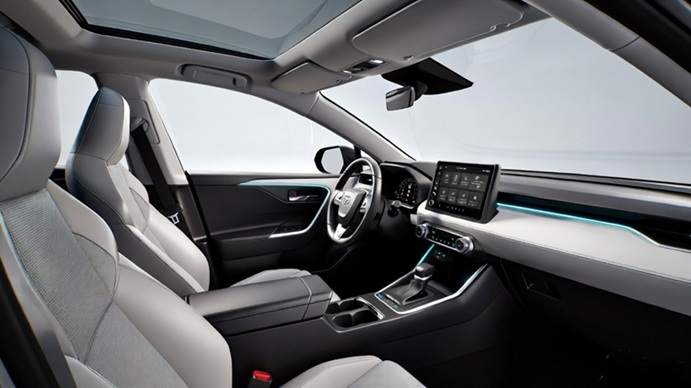
Standout practical touches include:
- Up to five USB-C ports (including high-power front media port).
- Available dual Qi wireless chargers.
- A clever center console with removable divider, generous storage, and a low-profile shifter that frees up space.
- Available 1,500-watt AC power outlet in the cargo area — perfect for tailgating, camping, or powering tools/laptops on the go.
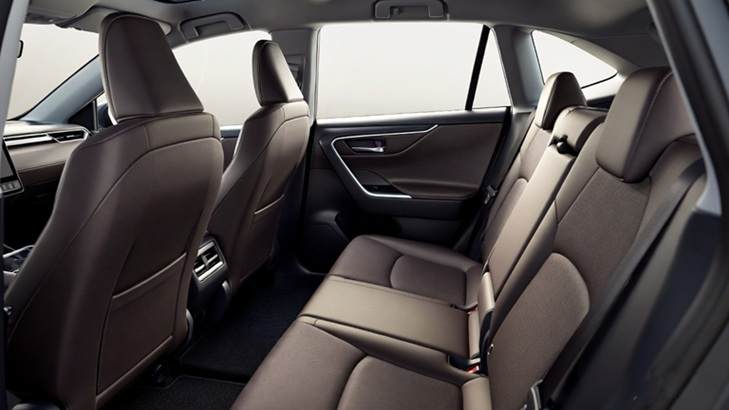
- Hands-free power liftgate, panoramic moonroof (higher trims), heated/ventilated seats, and SofTex or suede-like upholstery options.
Toyota Safety Sense 4.0 (TSS 4.0) brings advanced standard and available features: adaptive cruise, lane-keeping, automatic emergency braking, plus Traffic Jam Assist (helpful in stop-and-go highway traffic) and Advanced Park (semi-autonomous parking). A Drive Recorder and improved connected services round out the tech.
Unique angle: The interior prioritizes usability over luxury theater. Materials are functional rather than opulent (some reviewers note plasticky elements in lower areas), but thoughtful storage, power access, and family-friendly charging ports make it genuinely livable for real life. The digital cluster and larger screens feel modern without overwhelming the driver.
AWD Details: Electronic Sophistication
All-wheel drive availability is a major strength. On HEV models, Toyota adds a dedicated rear electric motor for on-demand AWD — no traditional driveshaft or transfer case needed in normal driving. This setup improves efficiency when AWD isn’t required and delivers instant torque vectoring potential.
PHEV models come standard with AWD. The system excels in snow, rain, or light trails, with seamless power distribution. GR Sport tuning adds sharper steering and suspension calibration for more engaging dynamics.
Often overlooked benefit: Electronic AWD reduces mechanical complexity and parasitic losses compared to older mechanical systems, contributing to the strong fuel economy numbers while maintaining confident traction. It’s a smart engineering choice that aligns with Toyota’s efficiency-first philosophy.
Fuel Economy & Efficiency
| Configuration | City MPG / MPGe | Highway MPG / MPGe | Combined MPG / MPGe |
|---|---|---|---|
| Hybrid FWD (most efficient) | 47 mpg | 40 mpg | 43 mpg |
| Hybrid AWD | Up to 46 mpg | Up to 39 mpg | Up to 42 mpg |
| Hybrid Woodland AWD | 41 mpg | 35 mpg | 38 mpg |
| PHEV (Electric + Gas) | — | — | Up to 41 mpg* |
| PHEV MPGe (combined) | — | — | Up to 98–107 MPGe |
Rivals: Advantages and Disadvantages
The 2027 RAV4 competes primarily with the Honda CR-V Hybrid, Kia Sportage Hybrid/PHEV, Hyundai Tucson Hybrid, Mazda CX-50 Hybrid, and to some extent the Subaru Forester (now with hybrid options in some markets) and mainstream gas models like the Nissan Rogue or Chevrolet Equinox.
RAV4 Advantages:
- Proven long-term reliability and class-leading resale value.
- Excellent real-world fuel economy and low ownership costs.
- Strong hybrid component warranty and Toyota dealer/service network.
- Versatile trim range (rugged Woodland, sporty GR Sport, value-oriented LE/SE).
- PHEV power and range that feels competitive.
Potential Disadvantages vs. Rivals:
- Interior materials and refinement lag behind Mazda’s more premium feel or some Korean rivals’ feature-packed cabins.
- Handling is competent but not as engaging as a Mazda CX-50 (except GR Sport).
- Some rivals offer longer basic warranties or more standard luxury touches.
The RAV4 often wins on total cost of ownership and peace of mind. Where others chase style or specs, Toyota delivers consistent, dependable performance.
2027 Toyota RAV4 Specs
| Specification | Hybrid (HEV) FWD | Hybrid (HEV) AWD | Plug-in Hybrid (PHEV) AWD |
|---|---|---|---|
| Engine | 2.5L 4-cylinder Atkinson-cycle + Electric Motors | 2.5L 4-cylinder Atkinson-cycle + Electric Motors | 2.5L 4-cylinder + Electric Motors + Larger Battery |
| Combined System Horsepower | 226 hp | 236 hp | 324 hp |
| Transmission | eCVT (Electronically Controlled CVT) | eCVT | eCVT |
| Drivetrain | Front-Wheel Drive | All-Wheel Drive (Electric rear motor) | All-Wheel Drive (Standard) |
| Top Speed | ~112 mph | ~112 mph | ~125 mph |
| Towing Capacity | Up to 1,750–3,500 lbs* | Up to 3,500 lbs | Up to 3,500 lbs |
| Battery | Lithium-ion | Lithium-ion | ~23 kWh lithium-ion (larger pack) |
Who Is This For?
The 2027 Toyota RAV4 suits a broad audience:
- Efficiency-focused commuters and families who want hybrid savings without sacrificing space or capability.
- Adventure seekers who value the Woodland trim’s rugged looks and all-terrain readiness for light trails or snowy roads.
- Tech-curious buyers who appreciate advanced safety, large screens, and practical power outlets.
- PHEV shoppers looking for daily electric driving (great for home charging and potential incentives) with gasoline backup for road trips.
- Value-conscious buyers prioritizing reliability, low maintenance, and strong resale over flashy branding.
It’s ideal if you want a vehicle that just works — day after day, year after year — while keeping fuel and ownership costs predictable.
| Trim | Style Theme | Starting Price (Est.) |
|---|---|---|
| LE | Core | ~$34,000 |
| SE | Core/Sport | ~$37,000 |
| XLE Premium | Core | ~$38,000 |
| Woodland | Rugged | ~$42,000 |
| XSE | Sport | ~$43,000 |
| Limited | Core | ~$45,000 |
| PHEV Variants | Sport/Rugged | ~$43,000+ |
| GR Sport (PHEV) | Sport | ~$50,000 |
Competition and Market Position
The 2027 Toyota RAV4 remains one of America’s best-selling vehicles for good reason. In a compact SUV segment shifting toward electrification, its hybrid-only strategy and refined execution reinforce its leadership. It counters pure-EV momentum with a pragmatic middle path: strong efficiency today, PHEV flexibility, and a platform ready for future updates.
Toyota’s brand trust, combined with the vehicle’s packaging, efficiency, and capability, keeps it at or near the top of sales charts. Rivals may offer more features on paper or bolder styling, but few match the RAV4’s balanced proposition and proven durability track record.
Market position: The safe, smart, high-volume choice. As more buyers prioritize total ownership experience over headline specs, the RAV4’s strengths become even more compelling.
The 2027 Toyota RAV4 doesn’t reinvent the wheel — it perfects the formula that made it a segment leader. With the sixth-generation foundation of sharper design, stronger electrified powertrains, thoughtful tech, and versatile trims, it delivers on reliability, efficiency, and everyday usability better than most.
Whether you choose the efficient HEV, potent PHEV, rugged Woodland, or sporty GR Sport, you’re getting a vehicle engineered for real life with minimal drama and maximum long-term satisfaction. In a noisy market full of promises, the RAV4 quietly continues to deliver.
If you value proven engineering, low running costs, family practicality, and the flexibility of advanced hybrids over pure electric range or luxury theater, the 2027 Toyota RAV4 deserves a top spot on your shopping list. It’s not the flashiest — but it might just be the smartest.
Related Post