
You’re standing in your garage looking at the electrical panel, holding a Level 2 charger box, and asking the same question thousands of Americans ask every month: Is 30 amp enough for a Level 2 charger?
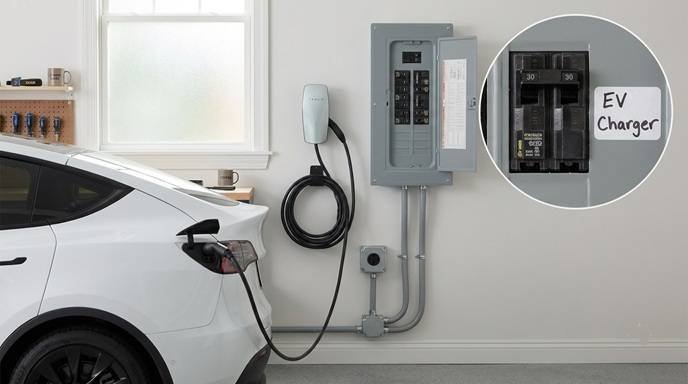
it can work — but only under specific conditions. A 30-amp circuit is the minimum many people start with, yet it is often not the smart long-term choice. This guide explains exactly when 30 amps is enough, when it falls short, what size breaker you actually need, Tesla-specific limits, real power delivery numbers, and the details most articles skip.
A 30-amp breaker can safely support a Level 2 EV charger pulling a maximum of 24 amps continuously (because of the National Electrical Code 125% continuous-load rule). That delivers about 5.7 kW at 240 volts. For many daily drivers who park at home overnight and commute under 40–50 miles, this is usable. For Tesla owners, larger-battery EVs, or anyone who wants faster overnight charging, 40-amp or 50-amp circuits are noticeably better.
What Size Breaker for a Level 2 Charger?
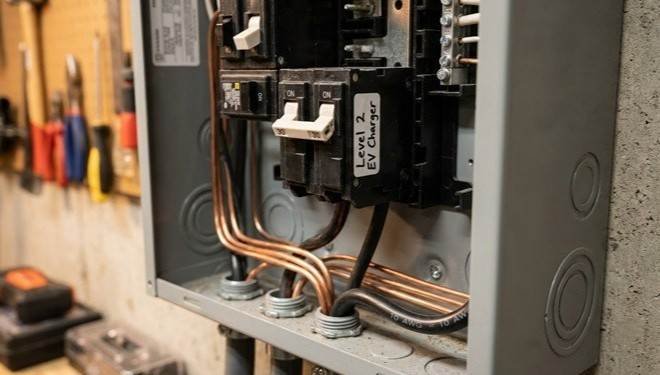
In the United States, EV charging is treated as a continuous load under the NEC (National Electrical Code). That means the breaker must be sized at 125% of the charger’s maximum amp draw.
| Charger Max Output | Required Breaker | Common Wire Gauge | Approx. Power | Typical Range Added per Hour |
|---|---|---|---|---|
| 16A | 20A | 12 AWG | 3.8 kW | 12–18 miles |
| 24A | 30A | 10 AWG | 5.7 kW | 20–30 miles |
| 32A | 40A | 8 AWG | 7.7 kW | 28–40 miles |
| 40A | 50A | 8 or 6 AWG | 9.6 kW | 35–50 miles |
| 48A | 60A | 6 AWG | 11.5 kW | 40–60 miles |
Key rule most homeowners miss: You cannot set a charger to 30 amps on a 30-amp breaker. The continuous rating forces you down to 24 amps.
Is 30 Amp Enough for a Level 2 Charger Tesla?
Tesla owners ask this constantly. Here’s the precise situation in 2026:
- Tesla Mobile Connector plugged into a NEMA 14-30 outlet: limited to 24 amps.
- Tesla Wall Connector (Gen 3 or newer): can be software-limited to 24 amps on a 30-amp circuit.
- Real-world Tesla charging speed on 24A: roughly 22–30 miles of range per hour depending on model (Model 3/Y are more efficient than Model S/X or Cybertruck).
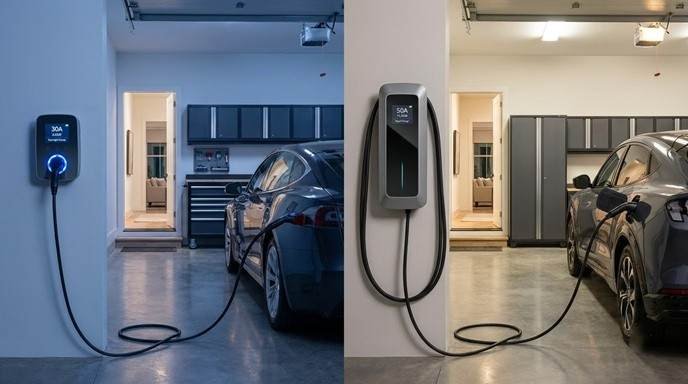
For a Tesla driver who returns home with 30–40% battery and leaves in the morning, 30 amps overnight (8–10 hours) is usually enough to reach 100%. If you drive 60+ miles per day, frequently arrive home very low, or own a dual-motor long-range model, you will feel the limitation. Many Tesla owners eventually upgrade to a 60-amp circuit (48A charging) because the Wall Connector can deliver up to 11.5 kW.
Level 2 EV Charger Power Requirements Explained
Level 2 = 240-volt charging. Power (kW) = Volts × Amps.
- 240 V × 24 A = 5.76 kW
- 240 V × 32 A = 7.68 kW
- 240 V × 40 A = 9.60 kW
Most modern Level 2 hardwired units (ChargePoint, Grizzl-E, Emporia, Tesla Wall Connector, etc.) allow you to select the amp rating during installation so they match the breaker.
A NEMA 14-30 outlet (30-amp dryer-style) paired with a portable EVSE is convenient but usually capped at 24A. Hardwired installations are cleaner, support higher amps, and are preferred by most electricians for permanent setups.
When 30 Amps Is Actually Enough
30 amps works well if:
- Your daily driving is under 40–50 miles
- You charge overnight almost every night
- You drive a smaller or more efficient EV (Model 3 RWD, Bolt, Mustang Mach-E base, ID.4, etc.)
- You rarely need to “turn around” the car in only 3–4 hours
- Your main panel has limited spare capacity and upgrading would require a costly service upgrade
In these cases, a properly installed 30-amp circuit with 10-gauge wire and a 24A-rated charger is code-compliant and functional.
When 30 Amps Is Not Enough
You will want more than 30 amps if:
- You own a Tesla Model S, Model X, Cybertruck, Rivian, or any large-battery EV
- You drive 60+ miles most days
- You take frequent longer day trips and come home low
- You have two EVs sharing one charger
- You want the car ready in 4–5 hours instead of 8–10
- You plan to keep the house long-term (future-proofing)
A jump from 24A to 32A or 40A feels significant in daily life.
Factors Most Articles Never Mention
- Voltage drop – Long wire runs (over 50–75 feet) on 10 AWG can drop voltage and reduce actual power. Electricians often recommend upsizing wire.
- Garage heat and continuous load – A charger pulling near its limit for hours generates heat. Proper breaker, wire, and torque on lugs matter more than people think.
- Panel capacity and load calculation – Older 100-amp or 150-amp main panels common in many US homes may not have room for a new 30-amp (or larger) breaker once you perform the full NEC load calc. Sometimes a 30-amp is the maximum you can add without a service upgrade or energy management system.
- Smart load sharing – Newer solutions (Emporia, Wallbox, Tesla PowerShare, etc.) can throttle the charger when the house is under heavy load, letting you install a higher-rated circuit more safely.
- Utility rebates and requirements – Some utilities in California, New York, Massachusetts, and other states offer rebates only for certain smart chargers or require the charger to be networked. A basic 30-amp setup may leave money on the table.
- Resale and inspection – Home inspectors and future buyers increasingly look for properly dedicated EV circuits. A clean 40- or 50-amp install can be a selling point.
Recommended Setup for Most US Homeowners in 2026
- Minimum acceptable: 30-amp breaker, 10 AWG copper, 24A charger
- Sweet spot for most people: 40-amp or 50-amp breaker, 8 AWG, 32A or 40A charging
- Best long-term (if panel allows): 60-amp breaker, 6 AWG, 48A charging
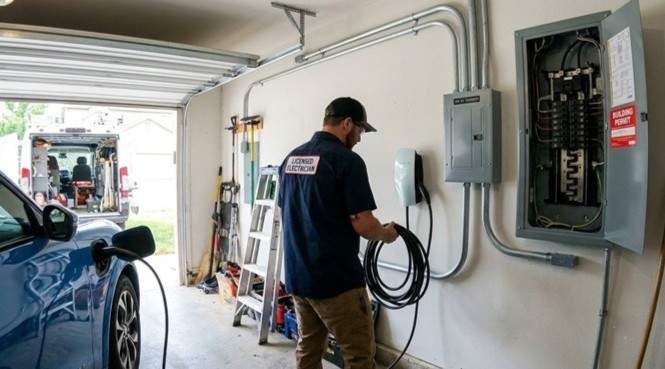
Always have a licensed electrician perform a load calculation and pull the permit. DIY electrical work on a 240-volt EV circuit is one of the faster ways to create a fire hazard or fail inspection.
Cost Reality Check
- Simple 30-amp circuit (short run): often $400–$900
- 40- or 50-amp circuit: $600–$1,500
- 60-amp + longer run or panel work: $1,200–$3,000+
- Full service upgrade (100A → 200A): $2,500–$5,000+ in many areas
Spending a bit more now usually beats living with slow charging for years.
Yes — if your driving is modest and you accept slower overnight charging.
No — if you want flexibility, own a larger EV, or plan to stay in the house more than a couple of years.
For Tesla owners specifically, 30 amps works but feels limiting once you experience 40-amp or higher charging. The smartest move for most American households is to install the highest amp circuit your panel and budget reasonably allow (commonly 40A or 50A) and set the charger to match. That single decision removes daily range anxiety at home and future-proofs the house.
If you tell an electrician “I want a Level 2 charger,” the best follow-up sentence is: “Do a proper load calc and tell me the highest safe amperage I can install without a service upgrade.” That conversation will give you a clearer answer than any generic online chart.
Related Post